Classic Novels Word Search
Click and drag to select words
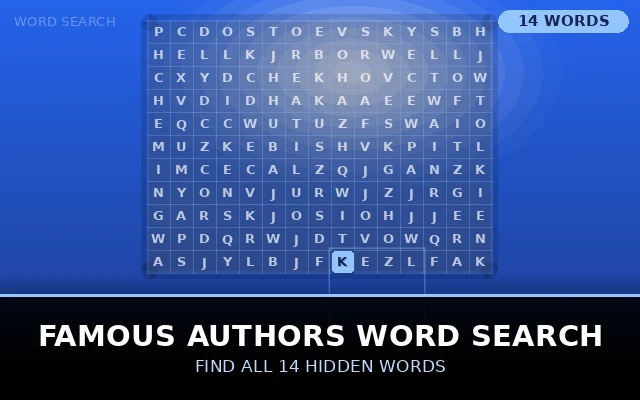
Shakespeare, Hemingway, Orwell and more. Play our Famous Authors word search and...
Play Now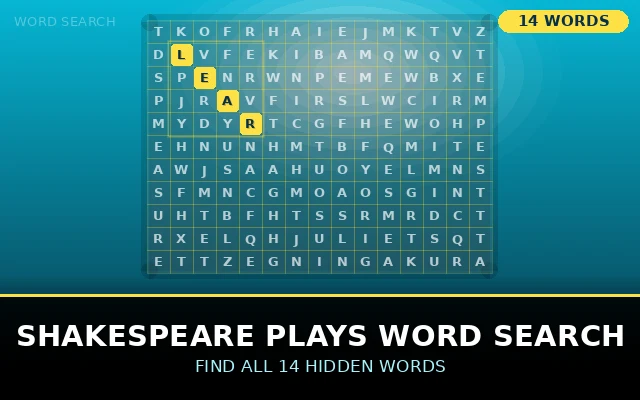
Hamlet, Othello, Macbeth and more. Play our Shakespeare Plays word search and ex...
Play Now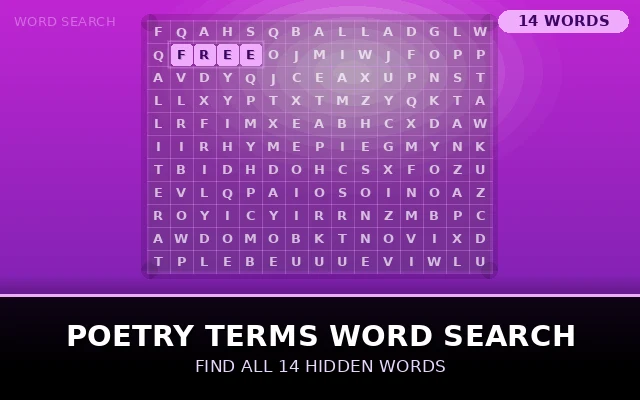
Rhyme, stanza, metaphor and more hidden in the grid. Play our Poetry Terms word ...
Play NowDickens, Austen, Tolstoy and more. Play our Classic Novels word search and discover timeless literary masterpieces. Free online no sign-up needed.
Shakespeare, Hemingway, Orwell and more. Play our Famous Authors word search and discover literary legends. Free online puzzle, no sign-up needed.
Play Now
Hamlet, Othello, Macbeth and more. Play our Shakespeare Plays word search and explore the Bard greatest works. Free online puzzle no sign-up needed.
Play Now
Rhyme, stanza, metaphor and more hidden in the grid. Play our Poetry Terms word search and explore the language of verse. Free online, no sign-up.
Play NowClassic Novels Word Search Guides & Articles
Classic Novels Word Search: Rediscover Timeless Stories One Word at a Time
Classic novels have shaped the way we understand storytelling, human nature, and the world around us. These are the books that have been passed down through generations, studied in classrooms, adapted into films, and discussed in book clubs for decades. The Classic Novels Word Search puzzle offers a delightful way to reconnect with these timeless titles, combining the joy of reading with the mental challenge of a word search game.
This puzzle features fourteen hidden words representing some of the most celebrated novels in literary history. Whether you're a student reviewing for a literature exam, a teacher planning a classroom activity, or simply a book lover who enjoys a nostalgic trip through classic literature, this word search puzzle is designed to entertain while reinforcing familiarity with important literary titles. In this article, we'll explore why classic novels remain so important, how this puzzle supports learning, and how to approach solving it effectively.
The Lasting Importance of Classic Novels
Classic novels earn their status not simply because of their age, but because of the way they capture universal human experiences, love, ambition, loss, morality, and identity, in ways that continue to resonate with readers today. These stories often explore complex social issues, historical contexts, and philosophical questions that remain relevant no matter how much time has passed since they were first published.
Because classic novels are so frequently referenced in academic settings, popular culture, and everyday conversation, recognizing their titles is a valuable form of cultural literacy. The Classic Novels Word Search puzzle taps into this cultural relevance, turning the recognition of these titles into an engaging and memorable activity rather than a rote memorization task.
Who This Puzzle Is Perfect For
Students studying English literature often need to become familiar with a wide range of classic novel titles, sometimes without having read every book cover to cover. This word search puzzle offers a lighthearted way to build that familiarity, making it easier to recognize titles during class discussions, essay writing, or exam preparation.
Teachers can incorporate the Classic Novels Word Search into their lesson plans as a warm-up activity, a between-unit break, or a review tool before a literature test. Because the puzzle is simple to understand yet rich in content, it works well for a variety of age groups and skill levels within a classroom setting.
Book clubs and reading groups can use this puzzle as a fun icebreaker before diving into deeper discussions about plot, characters, or themes. It's an easy way to get everyone thinking about classic literature in a relaxed, low-stakes format before the conversation turns more analytical.
General puzzle enthusiasts who enjoy word games will also find this It wordsearch puzzle satisfying, even without a strong literary background. The act of searching for hidden titles can spark curiosity about books they haven't yet read, potentially inspiring a new addition to their reading list.
Why Word Search Puzzles Work Well for Literature Learning
Traditional methods of learning about classic novels often involve reading lengthy summaries, memorizing plot points, or studying detailed analyses. While these methods have their place, they can sometimes feel overwhelming, especially for readers who are just beginning to explore classic literature. A word search puzzle offers a much gentler entry point.
By transforming novel titles into a visual search activity, this puzzle encourages active engagement rather than passive reading. Players must scan, recognize letter patterns, and mentally confirm each title as they find it, a process that reinforces memory far more effectively than simply reading a list of book names. This is particularly helpful for visual learners who benefit from interactive, hands-on activities rather than traditional text-based study methods.
Related Puzzles:
- Shakespeare Plays Word Search
- Famous Authors Word Search
- Fairy Tale Characters Word Search
- Poetry Terms Word Search
Tips for Solving the Classic Novels Word Search
To get the most out of this puzzle and solve it efficiently, try the following approach:
- Start with the word list. Read through all fourteen novel titles before you begin searching. This primes your brain to recognize the words more quickly once you start scanning the grid.
- Identify shorter or more distinctive words first. Titles with unusual letter combinations or shorter lengths are often easier to spot quickly, giving you early momentum in the puzzle.
- Search in a consistent pattern. Rather than jumping around the grid randomly, move methodically from left to right and top to bottom. This reduces the likelihood of missing a hidden word.
- Remember that words can go in multiple directions. Classic word search puzzles often hide words horizontally, vertically, diagonally, and occasionally backwards, so keep an open mind as you scan.
- Use a highlighter or tracking method. Marking off words as you find them, and shading areas of the grid you've already thoroughly checked, helps you stay organized and avoid duplicate searching.
- Don't rush. While speed can be satisfying, taking your time to carefully scan the grid often leads to fewer missed words and a more enjoyable overall experience.
The Educational Benefits of Classic Literature Puzzles
Beyond simple entertainment, the Classic Novels Word Search offers several meaningful educational benefits. First, it reinforces vocabulary recognition, particularly for titles that may include less common words or historical language. Second, it strengthens visual scanning and pattern recognition skills, which are valuable not just for reading comprehension but for cognitive development more broadly.
Third, this puzzle can serve as a gentle introduction to classic literature for readers who may feel intimidated by lengthy or complex novels. By first becoming familiar with a title through a fun puzzle, readers may feel more confident and curious about picking up the actual book later on.
Finally, for students specifically, this type of puzzle can reduce study-related stress. Literature exams often require memorizing numerous titles, authors, and details, and a word search puzzle offers a break from traditional flashcards or written notes while still reinforcing the same core information.
Bringing Classic Literature Into Everyday Life
One of the great strengths of the Classic Novels Word Search is its ability to make literature feel accessible and fun rather than distant or academic. Classic novels are sometimes viewed as intimidating due to their age, length, or complex language, but puzzles like this help bridge that gap by presenting familiar titles in a playful, approachable format.
This puzzle is also a wonderful addition to library programs, literature-themed events, or educational workshops. Its simple design makes it suitable for a wide audience, while its content offers genuine educational value for those looking to deepen their literary knowledge.
Conclusion
The Classic Novels Word Search puzzle offers a wonderful blend of nostalgia, education, and entertainment. By hiding fourteen beloved novel titles within a letter grid, this puzzle invites readers, students, and puzzle enthusiasts alike to reconnect with the timeless stories that have shaped literary history.
Whether you're using it as a study tool, a classroom activity, a book club icebreaker, or simply a relaxing way to spend a few minutes, the Classic Novels Word Search delivers a satisfying and educational experience. It serves as a gentle reminder that great stories never truly go out of style, they simply wait to be rediscovered, one hidden word at a time.