Clothing Types Word Search
Click and drag to select words
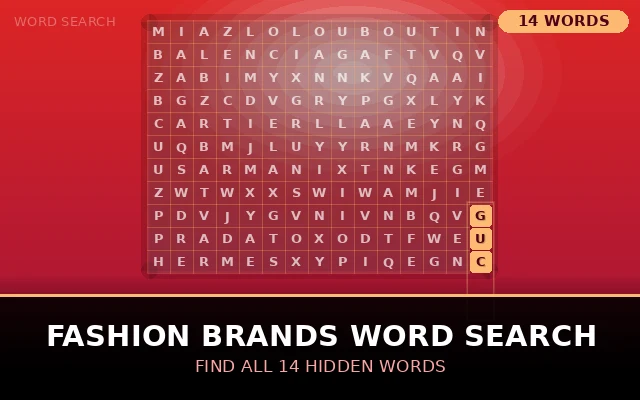
Gucci, Nike, Chanel and more hidden in the gril. Play our Fashion Brands word se...
Play Now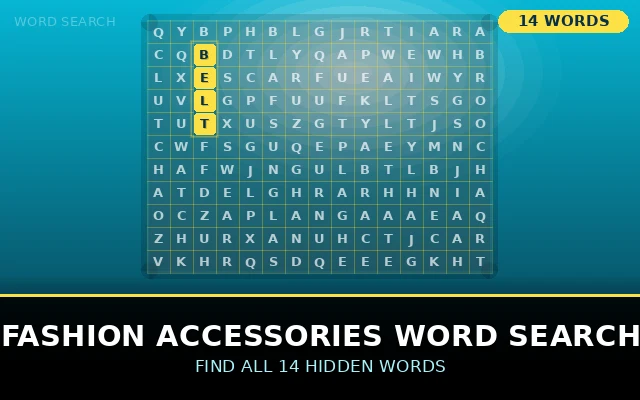
Handbags, scarves, sunglasses and more. Play our Fashion Accessories word search...
Play Now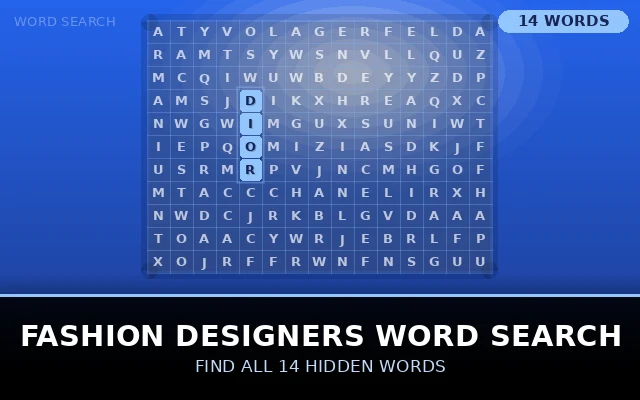
Chanel, Versace, Armani and more. Play our Fashion Designers word search and dis...
Play NowJacket, dress, scarf and more. Play our Clothing Types word search and build your fashion vocabulary. Free online puzzle no registration needed.
Gucci, Nike, Chanel and more hidden in the gril. Play our Fashion Brands word search and find iconic style labels. Free online puzzle no sign-up needed.
Play Now
Handbags, scarves, sunglasses and more. Play our Fashion Accessories word search and explore stylish add-ons. Free online puzzle no sign-up needed.
Play Now
Chanel, Versace, Armani and more. Play our Fashion Designers word search and discover style icons hidden in the grid. Free online no sign-up needed.
Play NowClothing Types Word Search Guides & Articles
Clothing Types Word Search: Building Wardrobe Vocabulary the Fun Way
From a cozy sweater on a chilly morning to a tailored blazer for an important meeting, clothing is woven into nearly every part of daily life. Learning the names of different garments is one of the most practical vocabulary sets a person can build, useful for shopping, describing outfits, or simply communicating clearly about what we wear. The clothing types word search transforms this everyday vocabulary into an engaging puzzle experience, making it a popular activity for language learners, young students, and puzzle enthusiasts alike.
In this article, we'll explore what makes a clothing types word search such a useful and enjoyable puzzle theme, the range of garments typically featured, the educational benefits it offers, and practical strategies for solving these puzzles more efficiently.
What Is a Clothing Types Word Search?
A clothing types word search is a themed It wordsearch puzzle in which the names of various garments and apparel items are hidden within a grid of letters. Common entries include Shirt, Pants, Dress, Jacket, Sweater, Skirt, Shorts, Blouse, Coat, Scarf, Sock, and Hat. Solvers must locate each clothing item, which may be arranged horizontally, vertically, or diagonally, in either direction.
Because clothing vocabulary is part of everyday life, this puzzle style is especially accessible, making it a popular choice for beginner-level learners, young children, and anyone looking for a low-pressure vocabulary-building activity.
Why Clothing Types Make a Practical Puzzle Theme
Clothing vocabulary is among the most functional and universally relevant word categories, useful in nearly every context, from casual conversation to formal writing. A few reasons this theme resonates so strongly with puzzle solvers include:
- Everyday relevance: Everyone gets dressed daily, making clothing vocabulary immediately practical and easy to relate to.
- Ideal for language learners: Clothing terms are often among the first vocabulary sets taught in language classes, making this puzzle a natural fit for ESL and foreign language education.
- Accessible to young learners: Because clothing items are concrete, visual objects, this vocabulary is easier for young children to grasp compared to more abstract word categories.
- Broad seasonal and cultural variety: From swimsuits to winter coats, clothing vocabulary naturally introduces concepts related to seasons, climate, and cultural dress.
Categories of Clothing Commonly Featured
A well-rounded clothing types word search typically draws from several categories of everyday apparel.
Tops and Upper Body Garments
This category includes Shirt, Blouse, Sweater, Jacket, and Vest items worn on the upper body across a wide range of occasions and seasons.
Bottoms and Lower Body Garments
Terms such as Pants, Shorts, Skirt, and Jeans represent the lower-body clothing items essential to nearly every wardrobe.
Full-Body Garments
Words like Dress, Jumpsuit, and Overalls describe single-piece garments that cover both the upper and lower body.
Outerwear
Terms including Coat, Jacket, Parka, and Raincoat reflect clothing designed specifically for protection against weather conditions.
Accessories and Small Items
Words like Scarf, Hat, Sock, Glove, and Belt round out a well-balanced puzzle, introducing smaller but equally important clothing items.
By blending garments from these varied categories, a clothing types word search offers a broad and practical overview of everyday apparel vocabulary.
Educational Benefits of a Clothing Types Word Search
Beyond its entertainment value, this puzzle style offers meaningful educational advantages, particularly for young learners and language students.
Building Foundational Vocabulary
Clothing terms are among the most practical words a beginner can learn, useful in daily conversation, shopping, and self-expression. A word search reinforces these words in a fun, memorable way.
Supporting Language Acquisition
For English language learners, clothing vocabulary is often introduced early in instruction due to its concrete, visual nature. A themed word search offers valuable reinforcement of terms learned in class.
Encouraging Categorization Skills
Sorting clothing into categories like tops, bottoms, outerwear, and accessories helps young learners develop basic classification skills, an important early step in cognitive development.
Connecting Vocabulary to Real Life
Unlike more abstract vocabulary, clothing terms are directly tied to daily routines like getting dressed, making the connection between word and meaning especially strong and easy to remember.
Strengthening Visual Scanning and Fine Motor Skills
As with any word search, the process of locating hidden words builds visual pattern recognition, while circling or tracing each word helps develop fine motor control useful for handwriting.
Interesting Facts About Clothing to Enjoy While Solving
A few fun facts can add extra enjoyment to your puzzle-solving session:
- The word "jeans" comes from the French phrase "bleu de Gênes," referring to the blue fabric originally produced in Genoa, Italy.
- The modern necktie is believed to have originated from Croatian mercenaries in the 17th century, whose neckwear inspired French fashion trends.
- The zipper wasn't widely used in clothing until the 1930s, when fashion designers began incorporating it into everyday garments.
- The word "sweater" originally referred to a garment worn specifically to induce sweating during exercise, before evolving into general cold-weather clothing.
- Ancient Egyptians are believed to have worn some of the earliest known sandals, dating back thousands of years.
Adjusting Difficulty for Different Age Groups
Because clothing vocabulary ranges from very simple to more specific, this puzzle theme can be easily tailored to different skill levels.
For young children or beginners: Short, familiar words like Hat, Sock, Coat, and Shirt work well in a smaller, simpler grid.
For elementary students or intermediate language learners: Adding words like Sweater, Jacket, Skirt, and Scarf increases the challenge while remaining approachable.
For advanced learners or adults: Including more specific terms such as Cardigan, Blazer, Overalls, or Turtleneck creates a genuinely challenging puzzle suited to more advanced vocabulary building.
Where Clothing Types Word Searches Are Commonly Used
- ESL and language classrooms: Teachers use these puzzles as engaging supplements to vocabulary units on clothing and daily routines.
- Elementary school classrooms: Clothing-themed puzzles are a common activity for teaching young children basic vocabulary and categorization skills.
- Homeschool curricula: Parents use clothing word searches to reinforce vocabulary in an approachable, low-pressure way.
- Occupational therapy and speech therapy settings: Some therapists use themed word searches to support vocabulary development and fine motor skills in young clients.
- Family activities: Clothing-themed puzzles are popular for road trips, rainy days, or quiet afternoons at home.
Tips for Solving a Clothing Types Word Search Efficiently
- Start with short, simple words. Terms like "Hat," "Coat," or "Sock" are quick to spot and help build early momentum in the puzzle.
- Look for distinctive letter patterns. Words like "Sweater" or "Overalls" contain repeated letters or unusual combinations that can stand out in a grid.
- Scan methodically. Move through the grid in a consistent pattern row by row, then column by column before checking diagonals.
- Check every direction. Clothing terms may be hidden forward, backward, vertically, horizontally, or diagonally.
- Cross off words as you find them. This keeps your progress organized and helps avoid wasted time re-scanning for terms already located.
Creating Your Own Clothing Types Word Search
Designing a custom puzzle is a great way to focus on a specific theme, such as "Winter Clothing" or "Clothing Around the World." Start by selecting a word list appropriate to your intended audience's age and language level, choose a grid size that comfortably fits your terms, and arrange the words in multiple directions for added challenge. Free online word search generators make this process quick and simple, allowing teachers, parents, or language instructors to create a personalized, printable puzzle complete with an answer key in just a few minutes.
Related Puzzles:
Fashion Brands Word Search
Fashion Designers Word Search
Fashion Accessories Word Search
Conclusion
The clothing types word search offers a practical and enjoyable way to build essential wardrobe vocabulary, from everyday basics like shirts and pants to more specific items like scarves and blazers. This puzzle theme supports language learners, young children, and puzzle enthusiasts alike, all while sharpening visual scanning skills and reinforcing vocabulary tied directly to daily life. Whether used in a classroom, a language course, or simply enjoyed at home, a clothing types word search offers a simple but valuable way to strengthen everyday vocabulary one hidden garment at a time.