Mental Health Word Search
Click and drag to select words
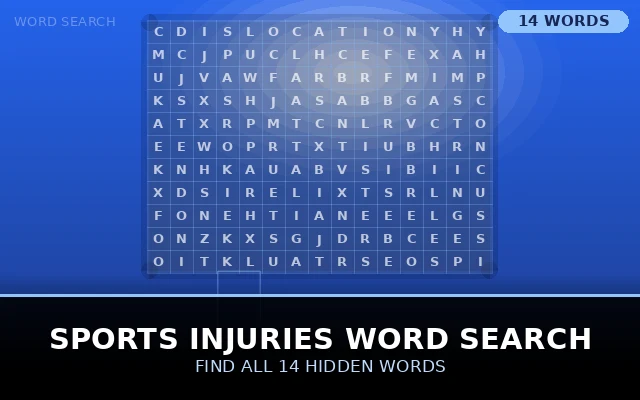
Sprain, fracture, tendon and more. Play our Sports Injuries word search and lear...
Play Now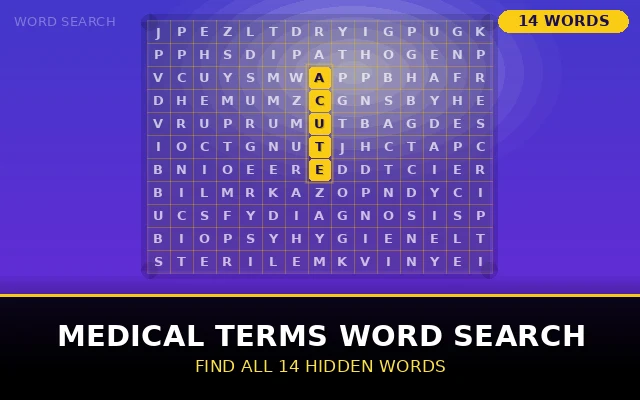
Diagnosis, surgery, vaccine and more. Play our Medical Terms word search and bui...
Play Now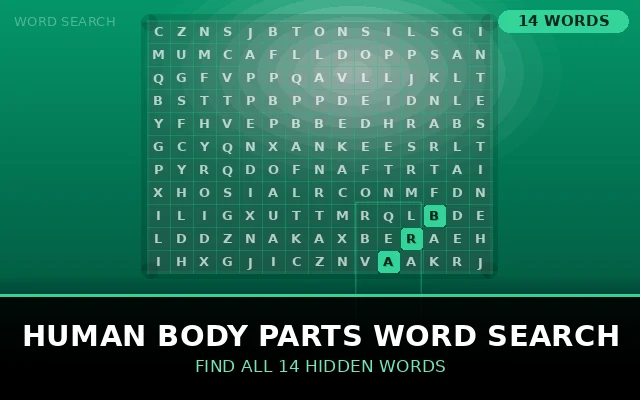
Heart, brain, skeleton and more. Play our Human Body word search and learn essen...
Play NowAnxiety, mindfulness, therapy and more. Play our Mental Health word search and explore wellbeing vocabulary. Free online puzzle, no sign-up needed.
Sprain, fracture, tendon and more. Play our Sports Injuries word search and learn common injury terms. Free online puzzle, no sign-up needed.
Play Now
Diagnosis, surgery, vaccine and more. Play our Medical Terms word search and build healthcare vocabulary. Free online puzzle, no sign-up needed.
Play Now
Heart, brain, skeleton and more. Play our Human Body word search and learn essential anatomy vocabulary. Free online puzzle, no sign-up needed.
Play NowMental Health Word Search Guides & Articles
A Mental Health Word Search Building Clinical Literacy and Reducing Stigma
Mental health conditions affect a substantial portion of the population at some point throughout their lives, yet the specific clinical vocabulary surrounding these conditions often remains poorly understood by the general public, contributing to persistent stigma and confusion that can genuinely delay individuals from seeking appropriate help. A mental health word search takes on this important clinical vocabulary directly, hiding words like Anxiety, Depression, and Therapy inside a grid of letters that treats mental health conditions with the same educational seriousness typically reserved for physical health topics.
This puzzle theme occupies distinctly different territory from more general wellness content, focusing specifically on diagnosable clinical conditions and treatment approaches rather than everyday emotional balance practices, offering solvers a chance to build genuine clinical literacy around conditions that touch an enormous number of families worldwide.
Understanding the Scope of Clinical Mental Health Conditions
Mental health conditions span an enormously diverse range of presentations, severities, and underlying causes, each requiring distinct understanding rather than being lumped together under vague general terminology. Anxiety Disorders represent among the most common mental health conditions globally, encompassing several distinct diagnoses including Generalized Anxiety Disorder, characterized by persistent, excessive worry across multiple life areas, and Panic Disorder, marked by sudden, intense episodes of fear accompanied by significant physical symptoms that can feel genuinely alarming to those experiencing them for the first time.
Depression, technically referred to within clinical settings as Major Depressive Disorder when meeting specific diagnostic criteria, involves persistent sadness or loss of interest lasting at least two weeks, accompanied by additional symptoms like changes in sleep, appetite, or concentration that significantly impact daily functioning beyond typical temporary sadness that everyone experiences occasionally. Bipolar Disorder involves distinct mood episodes ranging from depressive lows to manic or hypomanic highs, a condition requiring specialized treatment quite different from standard depression treatment protocols given its genuinely distinct underlying nature and clinical presentation.
Vocabulary Reflecting Genuine Clinical Understanding
A well constructed mental health word search draws from actual clinical terminology used within diagnostic and treatment contexts rather than vague colloquial language that sometimes minimizes or mischaracterizes serious conditions. Common entries include Anxiety, Depression, Therapy, Psychiatrist, Medication, Diagnosis, and Counseling, terms that most solvers will recognize given increasing public conversation around mental health topics in recent years. More advanced puzzles might introduce Bipolar, Psychosis, Cognitive Behavioral, and Antidepressant, vocabulary that rewards solvers with slightly deeper clinical understanding beyond general mental health awareness.
Some puzzle creators also incorporate treatment and support system vocabulary alongside diagnostic terminology, including words like Support Group, Psychotherapy, Coping Strategy, and Crisis Line, broadening the puzzle beyond simple condition identification into the broader landscape of resources and treatment approaches available to individuals navigating these genuinely challenging conditions.
Why Clinical Accuracy Matters for Public Understanding
Popular culture and everyday conversation frequently use mental health terminology loosely, sometimes describing normal emotional fluctuations using clinical language that actually describes considerably more severe and persistent conditions, a pattern that can both minimize the genuine severity of diagnosable conditions and create confusion about what actually constitutes a clinical mental health concern requiring professional attention. A mental health word search offers an opportunity to reinforce accurate clinical vocabulary, helping distinguish between everyday emotional experiences and diagnosable conditions that follow specific, medically recognized criteria.
This accuracy matters considerably given ongoing public health efforts to reduce mental health stigma while simultaneously encouraging individuals experiencing genuine symptoms to seek appropriate professional evaluation rather than either dismissing serious symptoms as simply personal weakness or conversely over identifying temporary difficult emotions as necessarily indicating a diagnosable disorder requiring formal treatment.
Educational Applications for Reducing Stigma
Health educators and school counselors increasingly recognize the importance of mental health literacy as a component of comprehensive health education, given how significantly mental health conditions affect academic performance, relationships, and overall wellbeing among students of every age. A mental health word search pairs naturally with broader mental health awareness curriculum, giving students an engaging, low pressure way to build familiarity with clinical vocabulary before encountering these terms during personal experience or supporting a friend or family member navigating a mental health condition.
Because mental health stigma often stems partly from unfamiliarity and misunderstanding, some educators specifically use accessible activities like this puzzle format to normalize discussion of clinical mental health vocabulary, treating these topics with the same educational seriousness and lack of shame typically applied to physical health conditions covered within standard health education curriculum.
Strategic Approaches to Solving
Working through a mental health word search efficiently benefits from recognizing that many clinical terms carry distinctive letter patterns worth prioritizing during an initial grid scan. Words like Psychiatrist and Antidepressant contain relatively unusual letter combinations that stand out more readily against randomized filler text compared to shorter, more common words like Therapy or Anxiety.
Searching for longer, more technical clinical vocabulary before circling back to shorter, more easily overlooked entries tends to produce faster overall results. Checking every possible direction around a promising starting letter remains essential throughout, since mental health themed puzzles frequently place longer clinical terms diagonally to maximize the challenge within the available grid space.
Building a Thoughtful Mental Health Puzzle
Anyone interested in creating a personalized mental health word search should approach the subject matter with genuine care and accuracy, given the sensitive nature of the topic for many solvers who may have personal or family experience with these conditions. A puzzle designed for general awareness education benefits from focusing on widely recognized terms like Anxiety, Depression, and Therapy, paired with accurate, non stigmatizing framing throughout any accompanying educational content presented alongside the puzzle itself.
A Puzzle Supporting Genuine Understanding Over Stigma
A mental health word search offers solvers a genuinely valuable opportunity to build accurate clinical literacy around conditions that affect a substantial portion of the population, whether directly or through family members and friends navigating these challenges. Every hidden word represents terminology that carries real significance for millions of individuals seeking to understand their own experiences or support loved ones through genuine mental health challenges. Whether solved by a student building foundational mental health literacy, or an adult seeking to better understand a loved one's diagnosis, this puzzle theme offers a genuinely meaningful way to replace stigma and confusion with accurate clinical understanding.
Recognizing When Professional Support Becomes Necessary
Beyond simple vocabulary recognition, a thoughtfully designed mental health word search can help clarify the important distinction between everyday emotional difficulty and symptoms genuinely warranting professional evaluation. Persistent symptoms lasting more than two weeks, significant interference with daily functioning at work, school, or in relationships, and thoughts of self harm all represent clear indicators that professional support, rather than simply waiting for feelings to naturally improve, represents the appropriate and genuinely necessary next step.
Including vocabulary like Professional Help, Crisis Resources, and Early Intervention within a mental health word search reinforces the genuinely important message that seeking help represents strength and appropriate self advocacy rather than weakness or failure, a reframing that mental health advocates consistently emphasize as essential for encouraging individuals to seek timely, appropriate care rather than suffering in silence due to persistent but genuinely outdated stigma surrounding mental health treatment and support.
The Range of Available Treatment Approaches
Mental health treatment encompasses a considerably broader range of approaches than many people initially realize, extending well beyond the simple image of medication or talk therapy that often dominates popular understanding of mental health care. Cognitive Behavioral Therapy, one of the most extensively researched therapeutic approaches, helps individuals identify and modify unhelpful thought patterns that contribute to emotional distress, while Dialectical Behavior Therapy specifically addresses emotional regulation difficulties through a combination of individual and group based skill building.
Medication management, when clinically appropriate, often works most effectively when combined with therapeutic approaches rather than serving as a standalone treatment, with different medication classes targeting specific conditions through distinct biological mechanisms that a treating psychiatrist carefully considers based on individual patient presentation and medical history. Support groups, peer counseling, and community based resources round out the broader treatment landscape, offering additional layers of support that complement more formal clinical treatment approaches. Including vocabulary like Cognitive Behavioral, Dialectical, and Peer Support within a mental health word search helps solvers appreciate this genuinely diverse treatment landscape, moving beyond oversimplified assumptions about what mental health treatment actually involves in contemporary clinical practice.
Supporting Someone Experiencing Mental Health Challenges
Beyond understanding clinical terminology for personal knowledge, many solvers engage with mental health vocabulary specifically to better support a friend or family member navigating their own mental health challenges. Understanding terms like Trigger, referring to specific circumstances that provoke symptom escalation, and Coping Mechanism, describing strategies individuals use to manage difficult emotions, helps supportive friends and family members communicate more effectively and provide genuinely helpful support rather than inadvertently saying something dismissive or unhelpful due to unfamiliarity with appropriate mental health communication approaches.
Related Puzzles:
- Diet and Nutrition Word Search
- Mental Wellness Word Search
- Healthy Daily Habits
- Alternative Medicine Word Search
- Sports Injuries Word Search
- Human Body Parts Word Search
- Medical Terms Word Search
- Exercise and Fitness Word Search
- Vitamins and Nutrition
- Yoga Terms Word Search
Conclusion
Ready to play? Dive into this Mental Health word search now and see how many words about mental health you can find. It's a fun, free way to sharpen your memory and learn something new. Enjoyed it? Share this puzzle with friends, classmates, or teachers who love a good challenge too!
This supportive dimension gives a mental health word search value extending well beyond individual self knowledge, potentially improving the quality of support available to millions of individuals whose friends and family members take the time to build genuine understanding of the clinical realities their loved ones navigate on an ongoing basis throughout their mental health journey.