Type of Dogs Word Search

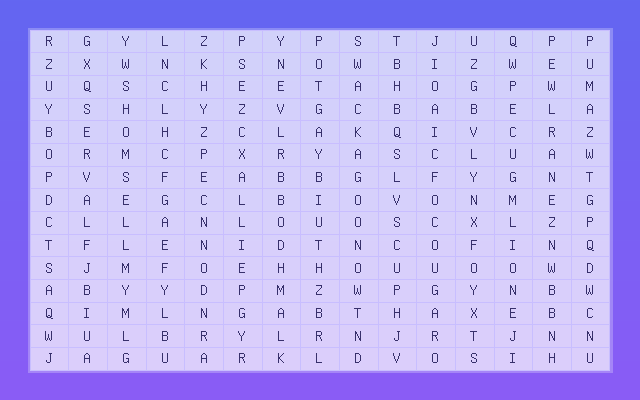
Puzzle Grid

Click and drag to select words

Words to Find 0/14

Share Puzzle
More in Animals
Ocean Creatures Grid
Ocean Creatures

Finding engaging educational activities for children can be challenging...

Play Now
Animals Word Search Grid
Animals Word Search

Word puzzles have long been a favorite pastime for children and adults alike,...

Play Now
Birds Word Search Grid
Birds Word Search

Whether someone is a seasoned puzzle lover or just starting their word game jour...

Play Now
Type of Dogs Word Search

Every morning, millions of people around the world wake up, pick up their phones, and search for the same thing.

Animals 5 views
More Puzzles in Animals
Ocean Creatures Grid
Ocean Creatures

Finding engaging educational activities for children can be challenging

Play Now
Animals Word Search Grid
Animals Word Search

Word puzzles have long been a favorite pastime for children and adults alike,

Play Now
Birds Word Search Grid
Birds Word Search

Whether someone is a seasoned puzzle lover or just starting their word game journey,

Play Now

Type of Dogs Word Search Guides & Articles

Type of Dogs Word Search

Why Millions of People Search for Type of Dogs Every Single Day

Every morning, millions of people around the world wake up, pick up their phones, and search for the same thing. Type of dogs. It sounds simple but behind those three little words is an ocean of curiosity, love, and genuine need. Some people are searching because they just spotted a gorgeous dog on their morning walk and absolutely have to know what breed it was. Others are searching because they are about to adopt their very first dog and feel completely overwhelmed by the sheer number of choices. And some people are searching simply because dogs make them happy and learning about them is one of life's quiet pleasures.


The world of dog breeds is genuinely staggering. There are over 340 officially recognized breeds around the globe, each one carrying its own history, personality, physical traits, and quirks. From the impossibly tiny Chihuahua that fits in your handbag to the enormous Irish Wolfhound that can look you straight in the eye when it stands up, every single breed is remarkable in its own way. This guide covers them all. Big dogs, small dogs, fluffy dogs, hypoallergenic dogs, police dogs, famous cartoon dogs, and everything in between.

Type of Dogs Breeds The Seven Major Groups

When experts and kennel clubs talk about type of dogs breeds, they organize them into seven distinct groups based on what those dogs were originally bred to do. Understanding these groups is genuinely useful because it tells you a lot about a dog's temperament, energy level, and the kind of lifestyle it thrives in. A dog bred to herd sheep for twelve hours a day is going to behave very differently from one that was bred to sit on a royal lap in a palace. Let us walk through each group properly.

Sporting Dogs

Sporting dogs were developed to work alongside hunters in the field. They are athletic, cheerful, and almost always eager to please. These dogs tend to be excellent with families because of their natural friendliness and trainability. Breeds in this group include the Golden Retriever, Labrador Retriever, American Cocker Spaniel, English Springer Spaniel, German Shorthaired Pointer, Vizsla, Weimaraner, Irish Setter, English Setter, Flat-Coated Retriever, Boykin Spaniel, Brittany Spaniel, Clumber Spaniel, and the Chesapeake Bay Retriever. These are dogs that genuinely love to move, so they do best with owners who lead an active lifestyle.

Hound Dogs

Hound dogs are among the oldest breeds in existence. They were developed over thousands of years to track prey either by scent or by sight, and that ancient purpose still shapes their behavior today. Scent hounds like the Beagle, Bloodhound, Basset Hound, Black and Tan Coonhound, Redbone Coonhound, and the American Foxhound follow their noses with a single-minded dedication that can make recall training a real challenge. Sight hounds like the Greyhound, Whippet, Saluki, Afghan Hound, Borzoi, Irish Wolfhound, and the Scottish Deerhound chase anything that moves with breathtaking speed. Together these breeds represent centuries of careful selective breeding for one purpose  finding and following prey.

Working Dogs

Working dogs are the powerhouses of the dog world. These large, muscular, intelligent breeds were developed for physically demanding tasks like guarding livestock, pulling sleds through Arctic conditions, performing water rescues, and protecting property. The group includes the Rottweiler, Great Dane, Doberman Pinscher, Siberian Husky, Alaskan Malamute, Bernese Mountain Dog, Saint Bernard, Newfoundland, Boxer, Bullmastiff, Cane Corso, Dogue de Bordeaux, Giant Schnauzer, Great Pyrenees, Kuvasz, Leonberger, Portuguese Water Dog, and the Tibetan Mastiff. These dogs need experienced handlers who can provide firm, consistent training and plenty of daily exercise.


Herding Dogs

Herding dogs are widely considered to be the most intelligent group of all. Bred to control the movement of livestock, these dogs have an almost supernatural ability to read situations and respond instantly. The Border Collie tops almost every canine intelligence ranking in the world. Other extraordinary members of this group include the German Shepherd, Australian Shepherd, Belgian Malinois, Belgian Tervuren, Belgian Sheepdog, Pembroke Welsh Corgi, Cardigan Welsh Corgi, Shetland Sheepdog (Sheltie), Rough Collie, Smooth Collie, Australian Cattle Dog (Blue Heeler), Bouvier des Flandres, Briard, Canaan Dog, Icelandic Sheepdog, Norwegian Buhund, Old English Sheepdog, Polish Lowland Sheepdog, and the Swedish Vallhund. These dogs need mental stimulation as much as physical exercise — without it, they will find their own entertainment, usually at the expense of your furniture.

Terrier Dogs

Terriers were bred to hunt and kill vermin, and that original purpose gave them a personality that is feisty, bold, tenacious, and thoroughly entertaining. Do not be fooled by their often small size. A terrier will not hesitate to pick a confrontation with a dog three times its size and will probably win through sheer attitude alone. Popular terrier breeds include the Yorkshire Terrier, Bull Terrier, Miniature Bull Terrier, Jack Russell Terrier, Parson Russell Terrier, Airedale Terrier, Bedlington Terrier, Border Terrier, Cairn Terrier, Dandie Dinmont Terrier, Fox Terrier (Wire and Smooth), Glen of Imaal Terrier, Irish Terrier, Kerry Blue Terrier, Lakeland Terrier, Manchester Terrier, Norfolk Terrier, Norwich Terrier, Scottish Terrier, Sealyham Terrier, Skye Terrier, Soft Coated Wheaten Terrier, Staffordshire Bull Terrier, and the Welsh Terrier.

Toy Dogs

Toy breeds exist for one purpose  to be companions. These small, affectionate dogs were developed for people who wanted a devoted, portable companion that could live comfortably in smaller spaces. They are often fiercely loyal to their owners and can be surprisingly bold given their tiny frames. Beloved toy breeds include the Chihuahua, Pomeranian, Maltese, Shih Tzu, Toy Poodle, Cavalier King Charles Spaniel, Italian Greyhound, Japanese Chin, Miniature Pinscher, Papillon, Pekingese, Toy Fox Terrier, Brussels Griffon, Chinese Crested, Affenpinscher, English Toy Spaniel, Havanese, Toy Manchester Terrier, and the Silky Terrier. Many of these breeds live remarkably long lives, with some regularly reaching 15 to 18 years.

Non-Sporting Dogs

The non-sporting group is the most diverse collection of breeds in any kennel club registry. These are dogs that, for various historical reasons, do not fit neatly into any of the other six categories. As a result, you get an extraordinary variety of sizes, appearances, temperaments, and energy levels all living under the same umbrella. This group includes the Poodle (Standard and Miniature), Bulldog, Dalmatian, Chow Chow, Bichon Frise, Boston Terrier, Finnish Spitz, French Bulldog, Keeshond, Lhasa Apso, Lowchen, Schipperke, Shiba Inu, Tibetan Spaniel, Tibetan Terrier, Xoloitzcuintli (the Mexican Hairless Dog), American Eskimo Dog, and the Chinese Shar-Pei.

Type of Dogs Word Search


Type of Dogs Big and Small  Finding Your Perfect Size

The Gentle Giants of the Dog World Big Dogs

Large dog breeds carry a presence that is genuinely hard to describe until you have experienced it. There is something profoundly comforting about a massive, warm dog leaning against you. Big dogs tend to be calmer than many people expect, and they are often extraordinarily patient and gentle with children despite their imposing size. The most popular large dog breeds include the German Shepherd, Golden Retriever, Labrador Retriever, Rottweiler, Belgian Malinois, Doberman Pinscher, Great Dane, Saint Bernard, Bernese Mountain Dog, Newfoundland, Irish Wolfhound, Scottish Deerhound, Leonberger, Tibetan Mastiff, Anatolian Shepherd, Caucasian Shepherd, Great Pyrenees, Kangal, Bullmastiff, Dogue de Bordeaux, Cane Corso, Boerboel, Black Russian Terrier, Neapolitan Mastiff, English Mastiff, and the Bouvier des Flandres.

Big Personalities Packed Into Tiny Bodies  Small Dogs

Small dog breeds have become enormously popular in modern life, particularly in cities where apartment living is the norm. They travel easily, eat less, and often live significantly longer than their larger counterparts. But anyone who has owned a Jack Russell Terrier or a Miniature Pinscher will tell you with complete sincerity that there is absolutely nothing low-energy about a small dog. The most loved small dog breeds include the Chihuahua, Yorkshire Terrier, Pomeranian, Maltese, Toy Poodle, Shih Tzu, French Bulldog, Cavalier King Charles Spaniel, Miniature Dachshund, Miniature Schnauzer, Jack Russell Terrier, West Highland White Terrier, Cairn Terrier, Papillon, Bichon Frise, Miniature Pinscher, Affenpinscher, Brussels Griffon, Bolognese, Coton de Tulear, Havanese, Japanese Chin, Löwchen, and the Italian Greyhound.

Type of dogs that stay small are a particularly popular search. People want to know which breeds will remain genuinely compact throughout their entire lives rather than growing unexpectedly large. The answer is any true toy breed. A Chihuahua will never exceed about six pounds. A Toy Poodle rarely goes above seven. A Yorkshire Terrier stays between four and seven pounds its entire life. These tiny dogs often reward their owners with fifteen to twenty years of devoted companionship, which makes the small size an even more appealing package.

Type of Dogs That Don't Shed and Hypoallergenic Breeds

Pet allergies affect millions of people globally, and for many of them the dream of owning a dog feels completely out of reach. But it does not have to be. There is a wide range of type of dogs that don't shed in any meaningful quantity, and while no dog is technically one hundred percent allergen-free, these breeds produce significantly less of the proteins that trigger allergic reactions in sensitive people.

The most consistently recommended hypoallergenic breeds include the Standard Poodle, Miniature Poodle, Toy Poodle, Portuguese Water Dog, Bichon Frise, Maltese, Miniature Schnauzer, Standard Schnauzer, Giant Schnauzer, Soft Coated Wheaten Terrier, Lagotto Romagnolo, Barbet, Spanish Water Dog, Xoloitzcuintli, Peruvian Inca Orchid, Kerry Blue Terrier, Irish Water Spaniel, Bedlington Terrier, and the Bolognese. Poodle crossbreeds have also become enormously popular among allergy sufferers — the Labradoodle, Goldendoodle, Cockapoo, Bernedoodle, Sheepadoodle, Aussiedoodle, and Cavapoo all tend to inherit the low-shedding coat of their Poodle parent, though results can vary depending on which parent's genes dominate.

Type of dogs that are hypoallergenic go well beyond just not shedding. Their low-dander coats also mean your furniture, clothing, and air filters stay cleaner for longer. This has made hypoallergenic breeds especially popular in urban households where maintaining a clean environment feels particularly important.

Type of Dogs by Appearance Fluffy, Long-Haired, Curly, and More

The Living Stuffed Animals Fluffy Dogs

Fluffy dog breeds have a universal appeal that is almost impossible to resist. Something about all that fur is deeply comforting, and these breeds consistently rank among the most photographed and shared on social media. Breeds known for their spectacular fluffy coats include the Samoyed, Chow Chow, Keeshond, Eurasier, Pomeranian, American Eskimo Dog (in all three sizes), Bichon Frise, Coton de Tulear, Bolognese, Great Pyrenees, Bernese Mountain Dog, Rough Collie, Shetland Sheepdog, Finnish Lapphund, Norwegian Elkhound, Tibetan Mastiff, Leonberger, Newfoundland, Old English Sheepdog, Alaskan Malamute, and the Siberian Husky. These breeds require regular grooming to prevent matting, but the result is genuinely spectacular.

The Natural Show-Stoppers Long-Haired Dogs

Long-haired dog breeds command attention wherever they go. Their flowing coats require dedication and consistent grooming, but for the people who love them, that investment is completely worth it. The most stunning long-haired breeds include the Afghan Hound, Maltese, Lhasa Apso, Shih Tzu, Yorkshire Terrier, Silky Terrier, Skye Terrier, Rough Collie, Shetland Sheepdog, Bearded Collie, Old English Sheepdog, Irish Setter, Gordon Setter, English Setter, Long-haired Dachshund, Long-haired Chihuahua, Cavalier King Charles Spaniel, Papillon, Pekingese, Japanese Chin, Tibetan Terrier, Komondor, Puli, and the Bergamasco Shepherd. The Komondor and Puli deserve special mention because their coats naturally form into long cords or dreadlocks as they mature, creating one of the most striking appearances in the entire dog world.

Naturally Stylish and Often Low-Shedding Curly-Haired Dogs

Curly-coated breeds are fascinating because that distinctive curl was not just a cosmetic accident. For most of these breeds the tight curl developed as a functional adaptation for water work, providing insulation and reducing water absorption during retrieving tasks. Today that same curl makes these breeds among the most sought after for people with allergies. The curliest breeds include the Standard Poodle, Miniature Poodle, Toy Poodle, Lagotto Romagnolo, Barbet, Portuguese Water Dog, Spanish Water Dog, Irish Water Spaniel, Curly-Coated Retriever, Kerry Blue Terrier, Bedlington Terrier (whose soft woolly curls give them the remarkable appearance of a small lamb), Airedale Terrier, American Water Spaniel, and the Bouvier des Flandres.

Dogs With Long Ears  Nature's Most Charming Feature

Long-eared breeds have a special kind of irresistible charm. Those floppy, velvety ears frame their faces in a way that makes them look perpetually curious and deeply lovable. The longest and most dramatic ears belong to breeds like the Basset Hound, Bloodhound, Beagle, Black and Tan Coonhound, English Cocker Spaniel, American Cocker Spaniel, English Springer Spaniel, Clumber Spaniel, Boykin Spaniel, Sussex Spaniel, Field Spaniel, Irish Water Spaniel, Gordon Setter, English Setter, Afghan Hound, and the Weimaraner. Among all of these, the Basset Hound holds the record for the longest ears relative to body size of any breed, with some specimens having ears that measure over thirteen inches from tip to tip.

Type of Dogs Around the World  Breeds by Country

Type of Dogs in the USA  America's Favorites

American dog lovers have clear preferences that have remained remarkably consistent over decades. The Labrador Retriever has held the top spot in American Kennel Club rankings for over thirty consecutive years, a record that no other breed has come close to matching. Behind the Labrador come the French Bulldog, Golden Retriever, German Shepherd, Poodle, Bulldog, Beagle, Rottweiler, German Shorthaired Pointer, Dachshund, Pembroke Welsh Corgi, Australian Shepherd, Yorkshire Terrier, Cavalier King Charles Spaniel, Doberman Pinscher, Miniature Schnauzer, Shih Tzu, Boston Terrier, Bernese Mountain Dog, Pomeranian, Siberian Husky, Boxer, and the Havanese. 

Type of Dogs in the UK  British Favourites

British dog culture has its own character and flavour. The UK produced some of the world's most celebrated breeds and those home-grown favourites continue to dominate British households. The Labrador Retriever is equally beloved across the Atlantic, but Britain's uniquely produced breeds hold special cultural status. Top breeds in the UK include the Labrador Retriever, French Bulldog, Cocker Spaniel, Bulldog, Miniature Smooth-Haired Dachshund, Springer Spaniel, Border Collie, Boxer, Golden Retriever, German Shepherd, Staffordshire Bull Terrier, Cavalier King Charles Spaniel, Pug, Shih Tzu, Chihuahua, West Highland White Terrier, Border Terrier, Whippet, Jack Russell Terrier, and the Lhasa Apso.

Type of Dogs Japanese  Ancient Breeds of the East

Japan has a proud and ancient tradition of dog breeding that produced some of the most distinctive and culturally significant breeds in the world. Japanese dog breeds are immediately recognizable for their fox-like facial features, curled tails, dense double coats, and naturally clean, independent temperaments. The native Japanese breeds include the Shiba Inu, Akita Inu, Hokkaido Ken, Kishu Ken, Shikoku Ken, Kai Ken, Tosa Inu, and the elegant toy breed Japanese Chin. Of these, the Shiba Inu has become a global phenomenon thanks in large part to the viral Doge meme, but internationally the Akita is perhaps the most famous Japanese breed, celebrated for its extraordinary loyalty and noble bearing.

Type of Dogs in India Native Breeds of the Subcontinent

India has a rich heritage of native dog breeds that are uniquely adapted to the varied climates of the subcontinent, from the heat of the plains to the cold of the mountains. India's native breeds include the Indian Pariah Dog (one of the oldest naturally evolved breeds on earth), Mudhol Hound, Rampur Hound, Rajapalayam, Chippiparai, Kanni, Kombai, Bakharwal, Gaddi Kutta, Jonangi, Pandikona, Vanjari Hound, Mahratta Greyhound, and the Banjara Greyhound. The Mudhol Hound has in recent years been adopted by the Indian Army and Border Security Force as an official working dog, finally bringing national recognition to one of India's most capable and elegant native breeds.

Type of Dogs Police Use  K9 Heroes on the Front Lines

Police dogs represent some of the most intensively trained animals on the planet. These extraordinary working dogs spend between fourteen and twenty-four months in specialized training programs before beginning active service, learning skills that most humans could never master. The type of dogs police use is selected through an incredibly rigorous evaluation process that assesses not just physical capability but temperament, drive, nerve strength, and the ability to work confidently under extreme pressure.


The German Shepherd has been the dominant police dog breed globally for over a century, and for good reason. These dogs combine the ideal physical attributes — strong build, athletic movement, exceptional nose — with the temperamental qualities that make a great working dog — courage, trainability, loyalty, and a natural protective instinct without being unstable. Alongside the German Shepherd, the Belgian Malinois has grown dramatically in popularity over the past two decades, particularly in elite military and special operations units, where its lighter build makes it easier to transport by parachute or helicopter without sacrificing any of its legendary intensity and drive.


Other breeds that serve in police and military roles include the Dutch Shepherd, Labrador Retriever and Golden Retriever for detection work, Bloodhound for tracking, Rottweiler in some European countries, Giant Schnauzer in parts of Eastern Europe and Russia, Doberman Pinscher in historical and some current military applications, Belgian Tervuren, and the Bouvier des Flandres. Detection dogs — those trained specifically to sniff out drugs, explosives, currency, human remains, electronics, and even certain cancers — are often Labradors, Golden Retrievers, or Beagles due to their powerful noses and non-threatening appearance around members of the public.

Type of Dogs in Movies, TV Shows and Animation

Type of Dogs in Lady and the Tramp

Lady and the Tramp is one of Disney's most enduring animated films, and part of its lasting appeal is how faithfully it captures the personalities of its canine characters. Lady herself is an American Cocker Spaniel, perfectly rendered with those iconic silky ears and gentle, trusting eyes. Tramp is deliberately depicted as a mixed-breed street dog, representing every lovable mutt who has ever charmed his way through life on personality alone. Jock is a Scottish Terrier, proud and slightly pompous in the way the best Scotties tend to be. Trusty is a venerable old Bloodhound whose nose, he proudly declares, has never failed him. Peg is a Pekingese mix from the dog pound with a smoky, world-weary glamour. Si and Am are the infamous Siamese cats, and Tony and Joe run the Italian restaurant where the famous spaghetti scene was filmed. That scene remains one of the most iconic and genuinely romantic moments in the history of animation.

Type of Dogs in Paw Patrol and on Paw Patrol

Paw Patrol has become a cultural force of almost incomprehensible scale among young children, and the type of dogs on Paw Patrol are chosen with genuine thoughtfulness to match each character's rescue role to a breed known for that kind of work in real life. Chase is a German Shepherd who handles police and spy missions, which is entirely fitting given that German Shepherds dominate real-world police K9 units globally. Marshall is a Dalmatian serving as the fire dog and medic, connecting to the historical role Dalmatians played running alongside horse-drawn fire carriages in the nineteenth century. Rubble is an English Bulldog handling construction duties. Rocky is a mixed breed resembling a Schnauzer-Terrier cross who manages eco and recycling missions. Zuma is a Chocolate Labrador responsible for water rescues, a natural fit given the Labrador's legendary swimming ability. Skye is a Cockapoo who pilots the team's aircraft. Everest is a Husky perfectly suited to snow and mountain rescue work. Tuck and Ella are Pugs, Tracker is a Chihuahua, and Liberty is a mixed-breed city dog who joined the team in later seasons.

Type of Dogs in Bluey  Australia's Greatest Export

Bluey has achieved something genuinely remarkable. An animated children's show about a family of dogs that has captivated not just children but parents, critics, and cultural commentators around the world. The Heeler family are Australian Cattle Dogs, specifically the blue-speckled variety that gives the show its title character her name. Bluey is a six-year-old Blue Heeler whose boundless imagination and emotional intelligence drive most of the show's storylines. Her younger sister Bingo is a reddish Heeler mix. Their father Bandit has become one of the most celebrated fictional father figures in contemporary television, praised by parents everywhere for the warmth and authenticity with which he engages with his children. Their mother Chilli is a Red Heeler who balances warmth with a gentle, steady authority. The show has genuinely increased interest in Australian Cattle Dogs as family pets, which is a lovely testament to how powerfully great storytelling can shape real-world behavior.

Type of Dogs in John Wick 3

The John Wick film series has an almost absurdly passionate love of dogs woven into its DNA, and the third film Parabellum features Belgian Malinois in some of the most spectacular dog action sequences ever filmed for cinema. The dogs that appear in John Wick 3 are specifically trained Belgian Malinois, which given the breed's dominant role in real-world military and special operations work, feels entirely appropriate for a film about lethal precision and extreme capability. The scenes where the Malinois work alongside their handler Sofia, played by Halle Berry, are among the most genuinely impressive working dog sequences in mainstream film history.

Type of Dogs A-Z  The Ultimate Alphabetical Breed Guide

For anyone who loves working through a full type of dogs list from beginning to end, here is an extensive alphabetical reference covering well over a hundred breeds from around the world. This section is particularly useful for searches like type of dogs that start with B or type of dogs that start with C and type of dogs that start with M.


        A — Afghan Hound, Affenpinscher, Airedale Terrier, Akita, Alaskan Malamute, American Bulldog, American Cocker Spaniel, American Eskimo Dog, American Foxhound, American Pit Bull Terrier, Anatolian Shepherd, Australian Cattle Dog, Australian Shepherd, Australian Terrier

        B — Barbet, Basenji, Basset Hound, Beagle, Bearded Collie, Bedlington Terrier, Belgian Malinois, Belgian Sheepdog, Belgian Tervuren, Bergamasco Shepherd, Bernese Mountain Dog, Bichon Frise, Black and Tan Coonhound, Bloodhound, Bolognese, Border Collie, Border Terrier, Borzoi, Boston Terrier, Bouvier des Flandres, Boxer, Boykin Spaniel, Briard, Brittany Spaniel, Brussels Griffon, Bull Terrier, Bulldog, Bullmastiff

        C — Cairn Terrier, Canaan Dog, Cane Corso, Cardigan Welsh Corgi, Caucasian Shepherd, Cavalier King Charles Spaniel, Chesapeake Bay Retriever, Chihuahua, Chinese Crested, Chinese Shar-Pei, Chippiparai, Chow Chow, Clumber Spaniel, Cocker Spaniel, Collie, Coton de Tulear, Curly-Coated Retriever

        D — Dalmatian, Dandie Dinmont Terrier, Dachshund (Miniature and Standard), Doberman Pinscher, Dogue de Bordeaux, Dutch Shepherd

        E — English Bulldog, English Cocker Spaniel, English Foxhound, English Setter, English Springer Spaniel, English Toy Spaniel, Eurasier

        F — Field Spaniel, Finnish Lapphund, Finnish Spitz, Flat-Coated Retriever, Fox Terrier (Smooth and Wire), French Bulldog

        G — Gaddi Kutta, German Shepherd, German Shorthaired Pointer, Giant Schnauzer, Glen of Imaal Terrier, Golden Retriever, Gordon Setter, Great Dane, Great Pyrenees, Greater Swiss Mountain Dog, Greyhound

        H — Harrier, Havanese, Hokkaido Ken, Hovawart

        I — Icelandic Sheepdog, Indian Pariah Dog, Irish Red and White Setter, Irish Setter, Irish Terrier, Irish Water Spaniel, Irish Wolfhound, Italian Greyhound

        J — Jack Russell Terrier, Japanese Chin, Japanese Spitz, Jonangi

        K — Kai Ken, Kangal, Kanni, Keeshond, Kerry Blue Terrier, Kishu Ken, Komondor, Kuvasz

        L — Labrador Retriever, Lagotto Romagnolo, Leonberger, Lhasa Apso, Löwchen

        M — Mahratta Greyhound, Maltese, Manchester Terrier, Miniature Pinscher, Miniature Schnauzer, Mudhol Hound

        N — Neapolitan Mastiff, Newfoundland, Norfolk Terrier, Norwegian Buhund, Norwegian Elkhound, Norwich Terrier, Nova Scotia Duck Tolling Retriever

        O — Old English Sheepdog, Otterhound

        P — Papillon, Parson Russell Terrier, Pekingese, Pembroke Welsh Corgi, Peruvian Inca Orchid, Petit Basset Griffon Vendéen, Plott Hound, Polish Lowland Sheepdog, Pomeranian, Poodle (Standard, Miniature, Toy), Portuguese Water Dog, Pug, Puli

        R — Rajapalayam, Rampur Hound, Redbone Coonhound, Rhodesian Ridgeback, Rottweiler, Rough Collie, Russell Terrier

        S — Saint Bernard, Saluki, Samoyed, Schipperke, Scottish Deerhound, Scottish Terrier, Sealyham Terrier, Shiba Inu, Shih Tzu, Shikoku Ken, Siberian Husky, Silky Terrier, Skye Terrier, Smooth Collie, Soft Coated Wheaten Terrier, Spanish Water Dog, Staffordshire Bull Terrier, Sussex Spaniel, Swedish Vallhund

        T — Tibetan Mastiff, Tibetan Spaniel, Tibetan Terrier, Toy Fox Terrier, Toy Manchester Terrier

        V — Vizsla, Volpino Italiano

        W — Weimaraner, Welsh Springer Spaniel, Welsh Terrier, West Highland White Terrier, Whippet, Wire Fox Terrier

        X — Xoloitzcuintli (Mexican Hairless Dog)

        Y — Yorkshire Terrier

        Z — Zuchon (also called Teddy Bear Dog, a Shih Tzu and Bichon Frise cross)

What People Name Their Breeds Type of Dogs Names

Naming a dog is one of the most personal and enjoyable parts of welcoming a new pet into your home. People draw inspiration from everywhere — the dog's appearance, personality, cultural heritage, favorite movies, food, places, and sometimes just a name that simply feels right the moment you meet them. Here is a look at the most popular names associated with different types of dogs, organized by breed group.

Names for Large and Working Breeds

Owners of German Shepherds, Belgian Malinois, Rottweilers, and Dobermans often choose names that feel strong and commanding. Popular choices include Rex, Max, Kaiser, Bruno, Thor, Zeus, Titan, Diesel, Duke, Gunner, Ranger, Scout, Blaze, Maverick, Cobra, Axel, Bear, Boss, Ranger, and Shadow for males. Female names in this group often include Luna, Remy, Sasha, Nyx, Freya, Vega, Hera, Athena, Petra, Zelda, Kira, and Raven.

Names for Friendly Retrievers and Sporting Dogs

Labrador Retrievers, Golden Retrievers, and other sporting dogs tend to get warm, cheerful names that match their sunny personalities. Popular male names include Buddy, Charlie, Cooper, Tucker, Jake, Finn, Beau, Milo, Winston, Bear, Barley, Dexter, and Oliver.

Names for Small and Toy Breeds

Small dogs often get names that reflect their personality or appearance. Chihuahuas frequently receive names like Taco, Chico, Pepito, Nacho, Lola, Bonita, and Coco. Pomeranians tend to get names like Fluffy, Teddy, Biscuit, Ginger, Cupcake, Button, Nugget, and Marshmallow. Yorkshire Terriers are often called Bella, Tinker, Pepper, Duchess, Jewel, Pippa, Rosie, or Archie. Shih Tzus frequently receive names like Bao, Lotus, Panda, Mochi, Tofu, Plum, Jasmine, and Dynasty that reflect their Chinese heritage.

Names for Huskies and Arctic Breeds

Huskies, Malamutes, and Samoyeds inspire names that evoke their cold-climate origins and wild spirit. Popular choices include Storm, Blizzard, Ghost, Glacier, Yukon, Kodiak, Denali, Tundra, Frost, Arctic, Aspen, Everest, Nala, Kira, Niko, Sable, and Luna. The pure white Samoyed often gets names like Cloud, Powder, Flurry, Bianca, Pearl, Nova, Ivory, Cotton, and Nimbus.

Names for Playful and Fluffy Breeds

Bichon Frises, Poodles, Malteses, and other fluffy companion breeds often receive names that feel elegant, playful, or even a little theatrical. Poodles, with their French heritage, frequently get names like Pierre, Coco, Chanel, Marcel, Bijou, Fifi, Celeste, and Henri. Bichon Frises are often named Snowball, Powder, Cotton, Bibi, Pip, Beau, Noel, Blanc, or Mimi. Malteses tend to receive names like Bianca, Pearl, Alba, Lily, Dove, Angel, Vera, and Opal.

Read More: Type of  Dogs

Final Thoughts

Whether your search for type of dogs started because you spotted a dog on the street and simply had to know what breed it was, or because you are standing on the edge of one of life's most rewarding decisions and trying to figure out which four-legged companion belongs in your home, this guide has tried to give you something genuinely worth reading.

The world of dog breeds is bigger and richer and more fascinating than most people realize. Every single breed has a story behind it. Every single breed was shaped by human hands over generations, refined for a purpose, refined again for a different purpose, and eventually refined simply for the joy of existing alongside us. From the ancient Indian Pariah Dog whose ancestors walked alongside humans ten thousand years ago to the French Bulldog that took over social media feeds in the last decade, every type of dog represents something remarkable about the bond between humans and animals.

There is no single best type of dog. There is only the best type of dog for you. A retired Greyhound napping peacefully in your apartment is just as perfectly placed as a Border Collie flying through an agility course at fifty miles per hour. They are just perfect for different people. Find the breed that matches your energy, your space, your lifestyle, and your heart. Then give that dog everything it deserves.

Frequently Asked Questions

The Labrador Retriever has held the title of the most popular dog breed in the United States for over thirty consecutive years according to American Kennel Club registration data, a record no other breed has come close to matching. Globally, the Labrador, German Shepherd, and Golden Retriever consistently appear at the top of popularity rankings across North America, Europe, and Australia. The French Bulldog has surged dramatically in popularity over the past decade and now regularly appears in the top two or three spots in many countries, driven largely by its suitability for apartment living and its low exercise requirements.

The best family dogs are breeds known for patience, gentleness, tolerance of rough handling, and a naturally friendly disposition toward people of all ages. The Golden Retriever is widely regarded as the gold standard family dog because of its almost boundless patience and gentle nature. The Labrador Retriever shares these qualities and adds an energetic playfulness that children find irresistible. The Beagle is another wonderful family dog, sturdy and cheerful and rarely aggressive. The Cavalier King Charles Spaniel is particularly good for families with very young children because of its quiet, gentle temperament. The Bernese Mountain Dog, Boxer, Newfoundland, and Collie are all excellent larger options for active families.

No dog is completely non-shedding because all dogs lose at least some hair as part of the natural growth cycle. However, certain breeds shed so minimally that they are considered effectively non-shedding in practical everyday terms. The best low-shedding breeds include the Poodle in all three sizes, Portuguese Water Dog, Bichon Frise, Maltese, Miniature Schnauzer, Soft Coated Wheaten Terrier, Lagotto Romagnolo, Barbet, Kerry Blue Terrier, Irish Water Spaniel, Bedlington Terrier, Peruvian Inca Orchid, and Xoloitzcuintli. Poodle crossbreeds like Labradoodles and Goldendoodles are also popular low-shedding options, though coat type varies between individual dogs.

The German Shepherd and Belgian Malinois are by far the most widely used breeds in police and military work worldwide. German Shepherds are valued for their balanced temperament, exceptional trainability, strong protective instinct, and physical capability. Belgian Malinois have grown in preference particularly for elite military units because their lighter build makes aerial insertion easier while their drive and intensity matches or exceeds the German Shepherd. Other breeds used in law enforcement include the Dutch Shepherd, Labrador Retriever and Golden Retriever for detection work, Bloodhound for tracking and search-and-rescue operations, Rottweiler in some European countries, and the Giant Schnauzer in parts of Eastern Europe.

Smaller dog breeds consistently live longer than larger breeds, and this pattern holds remarkably reliably across the entire canine world. The longest-lived breeds include the Chihuahua with a typical lifespan of fourteen to twenty years, the Toy Poodle at fourteen to eighteen years, the Dachshund at twelve to seventeen years, the Yorkshire Terrier at thirteen to sixteen years, the Maltese at twelve to fifteen years, the Shih Tzu at ten to eighteen years, the Pomeranian at twelve to sixteen years, and the Lhasa Apso at twelve to fifteen years. The Beagle, Australian Cattle Dog, and Basenji are among the medium-sized breeds known for longer than average lifespans. In contrast, giant breeds like the Great Dane, Saint Bernard, and Irish Wolfhound typically live only seven to ten years.

The most consistently recommended hypoallergenic breeds are the Poodle in all three sizes, Portuguese Water Dog, Bichon Frise, Maltese, Miniature Schnauzer, Soft Coated Wheaten Terrier, Lagotto Romagnolo, Barbet, and Xoloitzcuintli. These breeds are considered hypoallergenic because they produce significantly less of the airborne allergens that trigger reactions in sensitive individuals, primarily dander and the proteins found in dog saliva. It is worth remembering that individual responses vary and the only reliable way to know if you will react to a specific dog is to spend time with that individual animal before making a commitment to adopt.

Any breed classified as a true toy breed will remain permanently small. The Chihuahua typically reaches a maximum weight of two to six pounds and stands only five to eight inches at the shoulder. The Toy Poodle rarely exceeds seven pounds. The Yorkshire Terrier stays between four and seven pounds throughout its life. The Maltese reaches between four and seven pounds. The Pomeranian typically weighs three to seven pounds at maturity. The Affenpinscher, Brussels Griffon, English Toy Spaniel, Japanese Chin, Miniature Pinscher, Papillon, Toy Fox Terrier, and the Silky Terrier are all other breeds that remain genuinely small their entire lives.

The main dog characters in Disney's Lady and the Tramp represent several real breeds. Lady is an American Cocker Spaniel with that breed's characteristic silky ears, gentle eyes, and warm golden-brown coloring. Tramp is deliberately portrayed as a mixed-breed street dog, representing the charm and resilience of dogs without a pedigree. Jock is a Scottish Terrier and Trusty is a Bloodhound, an old family friend whose nose, it is suggested in a memorable scene, may not be quite as reliable as his pride suggests. Peg is a Pekingese mix from the dog pound. The 2019 live-action remake used the same breed choices for its main characters.

Paw Patrol features a carefully chosen cast of breeds matched to each rescue role. Chase is a German Shepherd handling police and spy missions. Marshall is a Dalmatian serving as the fire and medical dog. Rubble is an English Bulldog managing construction work. Rocky is a mixed breed resembling a Schnauzer-Terrier mix handling eco and recycling missions. Zuma is a Chocolate Labrador Retriever responsible for water rescues. Skye is a Cockapoo piloting the team's helicopter. Everest is a Siberian Husky handling snow and mountain rescues. Tracker is a Chihuahua specializing in jungle and off-road missions. Tuck and Ella are Pug puppies and Liberty is a mixed-breed city dog who joined in later seasons.

Sled dog racing has a rich tradition, particularly in Alaska, Canada, and Scandinavia, and the breeds used for this demanding sport are purpose-built for endurance, cold tolerance, and an extraordinary willingness to run. The Siberian Husky is the most internationally recognized sled dog breed, known for its ability to cover enormous distances at a moderate pace with remarkable efficiency. The Alaskan Malamute is the larger, more powerful option, built for hauling heavy loads rather than racing speed. The Alaskan Husky is technically a type rather than a recognized breed — it is a selectively bred mixed dog developed specifically for racing performance and dominates competitive sled racing at the elite level. The Greenland Dog, Samoyed, and Canadian Eskimo Dog are other traditional Arctic sled breeds with centuries of working history.

The World Canine Organization, known internationally by its French name Fédération Cynologique Internationale or FCI, officially recognizes over 360 dog breeds worldwide, organized into ten distinct groups. The American Kennel Club recognizes over 200 breeds. The UK Kennel Club recognizes over 220. Different kennel clubs around the world apply different standards for recognition, which is why the numbers vary between organizations. Additionally, there are hundreds of regional, traditional, and emerging breeds that exist in various countries but have not yet received formal international recognition. New breeds earn kennel club recognition regularly as breeders meet the strict documentation, population size, and standardization requirements.