Daily Word Search Leaderboard
Click and drag to select words
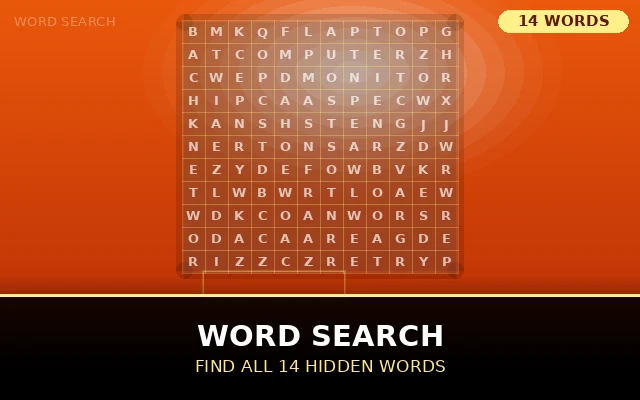
Challenge your brain with our classic Word Search puzzle. Find hidden words in t...
Play Now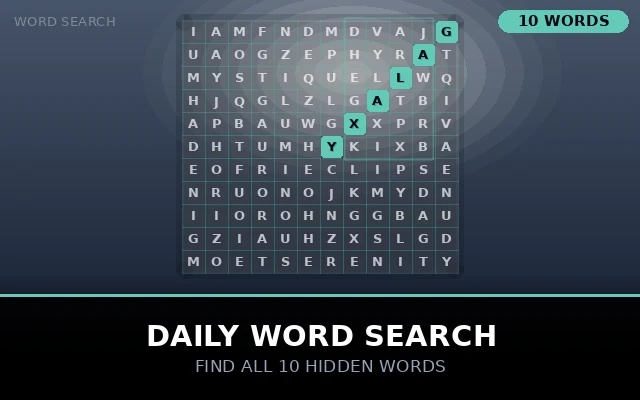
Start your day with a brain-boosting Daily Word Search! Fresh vocabulary, fun ch...
Play Now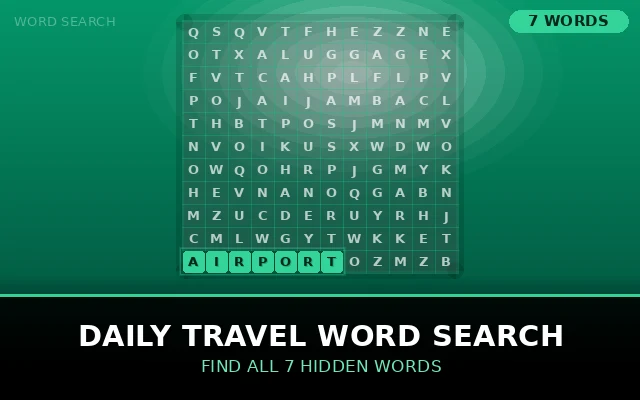
Play our free Daily Travel Word Search puzzle. Find airport, luggage, journey, a...
Play NowJoin our free Daily Word Search Leaderboard. Solve puzzles, track your score, and compete to become the daily champion.
Challenge your brain with our classic Word Search puzzle. Find hidden words in the grid and sharpen your focus. Free to play online no sign-up needed.
Play Now
Start your day with a brain-boosting Daily Word Search! Fresh vocabulary, fun challenges, and zero cost. Play free online at it wordsearch no sign-up.
Play Now
Play our free Daily Travel Word Search puzzle. Find airport, luggage, journey, and more hidden words. New travel themes updated daily.
Play NowDaily Word Search Leaderboard Guides & Articles
Daily Word Search Leaderboard: Climbing the Ranks One Puzzle at a Time
Solving a word search alone can be satisfying, but knowing exactly how you stack up against other players adds an entirely new dimension to the experience. This is the core appeal of a daily word search leaderboard, a feature that ranks solvers based on speed, accuracy, or overall performance, turning a simple daily puzzle into a competitive event with bragging rights on the line.
For players who enjoy tracking their progress and comparing results with others, a leaderboard system transforms word search solving from a private pastime into a shared, community-driven activity.
What Is a Daily Word Search Leaderboard
A daily word search leaderboard is a ranking system attached to a puzzle platform, typically updated once each day alongside a new puzzle. This ranking system serves as both a scoreboard and a motivational tool, giving players a tangible reason to return each day beyond the simple enjoyment of the puzzle itself. As players complete the day's word search, their performance, usually measured by completion time, is recorded and compared against other solvers. The fastest or most accurate players are then displayed at the top of the leaderboard, often alongside usernames, scores, and sometimes badges or achievements.
This system adds a layer of social competition to what is traditionally a solitary activity, encouraging players to return daily not just to solve a puzzle, but to defend or improve their ranking.
Why Leaderboards Make Word Search More Engaging
Human beings are naturally drawn to competition and comparison. A daily word search leaderboard taps into this tendency by giving players a clear, visible goal beyond simply finishing the puzzle. Instead of just completing today's grid, players are motivated to complete it quickly, accurately, and competitively, knowing that their result will be measured against others.
This added motivation often leads to increased engagement, with players returning daily not only out of habit but out of genuine interest in maintaining or improving their standing among fellow solvers.
- Daily Word Search
-
Word Search
-
Daily Word Search Streak
-
Word Search Daily Challenge
-
Daily Nature Word Search
The Vocabulary of Competition
Interestingly, the word lists featured in leaderboard-themed puzzles often reflect this competitive spirit directly. Words like champion, score, ranking, compete, fastest, winner, and records frequently appear, reinforcing the competitive nature of the puzzle even within its content. This thematic alignment between the puzzle's structure and its vocabulary creates a cohesive and immersive experience for players who enjoy this style of solving.
How Leaderboard Systems Typically Work
Most daily word search leaderboard systems follow a similar pattern. A timer begins as soon as the player starts the puzzle, tracking exactly how long it takes to find every hidden word. Once completed, this time is submitted and compared against other players who solved the same day's puzzle. Some platforms rank players purely by speed, while others incorporate additional factors such as accuracy, hints used, or overall consistency across multiple days.
Certain platforms also offer separate leaderboards based on categories, such as age group, region, or difficulty level, allowing players to compete within a more relevant peer group rather than against every solver globally.
Who Is Drawn to Leaderboard-Based Word Search
Competitive puzzle enthusiasts naturally gravitate toward this format, enjoying the opportunity to measure their skills against a broader community of solvers. Younger players and students often find leaderboards particularly motivating, as the gamified structure adds excitement to what might otherwise feel like a simple educational exercise. Even casual solvers sometimes find themselves drawn into the competitive aspect once they see their name appear on a leaderboard, even if their initial intention was simply to relax with a quick puzzle.
Building Consistency Through Competition
One notable side effect of leaderboard systems is the way they encourage consistency. Players who might otherwise solve puzzles sporadically often find themselves returning daily specifically to maintain their ranking or improve their position from the previous day. This creates a positive feedback loop where competition drives habit formation, and habit formation in turn drives continued mental engagement through regular puzzle solving.
Balancing Competition With Enjoyment
While leaderboards add an exciting competitive element, the best word search platforms manage to balance this with the inherently relaxing nature of the puzzle format itself. Rather than creating pressure, well-designed leaderboard systems frame competition as a fun, optional layer on top of an already enjoyable activity, allowing players who prefer a more casual approach to simply ignore the ranking system and solve at their own pace.
Tips for Climbing the Leaderboard
Players looking to improve their standing on a daily word search leaderboard often benefit from practicing regularly to build familiarity with common grid patterns and letter arrangements. Scanning for less common letters first can help narrow down word locations more efficiently. Reviewing the word list carefully before beginning the search allows players to visualize each word's length and shape, which can significantly speed up the solving process once the timer starts.
The Design Challenges Behind Fair Leaderboard Systems
Creating a leaderboard that feels genuinely fair requires careful design consideration. If puzzles vary too much in difficulty from day to day, comparisons between solvers can become meaningless, since a naturally harder puzzle will produce slower times across the board regardless of individual skill. To address this, well-designed platforms often calibrate their daily puzzles to maintain a consistent baseline difficulty, occasionally introducing special themed challenges that are clearly marked as separate from the standard ranking system. This careful balancing act is essential for maintaining a leaderboard that solvers genuinely trust and respect, rather than dismissing rankings as arbitrary or inconsistent.
Regional and Global Leaderboard Structures
Many daily word search leaderboard platforms offer more than a single global ranking. This tiered structure gives every solver a realistic shot at a top ranking within some relevant category, rather than forcing everyone to compete against a small handful of elite global solvers. Regional leaderboards allow players to compete against others in their own country or time zone, which can feel more relevant and achievable than competing against a worldwide pool of solvers. Some platforms also organize leaderboards by age group, recognizing that younger players and older adults may have different average solving speeds due to factors like reading experience, vision, or general familiarity with digital interfaces. This layered approach to ranking ensures that competition remains meaningful and motivating for the widest possible range of participants.
How Leaderboards Influence Puzzle Design
The presence of a leaderboard often shapes how puzzle creators design their daily grids. Designers must think not just about entertainment value but also about statistical fairness across thousands of daily participants. Knowing that solving times will be compared and ranked encourages designers to maintain consistent grid sizes, word counts, and difficulty levels, since wildly inconsistent puzzles would undermine the integrity of the ranking system. This has led to more standardized approaches to word search creation on leaderboard-based platforms compared to purely casual puzzle sites, where variation in difficulty matters less since there is no direct performance comparison between solvers.
The Emotional Experience of Leaderboard Competition
For many players, checking a daily word search leaderboard becomes an emotional experience in itself, separate from the puzzle solving. This emotional layer transforms a simple word game into something closer to a daily ritual, complete with its own small moments of triumph and mild disappointment. The anticipation of seeing where you rank, the satisfaction of climbing a few spots, or the motivation that comes from just missing a personal best time all contribute to a broader emotional engagement with the platform. This emotional investment helps explain why leaderboard-based word search platforms often report higher rates of daily return visits compared to puzzle platforms without any competitive ranking element.
Avoiding Burnout in Competitive Puzzle Formats
While competition can be motivating, it can also lead to burnout if not managed thoughtfully. Recognizing this risk early allows platform designers to build in safeguards that protect the overall enjoyment of the puzzle experience. Some players become overly focused on their ranking, turning what should be an enjoyable activity into a source of stress or frustration, particularly after a string of days where their ranking dropped. The best leaderboard-based platforms address this by including messaging that frames the leaderboard as a fun, optional feature rather than a mandatory performance metric, encouraging players to view their ranking as one small part of a broader, enjoyable puzzle-solving experience rather than the sole measure of their success.
The Future of Competitive Word Search Platforms
As digital puzzle platforms continue to evolve, leaderboard systems are likely to become even more sophisticated, potentially incorporating features like weekly or monthly ranking summaries, achievement badges for specific milestones, or social sharing options that let players celebrate their ranking with friends. These innovations reflect a broader trend across digital entertainment toward blending simple, classic gameplay with modern social and competitive features. These enhancements build on the core appeal of competitive word search solving while adding new layers of engagement that keep the format feeling fresh and relevant to a growing community of puzzle enthusiasts.
Conclusion
A daily word search leaderboard adds an exciting, community-driven layer to a classic puzzle format, turning solo solving into a friendly competition among players worldwide. By combining the mental benefits of word search puzzles with the motivational power of visible rankings, this format offers a uniquely engaging experience for solvers who enjoy tracking progress and striving to reach the top spot. Whether you are chasing a personal best or aiming for the number one ranking, this puzzle style proves that a little friendly competition can make daily brain training even more rewarding.