A Christmas Carol Word Search
Click and drag to select words
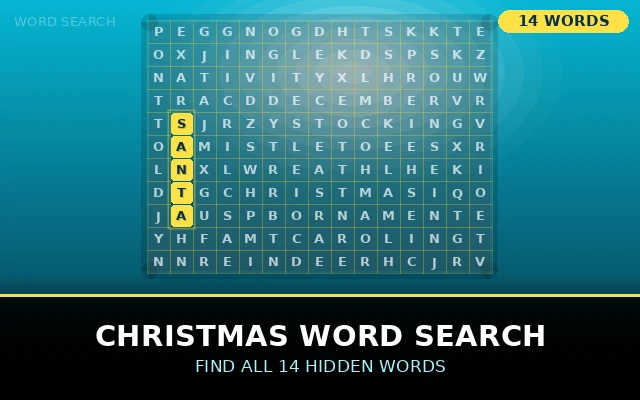
Santa, reindeer, snowflakes and more. Play our Christmas Word Search and enjoy t...
Play Now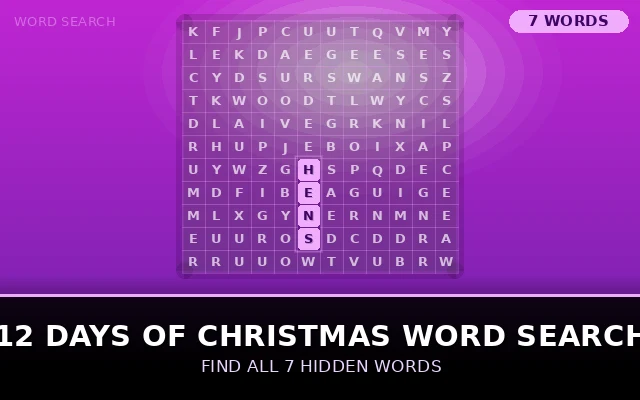
Find every gift from the classic carol in our free 12 Days of Christmas Word Sea...
Play Now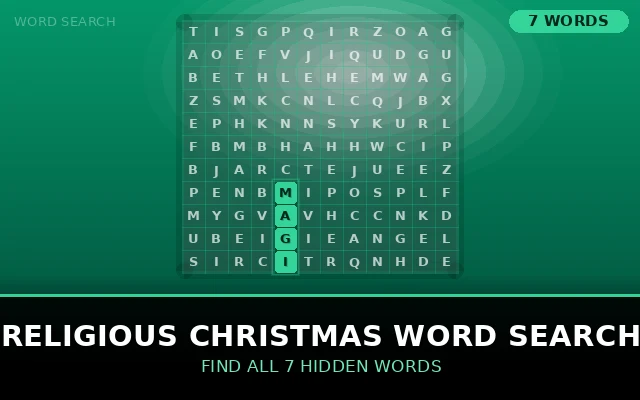
Play our free Religious Christmas Word Search featuring Bethlehem, Manger, Sheph...
Play NowPlay our free A Christmas Carol Word Search with Scrooge, Marley, Cratchit and more. A fun puzzle inspired by Dickens' beloved holiday tale.
Santa, reindeer, snowflakes and more. Play our Christmas Word Search and enjoy the festive holiday fun. Free online puzzle for kids and families no sign-up.
Play Now
Find every gift from the classic carol in our free 12 Days of Christmas Word Search. Partridges, drummers, swans and more hidden in one festive puzzle.
Play Now
Play our free Religious Christmas Word Search featuring Bethlehem, Manger, Shepherd, Nativity and more. A faith-filled holiday puzzle for kids and families.
Play NowA Christmas Carol Word Search Guides & Articles
A Christmas Carol Word Search: Built Around Dickens' Five Staves
Charles Dickens wrote A Christmas Carol in six weeks during the autumn of 1843, reportedly walking the streets of London late at night while working out the story in his head. He was under real financial pressure at the time his previous novel had sold poorly, and he needed a commercial success. He got one: the first print run of 6,000 copies sold out by Christmas Eve, and the book has never been out of print since.
Dickens divided the story into five chapters, which he called "staves" rather than chapters, borrowing the musical term for the lines of a musical staff a fitting choice for a book he subtitled "A Ghost Story of Christmas" and clearly intended to be read aloud, the way a carol is sung. An A Christmas Carol word search built around that same five-stave structure gives readers a way to move through the book in the order Dickens actually wrote it, rather than as a jumbled list of characters pulled from the story at random.
Stave One: Marley's Ghost
The book opens with one of the most quoted lines in English literature establishing, without ambiguity, that Jacob Marley is dead, "to begin with." From here, the stave introduces Scrooge in his counting house, dismissive of his nephew's Christmas cheer and two gentlemen collecting for the poor, before Marley's ghost arrives that night, dragging chains forged, as he explains, link by link during a lifetime of greed.
An It wordsearch puzzle covering just this stave would center on Scrooge, Marley, chains, and humbug Scrooge's now-famous dismissal of the holiday itself, a word that has outlived the book in everyday use far more than most people realize.
Stave Two: The First of the Three Spirits
The Ghost of Christmas Past arrives next, pulling Scrooge back through scenes from his own boyhood and young adulthood his lonely school days, his apprenticeship under the warm-hearted Fezziwig, and the painful end of his engagement to Belle, who leaves him once she recognizes that money has replaced her in his affections.
This section of the puzzle shifts away from the ghost story elements and toward Scrooge's personal history, making room for names like Fezziwig and Belle that rarely appear in film trailers or pop-culture references to the story, despite being central to understanding why Scrooge became who he is.
Stave Three: The Second of the Three Spirits
The largest and warmest stave in the book, this section introduces the Cratchit family's modest Christmas dinner, presided over by Bob Cratchit and his ailing youngest son. It is here that the phrase most people associate with the entire novella appears, spoken as a blessing over the meal.
A puzzle drawn from this stave leans on Cratchit, and the smaller, tender vocabulary that defines the family's scene a far cry from the grim chains of Stave One.
Stave Four: The Last of the Spirits
The tone turns cold and silent in the fourth stave. The final spirit, robed and wordless, shows Scrooge a death that no one mourns and belongings sold off without sentiment, before revealing an unmarked grave that forces Scrooge to confront his own mortality directly for the first time.
This stave is the shortest in vocabulary terms but the heaviest in tone, and a puzzle built from it tends to use words like grave and spirit rather than named characters, since the stave deliberately withholds identity until its final page.
Stave Five: The End of It
Scrooge wakes transformed, and the final stave moves quickly a turkey sent anonymously to the Cratchit household, a startled nephew whose dinner invitation is finally accepted, and a raise for Bob Cratchit delivered with uncharacteristic warmth. The book closes by noting that Scrooge became as good a friend, master, and man as the old city knew, and that he kept Christmas well ever after.
Why Organizing the Puzzle This Way Matters
Most word searches built around this story simply pool every character name together into one flat list, which works fine as a vocabulary exercise but flattens the actual shape of the book. Splitting the puzzle into five smaller sections, one per stave, mirrors how Dickens paced the story himself cold and haunted at the start, warm in the middle, briefly bleak, then resolved. A classroom working through the novella stave by stave can pair each reading assignment with the matching mini-puzzle, rather than being handed the full character list before they have met half of these people on the page.
An Ironic Title, and a Story Dickens Kept Retelling
There is a small irony built into the book's title: despite being called a carol, no one actually sings in it. Dickens borrowed the term for its structure rather than its content, treating the five staves as movements in a piece of music rather than chapters in a novel, which is part of why the book reads so differently from his longer, more sprawling works like Oliver Twist or David Copperfield.
Dickens did not simply publish the story and move on. Starting in 1853, he began performing abridged, one-man stage readings of A Christmas Carol across Britain and later the United States, acting out Scrooge, Marley, and the Cratchits himself in front of paying audiences. These performances became wildly popular in their own right, and some biographers argue the physical toll of touring and performing so intensely in his final years contributed to his declining health before his death in 1870. In a sense, Dickens turned his own book into the first adaptation of it, decades before film ever existed.
The Line Between the Book and Its Adaptations
Because so many readers meet this story through a film version before ever opening the book, some puzzles blend in details that come from adaptations rather than Dickens' original text inventions or expanded scenes that do not appear in the five staves at all. A puzzle built strictly from the staves as written gives students a way to check their own assumptions against the source material, which often turns into a useful classroom discussion on its own: which parts of what they thought they knew actually came from Dickens, and which were added later by a screenwriter.
Conclusion
A Christmas Carol word search does not have to treat the story as one big pile of names to sort through. Built stave by stave, the way Dickens structured it in six frantic weeks in 1843, the puzzle follows the same arc from a cold counting house to a warm, transformed Christmas morning giving readers a reason to notice the book's own shape, not just the names inside it.