Baking Word Search
Click and drag to select words
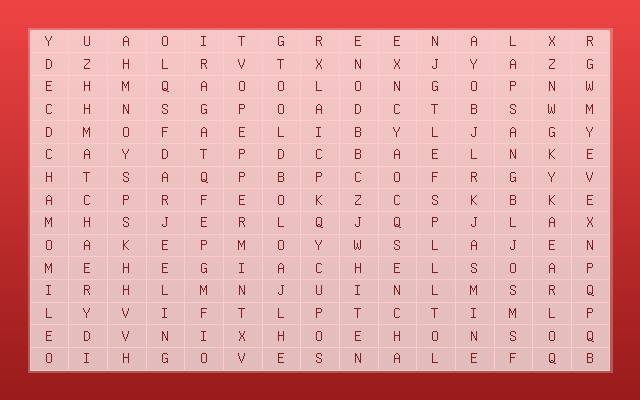
Green, oolong, chamomile and more. Play our Types of Tea word search and discove...
Play Now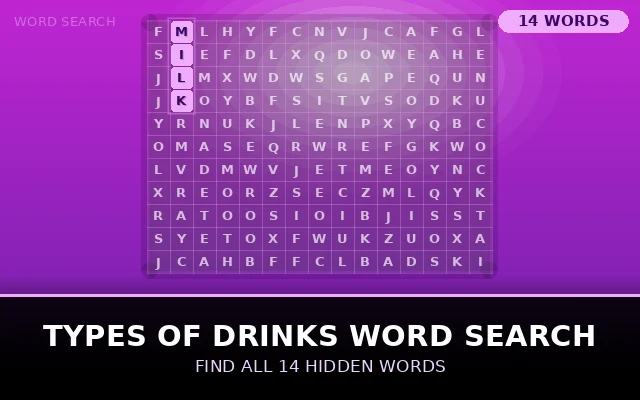
Juice, soda, smoothie and more hidden in the grid. Play our Types of Drinks word...
Play Now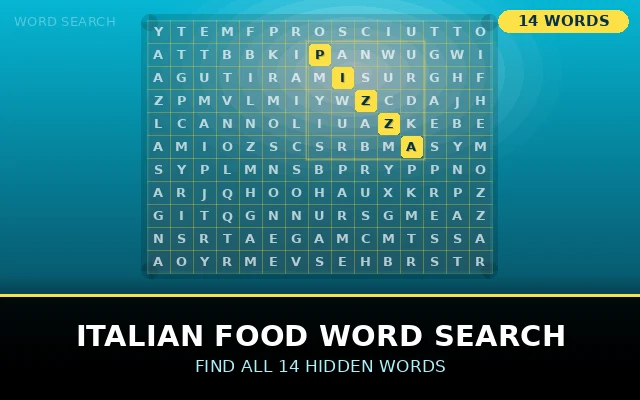
Pizza, pasta, risotto and more. Play our Italian Food word search and explore de...
Play NowFlour, dough, oven and more. Play our Baking word search and discover essential baking vocabulary. Free online puzzle for foodies no sign-up needed.
Green, oolong, chamomile and more. Play our Types of Tea word search and discover teas from around the world. Free online puzzle no sign-up needed.
Play Now
Juice, soda, smoothie and more hidden in the grid. Play our Types of Drinks word search and test your beverage knowledge. Free online no sign-up needed.
Play Now
Pizza, pasta, risotto and more. Play our Italian Food word search and explore delicious dishes hidden in the grid. Free online puzzle no sign-up needed.
Play NowBaking Word Search Guides & Articles
Baking Word Search
Bread rises because of a fight between gas and gluten. Yeast eats sugar and exhales carbon dioxide, and a stretchy web of gluten protein traps that gas instead of letting it escape, causing the dough to swell. Get the gluten too weak and the bread collapses; too strong and it stays dense. A baking word search hides words like Yeast, Flour, Knead, Whisk, Oven, and Batter in a grid, but each one represents a specific, almost chemical decision a baker makes before anything even goes in the oven.
The Four Ingredients That Explain Almost Everything
Nearly all baking, from a simple loaf to an elaborate layer cake, comes down to managing four categories: flour (structure), fat (tenderness), leavening (rise), and liquid (binding). Flour's protein content determines everything from bread's chewiness to cake's crumb bread flour runs around 12-14% protein for a strong gluten network, while cake flour sits closer to 7-9% for a delicate, tender texture. This is why swapping bread flour into a cake recipe often produces a tough, rubbery result: the same ingredient category behaves completely differently depending on its protein percentage.
Two Completely Different Ways to Make Something Rise
Words like "Yeast" and "Baking Soda" often appear in the same It wordsearch puzzle grid, but they represent entirely different chemical processes. Yeast is a living organism that produces carbon dioxide slowly through fermentation, which is why bread dough needs hours to rise, and why a warm kitchen speeds the process while a cold one slows it dramatically. Baking soda, by contrast, is a chemical base that reacts instantly with an acid buttermilk, lemon juice, brown sugar, or cocoa powder to produce gas immediately, no waiting required. Baking powder is baking soda pre-mixed with its own powdered acid, designed to activate in two separate stages: once when it gets wet, and again when it hits oven heat, a "double-acting" mechanism that gives baked goods a more reliable, predictable rise than baking soda used alone. Mixing these two up in a recipe, using soda where powder is called for, is one of the most common reasons a home baker's cake fails to rise properly despite following every other step correctly.
Why the Same Motion Ruins a Cake and Saves a Loaf
"Knead" is one of the more physically demanding words in a baking word search, and it exists for a precise reason: kneading develops gluten by physically stretching and aligning protein strands until they form an elastic network capable of trapping gas. Bread dough is kneaded extensively, often for ten minutes or more, because it needs a strong structure to hold air pockets during a long rise and to produce the chewy texture associated with a good loaf. Cake and muffin batters, on the other hand, are deliberately mixed as little as possible, stopped the moment ingredients are just combined, because overdeveloped gluten in a cake produces a tough, bread-like texture instead of the soft, tender crumb a cake is supposed to have. The instruction "do not overmix," found in nearly every muffin and cake recipe, is really a warning against accidentally kneading a batter that was never meant to be kneaded at all.
The Oven Dial Lies More Than Most People Realize
"Oven" might be the shortest word in a baking puzzle, but oven temperature is arguably the most misunderstood variable in home baking. Home ovens frequently run 25 degrees or more off their displayed setting, which is why professional bakers routinely use a separate oven thermometer rather than trusting the built-in dial. Temperature also shapes texture in specific, non-obvious ways: a very hot oven creates rapid steam and a strong initial burst of rise in bread, known among bakers as "oven spring," while a lower, longer bake in cakes allows gentler, more even cooking that prevents a domed or cracked top from forming as the edges set faster than the center.
Why So Much Baking Vocabulary Is French
Several terms found in baking-themed puzzles carry French names for a specific historical reason. "Meringue," made from whipped egg whites and sugar, and "Croissant," the laminated, butter-layered pastry, both trace back to French pâtisserie, which methodically codified and standardized baking technique between the 17th and 19th centuries in a way that eventually became the international standard taught in culinary schools worldwide, regardless of a baker's home country. A croissant's flaky layers, specifically, come from a technique called lamination, in which a block of butter is folded into dough repeatedly, creating dozens of paper-thin alternating layers of dough and fat that separate and puff dramatically in the oven's heat, a process that can take professional bakers two to three days from start to finish.
Sugar's Second, Quieter Job
Sugar in baking isn't only about sweetness it performs structural work most home bakers underestimate. Sugar attracts and holds moisture, which is part of why cookies made with more sugar spread thinner and stay softer for longer, while low-sugar recipes tend to produce drier, more crumbly results. Sugar also drives browning through the Maillard reaction, a chemical reaction between amino acids and sugars that occurs at high heat, the very same process responsible for a seared steak's crust meaning the golden color on a baked cookie and the crust on a grilled burger come from a closely related chemical event, just triggered by different foods.
Baking Powder's Surprisingly Recent Invention
Unlike yeast, which humans have used for thousands of years without fully understanding the biology behind it, baking powder is a distinctly 19th-century invention. It was developed in the 1840s specifically to give home bakers a fast, reliable, yeast-free way to leaven quick breads and cakes, and its invention roughly coincided with, and helped enable, the rise of the modern American cake culture that eventually produced recipes like the layer cake, a format that would have been far more difficult to leaven reliably using yeast alone.
Salt Isn't Just for Flavor Either
A pinch of salt in a bread recipe does more than season the final loaf it actively slows yeast fermentation, giving bakers more control over rise time and helping develop a stronger gluten structure by tightening the protein network as dough is kneaded. Bread made entirely without salt tends to rise too quickly and unevenly, producing a looser, weaker crumb, which is why professional bakers treat salt as a functional ingredient with real structural consequences, not merely a flavor add-in that could be left out without changing anything but taste.
Why Pie Crust and Bread Dough Are Handled So Differently
Pie dough follows an almost opposite set of rules from bread dough, and the reason again comes back to gluten. A good pie crust needs to stay tender and flaky rather than chewy, so bakers deliberately keep the butter cold and handle the dough as little as possible, cutting fat into flour in small pieces rather than fully blending it. Those small, unmelted pockets of cold butter create steam pockets during baking that separate the dough into flaky layers, a completely different mechanism from the gas-trapping gluten network that makes bread rise. Overworking pie dough, kneading it the way a baker would knead bread, activates unwanted gluten and produces a tough, dense crust instead of a light, flaky one a mistake nearly every beginner baker makes at least once before learning to handle pastry dough with a lighter touch.
Gluten-Free Baking Has to Rebuild the Whole System From Scratch
Because gluten's elastic, gas-trapping structure is so central to how conventional bread and cake recipes work, gluten-free baking can't simply swap in a different flour and expect the same results. Gluten-free flour blends typically combine several different starches and flours rice flour, tapioca starch, potato starch along with a binding agent like xanthan gum or guar gum, specifically to mimic, as closely as possible, the structural and elastic properties that wheat gluten would otherwise provide. This is part of why early gluten-free baked goods earned a reputation for being dense or crumbly: replicating gluten's unique combination of stretch and strength using entirely different ingredients turned out to be a genuinely difficult food science problem, one that commercial gluten-free flour blends have only gradually improved at solving over the past couple of decades.
Whisking, Folding, and Why Bakers Distinguish Between Them
"Whisk" and "Fold" might look like interchangeable synonyms for mixing to a beginner, but pastry chefs treat them as two very different physical actions with different purposes. Whisking incorporates air rapidly through a beating motion, essential for tasks like whipping egg whites or cream into a stable foam. Folding, by contrast, is a gentle, deliberate motion using a spatula to cut down through a mixture and turn it over itself, designed specifically to combine ingredients like folding whipped egg whites into a delicate soufflé base without knocking out the air that whisking just worked so hard to incorporate. Using the wrong technique at the wrong stage, whisking when a recipe calls for folding, can deflate a carefully built foam structure in seconds, undoing several minutes of prior mixing work.
Next time a word search hides "Yeast" a few squares away from "Knead," it's worth remembering those two words are really describing two halves of the same chemical event one producing the gas that makes bread rise, the other building a structure strong enough to hold that gas in until the oven's heat locks the shape permanently into place.
Related Keywords:
Cocktails Word Search
Types of Cheese Word Search
Street Food Word Search
Types of Tea Word Search
Vegetables Word Search
Breakfast Foods Word Search
Italian Food Word Search
Asian Food Word Search
Types of Food Word Search
Cooking Terms Word Search
Types of Drinks Word Search
World Cuisines Word Search
Desserts Word Search
Healthy Foods Word Search
Fast Food Word Search
Spices and Herbs Word Search
Conclusion
Try this baking word search puzzle and see how quickly you can find all 14 hidden baking words. Share this free puzzle with friends, students, or family members who love baking and word games.