Color Names Word Search
Click and drag to select words

Whiskers, Mittens, Tiger and more. Play our Cat Names word search and find purrf...
Play Now
Salmon, tuna, clownfish and more. Play our Fish Names word search and explore un...
Play Now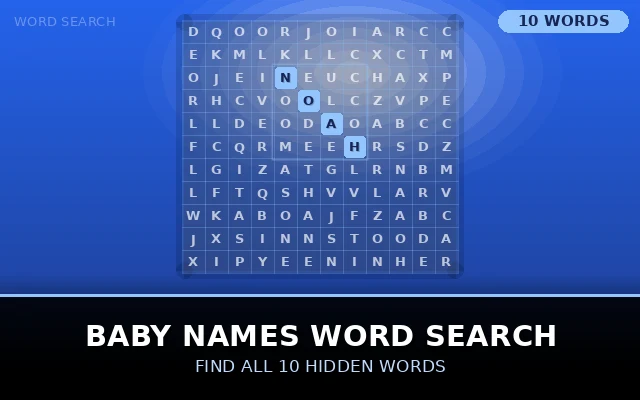
Discover popular baby names hidden in the grid. Play our Baby Names word search ...
Play NowRed, blue, violet and more hidden in the grid. Play our Color Names word search and explore the rainbow of language. Free online no sign-up needed.
Whiskers, Mittens, Tiger and more. Play our Cat Names word search and find purrfect name ideas hidden in the grid. Free online no sign-up needed.
Play Now
Salmon, tuna, clownfish and more. Play our Fish Names word search and explore underwater vocabulary. Free online puzzle no registration needed.
Play Now
Discover popular baby names hidden in the grid. Play our Baby Names word search — fun for parents and name lovers. Free online no sign-up needed.
Play NowColor Names Word Search Guides & Articles
The Complete Learning Guide to Colors, and the Language of Color Names Word Search
Introduction: Why Color Names Are One of the Most Searched Topics on Earth
Color is the first language
every human being learns. Long before a child can read a word, name an animal,
or count to ten, they are pointing at the sky and learning the word blue. They
are watching autumn leaves and hearing the word red. They are touching grass and
connecting the sensation to green. Color names are not just vocabulary. They
are the vocabulary that comes first, the words that organize the visible world
into categories our brains can hold, compare, and communicate.
This foundational relationship
between human beings and color names explains why color names consistently
ranks among the most searched topics on Google, with over 33,100 monthly
searches in the United States alone. Add in searches for green color names, red
color names, purple shades, blue shades, pink variations, and yellow tones, and
you are looking at hundreds of thousands of monthly searches for color
vocabulary across every demographic, age group, and professional field.
At itwordsearches.com, color
names word search puzzles sit at a beautiful intersection of these interests.
They combine the visual delight of color learning with the cognitive
satisfaction of puzzle solving. Whether a child is learning their first color
words, a student is expanding their artistic vocabulary, a graphic designer is
exploring shade terminology, or a curious adult is simply discovering that
there are far more names for green than they ever imagined, color names word
search puzzles deliver an experience that is simultaneously educational,
entertaining, and genuinely useful.
This guide covers everything you
need to know about color names. It explores the history of how colors got their
names, the psychology of color perception, the enormous diversity of shade
names across every major color family, the fascinating way different languages
and cultures name their colors, and practical guidance on using color names
word search puzzles as genuine learning tools. A thorough FAQ section at the
end addresses the most searched questions about color names on the internet
today.
The History and Etymology of Color Names
Color names have histories as
rich and unexpected as the colors themselves. Very few color names mean what
you would guess, and tracing their origins reveals a remarkable story about
human trade, conquest, art, science, and the natural world.
How Ancient Civilizations Named Their Colors
The oldest color names in most
languages are black and white, followed closely by red. This pattern appears so
consistently across unrelated languages and cultures that linguists have
proposed a universal sequence for color term development. A language acquires
black and white before any chromatic color, then red, then yellow or green,
then blue, then brown, then purple, pink, orange, and grey. No language in
documented history has acquired blue before red, or brown before green.
Red was named first among
chromatic colors likely because of its immediate survival relevance: blood,
fire, ripe fruit, and dangerous animals are all red. Ancient Egyptian artists
had six colors in their formal palette, and their word for red, desher, also
meant desert and danger, revealing how deeply color vocabulary was tied to
lived experience rather than abstract aesthetics.
The naming of blue presents one of the most fascinating puzzles in color linguistics. Ancient Greek, ancient Chinese, Japanese, and even early Biblical Hebrew had no dedicated word for blue as a distinct color, treating it instead as a shade of green or black depending on context. The sky was not called blue in ancient Greek epic poetry. The ocean was not blue. This has led some researchers to suggest that color terms only emerge when a culture has consistent, reproducible access to that color, whether through dyes, pigments, or materials. Blue pigments were extraordinarily rare and expensive in the ancient world, which may explain why the vocabulary for blue developed so much later than other color names.

Where Famous Color Names Actually Come From
Crimson derives from the Arabic
word qirmiz, referring to the kermes insect from which a deep red dye was
extracted. Scarlet similarly traces to a type of fine cloth rather than a
color, only later transferring its meaning to the vivid red hue associated with
that fabric. Vermillion comes from the Latin vermiculus, meaning little worm, again
referencing an insect-based red dye. The pattern reveals how many of our most
vivid color names were originally the names of dyestuffs, trade goods, or
materials before they became purely visual descriptors.
Turquoise takes its name
directly from the French word for Turkish, reflecting the route through which
this blue-green gemstone reached European markets. Magenta was named after the
Battle of Magenta in 1859, where a newly synthesized aniline dye happened to be
released in the same year as this bloody Italian conflict. Chartreuse is named
after the French monastery where the famous liqueur of that yellow-green color
was produced. Indigo traces through Portuguese from the Greek word for Indian,
reflecting where this precious blue dye was cultivated. Each of these names is
a compressed piece of history.
Color Names in the Modern Era: From Pantone to HTML
The twentieth century produced a
revolution in color naming. Industrial manufacturing required standardized
color references, leading to systems like the Pantone Matching System, RAL
color standards, and eventually web color standards with their hex codes and
RGB values. Suddenly it was not enough to say green. You needed to specify
whether you meant lime green, forest green, hunter green, sage green, olive
green, or any of dozens of other distinct formulations. The color names chart
expanded exponentially.
The HTML specification
introduced 140 named colors that became part of the foundational vocabulary of
web design. Names like cornflowerblue, mediumaquamarine, papayawhip, and
blanchedalmond entered the professional lexicon of millions of designers and
developers, creating an entirely new category of color names that blend the
poetic with the technical. The color names with hex codes that developers use
daily represent a genuinely new chapter in the ancient story of how humans name
what they see.
The Most Searched Color Family
With over 6,600 monthly searches
specifically for green color names, green is the most searched individual color
name category in the data set, and for good reason. Green has more named shades
than almost any other color, reflecting its enormous presence in the natural
world and its importance across culture, design, ecology, and art.
The Science Behind Why Green Has So Many Names
Human color vision is more
sensitive to distinctions within the green range than in almost any other part
of the spectrum. This is an evolutionary adaptation: our ancestors needed to
distinguish between ripe and unripe fruit, edible and poisonous plants, healthy
foliage and diseased vegetation. The human eye contains more green-sensitive
cone cells than any other type, which means we genuinely perceive more
gradations of green than of most other colors. More perceptual distinctions
naturally produce more vocabulary to describe them.
The Spectrum of Green Shade Names
From the palest sage and celadon
at one end to the deepest hunter green and forest green at the other, the green
color family encompasses extraordinary diversity. Emerald references the deep,
vivid green of the precious gemstone, a color so associated with wealth and
beauty that Ireland has been called the Emerald Isle for centuries. Jade takes
its name from a gemstone with a more muted, grey-green tone that has been
central to Chinese culture and art for thousands of years.
Olive green occupies a warm,
yellow-toned section of the green spectrum, its name drawn from the fruit
rather than the tree. Moss green is soft, muted, and slightly grey, evoking
damp woodland floors. Mint green is cool, pale, and slightly blue, named after
the herb whose leaves have exactly this fresh, light tone. Teal sits at the
boundary between green and blue, named after the common teal duck whose eye
stripe displays this distinctive dark blue-green color.
Chartreuse sits at the
yellow-green boundary, a color so unusual in its position between two primaries
that many people disagree about whether it is a shade of green or a shade of
yellow. Lime green is vivid and electric, named after the citrus fruit. Pistachio
is pale and creamy, named after the nut. Avocado green, which had an extended
period of popularity in 1970s interior design, is darker and more muted. Fern
green, clover green, shamrock, viridian, verdant, and celadon each occupy their
own distinct position in the green color names palette, and each one tells a
story about the natural world, human craftsmanship, or cultural association.
Passion, Power, and Endless Variation
Red color names attract 3,600
monthly searches, reflecting the enduring human fascination with the most
emotionally charged color in the spectrum. Red is the color of blood, fire,
love, danger, revolution, and celebration simultaneously, and this multiplicity
of meanings has generated an extraordinarily rich vocabulary of shade names.
Understanding Red Shade Names
Crimson is one of the oldest and
most celebrated red color names in the English language, a deep, slightly
blue-toned red that has been associated with royalty, religious ceremony, and
military honor for centuries. Its blue undertone distinguishes it clearly from
scarlet, which leans toward orange and is associated with brightness and
urgency. The phrase scarlet letter specifically exploits the vivid,
attention-commanding quality of that particular red shade.
Burgundy takes its name from the
wine-producing region of France, a deep red with significant purple and brown
undertones that evokes richness, warmth, and sophistication. Maroon is
similarly deep but leans toward brown rather than purple, named from the French
word for chestnut. Carmine is a vivid, slightly acidic red derived historically
from the cochineal insect, used extensively by Aztec cultures and later prized
by European painters. Vermillion is a bright, orange-leaning red historically
made from mercury sulfide, one of the most important pigments in art history.
Coral, Rose, and the Warm Red Adjacent Shades
The warm edge of the red
spectrum generates its own cluster of beloved color names. Coral sits at the
boundary of red and orange, named after the marine organism whose skeletal
material displays this warm, peachy-red color. Salmon is lighter and softer,
with significant pink and orange tones mixed into a color that has become
enormously popular in interior design and fashion. Rose is the classic soft
red, cooler and more pink than coral, carrying centuries of romantic and
botanical association.
Rust occupies the darker, more
orange end of warm reds, an earthy color associated with aged iron and autumn
landscapes. Terra cotta, meaning baked earth in Italian, is a warm brownish-red
that has been central to Mediterranean architecture and pottery traditions for
millennia. Brick red is similarly earthy and warm, while tomato red is the
vivid, slightly orange-tinged red of the ripe fruit, one of the most immediately
recognizable shades in the entire red family.
Mystery, Royalty, and Lavender Dreams
Purple shade names generate
6,600 monthly searches, matching green as the most searched color family in the
data set. Purple has one of the most fascinating histories of any color name,
and its shade vocabulary is among the most evocative and poetic in the entire
color names spectrum.
The Historical Rarity That Created Purple's Royal Associations
Tyrian purple, extracted from the
murex sea snail along the coast of ancient Phoenicia, required thousands of
snails to produce a single gram of pigment. The smell of the production process
was reportedly nauseating. The resulting color was reserved exclusively for
royalty, high priests, and emperors because only they could afford it. The
phrases born to the purple and royal purple both trace directly to this ancient
economic reality. Purple's association with power, mystery, and luxury is not
an arbitrary cultural invention. It is the direct legacy of scarcity.
Violet, Lavender, Mauve, and the Soft Purple Family
Lavender is one of the most
beloved soft purple names, taking its name from the flowering herb that
displays exactly this pale, grey-toned purple. The color has become almost
universally associated with calm, relaxation, and gentle femininity, appearing
everywhere from aromatherapy packaging to nursery walls. Lilac is similarly
soft but warmer and slightly more pink, named after the flowering shrub. Both
lavender and lilac are considered among the most popular color names for babies
and nursery design.
Violet is the pure spectral
purple visible at the far end of the rainbow, distinguishable from purple in
that it is a single-wavelength color rather than a mixture. Mauve, named from
the French word for the mallow flower, is a dusty, grey-toned purple that was
the first synthetic aniline dye ever produced, developed accidentally by an
eighteen-year-old chemistry student in 1856. Periwinkle is a mid-toned
blue-purple named after the small flowering plant, a color that sits
beautifully between blue and purple and has become increasingly popular in
contemporary design.
Plum, Eggplant, and Amethyst
At the deeper end of the purple
spectrum, the names become richer and more dramatic. Plum is a deep, dark
purple with significant red undertones, named after the fruit. Eggplant, called
aubergine in British English, is an extraordinarily deep purple bordering on
black, a color that has become highly fashionable in interior design and
fashion. Indigo, which sits between blue and violet on the visible spectrum, is
a deep blue-purple historically associated with the natural dye from the indigo
plant and now one of the seven colors of the traditional rainbow.
Amethyst takes its name from the
purple gemstone, a medium-deep purple with cool blue undertones that has been
associated with clarity of mind and spiritual protection in various traditions.
Mulberry is dark and slightly warm, named after the berry. Orchid is a medium,
warm purple named after the tropical flower. Fuchsia, named after the botanical
genus rather than the German botanist Leonhart Fuchs, is an intense, almost
electric pink-purple that sits at the most vivid extreme of the purple color
names spectrum.
From Blush to Hot Pink and Everything Between
Pink color names attract 2,900
monthly searches, reflecting the enormous cultural significance and astonishing
variety within this color family. Pink is not simply a light version of red. It
is a distinct color with its own shade vocabulary, cultural history, and
psychological associations.
The Cultural History of Pink as a Color Name
The word pink as a color name
has an unexpected botanical origin. It derives from the Dianthus flower,
commonly called pinks or carnations, because the petal edges of these flowers
appear as though they have been cut with pinking shears, giving a distinctive
notched edge. The color of these flowers gave the word pink its chromatic meaning
in English. Before the seventeenth century, what we now call pink was typically
described as pale red or light rose.
The gendering of pink as a
specifically feminine color is surprisingly recent. Throughout the nineteenth
century and into the early twentieth century, pink was considered the more
appropriate color for boys because it was seen as a diluted version of the
strong, masculine red. Blue was considered more delicate and appropriate for
girls. This assignment reversed completely in the mid-twentieth century,
demonstrating that color name associations are cultural constructions rather
than natural or universal truths.
The Full Spectrum of Pink Shade Names
Blush is perhaps the most
elegant and widely used of all soft pink names, a pale, warm pink with
significant peach undertones that has become one of the dominant colors in
contemporary interior design and wedding aesthetics. Rose quartz, made famous
by its selection as the Pantone color of the year in 2016 alongside serenity
blue, is similarly pale but cooler and more grey-toned.
Baby pink is the classic pastel,
a very pale, almost white pink associated with nurseries and gentle softness.
Bubblegum pink is brighter and more saturated, carrying associations of
playfulness and sweetness that its name perfectly communicates. Flamingo is a
medium pink with slight orange warmth, named after the bird whose feathers
display this distinctive coral-touched pink. Carnation pink is the clear,
medium pink of the flower, while petal pink is softer and more neutral.
Hot pink and magenta occupy the
vivid extreme of the pink spectrum. Hot pink is a fully saturated, electric
pink with no white mixed in, a color associated with bold fashion statements
and vibrant pop aesthetics. Magenta sits at the boundary between pink and
purple, an intense color that exists outside the traditional rainbow spectrum
and which the human eye perceives through a combination of red and blue cone
signals rather than a single wavelength.
Blue and Blue-Green Color Names Depth, Calm, and the World of Cyan
Blue and blue-green color names
generate substantial search interest, with blue shades attracting 1,000 monthly
searches and blue-green names attracting 1,900. The blue color family is one of
the most psychologically powerful in human experience, consistently ranking as
the world's most popular color in global surveys across different cultures and
demographics.
Why Blue Has So Many Named Shades
Blue's dominance in global color
preference surveys has given it an unusually rich shade vocabulary. Sky blue,
baby blue, cerulean, cobalt, sapphire, navy, royal blue, steel blue, denim,
cadet blue, slate blue, powder blue, cornflower blue, and midnight blue each
describe meaningfully different positions within the blue spectrum, and each
name carries its own set of cultural, emotional, and aesthetic associations
that distinguish it from its neighbors.
Cerulean deserves particular
attention as one of the most evocative blue color names. Derived from the Latin
word for sky, cerulean is the clear, pure blue of a cloudless daytime sky. It
sits at the lighter end of the blue spectrum and carries associations of
openness, clarity, and peaceful vastness. Cobalt blue is significantly deeper
and more intense, a vivid blue named after the metallic element used to create
blue glass and ceramics since ancient times. Sapphire blue references the
precious gemstone, a deep, slightly violet-toned blue that has been associated
with wisdom and divine favor in numerous religious traditions.
Teal, Cyan, and the Blue-Green Color Names
The blue-green family generates
its own fascinating cluster of color names. Teal, as mentioned earlier, bridges
blue and green and has become one of the most popular colors in contemporary
design and branding. Its name comes from the Eurasian teal duck, and it
occupies a position that feels simultaneously cool and organic, making it
versatile across an enormous range of design contexts.
Cyan is the pure blue-green of
printing technology, one of the four colors in CMYK printing systems, and its
name comes from the Greek word for dark blue. Aqua sits slightly warmer and
lighter than cyan, evoking clear water and tropical seas. Turquoise, as noted
in the historical section, takes its name from the trade route through which
its namesake gemstone reached Europe, and its particular blue-green sits
between sky blue and true green in a way that feels genuinely unique and
irreplaceable. Seafoam is a pale, slightly grey blue-green that evokes ocean
foam and coastal landscapes with extraordinary precision.
Yellow, Orange, and Brown Color Names Warmth, Earth, and Sunlight
Yellow color names attract 1,600
monthly searches, reflecting this color's importance in design, safety
communication, and cultural symbolism. Orange and brown color names carry
significant search interest as well, particularly in design, interior
decoration, and art contexts.
Yellow Shade Names From Lemon to Gold
Yellow's shade names span an
extraordinary range from the palest butter and cream through vivid lemon and
canary to the deep warmth of amber and golden yellow. Butter yellow is warm and
slightly orange-tinted, soft and comforting in interior contexts. Canary
yellow is the classic vivid yellow of the bird, fully saturated and
attention-commanding. Sunshine yellow sits between canary and gold, warm and
energetic.
Amber is technically more orange
than yellow, but it occupies a warm golden-yellow position in most color naming
contexts, evoking fossilized tree resin, autumn light, and aged honey. Gold is
richer and warmer, a yellow with significant orange and brown undertones that
creates its characteristic sense of luxury and warmth. Mustard yellow is deeper
and more muted, an earthy yellow with significant brown tones that has been a
recurring presence in fashion and interior design across multiple decades.
Earth, Spice, and Autumn Orange and Brown Color Names
Orange color names draw from the
natural world with particular richness. Pumpkin orange, burnt orange,
tangerine, mandarin, copper, rust, and terracotta each occupy distinct
positions within the orange spectrum. Burnt orange is one of the most popular
orange shades in interior design and fashion, a deep, slightly darkened orange
with brown undertones that feels simultaneously warm and sophisticated. Sienna,
named after the Italian city famous for its reddish-brown soil, is an earthy
orange-brown used by artists for centuries.
Brown color names are among the
most grounded and earthy in the entire palette. Chocolate, chestnut, mahogany,
walnut, espresso, caramel, toffee, tan, khaki, beige, taupe, and sand each
describe meaningfully different brown positions. Mahogany references the deep
reddish-brown wood used in fine furniture. Espresso is the darkest, richest
brown, barely distinguishable from black. Caramel and toffee evoke warm, golden
browns. Sand and beige move toward the pale, almost-neutral end of the brown
spectrum.
A Global Perspective Color Names in Different Languages
Color naming varies
fascinatingly across languages, and understanding these variations adds
significant educational depth to any color names word search puzzle experience.
Japanese Color Names and Their Unique Beauty
Japanese has one of the richest
color naming traditions in the world, with particular depth in the naming of
blues and greens. The Japanese word ao historically covered both blue and
green, a pattern that reflects the linguistic point that color boundaries are
cultural rather than natural. Modern Japanese has developed more distinct
terms, but the overlap between blue and green persists in certain traditional
contexts. Japan also has an extraordinary vocabulary of poetic color names drawn
from nature: hanasurume for the pink of dried squid, tokiwa for the deep green
of cypress trees, and rurikon for the deep blue of lapis lazuli.
Japanese color names are
particularly beautiful in the context of word search puzzles because they
introduce learners to sounds and meanings that are genuinely novel. Discovering
that the Japanese word for sky blue is sorairo, literally sky color, or that
momo-iro means pink and translates as peach color, creates a memorable learning
experience that a simple English-only puzzle cannot provide.
Color Names in Spanish, French, and Other European Languages
Spanish color vocabulary reveals
interesting cultural patterns. The Spanish word for brown, marrón, comes from
the same French root as maroon. Interestingly, Spanish uses the word moreno to
describe both dark brown hair and dark skin tones, a color term that functions
as a social descriptor in ways that color names rarely do in English. The
Spanish word for pink, rosado, means literally rose-like, while the French rose
similarly connects pink directly to the flower.
French color names have
contributed extensively to English color vocabulary. Beige is a French word
meaning undyed or natural, reflecting the original undyed wool color. Taupe
comes from the French word for mole, the small mammal whose grey-brown fur
gives the color its name. Maroon comes from the French word for chestnut.
Cerise means cherry in French. These borrowed color names represent a living
layer of French cultural influence in English visual vocabulary.
Color Names and Cultural Color Symbolism
Color names carry different
emotional and cultural meanings in different societies, and these meanings have
influenced how colors are named and used. White in most Western traditions is
associated with purity and weddings. In several East Asian traditions, white is
associated with mourning and funerals. Red in Chinese culture carries powerful
associations with luck, celebration, and prosperity. Green in many Islamic
traditions carries sacred significance. Understanding these cultural dimensions
transforms color names from simple vocabulary words into windows onto genuinely
different ways of experiencing and valuing the visible world.
Color Names Word Search Puzzles as Educational Tools
The itwordsearches.com approach
to color names word searches turns what could be a simple vocabulary exercise
into a genuinely rich learning experience. Understanding why these puzzles work
educationally helps both puzzle builders and users get maximum value from the
format.
How Word Search Puzzles Build Color Vocabulary
Vocabulary acquisition research
consistently shows that words are learned most effectively when encountered in
multiple modalities: seen, heard, connected to meaning, and used in context.
Color names word search puzzles engage visual recognition and create a
memorable moment of discovery when each word is found. When puzzle word lists
include brief meanings or origins, the discovery moment connects visual
recognition with semantic understanding, creating a stronger memory trace than
either alone would produce.
Repeated scanning of color names
in a grid also creates familiarity with the visual forms of unusual color
words. Someone who has scanned a puzzle grid containing chartreuse, viridian,
celadon, and vermillion for several minutes will recognize those words far more
quickly the next time they encounter them in a design brief, a paint chart, or
an art history textbook. Passive recognition is a genuine form of vocabulary
learning, and word search puzzles are uniquely efficient at building it.
Color Names Puzzles for Different Age Groups and Learning Goals
For young children learning
basic color names, a simple puzzle with eight to twelve core colors in a small
grid provides the right level of challenge and the right vocabulary scope. The
goal at this level is reinforcing the connection between the written word and
the color concept, building the foundation for more advanced color vocabulary.
For older children and students,
themed color name puzzles introduce shade vocabulary within specific color
families. A puzzle dedicated entirely to green shade names introduces mint,
sage, olive, emerald, teal, jade, and moss in a context that naturally
encourages comparison and categorization. Students begin to understand that
colors exist on spectrums and that human beings have developed rich
vocabularies to describe the differences they perceive.
For adult learners, art
students, and design enthusiasts, advanced color names word searches can
incorporate technical color terms, historical pigment names, and
cross-linguistic color vocabulary. A puzzle featuring Prussian blue,
vermillion, alizarin, cadmium yellow, and viridian introduces the vocabulary of
classical painting while simultaneously functioning as a fascinating art history
lesson. A puzzle featuring color names from five different languages turns the
search into a genuine multicultural learning experience.
Read More: Color Names
Building the Perfect Color Names Word Search Puzzle
Creating a high-quality color
names word search for itwordsearches.com requires thoughtful curation, careful
grid construction, and attention to the learning experience each puzzle
delivers.
Selecting Color Names That Create Great Puzzle Experiences
The best color names for word
search puzzles are those with interesting shapes. Long words with unusual
letter combinations create satisfying, challenging finds that reward careful
searching. Words like chrysocolla, xanthic, amaranth, heliotrope, and glaucous
create genuine discovery experiences because most solvers will not have
encountered them before and will need to search systematically rather than rely
on word recognition shortcuts.
Mixing word lengths creates the
rhythmic variety that makes puzzles satisfying rather than frustrating. Include
a handful of short, familiar color names of four to five letters alongside
medium names of six to eight letters and a few long, rare names of nine to
twelve letters. This distribution means every solver gets early wins, sustained
engagement, and occasional triumphant discoveries.
Thematic Consistency and Its Educational Benefits
Themed color word searches,
where every word belongs to a single color family or a specific category such
as gemstone-inspired colors, food-inspired colors, or nature-inspired colors,
deliver better educational outcomes than mixed-category puzzles. The thematic
unity creates a context that helps solvers retain vocabulary. Finding coral,
salmon, rose, blush, magenta, fuchsia, carnation, and flamingo in a single
puzzle creates a mental map of the pink color family that persists long after
the puzzle is completed.
Adding brief etymology notes or
cultural associations to the word list transforms a vocabulary puzzle into a
genuine learning document. A solver who discovers that the color ecru takes its
name from the French word for unbleached and refers to the natural off-white
color of raw linen learns something genuinely interesting about both color
vocabulary and textile history. These moments of contextual learning are what
distinguish an educational puzzle from a mere entertainment activity.
Conclusion: The Endless Depth of Color Names
The world of color names is far
larger, older, and more fascinating than most people ever realize. What begins
as a simple children's exercise in learning red, blue, and green opens into a
vast landscape of linguistic history, cultural psychology, perceptual science,
artistic tradition, and global cultural exchange. Every color name carries
within it a compressed story about the world that named it.
At itwordsearches.com, color
names word search puzzles provide the perfect format for exploring this
richness. The grid-scanning process builds familiarity with unusual vocabulary.
The moment of discovery creates memorable learning experiences. Thematic organization
helps solvers build mental maps of color families and their relationships. And
the educational context provided alongside each puzzle transforms entertainment
into genuine knowledge.
Whether you are a designer
searching for the precise name of a shade you need to specify, a teacher
looking for an engaging vocabulary activity, a puzzle enthusiast who loves
discovering words you never knew existed, or simply someone who has always
wondered why there are so many different words for green, the color names word
search experience offers something genuinely valuable. The spectrum of human
color vocabulary is as broad and varied as the spectrum of visible light
itself. And we have barely begun to explore it.