Flower Names Word Search
Click and drag to select words
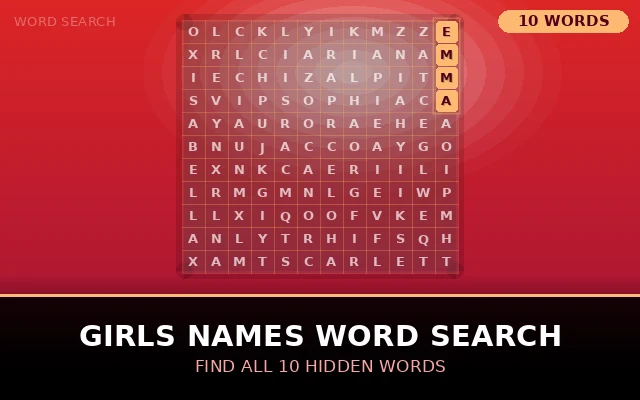
Discover popular girls names hidden in the grid! Play our Girls Names word searc...
Play Now
Toyota, Ferrari, Tesla and more hidden in the grid. Play our Vehicle Names word ...
Play Now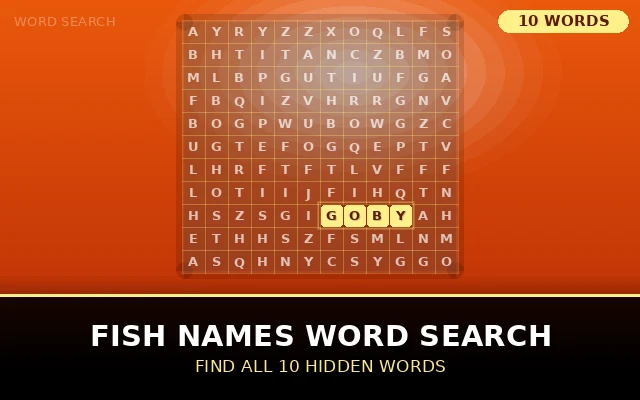
Salmon, tuna, clownfish and more. Play our Fish Names word search and explore un...
Play NowRose, tulip, daisy and more. Play our Flower Names word search and discover beautiful blooms hidden in the grid. Free online puzzle no sign-up needed.
Discover popular girls names hidden in the grid! Play our Girls Names word search — fun for parents-to-be. Free online puzzle no sign-up needed.
Play Now
Toyota, Ferrari, Tesla and more hidden in the grid. Play our Vehicle Names word search and find famous car brands. Free online no sign-up needed.
Play Now
Salmon, tuna, clownfish and more. Play our Fish Names word search and explore underwater vocabulary. Free online puzzle no registration needed.
Play NowFlower Names Word Search Guides & Articles
Flower Names: The Ultimate Word Search Guide
Introduction: Where Word Searches and Flowers Bloom Together
There is
something deeply satisfying about finding a hidden word in a word search puzzle that moment of recognition when your eye suddenly traces the letters of a
name you were hunting for. And when those hidden words are flower names, the
experience takes on an extra layer of beauty. Flowers are among the oldest,
most universal symbols of human culture. Every civilization on earth has named
them, celebrated them, painted them, and built languages around them. A word
search built around flower names is not just a puzzle it is a garden of
knowledge waiting to be explored.
This guide is
your complete companion to flower names in the context of word searches.
Whether you are a teacher building a classroom activity, a gardening enthusiast
who loves puzzles, a parent looking for educational content for children, or
simply someone who wants to sharpen their knowledge of botanical vocabulary,
this article covers it all. From common flower names and rare exotic blooms to
flower names by color, season, meaning, and origin every angle of this
subject is explored here in depth.
We will also
look at how flower names appear in puzzles, what makes certain names more
common in word searches than others, and how understanding the structure and
origin of flower names can give you a genuine competitive advantage the next
time you sit down with a flower-themed word search puzzle. By the end of this
guide, you will not just know more flower names you will understand them in a
way that makes them genuinely memorable.

Why Flower Names Make Perfect Word Search Material
Flower names
occupy a unique and special place in word search design. They are familiar
enough that most people recognize them, yet diverse enough to span beginners to
experts. They range from short, punchy three-letter names to long, flowing
botanical terms that stretch across an entire row of a puzzle grid. They carry
cultural weight everyone knows what a rose or a tulip is but the world of
flowers is also vast enough that even dedicated gardeners encounter names they
have never heard before.
The structure
of flower names also makes them ideal for word search puzzles. Many flower
names contain unusual letter combinations think of the double letters in
daffodil, the exotic consonant cluster in chrysanthemum, or the surprising
vowel run in petunia. These features make flower names visually distinctive in
a grid of random letters, creating satisfying moments of discovery when the
solver's eye finally locks onto the pattern.
From an
educational standpoint, flower name word searches serve multiple learning goals
simultaneously. They build vocabulary and spelling skills, introduce children
and adults to the natural world, and create opportunities to discuss the
history, symbolism, and science of plants. A well-designed flower names word
search is not just entertainment it is a gateway into botany, language,
culture, and art.
Flower names
are also among the most searched topics in the word search space. People
regularly search for flower names with pictures, flower names and meanings,
flower names starting with specific letters, and flower names by color. All of
these categories translate naturally into word search themes, making flower
names one of the richest possible subjects for puzzle design.
Common Flower Names: The Foundation of Every Floral Word Search
Every flower
word search whether designed for young children, adult hobbyists, or serious
botanists starts with a core group of common flower names that form the
backbone of the puzzle. These are the names that most people recognize, the
flowers that appear in gardens, grocery stores, wedding arrangements, and
greeting cards around the world.
Common flower
names are popular in word searches precisely because they strike the right
balance between familiarity and challenge. A word like 'Rose' is instantly
recognizable but might still be tricky to locate in a densely packed grid. A
word like 'Tulip' is well-known but requires careful attention to the letter
sequence to distinguish it from similar patterns in the surrounding letters.
Understanding
why certain flower names are considered 'common' helps puzzle creators and
solvers alike. A flower's commonality in word searches is influenced by several
factors: how widely the flower is cultivated and sold, how often its name
appears in literature and media, how recognizable it is across different
cultures, and how suitable its letter structure is for word search placement.
Names that are moderately long typically between five and ten letters work
especially well in puzzle grids because they are long enough to be distinctive
but short enough to fit comfortably in standard grid sizes.
Short Flower Names in Word Searches
Short flower
names those with three to five letters are valuable in word searches
because they can be placed diagonally, backwards, and in tight spaces within
the grid. They often serve as the 'connector' words that link longer names and
fill the grid efficiently. Their brevity also makes them slightly harder to
spot amid the surrounding letters, adding a layer of difficulty to even
straightforward puzzles.
Short flower
names are also among the most searched terms in the broader flower naming
space. Searches for flower names with specific letter counts are extremely
common, reflecting how frequently these terms appear in educational puzzles,
crossword clues, and trivia games. Solvers who memorize common short flower
names gain a significant advantage in timed word search competitions.
Long Flower Names in Word Searches
On the other
end of the spectrum, long flower names particularly botanical and scientific
names are prized in advanced word search puzzles for the visual impact they
create. A fourteen-letter flower name stretching across an entire row of a grid
is unmistakable once spotted, but it requires the solver to hold a long
sequence of letters in mind while scanning the puzzle.
Flower names
that are long in everyday usage not just in scientific classification are
particularly interesting. Some of the world's most beloved flowers have names
that are surprisingly long and complex, filled with double letters, silent
consonants, and unexpected vowel combinations. Mastering these long flower
names is one of the most rewarding challenges in floral word search solving.
Flower Names by Color: Painting Your Word Search in Bloom
Color is one
of the most natural and intuitive ways to organize flower names both for
gardeners who want to design a visually cohesive planting scheme and for word
search creators who want to build thematically rich puzzles. Flower names by
color are among the most frequently searched combinations in the entire floral
vocabulary space, and for good reason: color is the first thing most people
notice about a flower.
Red Flower Names
Red flowers
carry some of the most powerful symbolic meanings in human culture passion,
love, courage, and sacrifice. Red flower names are popular in word searches
themed around romance, Valentine's Day, and celebration. The challenge for
puzzle solvers is that many red flower names share similar letter patterns,
requiring careful attention to distinguish one from another in the grid.
The world of
red flowers is remarkably diverse, spanning delicate woodland blooms and bold
tropical showpieces. Some red flowers are named directly for their color, while
others carry names that reflect their geographic origin, their shape, their
scent, or the person who first catalogued them. This diversity of naming
origins makes red flower names particularly interesting from a linguistic and
historical perspective.
Yellow Flower Names
Yellow
flowers are associated with sunshine, happiness, and new beginnings. Yellow
flower names are popular in spring-themed word searches and in puzzles designed
to celebrate cheerful, upbeat themes. Many yellow flowers have names that
reflect their brightness with words from Latin and Greek that mean 'golden',
'shining', or 'sun-like' embedded in their botanical titles.
From wild
meadow flowers to carefully cultivated garden varieties, yellow blooms span an
enormous range of shapes, sizes, and habitats. Their names reflect this
diversity, encompassing everything from single-syllable everyday names to
complex multi-syllable botanical terms. Yellow flower names with pictures are
among the most searched visual content in this category, reflecting how
strongly people associate these flowers with their cheerful color.
Purple and Lavender Flower Names
Purple
flowers occupy a special place in the floral vocabulary, associated with
royalty, mystery, spirituality, and creativity. Purple flower names are popular
in word searches themed around elegance, magic, and the natural beauty of wild
landscapes. The word 'lavender' itself both a flower name and a color
descriptor is one of the most recognized and beloved terms in the entire
floral lexicon.
Lavender
flower names and purple flower names frequently overlap, as many flowers in
this color range have names that explicitly reference their hue. Others carry
names derived from the mythology, history, and cultural traditions of the
regions where they grow. This cultural richness makes purple flower names some
of the most narratively interesting in any word search collection.
White Flower Names
White flowers
are universal symbols of purity, peace, and reverence. White flower names
appear in word searches themed around weddings, memorials, spirituality, and
the quiet beauty of monochromatic garden designs. Some of the most elegant and
formally recognized flower names in the world belong to white-blooming species,
reflecting the flower's association with ceremony and significance.
White flower
names present a particular challenge in word searches because many of them are
long, formal, and filled with unusual letter sequences. They reward the solver
who takes the time to learn them properly each name carries a story of
discovery, cultivation, and cultural meaning that makes it genuinely worth
knowing.
Pink Flower Names
Pink flower
names represent one of the broadest and most beloved categories in floral
vocabulary. Pink flowers span an enormous range of shades from the palest
blush to the deepest fuchsia and the names given to pink blooms reflect this
variety. Pink flower names are popular in word searches for all ages and
occasions, from children's nature puzzles to sophisticated botanical vocabulary
challenges.
Many pink
flower names carry meanings related to affection, gentleness, grace, and
admiration reflecting the cultural associations that pink flowers have
developed across centuries of human cultivation and symbolism. Understanding
these meanings adds an extra dimension of appreciation to any flower names word
search.
Flower Names by Season: A Year-Round Word Search Calendar
One of the
most educational and enjoyable ways to organize a flower names word search is
by season. Different flowers bloom at different times of year, and
understanding this seasonal rhythm connects the abstract names in a puzzle grid
to the living, breathing world of natural cycles and botanical patterns.
Spring Flower Names
Spring flower
names are among the most joyfully anticipated in the entire floral vocabulary.
Spring flowers represent renewal, hope, and the return of warmth and color
after winter's grey months. Spring flower names word searches are enormously
popular for classroom activities, Easter celebrations, and garden planning
exercises.
The diversity
of spring blooms is extraordinary. From the earliest bulbs that push through
frozen ground to the cascading blossoms of ornamental trees, spring offers a
succession of flower names that build on one another throughout the season.
Many spring flower names have ancient roots they were among the first flowers
that early humans in temperate climates would have noticed and named, giving
them a special place in folklore, mythology, and literature.
Spring flower
names also tend to have particularly pleasing sounds they were often named to
reflect the brightness and freshness of the season, and this is reflected in
their light, open vowel sounds and gentle consonants. This acoustic quality
makes spring flower names satisfying to say aloud, which is why they appear so
frequently in poetry, songs, and children's rhymes.
Summer Flower Names
Summer flower
names reflect the fullness and abundance of the growing season at its peak.
Summer flowers tend to be bold, bright, and generous they bloom in profusion,
last for extended periods, and fill gardens with color and scent. Summer flower
names word searches are popular for outdoor-themed puzzles, gardening clubs,
and warm-weather educational activities.
The world of
summer flowers is extraordinarily diverse, spanning meadow wildflowers,
cultivated garden perennials, towering annuals, and delicate climbing vines.
This diversity is reflected in the range of names they carry from simple,
everyday names that every child knows to complex botanical terms that challenge
even experienced gardeners. Summer flower names that start with specific
letters are commonly searched, reflecting the use of these names in
alphabetically organized word searches and educational games.
Autumn Flower Names
Autumn flower
names carry a particular melancholy beauty they are the final flourish of the
growing season, the last burst of color before winter sets in. Many autumn
flowers have names that explicitly reference their late-season character, using
words from multiple languages that evoke the harvest, the changing leaves, and
the deepening chill of the year.
Autumn flower
names are less frequently encountered in general word searches than spring and
summer names, which makes them especially valuable in advanced puzzles designed
to challenge experienced solvers. Knowing the names of flowers that bloom in
autumn and being able to recognize them quickly in a puzzle grid signals a
genuine depth of botanical knowledge.
Winter Flower Names
Winter flower
names represent some of the most resilient and remarkable plants in the
botanical world. These are flowers that bloom in the coldest and darkest
months, often carrying symbolic associations with hope, endurance, and the
promise of seasons yet to come. Winter flower names are popular in
holiday-themed word searches and in puzzles designed to celebrate the quiet
beauty of the cold season.
Some winter
flower names have become so deeply embedded in cultural tradition that they are
recognized globally, associated not just with the flower itself but with entire
festive seasons and their accompanying emotions. These culturally loaded names
are among the most satisfying to find in a word search because finding them
feels like more than just locating a hidden word.
Flower Names by Origin: A Global Garden of Words
The names
given to flowers across different cultures and languages represent one of the
richest areas of botanical vocabulary. Flower names from around the world carry
the histories, aesthetics, and values of the civilizations that created them making a globally themed flower word search one of the most educational and
culturally enriching puzzles you can design.
Latin and Greek Flower Names
Many of the
most elegant and precise flower names come from Latin and Greek, reflecting the
scientific naming conventions developed by botanists over the past four
centuries. Latin flower names are the foundation of the formal botanical
classification system, and understanding them opens up a whole new layer of
meaning in every word search.
Latin flower
names often describe the plant's appearance, habitat, or properties with great
precision. The Latin words for colors, shapes, textures, and sizes are embedded
in these names, creating a kind of visual description encoded in a single word.
Solvers who learn the meanings of common Latin botanical roots such as words
meaning 'white', 'small', 'thorny', 'sweet-scented', or 'woodland' gain a
powerful tool for recognizing and remembering unfamiliar flower names.
Greek flower
names carry a different character they often reflect the mythology and
storytelling traditions of ancient Greece, embedding legends of gods, heroes,
and nymphs into the names of ordinary garden flowers. These mythological
connections make Greek-origin flower names some of the most narratively
interesting in any word search, each one carrying a story that spans thousands
of years.
Japanese Flower Names
Japanese
flower names occupy a unique and celebrated place in world botanical culture.
Japan's deep appreciation for seasonal change, natural beauty, and the symbolic
language of flowers has produced a flower naming tradition that is unmatched in
its poetic depth and cultural resonance. Japanese flower names and their
meanings are widely searched, reflecting global interest in the intersection of
language, culture, and natural beauty.
The Japanese
tradition of Hanakotoba the language of flowers assigns specific meanings
to individual blooms, creating a complex symbolic vocabulary that was
historically used to communicate emotions and intentions without words.
Understanding this tradition adds an entirely new dimension to any word search
featuring Japanese flower names, transforming each hidden word into a message
as well as a botanical term.
Some Japanese
flower names have crossed language barriers and entered English usage directly reflecting the global reach of Japanese horticultural expertise and the
universal appeal of the flowers themselves. These borrowed names appear regularly
in word searches targeting intermediate and advanced solvers.
French Flower Names
French flower
names carry an inherent elegance that reflects France's long tradition of
formal garden design, perfumery, and floral artistry. French flower names
appear in word searches themed around art, fashion, romance, and European
cultural history. Many English flower names have French origins borrowed
during the centuries when French was the prestige language of European courts
and culture.
French flower
names often feature the distinctive sounds and letter combinations of the
French language the silent final consonants, the nasal vowels, the flowing
liquid sounds that give French its characteristic musicality. Recognizing these
patterns helps word search solvers identify French-origin flower names quickly
in a puzzle grid, even when the name is unfamiliar.
Flower Names and Their Meanings: The Hidden Language of Blooms
One of the
most fascinating aspects of flower names is the meanings embedded within them both the etymological meanings encoded in the name's linguistic origin and the
cultural meanings assigned to each flower through centuries of human tradition.
Flower names and their meanings are among the most frequently searched
combinations in this topic area, reflecting how powerfully people connect the
names of flowers to their emotional and symbolic significance.
The practice
of assigning meanings to flowers known as floriography or the language of
flowers its peak in the Victorian era, when elaborate codes of floral
symbolism allowed people to communicate feelings that polite society did not
permit to be expressed directly. A carefully chosen bouquet could convey love,
admiration, jealousy, grief, or congratulation all without a single spoken word.
The names of the flowers in that bouquet carried the meaning, and knowing those
names was essential to understanding the message.
Today, flower
names and meanings continue to be deeply relevant in contexts ranging from
wedding planning and memorial design to personal tattoo choices and the
symbolism of gifts. A word search built around flowers and their meanings can
serve as both an entertaining puzzle and a genuinely educational exploration of
cultural history. Flower names with meaning are consistently among the most
searched terms in this entire topic area.
Understanding
the meanings of flower names also helps word search solvers in a subtle but
important way: the more personal connection a solver has to a name the more
they know about what it represents and why the more likely they are to
recognize it quickly in a puzzle grid. Knowledge and recognition are closely
linked in word search solving, and the meanings of flower names provide one of
the richest forms of that connecting knowledge.
Rare and Exotic Flower Names: Advanced Word Search Territory
Every serious
word search enthusiast eventually encounters the challenge of rare and exotic
flower names terms that go far beyond the everyday vocabulary of casual
gardeners and delve into the specialized world of botanical collectors,
tropical horticulturalists, and plant scientists. Rare flower names and exotic
flower names are popular search topics precisely because they represent
knowledge that most people do not have, making them both valuable and
satisfying to acquire.
Rare flower
names often come from plants that are difficult to cultivate outside their
native habitats, exist only in remote or protected locations, or have only
recently been discovered and formally classified. Their names frequently
reflect the extraordinary circumstances of their existence they might honor
the scientist who discovered them, describe the remote region where they were
found, or encode in Latin some remarkable feature of their biology or
appearance.
Exotic flower
names, on the other hand, are flowers that are well-known in their native
regions but unfamiliar in others blooms from tropical rainforests, mountain
meadows, desert environments, or island ecosystems that have not yet achieved
global recognition. These names carry the flavors of distant places and
different botanical traditions, making them some of the most geographically and
culturally interesting terms in any flower word search.
In word
search puzzles, rare and exotic flower names typically appear in advanced or
expert-level challenges. Finding them requires not just careful scanning of the
grid but also the kind of deep botanical vocabulary that comes from sustained
study and genuine enthusiasm for the subject. Solvers who learn these names
gain access to a whole world of puzzle content that remains invisible to more
casual players.
Flower Names for Girls: A Blooming Tradition of Naming
One of the
most enduring intersections of floral vocabulary and human culture is the
practice of using flower names as given names for people particularly for
girls and women. Flower names for girls are enormously popular search terms,
reflecting how widely this naming tradition is practiced and how deeply it
resonates across different cultures and generations.
The practice
of naming children after flowers has ancient roots in many cultures. In
English-speaking societies, flower names for girls became especially
fashionable during the Victorian era the same period that saw the peak of
floriographic tradition and the formalization of flower symbolism. Names like
Rose, Lily, Violet, Iris, and Daisy became fixtures of the naming landscape
during this period, and many of them have remained popular ever since.
Flower names
that are used as human names present an interesting dual identity in word
search puzzles they can be placed legitimately in both a 'flower names'
puzzle and a 'girls names' puzzle, creating a pleasant overlap that many puzzle
designers exploit deliberately. Recognizing a word as both a flower and a name
adds an extra layer of recognition and satisfaction when that word is finally
located in the grid.
Beyond the
traditional English flower names, many cultures have developed their own
traditions of flower-based naming. Japanese, Indian, Persian, and Mediterranean
cultures all have rich vocabularies of flower names used as given names,
creating a truly global palette of flower-inspired personal names. These
cross-cultural flower name connections are a rich vein of content for
internationally themed word search puzzles.
Flower Names Starting with Specific Letters: The Alphabetical Puzzle
Alphabetically
organized word searches where all the hidden words begin with the same letter are among the most popular formats in educational puzzle design. Flower names
starting with specific letters are consistently among the most searched topics
in this area, reflecting how commonly this format is used in classroom
activities, language learning exercises, and letter-recognition games for
children.
Each letter
of the alphabet opens up a different garden of floral vocabulary. Some letters
yield an abundance of well-known flower names, while others lead to more
obscure and exotic territory. Understanding the distribution of flower names
across the alphabet helps puzzle creators design balanced, appropriately
challenging activities, and helps solvers develop more targeted search
strategies.
Flower names
starting with certain letters particularly those that are commonly searched
in word search contexts deserve special attention. The letters that generate
the most searches in this category tend to correspond to letters that produce
large numbers of familiar, widely cultivated flowers. Knowing which letters are
richest in flower vocabulary is a genuine strategic advantage for anyone
working with flower name word searches regularly.
Flower names
starting with a particular letter are also popular in educational activities
for children learning the alphabet. A 'flower alphabet' project where
students find a flower name for each letter of the alphabet is a classic
classroom exercise that combines botanical vocabulary with letter recognition,
making it one of the most educationally valuable uses of flower names in word
search format.
Scientific and Botanical Flower Names: The Language of Botanists
For those who
want to take their flower word search skills to the highest level, scientific
and botanical flower names represent the ultimate frontier. Scientific flower
names following the binomial nomenclature system established by Carl Linnaeus
in the eighteenth century provide a precise, universally applicable
vocabulary for identifying and discussing plants across all languages and
cultures.
Botanical
flower names follow strict rules of Latin and Greek grammar, and understanding
these rules transforms what might appear to be random strings of letters into
logical, meaningful descriptions. The genus name always capitalized typically describes some broad characteristic of the plant family, while the
species name always lowercase provides more specific information about that
particular variety. Together, they create a two-part name that is
simultaneously a precise scientific identifier and a miniature description of
the plant itself.
In advanced
flower word searches, botanical names present a unique challenge. Their Latin
and Greek roots create letter combinations that are unusual in everyday
English, making them harder to scan for visually but also more distinctive once
spotted. A solver who knows the common Latin roots for botanical names color
words, shape descriptions, geographic indicators, and size references can
recognize unfamiliar botanical names much more quickly than someone approaching
them as meaningless letter strings.
Botanical
names in word search puzzles also serve an important educational function.
Learning to recognize and spell botanical flower names develops a kind of
linguistic and scientific literacy that has applications far beyond word
puzzles. It connects the solver to a four-hundred-year tradition of botanical
scholarship and provides a foundation for understanding any plant-related
scientific text.
Flower Names in Literature, Art, and Culture
Flowers and
their names have played a central role in human artistic and literary
expression since the earliest written records. Understanding the cultural
presence of flower names how they appear in poetry, paintings, mythology, and
everyday speech adds a rich dimension of meaning to any flower word search
and helps solvers remember names by connecting them to stories and associations
they already know.
In poetry and
literature, flower names have been used as symbols, metaphors, and direct
objects of description for thousands of years. Many flower names carry specific
literary associations certain blooms are connected to particular poets,
specific emotions, or famous works of literature in ways that make the name
instantly evocative to readers who are familiar with those associations.
Recognizing these literary connections transforms the experience of finding a
flower name in a word search from a mechanical process into a moment of
cultural recognition.
In art
history, specific flowers appear so frequently in paintings across different
periods and traditions that their names have become shorthand for entire
aesthetic and symbolic traditions. The visual arts have also influenced how
flower names are used in design contexts including the design of word search
puzzles themselves, where flower names are sometimes incorporated into
decorative borders, illustrated themes, and visual backgrounds that reinforce
the botanical subject matter.
In
contemporary culture, flower names continue to permeate language and media in
ways that most people do not consciously notice. They appear in brand names,
product descriptions, song titles, film names, and everyday idiomatic
expressions. This cultural saturation means that most people already know far
more flower names than they realize the challenge in word search contexts is
activating that knowledge and applying it systematically to the task of finding
hidden words in a grid.
Strategies for Solving Flower Name Word Searches
Armed with a
broad and deep knowledge of flower names, you are ready to approach flower word
search puzzles with real confidence. But knowledge of the vocabulary is only
part of what makes a skilled word search solver. Strategy the systematic
application of that knowledge to the specific challenge of scanning a letter
grid is equally important.
Start with the Names You Know Best
The most
efficient approach to any word search is to begin with the words you are most
confident about the names you can spell perfectly and recognize instantly. In
a flower names word search, these are typically the most common and widely
known flower names. Starting with what you know builds momentum, reduces the
number of remaining words, and often clears space in the grid that makes
finding the remaining words easier.
Use Letter Length as a Navigation Tool
Flower names
that are very long or very short provide useful navigational anchors in a word
search grid. Long flower names particularly those with distinctive double
letters or unusual consonant combinations are visually distinctive and can
often be spotted by scanning specifically for those distinctive letter features
rather than searching for the name letter by letter from the beginning. Short
flower names, meanwhile, can be found by focusing on specific corners and edges
of the grid where shorter words are more commonly placed.
Recognize Color Prefixes and Nature Suffixes
Many flower
names follow predictable structural patterns. Names that begin with color
words, geographic descriptors, or size references and names that end with
common botanical suffixes derived from Latin or Greek can be identified by
scanning for these structural elements rather than the complete name. This
pattern-recognition approach dramatically speeds up the solving process for
experienced players.
Work Diagonally and Backwards
Beginner word
search solvers often overlook diagonal and backwards placements focusing only
on horizontal and vertical directions. In flower name word searches designed
for intermediate and advanced players, diagonal and reverse placements are used
extensively to increase difficulty. Developing comfort with scanning in all
eight directions is essential for solving these more challenging puzzles
efficiently.
Read More: Flower Names
Conclusion: A Garden of Words Worth Exploring
Flower names
are one of nature's most abundant gifts to the human vocabulary. They are
beautiful to look at, satisfying to say, rich in meaning and history, and
endlessly varied in their origins and structures. As word search puzzle
material, they are almost unmatched diverse enough to challenge experts,
familiar enough to welcome beginners, and meaningful enough to make the search
genuinely worthwhile.
This guide
has taken you through the full landscape of flower naming from the common
flowers that form the foundation of every floral puzzle to the rarest and most
exotic blooms that challenge even the most dedicated botanical enthusiasts. We
have explored flower names by color, by season, by geographic origin, by
meaning, by length, and by their uses in culture, literature, and personal naming
traditions. We have offered practical strategies for solving flower word
searches more effectively and answered the questions that people most
frequently ask about this rich and rewarding topic.
Whether you
are a puzzle creator looking for fresh material, a teacher designing an
educational activity, a gardener who loves language as much as plants, or
simply someone who finds joy in the intersection of words and the natural world the universe of flower names has something extraordinary to offer you. Every
name in that universe represents a living thing that grew somewhere on this
earth, was noticed and named by a human being, and was found beautiful enough
to be remembered and passed on.
The next time
you sit down with a flower names word search whether you are hunting through
a garden-themed grid at a kitchen table, exploring a digital puzzle on a
screen, or guiding a classroom of young botanists through their first encounter
with floral vocabulary carry with you the knowledge that every word you find
is more than a puzzle solution. It is a flower's name. And names, in the end,
are how we remember what we love.