Fairy Tales Word Search
Click and drag to select words
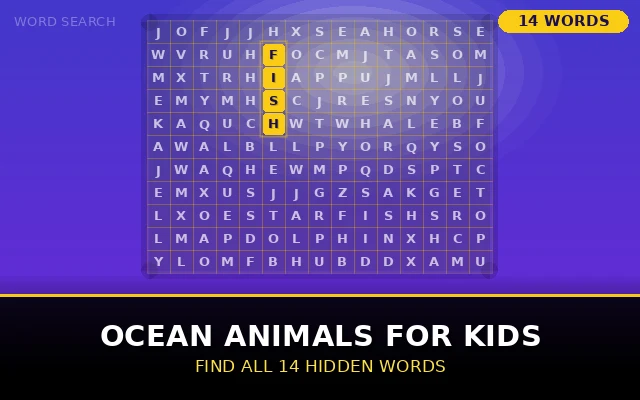
Our free Ocean Animals for Kids Word Search brings fourteen of these amazing sea...
Play Now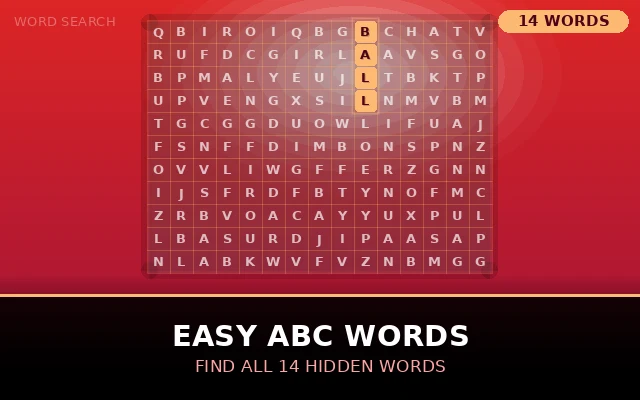
Our free Easy ABC Words Word Search hides fourteen short, beginner-friendly word...
Play Now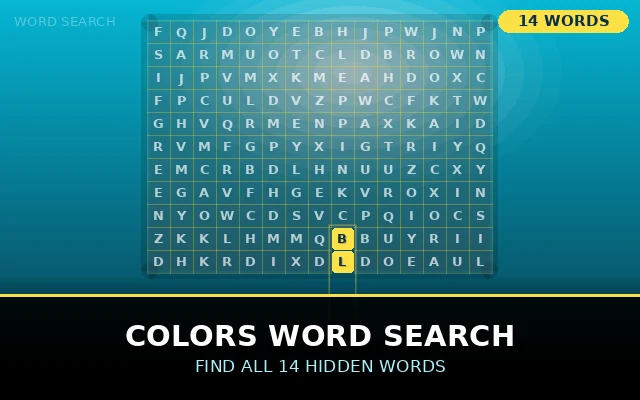
Our free Colors Word Search hides fourteen common color words inside a single le...
Play NowOur free Fairy Tales Word Search hides fourteen classic fairy tale words inside a single letter grid, giving young learners a magical, story-themed way to practice early reading skills using vocabulary drawn from some of the most beloved tales ever told.
Our free Ocean Animals for Kids Word Search brings fourteen of these amazing sea creatures together in one fun, easy-to-play puzzle, perfect for young learners who love the beach, aquariums, or simply anything that lives underwater.
Play Now
Our free Easy ABC Words Word Search hides fourteen short, beginner-friendly words inside a single letter grid, giving young learners a fun, low-pressure way to practice letter recognition, early spelling, and sight-word confidence all at once, one small successful discovery at a time.
Play Now
Our free Colors Word Search hides fourteen common color words inside a single letter grid, giving young learners a fun, hands-on way to connect the colors they already know with the written words that represent them.
Play NowFairy Tales Word Search Guides & Articles
Fairy Tales Word Search for Kids
"Once upon a time" are four of the most magical words in a young child's world, instantly signaling that a story full of castles, dragons, and happy endings is about to begin. Our free Fairy Tales Word Search hides fourteen classic fairy tale words inside a single letter grid, giving young learners a magical, story-themed way to practice early reading skills using vocabulary drawn from some of the most beloved tales ever told.
This fairy tales word search for kids is completely free to play, requires no download or sign-up, and works instantly in any browser on a computer, tablet, or phone. It's a wonderful early literacy activity for preschool, kindergarten, and early elementary classrooms, as well as a fun way for parents to extend storytime into an engaging follow-up reading activity at home.
Why Fairy Tale Vocabulary Sparks Such Strong Engagement
Fairy tales hold a nearly universal appeal for young children, and that appeal has remained remarkably consistent across generations. Whether a child's favorite version comes from a classic storybook, an animated film, or a bedtime story told from memory, fairy tales tap into a deep, natural love of magic, adventure, and imagination that few other story genres can match quite as reliably.
This built-in enthusiasm makes fairy tale vocabulary an unusually motivating theme for early reading practice. Children searching for words like CASTLE, DRAGON, and PRINCESS are drawing on vocabulary they've likely already encountered dozens of times through storybooks, movies, and bedtime stories, giving them a strong head start of oral familiarity even before they begin searching the grid. That existing familiarity helps build genuine reading confidence, since children aren't learning entirely new concepts, just connecting words they already know and love with their written form.
Meet the Fourteen Fairy Tale Words Hidden in the Grid
Castle — A large, fortified building often home to kings, queens, princes, and princesses throughout countless classic fairy tales.
Dragon — A large, often fire-breathing mythical creature commonly featured as either a fearsome villain or a surprising ally in fairy tale adventures.
Princess — A young female royal character frequently featured as the central figure in many classic fairy tales.
Prince — A young male royal character often portrayed as a hero or love interest throughout classic fairy tale stories.
Witch — A magical character, often portrayed as a villain, known for casting spells and creating potions in countless fairy tales.
Wizard — A magical male character often portrayed as wise or powerful, sometimes serving as a guide or mentor within a fairy tale.
Fairy — A small, magical winged creature often associated with granting wishes or offering magical assistance throughout a story.
Magic — Referring to supernatural powers or spells commonly featured as a central element throughout fairy tale storytelling.
Forest — A large, often mysterious wooded area frequently serving as the setting for adventure and discovery in classic fairy tales.
Giant — An enormous, often intimidating character featured in numerous classic fairy tales, sometimes as a villain and sometimes as a gentle figure.
Wolf — A cunning, often villainous animal character featured prominently in several beloved classic fairy tales.
Tower — A tall, narrow structure often used in fairy tales as a place where a character is kept hidden away.
Wish — Referring to a hoped-for outcome, often granted through magic, and a common central theme throughout many fairy tale plots.
Kingdom — A land ruled by a king or queen, commonly serving as the broader setting for classic fairy tale adventures.
Why Fairy Tale Themes Have Lasted for Generations
It's worth pausing on just how remarkably durable fairy tale vocabulary and themes have proven to be across generations of storytelling. Many of the words in this puzzle castle, dragon, witch, wizard, kingdom appear in stories that have been told and retold for centuries, passed down through oral tradition long before they were ever written into the storybooks children read today. This staying power isn't accidental. Fairy tales tend to explore simple, universal themes bravery, kindness, cleverness overcoming strength, good triumphing over evil using vivid, memorable imagery that sticks with young listeners and readers in a way more abstract lessons rarely do.
That same universal, memorable quality is part of what makes fairy tale vocabulary such an effective early reading theme. A word like DRAGON or WITCH doesn't just represent an isolated vocabulary item to memorize; it represents an entire cultural touchstone that most children have already encountered in some form, whether through a picture book, an animated film, or a story told by a grandparent. This puzzle taps directly into that deep well of existing cultural familiarity, giving children a genuine head start before they even begin searching the grid.
How to Play the Fairy Tales Word Search
This magical, story-themed puzzle is simple enough for young beginners to enjoy, whether played independently or alongside a parent or teacher:
- Look over the list of fourteen fairy tale words shown next to the puzzle grid.
- Scan the grid carefully, checking each row from left to right, then each column from top to bottom.
- Once a word is spotted, click and drag across the letters, or tap and swipe on a touchscreen device, to select it.
- Correctly found fairy tale words will highlight and disappear automatically from the remaining list.
- The puzzle is complete once all fourteen words have been found.
For younger children, it helps to connect each word to a specific fairy tale they already know and love. If a child is searching for the word DRAGON, ask them to name a story they know that features a dragon, reinforcing the vocabulary through a familiar, beloved story context rather than an isolated, abstract word.
Ocean Animals for Kids
Feelings and Emotions Word Search
Easy ABC Words
Colors Word Search
Numbers Word Search
Shapes Word Search
Animals for Kids Word Search
School Supplies Word Search
Playground Word Search
Fairy Tales Word Search
Connecting This Puzzle to Storytime
One of the most natural ways to use this fairy tale word search is as a follow-up activity after reading a favorite fairy tale together. After finishing a classic story featuring a princess, a castle, or a magical forest, this puzzle offers a perfect opportunity to revisit and reinforce that same story's vocabulary in a completely different, engaging format.
This kind of story-to-puzzle pairing helps deepen a child's engagement with the story itself, encouraging them to think more carefully about the specific words and concepts that made up the tale they just enjoyed. A child who just finished a story about a brave princess defeating a fearsome dragon to save her kingdom will likely find genuine excitement in spotting those exact same words PRINCESS, DRAGON, and KINGDOM hidden within the puzzle grid shortly afterward.
Building Imagination and Vocabulary Together
Fairy tales offer a uniquely rich vocabulary category because so many of the words are tied directly to imaginative, fantastical concepts rather than purely everyday objects. Words like WIZARD, FAIRY, and MAGIC introduce children to imaginative vocabulary they might not otherwise encounter as frequently in more everyday, practical word lists, like household items or common animals.
This blend of familiar structurecastles, kingdoms, forests and purely magical concepts dragons, wizards, wishes helps expand a child's vocabulary in genuinely exciting directions. Encountering and successfully reading a word like WIZARD or DRAGON for the first time can feel like a small triumph for a young reader, especially given how often these exact words appear throughout their favorite books, movies, and imaginative play.
Encouraging Creative Storytelling
Beyond simple word recognition, this fairy tale word search offers a wonderful springboard for creative storytelling practice. After completing the puzzle, consider challenging your child to invent their own short fairy tale using as many of the fourteen found words as possible. A child might create a brand-new story combining a princess, a wolf, a forest, and a wish, practicing early narrative and storytelling skills while reinforcing the exact vocabulary they just practiced in the word search.
This kind of open-ended creative extension helps move vocabulary practice beyond simple recognition and into genuine, active use. A child who can confidently use the word KINGDOM or CASTLE within their own invented story has moved well past simply recognizing that word in a puzzle grid, demonstrating a much deeper, more flexible understanding of its meaning and how it fits within a broader story context.
Using This Puzzle in the Classroom
Teachers running fairy tale or folktale units in early elementary classrooms will find this word search fits naturally alongside a wide range of complementary literacy activities. Pairing the puzzle with a classic fairy tale read-aloud, a simple story sequencing activity, or a creative writing exercise inviting students to write their own short fairy tale helps reinforce the same vocabulary through multiple engaging formats throughout a themed literacy unit.
This puzzle also works particularly well as a comparison activity across different classic fairy tales. After completing the word search, ask students which of the fourteen words appeared in which specific fairy tales they've read or heard, helping them notice recurring themes and vocabulary patterns that appear again and again across the broader fairy tale genre.
Tips for Parents Using This Puzzle at Home
At home, this fairy tale word search works beautifully as a bedtime wind-down activity, paired naturally with an actual bedtime story. Consider playing the puzzle together right after finishing a favorite fairy tale book, using it as a calm, engaging way to extend the magic of storytime just a little bit longer before lights out.
For families who enjoy imaginative play, this puzzle also pairs wonderfully with dress-up or pretend play activities. After finding the word PRINCESS or DRAGON in the puzzle, encourage your child to act out a scene using their own costumes or toys, blending vocabulary practice with the same kind of imaginative, story-driven play many children already naturally gravitate toward.
Conclusion
This free Fairy Tales Word Search for Kids brings the timeless magic of classic storytelling into a genuinely enjoyable early reading activity. From familiar favorites like PRINCESS, CASTLE, and DRAGON to more imaginative concepts like WIZARD, FAIRY, and MAGIC, all fourteen hidden words give young learners a joyful, story-rich vocabulary experience built on tales they likely already know and love. Whether used as a storytime follow-up activity at home or a classroom literacy unit extension, this puzzle proves that early reading practice can be every bit as magical as the fairy tales that inspired it, turning every hidden word into its own small, satisfying "happily ever after."