Action Heroes Word Search: History, Benefits, Strategies
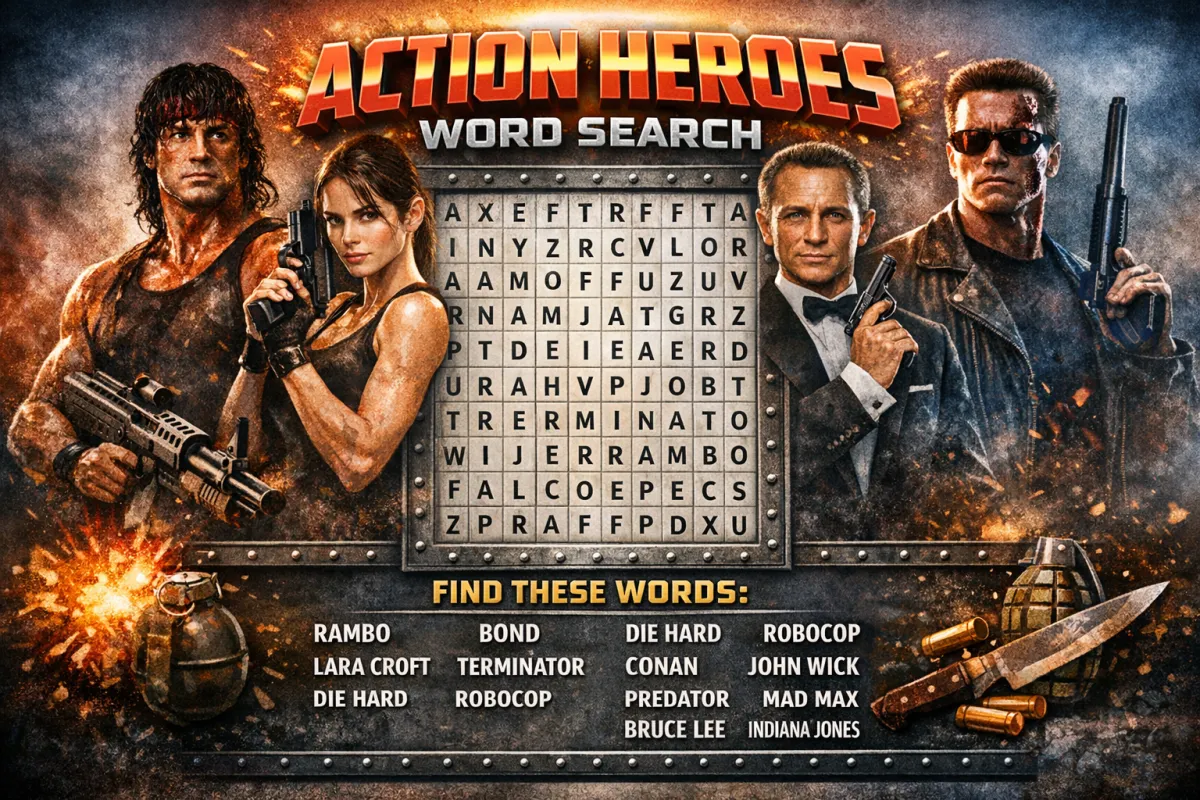
Whether you are a teacher planning a superhero-themed classroom activity, a parent searching for a screen-free weekend pastime, or a puzzle enthusiast who simply loves the thrill of hunting hidden words, the action heroes word search is one of the most versatile and rewarding activities you can pick up. But have you ever wondered where this tradition began? What makes a word search genuinely educational? How do professional puzzle designers build grids that challenge but never frustrate?
This in-depth guide goes beyond the basics. We will trace the fascinating origin of word search puzzles, explore the specific psychology of why action heroes themes make these puzzles so effective, break down proven solving strategies that experts use, and walk you through creating your own custom puzzle from scratch. By the end, you will see the action heroes word search in a completely new light.
The Surprising History of Word Search Puzzles
Most people never think about where word searches came from they simply grab a pencil and start scanning. But the backstory is surprisingly recent and quite interesting.
The modern word search puzzle was invented in 1968 by Norman E. Gibat, a teacher from Oklahoma, USA. He originally published it in a locally distributed newspaper called the Selenby Digest, intending it as a simple classroom enrichment activity for students who finished their work early. What started as a modest classroom handout quickly spread across the country as other educators and publishers recognized its appeal.
Within a decade, word searches had become fixtures in activity books, children's magazines, and daily newspapers worldwide. By the 1980s and 1990s, themed word searches including those featuring pop culture icons like action heroes became enormously popular. Publishers discovered that connecting a familiar, beloved subject to a puzzle dramatically increased engagement and completion rates.
Today, action heroes word search puzzles exist in every format imaginable: printed worksheets, downloadable PDFs, interactive mobile apps, and online browser-based games. The format has evolved, but the core satisfaction remains the same: the quiet thrill of spotting a hidden word in a sea of letters.
Puzzles:
Why Action Heroes? The Psychology Behind Themed Word Searches
Not all word searches are created equal. A puzzle about generic vocabulary words will always be less engaging than one featuring the names of your favourite superheroes. This is not simply a matter of personal taste there is real cognitive psychology behind it.
- The Surprising History of Word Search Puzzles
- Puzzles:
- Why Action Heroes? The Psychology Behind Themed Word Searches
- Emotional Investment Drives Attention
- Prior Knowledge Accelerates Recognition
- Motivation Through Cultural Identity
- The Genuine Educational Benefits of Action Heroes Word Searches
- Visual Scanning and Pattern Recognition
- Spelling Reinforcement Without Pressure
- Concentration and Sustained Focus
- Working Memory Development
- Vocabulary Expansion Through Context
- How Professional Puzzle Designers Build an Action Heroes Word Search Grid
- Curating the Word List
- Determining Grid Size
- Placing Words Strategically
- Filling the Remaining Grid Squares
- Testing and Calibrating Difficulty
- Expert Strategies for Solving Action Heroes Word Searches Faster
- Scan for First Letters Only
- Target Rare Letters First
- Work the Edges
- Cover the Grid Systematically
- Use the Word List Strategically
- Creating Your Own Action Heroes Word Search
- Define Your Purpose and Audience
- Build Your Hero Roster
- Choose Your Grid Dimensions
- Use an Online Generator or Build by Hand
- Design for Your Medium
- Add an Answer Key
- Action Heroes Word Search Across Different Age Groups
- Ages 5-7: Foundation Level
- Ages 8-11: Intermediate Level
- Ages 12-17: Advanced Level
- Adults: Expert Level
- Themes and Variations to Keep Things Fresh
- Using Action Heroes Word Searches in Educational Settings
- As a Vocabulary Pre-Teaching Tool
- As a Reading Fluency Builder
- As a Transition Activity
- As a Cultural Literacy Discussion Starter
- Conclusion
Emotional Investment Drives Attention
When a child searches for 'SPIDERMAN' or 'BATMAN' in a grid, they are not just looking for a sequence of letters they are connecting with a character they care about. That emotional investment dramatically increases attention span and persistence. Research in educational psychology consistently shows that learners engage longer and retain information better when the subject matter holds personal relevance.
Prior Knowledge Accelerates Recognition
Familiarity with a word helps the brain recognise it faster. A student who already knows the word 'WOLVERINE' will spot it in a grid more quickly than an unfamiliar word of the same length, because their brain has an existing neural pathway for that word. This pre-existing familiarity makes themed puzzles both more enjoyable and more rewarding.
Motivation Through Cultural Identity
Action heroes occupy a special place in popular culture. For many children and adults, these characters represent values bravery, justice, perseverance that feel personally meaningful. Solving an action heroes word search becomes a small act of celebrating those values, not just completing a task.
The Genuine Educational Benefits of Action Heroes Word Searches
Parents and educators sometimes dismiss word searches as purely recreational. In reality, when designed well, they deliver a range of measurable cognitive and academic benefits.

Visual Scanning and Pattern Recognition
Finding hidden words requires the eyes to move systematically across a grid, scanning for specific letter patterns. This strengthens visual discrimination the ability to notice fine differences between similar stimuli. This is a foundational skill for reading, where children must quickly distinguish between similar-looking letters and letter combinations.
Spelling Reinforcement Without Pressure
One of the most underrated benefits of word searches is passive spelling reinforcement. When a child searches for 'CAPTAIN' in a grid, they must hold the correct spelling in working memory and match it against the letters they see. This repetitive process cements spelling without the anxiety of a formal spelling test.
Concentration and Sustained Focus
In an age of constant digital distraction, the ability to focus on a single task for an extended period is increasingly valuable. Word search puzzles demand exactly this kind of sustained attention. Because the subject matter is engaging familiar action heroes solvers are more willing to maintain focus than they would be with a less interesting activity.
Working Memory Development
Holding a target word in mind while scanning a grid exercises working memory. For younger solvers, this might mean remembering four or five letters; for adults tackling complex puzzles, it might mean tracking longer character names with unusual letter combinations. Either way, the activity gives working memory a genuine workout.
Vocabulary Expansion Through Context
Beyond character names, well-designed action hero puzzles include thematic vocabulary: words like SHIELD, VILLAIN, AVENGER, KRYPTONITE, or NEMESIS. Encountering these words in a puzzle context without the pressure of a formal lesson allows learners to absorb new vocabulary naturally.
How Professional Puzzle Designers Build an Action Heroes Word Search Grid
Have you ever wondered what goes into creating a high-quality word search? It is a much more deliberate process than most people realise. Understanding this design process will help you appreciate the puzzles you solve and create better ones yourself.
Curating the Word List
The foundation of any word search is its word list. Professional designers start by defining their audience and theme. For an action heroes puzzle aimed at primary school children, the list might include short, familiar names: THOR, HULK, FLASH, BATMAN. For an adult collector's edition, the list might include more obscure character names, code names, and locations from specific storylines.
A well-balanced word list typically contains between 10 and 25 words, with a mix of short words (4-6 letters) and longer words (8-12 letters). Too many short words makes the puzzle too easy; too many long words can make it frustratingly difficult.
Determining Grid Size
Grid size must be proportional to the word list and target difficulty. A 10x10 grid works well for 10-15 shorter words in a beginner puzzle. A 20x20 grid can comfortably house 20-25 words of varying lengths for an intermediate challenge. Advanced puzzles sometimes use grids as large as 30x30, requiring solvers to adopt a highly systematic approach.
Placing Words Strategically
Words can be placed horizontally (left to right), vertically (top to bottom), diagonally (in four diagonal directions), and backwards in any of these directions. A beginner-level action heroes word search might limit placements to horizontal and vertical only. A challenging puzzle includes all eight directions.
Professional designers deliberately create intersections places where letters are shared between two different words. These intersections are what fill the grid efficiently, but they also create moments of confusion that make the puzzle more interesting to solve.
Filling the Remaining Grid Squares
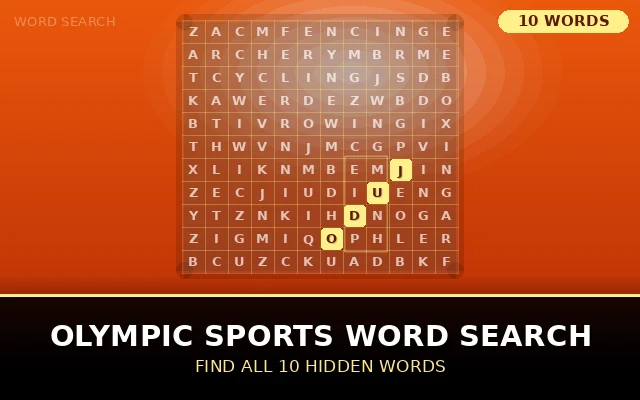
Once all words are placed, the remaining empty squares are filled with random letters. This sounds simple, but experienced designers are careful not to accidentally create recognisable words in the fill letters, as this creates false positives that frustrate solvers. They also avoid sequences of repeated letters that visually dominate the grid and give away word locations.
Testing and Calibrating Difficulty
A good puzzle designer always solves their own creation before publishing it. This testing phase reveals whether the puzzle is appropriately challenging, whether any words are impossible to find due to unlucky fill patterns, and whether the overall experience feels satisfying.
Expert Strategies for Solving Action Heroes Word Searches Faster
Most casual solvers approach word searches by randomly scanning the grid until their eye catches something. This works, but it is inefficient. Professional puzzle enthusiasts use structured techniques that dramatically reduce solving time and increase accuracy.
Scan for First Letters Only
Choose one word from your list and identify its first letter. Then scan the entire grid looking only for that specific letter. When you find it, check in each of the eight possible directions to see if the rest of the word follows. This focused approach is faster than trying to read every row and column simultaneously.
Target Rare Letters First
In action hero puzzles, words often contain unusual letters: the X in XAVIER or WOLVERINE, the Z in ZATANNA, the Q in QUICKSILVER. These rare letters appear infrequently in random fill, making them easy to spot. Find the rare letter first, then look outward from that point to identify the word.
Work the Edges
Many puzzle designers, particularly less experienced ones, tend to start placing words near the edges and corners of the grid. Experienced solvers often check edges first for this reason. Even if not always true, it is a quick initial scan that can yield fast early finds and build momentum.
Cover the Grid Systematically
Rather than jumping randomly around the grid, scan methodically left to right, row by row, from top to bottom. This systematic approach ensures you do not miss any section of the grid. Once you have completed one full pass, you can switch to a different pattern if needed.
Use the Word List Strategically
Not all words are equally hard to find. Start with the longest words on your list these are usually easier to spot because they have distinctive letter patterns and are harder to accidentally place in ways that blend into the fill. Once the long words are found, the shorter ones become easier to locate in the remaining space.
Creating Your Own Action Heroes Word Search
Creating a custom action heroes word search is a rewarding project for teachers, parents, party planners, and puzzle enthusiasts. Here is a practical, step-by-step approach.
Define Your Purpose and Audience
Before writing a single letter, clarify your goals. Who will be solving this puzzle? A group of 7-year-olds at a birthday party has very different needs from a class of 14-year-olds or a group of adult comic book fans. Your audience determines every subsequent decision: word length, grid size, vocabulary complexity, and direction rules.
Build Your Hero Roster
Compile your word list with your audience firmly in mind. For younger children, stick to single-name heroes: THOR, HULK, FLASH, ROBIN. For older solvers, include full names and aliases: BLACKPANTHER, GREENARROW, DAREDEVIL, SCARLETWITCH. Consider including thematic supporting words too not just hero names but related vocabulary like VILLAIN, POWERS, SHIELD, JUSTICE, COURAGE.
Aim for a list of 15-20 words. Remove any spaces from two-word names (so 'Black Panther' becomes 'BLACKPANTHER') to keep the grid manageable.
Choose Your Grid Dimensions
A practical rule of thumb: your grid should be at least as wide as your longest word, and large enough that words do not crowd each other. For a 15-word puzzle with words up to 12 letters long, a 15x15 or 16x16 grid works well. For a 20-word puzzle, step up to an 18x18 or 20x20 grid.
Use an Online Generator or Build by Hand
Several free online word search generators allow you to input your word list and automatically produce a print-ready puzzle. Tools like Discovery Education's puzzle maker, Puzzlemaker, or WordSearchFun.com are reliable choices. If you want more control over word placement and aesthetics, building by hand on graph paper gives you complete creative freedom.
Design for Your Medium
If your puzzle will be printed, ensure font sizes are large enough for your audience. Young children need larger grids with bigger letters; adults can manage smaller type. If creating a digital puzzle, test it on both desktop and mobile screens before distributing.
Add an Answer Key
Always create and keep an answer key. For classroom use, having the answer key allows you to quickly verify student answers. For party use, it helps resolve friendly disputes about word locations.
Action Heroes Word Search Across Different Age Groups
Ages 5-7: Foundation Level
At this age, puzzles should feature a small grid no larger than 8x8 with only 8 to 10 words. All words should be placed horizontally or vertically only, never diagonally or backwards. Font sizes should be large and easy to read. Word choices should be limited to single-syllable or very familiar names: THOR, HULK, FLASH, ROBIN.
Ages 8-11: Intermediate Level
This age group can handle a 12x12 to 15x15 grid with 12-18 words. Diagonal word placements can be introduced, and some longer character names become appropriate: SPIDERMAN, SUPERMAN, IRONMAN, BATGIRL. The word list can start including thematic vocabulary beyond hero names.
Ages 12-17: Advanced Level
Teenagers enjoy the challenge of a 15x20 or larger grid with 18-25 words placed in all eight directions, including backwards. Obscure character names, real names behind aliases (BRUCEBANNER, CLARKENT, TONYSTARK), and extended franchise vocabulary add genuine challenge.
Adults: Expert Level
Adult action hero enthusiasts appreciate puzzles that test their franchise knowledge. These can include character names from less mainstream titles, creator names (STANLEE, JACKKIRBY), publication names, and even storyline titles. Grids of 20x20 or larger with 25+ words in all directions provide a satisfying challenge that can take 30 minutes or more to complete.
Themes and Variations to Keep Things Fresh
One of the great strengths of the action heroes word search format is its flexibility. Once you understand the basic structure, you can create endless variations that keep solvers engaged.
Universe-Specific Puzzles: Focus exclusively on one franchise the Marvel Cinematic Universe, the DC Extended Universe, or a specific animated series. Franchise fans particularly appreciate this depth.
Era-Based Puzzles: Build a puzzle around heroes from a specific decade the golden age of comics in the 1940s, the silver age of the 1960s, or modern cinematic heroes from the 2000s onward.
Powers-Themed Puzzles: Instead of hero names, feature words related to superpowers: TELEKINESIS, SUPERSONIC, INVISIBILITY, SHAPESHIFTING. This adds an educational vocabulary dimension.
Crossover Challenge Puzzles: Mix heroes from different universes or media comics, film, animation, and video games creating a comprehensive challenge that rewards broad knowledge.
Real Name Revelation Puzzles: Feature the civilian identities of heroes, with the puzzle clue listing the hero name and solvers searching for the real name. This adds a quiz element to the word search format.
Using Action Heroes Word Searches in Educational Settings
For teachers and parents, these puzzles are far more than time-fillers. With thoughtful implementation, they become genuine learning tools.
As a Vocabulary Pre-Teaching Tool
Introduce a word search featuring vocabulary from an upcoming unit before teaching the content formally. Exposure to new words in a low-pressure puzzle format primes the brain to recognise and retain those words when encountered in formal instruction.
As a Reading Fluency Builder
For struggling readers, word searches provide a non-threatening way to practice letter recognition and sight word identification. The familiar action hero context provides motivation that traditional reading exercises may lack.
As a Transition Activity
Word searches are ideal for the five or ten minutes between structured lessons. They are engaging enough to maintain attention but do not require teacher instruction or supervision once distributed.
As a Cultural Literacy Discussion Starter
A well-designed action heroes word search can spark conversations about storytelling, heroism, cultural representation in media, and the values associated with different characters. These discussions extend the educational value far beyond letter recognition.
Read More: Dog Names
Conclusion
The action heroes word search is far more than a simple time-passer. It sits at the intersection of entertainment, cognitive development, cultural identity, and creative expression. Whether you are a solver, a teacher, a parent, or a puzzle designer, understanding the history, psychology, and craft behind these puzzles transforms how you experience them.
The next time you pick up an action heroes word search or create one for someone else you are participating in a tradition that stretches back to a classroom in 1968, evolved through decades of popular culture, and today continues to engage minds of every age across the world. Not bad for a grid of letters.