Animals Word Search
Click and drag to select words

Discover fascinating elephant vocabulary in our Elephants word search! A fun, ed...
Play Now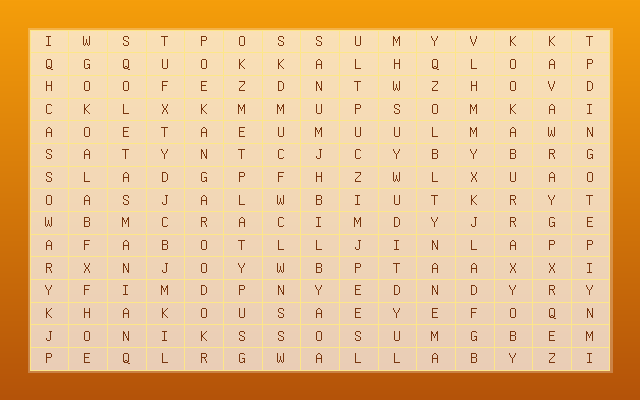
Kangaroos, koalas, wombats and more. Play our Australian Animals word search and...
Play Now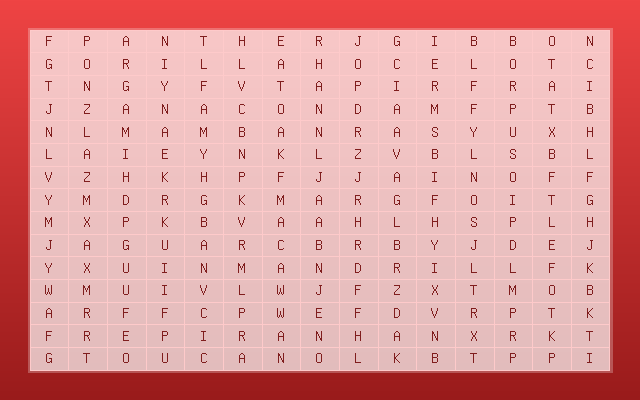
Jaguars, toucans, gorillas and more await in our Jungle Animals word search. Ex...
Play NowFind wild, domestic and exotic animal names hidden in our Animals word search. A fun, educational puzzle for all ages. Play free online no registration needed.
Discover fascinating elephant vocabulary in our Elephants word search! A fun, educational puzzle for wildlife lovers of all ages. Play free no sign-up!
Play Now
Kangaroos, koalas, wombats and more. Play our Australian Animals word search and explore the unique wildlife of Australia. Free puzzle, no sign-up needed.
Play Now
Jaguars, toucans, gorillas and more await in our Jungle Animals word search. Explore tropical wildlife in this fun, free puzzle. Play online no sign-up needed.
Play NowAnimals Word Search Guides & Articles
Animals Word Search: A Wild Adventure in Letters and Learning
Few puzzle themes have the universal appeal of animals. Whether it's the roar of a lion, the trumpet of an elephant, the hop of a kangaroo, or the slither of a snake, the animal kingdom offers an endless supply of fascinating creatures to explore. This broad appeal is exactly what makes the animals word search one of the most versatile and widely used puzzle formats in classrooms, activity books, and family game nights around the world.
Unlike more specific puzzles that focus on a single category It wordsearch such as birds, dogs, or ocean life a general animals word search draws from the entire animal kingdom, offering a rich and varied mix of species. In this article, we'll take a closer look at what makes this puzzle style so popular, the wide range of animals typically included, the developmental benefits it offers, and practical strategies for solving it with confidence.
What Sets a General Animals Word Search Apart
A general animal word search casts a wide net, pulling from multiple categories of the animal kingdom rather than focusing on just one theme. This might include:
- Mammals: Lion, Tiger, Elephant, Zebra, Giraffe, Bear, Wolf, Monkey, Kangaroo
- Reptiles: Snake, Lizard, Turtle, Crocodile, Iguana
- Amphibians: Frog, Toad, Salamander
- Insects and Bugs: Ant, Bee, Butterfly, Spider, Grasshopper
- Wild and Domestic Animals Combined: Fox, Rabbit, Deer, Squirrel, Cat, Dog
This variety is what makes a general animal word search particularly appealing for broad educational use it isn't limited to farm life, pets, birds, or sea creatures, but instead offers a sweeping overview of the natural world in a single puzzle.
Why General Animal Word Searches Are So Widely Used
Because animals are one of the very first subjects children learn about, this theme has near-universal appeal across age groups and settings. A few reasons this puzzle format remains a go-to choice include:
- Broad relevance: Almost everyone has some familiarity with common animals, making the puzzle accessible to a wide audience.
- Endless variety: With thousands of species to choose from, no two animal word searches need to look the same, keeping the format fresh and engaging.
- Cross-curricular use: Teachers can easily connect an animal word search to science lessons on habitats, food chains, classification, or biodiversity.
- Universal entertainment value: Unlike more niche themes, a general animal puzzle appeals to virtually any audience, from toddlers to seniors.
Educational Benefits of Animal-Themed Word Searches
While it may look like simple fun, a well-designed animals word search offers a wide range of learning benefits, particularly for younger solvers.
Vocabulary Expansion
Because animal names vary so much in length and complexity from short words like "cat" and "fox" to longer ones like "elephant" or "crocodile" this puzzle style naturally supports vocabulary growth at multiple levels simultaneously.
Categorization and Classification Skills
A general animal word search often subtly introduces the concept of biological classification. When puzzles group animals by type mammals, reptiles, insects solvers begin to notice patterns and characteristics that distinguish one group from another, laying a foundation for basic zoological understanding.
Visual Discrimination and Pattern Recognition
Scanning a grid full of letters to locate hidden words trains the brain to notice visual patterns quickly and accurately a skill directly linked to reading fluency and attention to detail.
Memory Reinforcement
Repeated exposure to animal names in a fun, low-pressure format helps solidify vocabulary in long-term memory, especially when paired with pictures or fun facts about each animal.
Encouraging Curiosity About Nature
A puzzle featuring an unfamiliar animal name, such as "Okapi" or "Pangolin," often sparks curiosity, prompting further research and a deeper interest in wildlife and conservation.
Fun Animal Facts to Pair With Your Puzzle
Adding trivia to an animal word search can make the experience even more memorable:
- A group of lions is called a "pride," while a group of hyenas is called a "clan."
- Elephants are the only mammals that cannot jump.
- Giraffes have the same number of neck vertebrae as humans just seven, though each one is much larger.
- Kangaroos cannot walk backward.
- Octopuses have three hearts and blue blood.
These small details add an extra layer of engagement, transforming the puzzle from a simple word-finding task into a mini nature lesson.
Adjusting Word Search Difficulty for Different Ages
One of the greatest strengths of the general animals word search is its scalability across nearly every age group.
For toddlers and preschoolers: A small grid with 5–6 very short, familiar words such as Cat, Dog, Fox, and Owl works best.
For elementary school children: A medium-sized grid with 10–15 words, including slightly longer animal names like Elephant, Giraffe, and Kangaroo, offers a good balance of challenge and accessibility.
For teens and adults: Larger, more complex grids featuring 20+ words, including less common animals like Chameleon, Porcupine, or Armadillo, provide a satisfying challenge for experienced puzzle solvers.
This flexibility is part of why the general animal word search remains one of the most frequently used puzzle formats in worksheets, textbooks, and printable activity collections.
Where Animal Word Searches Are Commonly Used
- Classrooms and homeschooling: Teachers regularly use animal-themed puzzles as warm-up activities, early-finisher tasks, or supplements to science units on the animal kingdom.
- Zoos and wildlife centers: Many facilities distribute printed animal word searches to young visitors as part of educational materials.
- Children's activity books: Animal-themed puzzles are a staple in coloring and activity books aimed at young audiences.
- Birthday parties and events: Jungle-, safari-, or zoo-themed parties often include a printed word search as part of the entertainment.
- Family downtime: Many households keep a stash of animal word searches on hand for road trips, rainy days, or quiet evenings.
Tips for Solving an Animals Word Search Efficiently
- Start with the shortest words. Words like "cat," "fox," or "owl" are easier to spot quickly and help build momentum.
- Look for unusual letter combinations. Words containing less common letters, such as "zebra" or "jaguar," often stand out more easily against a background of random letters.
- Scan in all directions. Words can appear horizontally, vertically, diagonally, and even backward make sure to check every direction systematically.
- Work through the grid methodically. Moving row by row, then column by column, reduces the chance of missing hidden words.
- Cross off words as you find them. This keeps your search organized and prevents you from wasting time re-scanning for words already located.
Related Puzzles:
- Pets Word Search
-
Aquarium Fish Word Search
-
Australian Animals Word Search
-
Arctic Animals Word Search
-
Jungle Animals Word Search
-
Amphibians Word Search
-
Bears Word Search
-
Big Cats Word Search
-
Reptiles Word Search
-
Sea Life Word Search
-
Elephants Word Search
-
Types of Snakes Word Search
-
Wild Cats Word Search
-
Dinosaurs Word Search
-
Insects Word Search
-
Dangerous Animals Word Search
-
Common Pets Word Search
-
Farm Animals Word Search
-
Type of Dogs Word Search
-
Birds Word Search
-
Ocean Creatures
How to Create Your Own Animal Word Search
Designing a custom animal word search is a simple and rewarding project. Begin by choosing a theme or age group for example, "Jungle Animals," "Backyard Wildlife," or "Animals of Africa." Select a word list appropriate to your audience, choose a grid size that fits comfortably, and arrange your words in multiple directions to add variety and challenge. Free online word search generators make this process especially easy, allowing you to type in your word list and instantly generate a printable puzzle complete with an answer key perfect for teachers, parents, or hobbyists looking for a quick, customized activity.
Conclusion
The animals word search remains one of the most enduring and versatile puzzle themes precisely because it draws from the boundless diversity of the natural world. From mammals and reptiles to insects and amphibians, this puzzle format offers something for every age and interest level, all while quietly building vocabulary, sharpening visual scanning skills, and sparking curiosity about the animal kingdom. Whether used as a classroom tool, a party activity, or a simple way to unwind at home, an animals word search offers a fun, accessible, and genuinely educational way to explore the wonders of wildlife one hidden word at a time.