Ocean Creatures
Click and drag to select words
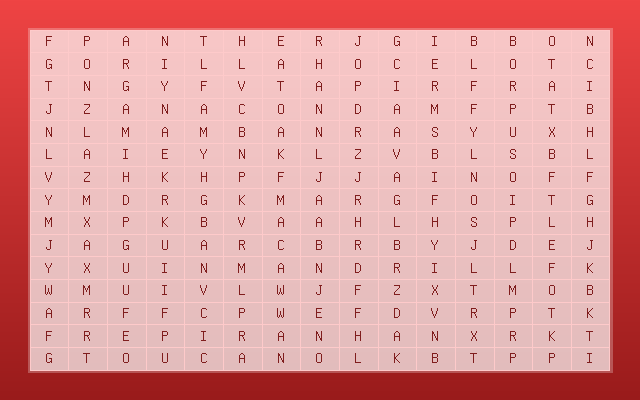
Jaguars, toucans, gorillas and more await in our Jungle Animals word search. Ex...
Play Now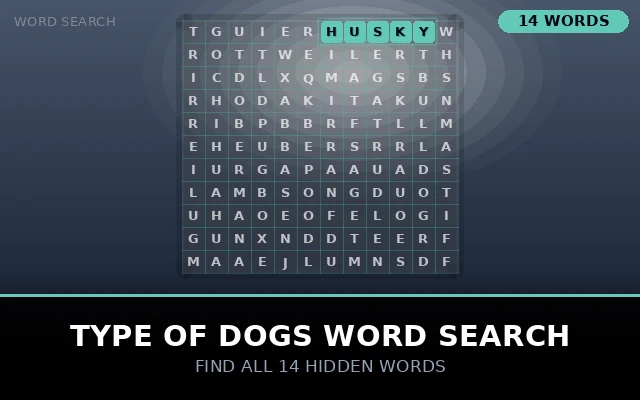
Labradors, Huskies, Bulldogs and more. Play our Type of Dogs word search and fin...
Play Now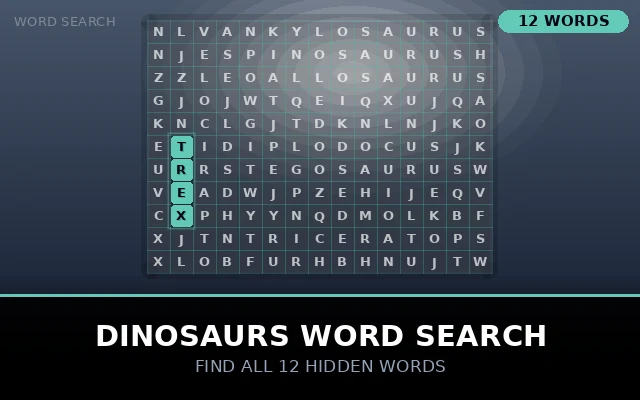
T-Rex, Triceratops, Velociraptor and more! Play our Dinosaurs word search and hu...
Play NowWhales, jellyfish, octopus and more hidden in the grid. Explore deep-sea life with our Ocean Creatures word search. Free online puzzle play now, no sign-up.
Jaguars, toucans, gorillas and more await in our Jungle Animals word search. Explore tropical wildlife in this fun, free puzzle. Play online no sign-up needed.
Play Now
Labradors, Huskies, Bulldogs and more. Play our Type of Dogs word search and find popular dog breeds hidden in the grid. Free online puzzle for dog lovers.
Play Now
T-Rex, Triceratops, Velociraptor and more! Play our Dinosaurs word search and hunt for prehistoric giants hidden in the grid. Free fun for kids and adults!
Play NowOcean Creatures Guides & Articles
Ocean Creatures Word Search: Diving Into a World of Hidden Words
The ocean covers more than seventy percent of our planet, yet it remains one of the least explored and most mysterious environments on Earth. From the graceful glide of a dolphin to the eerie glow of a jellyfish, and from the powerful presence of a great white shark to the delicate beauty of a seahorse, marine life captures the imagination like few other subjects can. It's this sense of wonder that makes the ocean creatures word search such a popular and engaging puzzle theme for children, educators, and puzzle enthusiasts alike.
In this article, we'll explore what makes ocean-themed word searches so captivating, the wide variety of marine species commonly featured, the educational value behind the fun, and some helpful strategies for solving these puzzles with ease.
The Fascination With Ocean-Themed Puzzles
Few environments spark as much curiosity as the deep sea. Its vastness, mystery, and the sheer strangeness of many of its inhabitants make it a rich subject for puzzles of all kinds. An ocean creatures word search typically includes a colorful mix of species such as Shark, Dolphin, Whale, Octopus, Jellyfish, Starfish, Crab, Lobster, Seahorse, Stingray, Turtle, and Coral names that instantly conjure vivid mental images, making the puzzle feel like an underwater adventure rather than a simple vocabulary exercise.
Categories of Marine Life Commonly Featured
Ocean-themed word search in It wordsearch often pull from several distinct categories of marine life, offering a broad and balanced view of underwater ecosystems.
Fish
This category includes species like Shark, Clownfish, Swordfish, Tuna, and Angelfish some of the most recognizable ocean dwellers.
Marine Mammals
Warm-blooded ocean creatures such as Dolphin, Whale, Seal, and Walrus fall into this category, often popular due to their intelligence and playful reputations.
Invertebrates
Creatures without a backbone, such as Jellyfish, Octopus, Squid, and Starfish, introduce fascinating and often alien-looking body structures to the puzzle.
Crustaceans
This group includes Crab, Lobster, and Shrimp animals known for their hard exoskeletons and claws.
Reptiles and Other Sea Life
Species like Sea Turtle, along with reef-associated life such as Coral and Anemone, round out a well-balanced ocean word search.
By blending these categories, puzzle creators offer solvers a mini introduction to marine biology, encouraging a broader appreciation for the diversity of life beneath the waves.
Why Ocean Creature Word Searches Are So Popular
There are several reasons this puzzle theme continues to capture attention across all age groups:
- Visual appeal: Ocean creatures are colorful, unusual, and often strikingly beautiful, making the theme naturally engaging.
- Connection to popular culture: Movies, documentaries, and children's shows featuring ocean life keep marine creatures fresh in the public imagination, from sharks to sea turtles.
- Summer and vacation associations: Beach trips and aquarium visits often inspire ocean-themed activities, including printable puzzles for children.
- Conservation awareness: With growing global attention on ocean health and marine conservation, these puzzles offer a light-hearted entry point into more serious environmental discussions.
Educational Benefits of Ocean Creature Word Searches
Beyond pure entertainment, ocean-themed word searches provide meaningful learning opportunities, particularly for young solvers.
Introduction to Marine Biology
Recognizing and searching for words like "octopus" or "stingray" often sparks curiosity about how these animals live, what they eat, and where they're found a gentle gateway into marine science.
Vocabulary and Spelling Development
Ocean creature names range widely in complexity, from short words like "crab" or "eel" to longer ones like "jellyfish" or "seahorse," offering vocabulary-building opportunities suited to a range of skill levels.
Environmental and Conservation Awareness
Many educators pair ocean word searches with lessons on plastic pollution, coral reef preservation, or endangered marine species, using the puzzle as a fun, approachable starting point for more serious environmental topics.
Visual Tracking and Concentration
As with any word search, scanning a busy grid trains the eyes and brain to identify patterns efficiently a skill that supports reading fluency and sustained attention.
Encouraging Imagination
The vivid, otherworldly nature of ocean creatures — glowing jellyfish, camouflaging octopuses, gliding manta rays naturally sparks imaginative thinking, making this puzzle theme especially appealing to children with a love of storytelling and fantasy.
Fascinating Ocean Facts to Pair With Your Puzzle
Adding a few fun facts can make an ocean creatures word search even more memorable:
- An octopus has three hearts and blue blood, and can change the color and texture of its skin in less than a second.
- The blue whale is the largest animal to have ever existed on Earth, even larger than the biggest known dinosaurs.
- Starfish don't have brains or blood — they use seawater to pump nutrients through their bodies.
- Some jellyfish species are technically immortal, capable of reverting to an earlier stage of life to avoid death.
- Seahorses are one of the only species where the male carries and gives birth to the babies.
These small pieces of trivia add depth to the puzzle, turning it into an engaging mini-lesson about the wonders of the deep sea.
Adjusting Difficulty for Different Age Groups
Ocean-themed word searches are highly adaptable, making them suitable for a wide range of solvers.
For young children (ages 4–6): A small grid with short, simple words like Crab, Fish, Eel, and Seal works well.
For elementary students (ages 7–10): A medium grid featuring words like Shark, Whale, Turtle, and Octopus adds a moderate level of challenge.
For older children and adults: Larger, more complex grids with words like Stingray, Anemone, Barracuda, and Seahorse provide a satisfying test for experienced solvers.
This adaptability makes ocean creature word searches a common feature in everything from preschool activity sheets to advanced adult puzzle collections.
Where Ocean Creature Word Searches Are Commonly Used
- Aquariums and marine centers: Many aquariums offer printed word searches as part of educational materials for young visitors.
- Classrooms: Teachers frequently use ocean-themed puzzles alongside science units on marine ecosystems, food chains, or ocean conservation.
- Summer camps: Beach- and ocean-themed camps often include printed word searches as a quiet activity between outdoor sessions.
- Family vacations: Ocean word searches are a popular way to keep children entertained during beach trips or long car rides to coastal destinations.
- Birthday parties: Under-the-sea themed parties frequently include printed puzzles as part of the entertainment or party favors.
Tips for Solving Ocean Creature Word Searches Faster
- Start with short, simple words. Words like "crab," "eel," or "seal" are quick to spot and help build early momentum in the puzzle.
- Look for unique letter patterns. Words like "jellyfish" or "octopus" contain distinctive letter combinations that often stand out in a grid.
- Scan systematically. Move through the grid in an organized way row by row and then column by column before checking diagonal placements.
- Check every direction. Words can be hidden forward, backward, vertically, horizontally, or diagonally, so it's important to look in all directions.
- Cross off words immediately. Marking each word as soon as it's found helps avoid confusion and wasted time later in the puzzle.
Designing Your Own Ocean Creatures Word Search
Creating a custom ocean-themed puzzle is a simple and enjoyable project. Start by selecting a focused theme, such as "Coral Reef Creatures," "Deep Sea Animals," or "Tide Pool Life." Choose a word list suited to your intended audience's age and skill level, select an appropriately sized grid, and arrange the words in multiple directions for added challenge. Free online word search generators make this process quick and easy, allowing anyone from teachers to parents to hobbyists to design a personalized, printable puzzle complete with an answer key in just a few minutes.
Related Puzzles:
- Pets Word Search
-
Aquarium Fish Word Search
-
Australian Animals Word Search
-
Arctic Animals Word Search
-
Jungle Animals Word Search
-
Amphibians Word Search
-
Bears Word Search
-
Big Cats Word Search
-
Reptiles Word Search
-
Sea Life Word Search
-
Elephants Word Search
-
Types of Snakes Word Search
-
Wild Cats Word Search
-
Dinosaurs Word Search
-
Insects Word Search
-
Dangerous Animals Word Search
-
Common Pets Word Search
-
Farm Animals Word Search
-
Type of Dogs Word Search
-
Birds Word Search
-
Animals Word Search
Conclusion
The ocean creatures word search offers a delightful way to explore the wonder and diversity of marine life while providing genuine educational value along the way. From fish and marine mammals to invertebrates and crustaceans, this puzzle theme introduces solvers to the incredible variety of life beneath the waves, all while building vocabulary, sharpening visual scanning skills, and encouraging curiosity about the natural world. Whether enjoyed in a classroom, during a beach vacation, or simply as a relaxing pastime at home, an ocean creatures word search invites players to dive into an underwater adventure one hidden word, and one remarkable sea creature, at a time.