Sea Life Word Search
Click and drag to select words
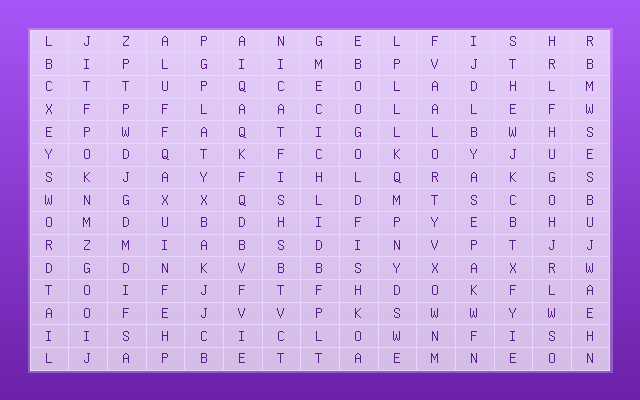
Dive into our Aquarium Fish word search and find tropical fish, clownfish, tetra...
Play Now
Cobras, pythons, mambas and more! Test your snake knowledge with our Types of Sn...
Play Now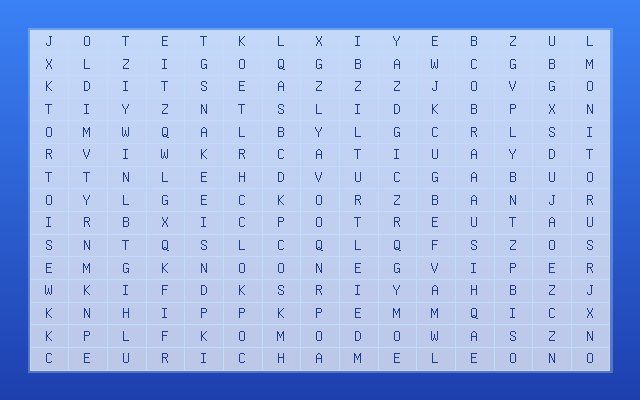
Snakes, lizards, crocodiles and turtles await! Play our Reptiles word search and...
Play NowDolphins, sharks, crabs and more hidden in the grid! Explore ocean biodiversity with our Sea Life word search. Free to play online Puzzle.
Dive into our Aquarium Fish word search and find tropical fish, clownfish, tetras and more hidden in the grid. Free to play online no registration required.
Play Now
Cobras, pythons, mambas and more! Test your snake knowledge with our Types of Snakes word search. Free online puzzle for wildlife fans no registration needed!
Play Now
Snakes, lizards, crocodiles and turtles await! Play our Reptiles word search and explore the scaly world of cold-blooded animals. Free puzzle play online now!
Play NowSea Life Word Search Guides & Articles
A Sea Life Word Search Diving Into the Ocean's Hidden Depths
More than seventy percent of our planet's surface lies beneath ocean water, containing an almost unimaginable variety of life that ranges from massive whales cruising open water to tiny, bizarre creatures thriving in complete darkness thousands of feet below the surface. A sea life word search invites solvers to explore this vast underwater world without ever getting wet, hiding names like Dolphin, Octopus, and Shark inside a grid of letters that stretches nearly as wide as ocean biodiversity itself.
Unlike more narrowly focused animal categories, sea life as a puzzle theme benefits from an almost limitless well of vocabulary to draw from, spanning everything from familiar coastal species to genuinely alien looking creatures found only in the deepest, most extreme corners of the ocean.
The Astonishing Range of Ocean Biodiversity
Understanding a sea life word search starts with appreciating the sheer scale of what actually lives beneath the ocean's surface. Marine mammals like Dolphins and Whales represent some of the most intelligent and socially complex animals found anywhere on Earth, communicating through complex vocalizations and, in the case of certain dolphin species, demonstrating problem solving abilities that rival many land based mammals. Sharks, often unfairly maligned in popular media and film, actually represent an incredibly diverse group ranging from the massive filter feeding Whale Shark, the largest fish species alive today, to smaller, more specialized hunters adapted to specific coastal ecosystems.
Cephalopods like Octopus and Squid showcase some of the most alien seeming intelligence found in the animal kingdom, capable of remarkable problem solving, color changing camouflage, and, in the case of certain octopus species, documented tool use behavior that continues to surprise marine biologists studying these creatures in both laboratory and open ocean settings. Coral reefs, though technically built by tiny colonial animals rather than plants, support an entire secondary ecosystem of colorful fish species, including Clownfish, Angelfish, and countless others that depend on reef structures for shelter and food.
Beyond these more familiar categories, the deep ocean hosts genuinely bizarre creatures adapted to crushing pressure and complete darkness, including bioluminescent Anglerfish capable of producing their own light to lure prey, and countless other deep sea species that continue to be discovered and documented even today, reminding scientists just how much of the ocean remains genuinely unexplored.
Vocabulary Commonly Featured in the Grid
A well rounded sea life word search in It wordsearch typically draws from across this entire spectrum of ocean biodiversity rather than focusing narrowly on just one category of marine animal. Common entries include Dolphin, Shark, Whale, Octopus, Starfish, Jellyfish, Seahorse, and Crab, names that most solvers will recognize immediately given how thoroughly these animals have permeated popular culture and childhood education. More advanced word lists often introduce Manta Ray, Anglerfish, Barracuda, and Sea Urchin, giving dedicated ocean enthusiasts a chance to test their knowledge beyond the most commonly featured species.
Some puzzle creators also incorporate habitat and ecosystem vocabulary alongside species names, including words like Coral Reef, Current, Tide, and Plankton, broadening the puzzle beyond simple animal identification into the broader ecological systems that sustain ocean life at every level of the food chain.
Why the Ocean Continues to Captivate Solvers
The ocean occupies a unique place in human curiosity precisely because so much of it remains genuinely mysterious even to modern science. Researchers frequently note that humanity has mapped the surface of the moon in greater detail than the deepest trenches of our own ocean floor, a fact that lends the entire sea life category an air of genuine mystery that few other puzzle themes can authentically claim.
This sense of the unknown translates directly into engagement with a sea life word search, since solvers are not simply matching random letters to a familiar list but actively engaging with an ecosystem that continues to surprise even professional marine biologists with genuinely new discoveries on a fairly regular basis. Every hidden word carries at least a small echo of that broader oceanic mystery, whether it represents a well studied coastal species or a creature adapted to depths most humans will never personally witness.
Classroom Applications for Marine Biology and Ecology
Teachers covering ocean ecosystems, food chains, or marine adaptation frequently find that sea life provides an exceptionally rich case study given the sheer diversity of adaptations required to survive across such varied ocean environments. A sea life word search pairs naturally with lessons about buoyancy, camouflage, and the layered structure of ocean ecosystems ranging from sunlit surface waters to the crushing pressure of deep sea trenches, giving students an engaging activity to reinforce vocabulary immediately after learning about these complex environmental concepts.
Because ocean ecosystems also face significant conservation challenges related to pollution, overfishing, and coral bleaching caused by rising ocean temperatures, some educators extend the puzzle activity into broader conversations about marine conservation, using beloved and charismatic sea creatures as an accessible entry point into more complex environmental science discussions for older students ready to engage with those weightier themes.
Effective Strategies for Solving
Working through a sea life word search efficiently benefits from recognizing that many marine species names contain distinctive letter combinations that stand out clearly against randomized filler text. Words like Barracuda and Anglerfish include unusual letter sequences that tend to catch the eye more readily than shorter, more common words like Crab or Fish, which can hide almost anywhere within a crowded grid.
Prioritizing longer, more distinctive species names before circling back to shorter and more easily overlooked entries generally produces faster and more reliable results. Checking all eight possible directions around any promising starting letter remains essential throughout, since ocean themed puzzles frequently place their more exotic species names diagonally to maximize use of the available grid space.
Building a Personalized Ocean Themed Puzzle
Anyone interested in designing a custom sea life word search should think carefully about which layer of the ocean ecosystem to emphasize. A puzzle focused on coastal and reef species might highlight colorful fish and coral related vocabulary, while a deep sea focused version could spotlight the genuinely strange creatures adapted to life in permanent darkness far below the surface. A truly comprehensive puzzle blends multiple ocean zones together, giving solvers a fuller sense of just how vertically layered and diverse marine ecosystems actually are.
A Puzzle as Vast and Mysterious as the Ocean Itself
A sea life word search offers solvers a chance to explore one of the largest and least understood ecosystems on our entire planet, spanning everything from familiar coastal species to genuinely alien creatures thriving in complete darkness thousands of feet below the surface, far beyond where sunlight has ever reached. Whether solved by a curious child fascinated by playful dolphins, or an adult ocean enthusiast reflecting on just how much of the deep sea remains unexplored, this puzzle theme offers a genuinely rewarding journey through one of nature's most vast and mysterious frontiers, one carefully uncovered creature at a time.
The Difference Between Ocean Zones
A particularly engaging way to deepen a sea life word search involves organizing vocabulary around the distinct zones that make up the ocean's vertical structure. The sunlit zone, extending down to roughly six hundred feet, supports the vast majority of ocean life visible to casual observers, including coral reefs, sea turtles, and most commercially fished species. Below this, the twilight zone receives only faint traces of filtered sunlight, home to creatures like certain squid species that have adapted large eyes to capture what little light filters down from far above.
Deeper still, the midnight zone exists in complete and permanent darkness, supporting bizarre bioluminescent creatures like the Anglerfish that generate their own light rather than relying on sunlight that never reaches these depths. At the very bottom, the trench zone represents the most extreme environment on the planet, where pressure reaches levels that would instantly crush an unprotected human body, yet specialized organisms have still managed to adapt and thrive even here. Building a puzzle that organizes species by these distinct depth zones gives solvers a much richer appreciation for just how dramatically ocean life changes depending on depth alone, transforming a simple word search into a genuine introduction to oceanographic science.
Related Puzzles:
- Pets Word Search
-
Aquarium Fish Word Search
-
Australian Animals Word Search
-
Arctic Animals Word Search
- Birds of Prey Word Search
-
Amphibians Word Search
-
Bears Word Search
-
Big Cats Word Search
-
Reptiles Word Search
-
Elephants Word Search
-
Types of Snakes Word Search
-
Wild Cats Word Search
-
Dinosaurs Word Search
-
Insects Word Search
-
Dangerous Animals Word Search
-
Common Pets Word Search
-
Farm Animals Word Search
-
Type of Dogs Word Search
-
Birds Word Search
-
Animals Word Search
-
Ocean Creatures
Marine Conservation Woven Into the Puzzle
Given how urgently ocean ecosystems face threats ranging from plastic pollution to coral bleaching, some of the most thoughtfully designed sea life word search puzzles weave conservation vocabulary directly alongside traditional species names. Words like Overfishing, Pollution, and Bleaching sit naturally beside more familiar entries like Dolphin and Shark, subtly reinforcing the idea that these fascinating creatures face genuine and mounting environmental pressures. This kind of intentional vocabulary pairing transforms an otherwise purely recreational puzzle into a small but meaningful entry point for genuine ocean conservation awareness, particularly valuable for older students and adult solvers who may not otherwise encounter this information in their daily lives, and who might come away from a simple puzzle activity with a slightly stronger appreciation for the fragile balance sustaining ocean ecosystems worldwide.
Conclusion
The ocean is waiting dive into the free Sea Life Word Search and find all 14 hidden creatures! Share it with friends, family, or your whole class and see who can finish first. Happy searching under the sea!