Fruits Word Search: A Fun and Educational Way to Learn About Fruits
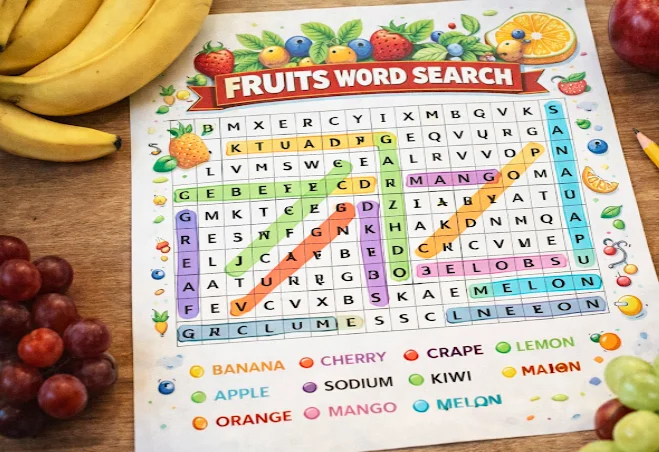
When most people think of word searches, they picture a rainy afternoon pastime or a classroom time-filler. But a fruits word search is so much more than that. It is a hands-on, brain-engaging learning tool that helps children and adults build vocabulary, strengthen spelling recognition, and develop a deeper familiarity with the wide, colourful world of fruits.
From tropical fruits like mango and papaya to everyday favourites like apple and grape, the fruits word search covers an impressive range of vocabulary in a single, enjoyable activity. Whether someone is a teacher looking for a quick classroom resource, a parent wanting to make healthy eating conversations more fun, or simply someone who loves a good word puzzle, the fruits word search delivers on every front.
This guide explores everything there is to know about the fruits word search its educational benefits, how to use it across different age groups, where to find the best printable versions, and how to create a custom one for any purpose. Let's get started.
What Is a Fruits Word Search?
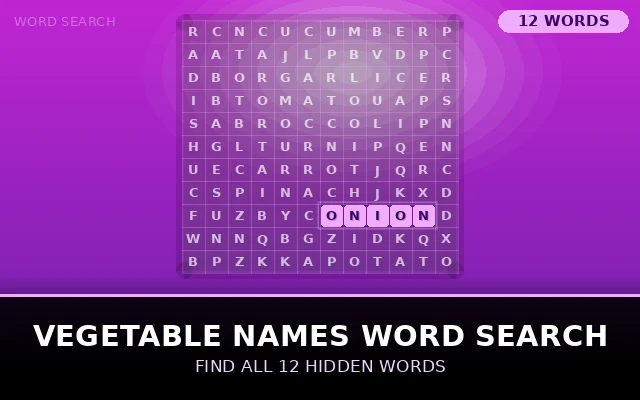
A fruits word search is a type of word puzzle in which a grid of randomly arranged letters conceals a list of fruit names. The solver's task is to scan the grid horizontally, vertically, diagonally, and sometimes backwards to find each hidden word and circle or highlight it.
The fruit names used in these puzzles range from short, simple words like FIG and LIME to longer, more challenging names like POMEGRANATE, WATERMELON, and PASSIONFRUIT. This makes the fruits word search adaptable for every skill level, from young children learning their first fruit vocabulary to older students and adults who enjoy a more demanding puzzle.
Unlike a quiz or a flashcard exercise, the fruits word search feels more like a game than a study session. That game-like quality is exactly what makes it such a powerful learning tool. Learners absorb vocabulary naturally and enjoyably without the pressure of formal testing.
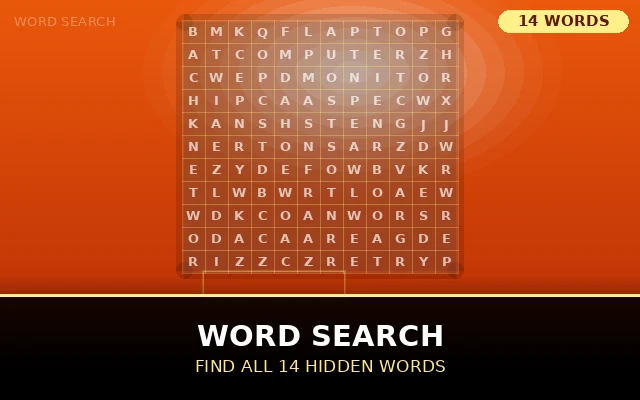
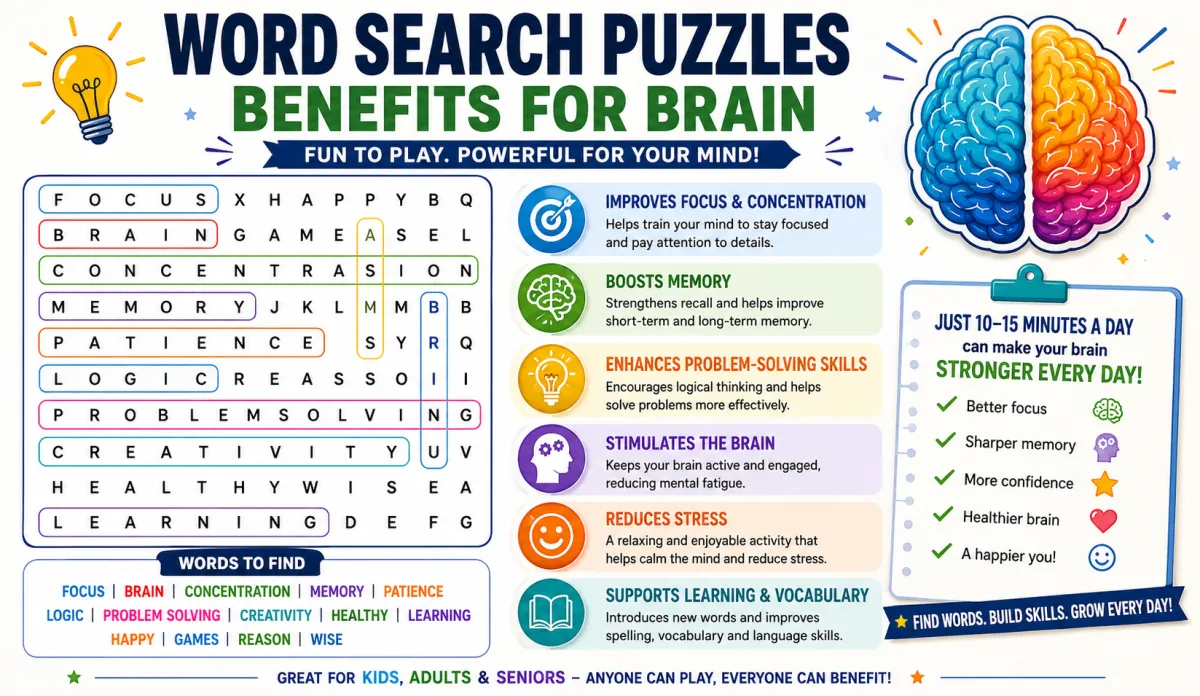
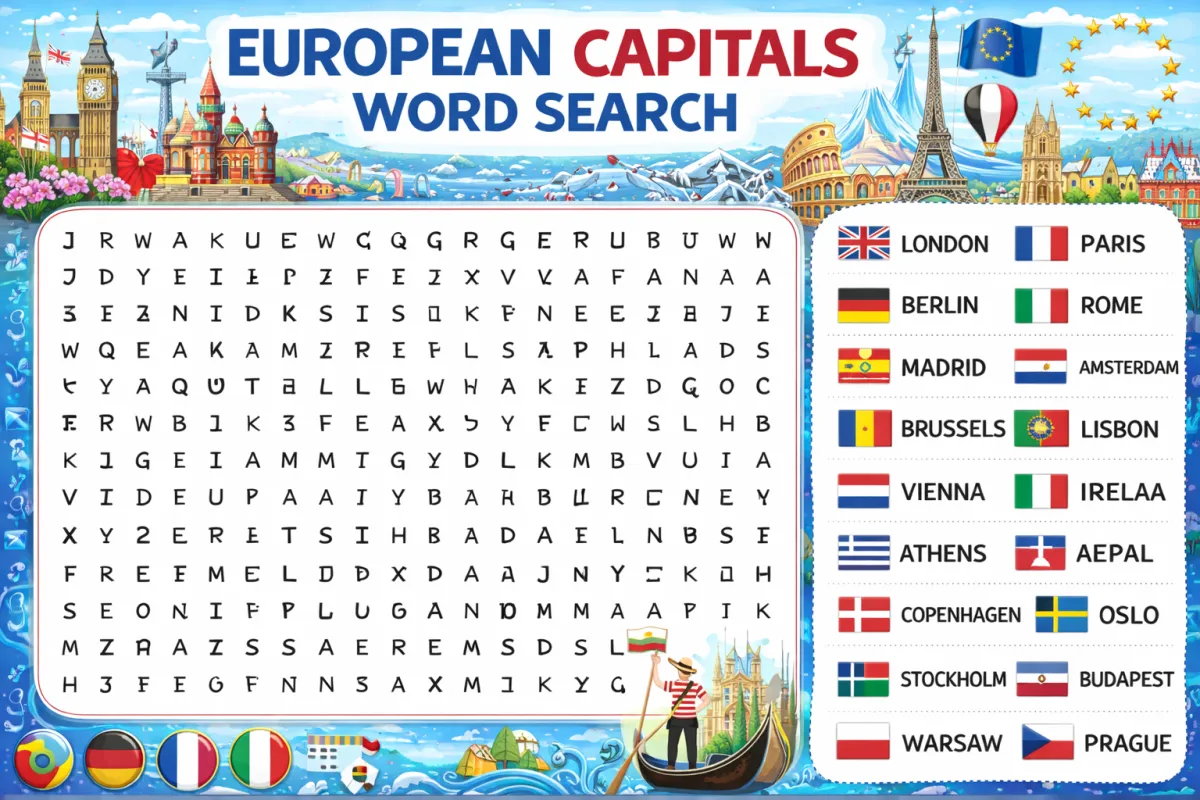
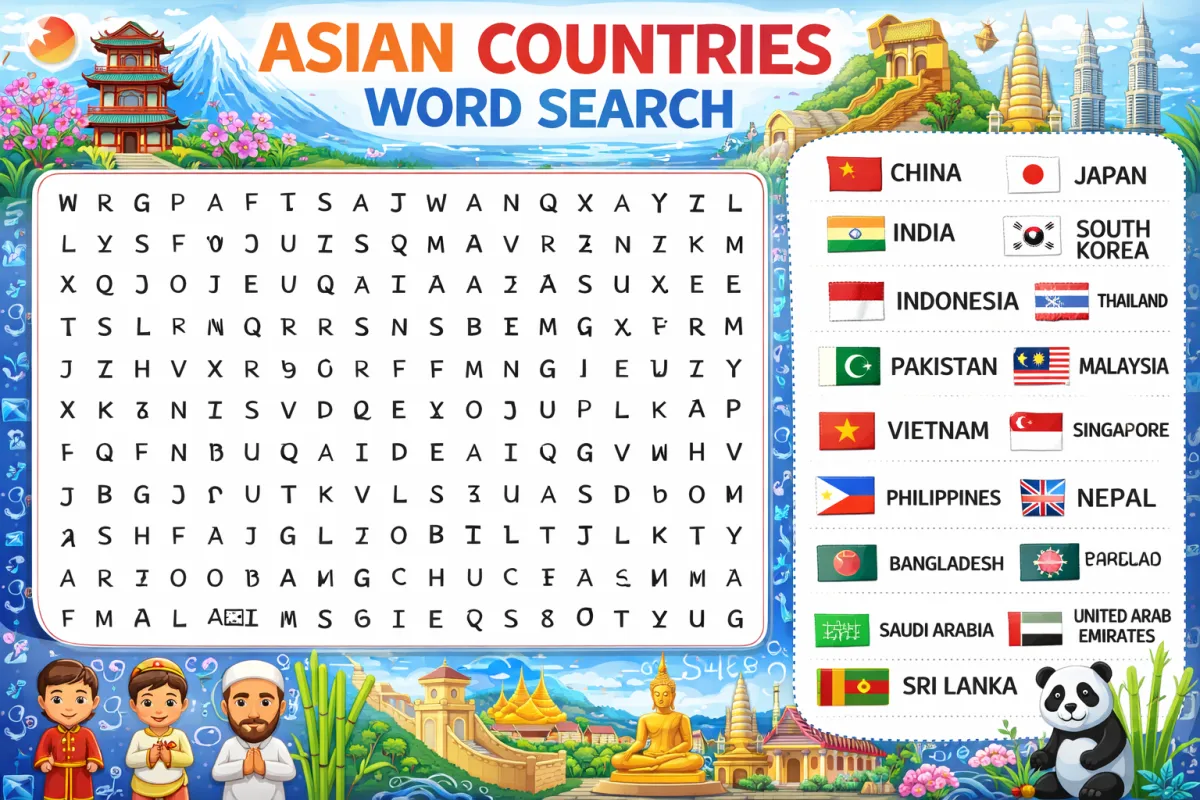
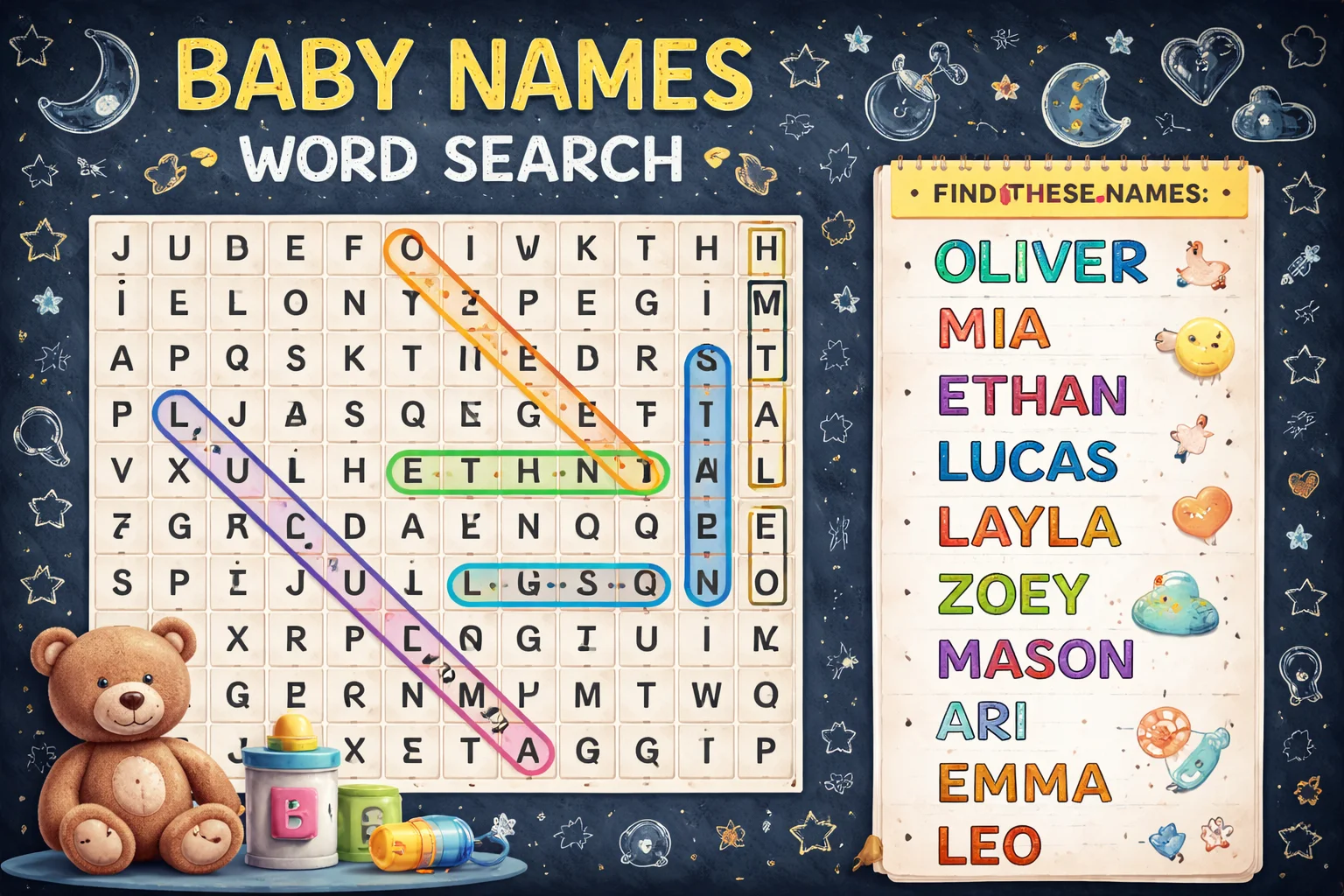
Puzzles:
The Educational Value of a Fruits Word Search
The fruits word search is not just a fun activity it is a genuinely effective educational resource. Research into word recognition and spelling consistently shows that repeated visual exposure to words significantly improves a learner's ability to identify, spell, and use those words correctly. A fruits word search provides exactly that kind of repeated visual engagement.
- What Is a Fruits Word Search?
- Puzzles:
- The Educational Value of a Fruits Word Search
- Building Fruit Vocabulary
- Improving Reading and Letter Recognition
- Encouraging Focus and Concentration
- Supporting Healthy Eating Conversations
- Fruits Word Search for Different Age Groups
- Fruits Word Search for Kindergarten and Early Years
- Fruits Word Search for Elementary School Students
- Fruits Word Search for Middle and High School Students
- Fruits Word Search for Adults and ESL Learners
- Types of Fruits Word Search Puzzles
- Simple Fruits Word Search
- Tropical Fruits Word Search
- Fruits and Vegetables Word Search
- Fruits Word Search with a Hidden Message
- Fruits Word Search in Other Languages
- How to Find the Best Printable Fruits Word Search
- Where to Look Free Printable Fruits Word Search
- Choosing the Right Format Fruits Word Search PDF
- Digital Play Options Fruits Word Search Online
- How to Create Your Own Fruits Word Search
- Step-by-Step Guide to Making a Fruits Word Search
- Fruits Word Search Ideas for Special Themes
- The Most Common Fruits to Include Fruits Word Search Word List
- Common Everyday Fruits
- Berries
- Tropical and Exotic Fruits
- Citrus Fruits
- Less Common and Advanced Fruits
- Practical Teaching Tips Fruits Word Search in the Classroom
- Vocabulary Priming Before the Puzzle
- Active Engagement Strategies During the Puzzle
- Extension Activities After the Puzzle
- Conclusion: The Fruits Word Search as a Gateway to Learning
Building Fruit Vocabulary
One of the most obvious benefits of a fruits word search is vocabulary expansion. Children who regularly complete fruit-themed word searches become familiar with a wide range of fruit names they might not otherwise encounter in daily life. Names like LYCHEE, GUAVA, QUINCE, and PERSIMMON are unlikely to come up in casual conversation, but seeing them hidden in a word search grid creates a memorable first impression that sticks.
For younger learners, even common fruits like APPLE, PEAR, PLUM, and PEACH become more firmly embedded in memory through the active process of searching for and finding them in a grid. The combination of seeing the word in the clue list and then hunting for it letter by letter is a remarkably effective vocabulary learning method.
Improving Reading and Letter Recognition
A fruits word search is an excellent exercise in letter-by-letter reading. To find a word like STRAWBERRY hidden diagonally in a dense grid, the solver must read individual letters carefully and sequentially. This precise letter-by-letter attention is a foundational reading skill, particularly important for early readers and learners with reading challenges.
For ESL (English as a Second Language) learners, the fruits word search is especially valuable. It introduces English fruit vocabulary in a low-pressure, visually engaging format that does not require full grammatical understanding just letter and word recognition.
Encouraging Focus and Concentration
Completing a fruits word search requires sustained attention and concentration. The solver must hold the target word in mind while carefully scanning the grid a mental task that builds working memory and focus. For children who find it difficult to stay on task during traditional lessons, a fruits word search offers a structured yet enjoyable way to practise concentration skills.
Studies in educational psychology suggest that activities that combine mild challenge with clear rewards such as finding a hidden word activate the brain's reward system in a way that motivates continued engagement. The fruits word search delivers that satisfying "aha!" moment with every word found.
Supporting Healthy Eating Conversations
Beyond pure literacy, a fruits word search creates a natural opening for conversations about nutrition and healthy eating. When a child finds the word BLUEBERRY in a puzzle, it is an easy, natural moment for a parent or teacher to mention that blueberries are packed with antioxidants, or to ask whether the child has ever tasted one. This kind of casual nutritional education, anchored by an activity the child is already engaged in, can be far more effective than a formal lecture about eating fruits and vegetables.
Some fruits word searches are specifically designed to pair the vocabulary puzzle with fun fruit facts, illustrations, or colouring elements, turning the activity into a full-featured educational experience about healthy food choices.
Fruits Word Search for Different Age Groups
Fruits Word Search for Kindergarten and Early Years
For the youngest learners, a fruits word search needs to be simple, visually inviting, and confidence-building. A fruits word search for kindergarten typically features a small grid of around 8x8 to 10x10 letters, a short word list of five to eight common fruits, words hidden only horizontally or vertically, and large, clear font that is easy on young eyes.
Fruit names in a kindergarten fruits word search usually include words like APPLE, PEAR, PLUM, FIG, KIWI, and LIME short, recognisable, and easily spottable in a grid. The act of finding each word and physically circling it gives young children a powerful sense of achievement that motivates further learning.
Many teachers pair a fruits word search for kindergarten with a colouring activity, where children colour an illustration of each fruit as they find its name in the puzzle. This multi-sensory approach deepens the learning experience and makes the session memorable.
Fruits Word Search for Elementary School Students
As children move into primary and elementary school, a fruits word search can grow in complexity to match their developing skills. A fruits word search for 2nd grade or 3rd grade might use a 12x12 or 15x15 grid and include both common and less familiar fruit names like MANGO, GRAPE, CHERRY, LEMON, PAPAYA, COCONUT, and PINEAPPLE. Words may be hidden in all directions, including diagonals.
For 4th and 5th graders, a fruits word search can include more advanced vocabulary: POMEGRANATE, DRAGONFRUIT, PASSIONFRUIT, PERSIMMON, and LYCHEE add a satisfying level of challenge. At this level, a fruits word search with answers is a useful teaching tool the teacher can walk through the answer key with the class and discuss each fruit's origin, taste, and nutritional value.
Subject-specific fruits word searches are also popular at the elementary level. A tropical fruits word search, for instance, focuses exclusively on fruits from tropical climates MANGO, PAPAYA, GUAVA, JACKFRUIT, RAMBUTAN and can be paired with a geography lesson about where these fruits grow around the world.
Fruits Word Search for Middle and High School Students
Older students might initially feel that a fruits word search is too simple, but a well-designed fruits word search hard edition quickly changes that perception. A large grid packed with obscure fruit names CARAMBOLA, FEIJOA, KUMQUAT, TAMARIND, DURIAN, ACKEE, MANGOSTEEN provides a genuinely challenging puzzle that stretches even adult vocabularies.
A fruits word search for high school students can also be designed with a cross-curricular angle, connecting to science lessons about botany and plant biology, geography lessons about global agriculture, or health classes about nutrition. A fruits word search that hides the scientific (Latin) names of common fruits alongside their everyday names offers a rich and rigorous vocabulary challenge.
Fruits Word Search for Adults and ESL Learners
Adults enjoy fruits word searches as a relaxing, screen-free mental exercise. A fruits word search printable in a large format makes a pleasant activity for a coffee break, a long journey, or a quiet evening. Adults who are learning English as a second language will find a fruits word search ESL edition particularly helpful, as it introduces fruit vocabulary in context without grammatical complexity.
Language schools and ESL programmes frequently use a fruits word search as a warm-up or supplementary activity, often pairing it with a fruits vocabulary list, picture flashcards, and a matching exercise to build a comprehensive and memorable vocabulary lesson.
Types of Fruits Word Search Puzzles
Simple Fruits Word Search
A simple fruits word search is the most beginner-friendly format. It features a small grid, a short list of well-known fruits, and words hidden only in horizontal and vertical directions. This version is ideal for young children, beginners, and anyone who wants a quick, low-stress puzzle experience. A simple fruits word search printable free version is one of the most commonly downloaded educational resources on teacher and parenting websites.
Tropical Fruits Word Search
A tropical fruits word search focuses on the rich vocabulary of exotic, warm-climate fruits. Words like MANGO, PAPAYA, GUAVA, PINEAPPLE, COCONUT, LYCHEE, PASSION FRUIT, JACKFRUIT, RAMBUTAN, and STARFRUIT make for an exciting and educational puzzle. This type of fruits word search is particularly popular in geography and science classrooms where teachers are exploring biodiversity and global food systems.
A tropical fruits word search printable is also a fun activity for themed parties, beach holidays, or summer camp programmes. The exotic vocabulary makes it feel fresh and adventurous, even for learners who are already comfortable with standard fruit names.
Fruits and Vegetables Word Search
A fruits and vegetables word search broadens the vocabulary list to include both categories, making it a more comprehensive nutritional vocabulary activity. This combined format is popular in health education classes, home economics lessons, and family nutrition workshops. Mixing fruits like APPLE, ORANGE, and GRAPE with vegetables like CARROT, BROCCOLI, and SPINACH creates a rich, educational word puzzle that reinforces the full landscape of healthy food vocabulary.
Fruits Word Search with a Hidden Message
A fruits word search with a hidden message takes the standard puzzle format one step further. Once all the fruit names have been found and crossed off, the remaining unused letters in the grid spell out a secret message often a fun food fact, a healthy eating tip, or an encouraging phrase. This format adds an extra layer of reward and motivation, especially for older children and adults who enjoy an additional challenge beyond simply finding the words.
Fruits Word Search in Other Languages
A fruits word search in Spanish, a fruits word search in French, or a fruits word search in German serves as a fantastic language learning tool. For bilingual families, dual-language classrooms, or language students of any level, a fruits word search that presents fruit names in a target language helps build vocabulary through active engagement rather than passive memorisation.
A fruits word search in Spanish is particularly widely used in the United States, both in bilingual education programmes and in Spanish language classrooms. Fruit names in Spanish MANZANA (apple), NARANJA (orange), UVA (grape), FRESA (strawberry) are approachable vocabulary for beginner and intermediate learners alike.
How to Find the Best Printable Fruits Word Search
Finding a high-quality fruits word search printable has never been easier, thanks to the wealth of free educational resources available online. Here are the best ways to find and evaluate a fruits word search:
Where to Look Free Printable Fruits Word Search
Teacher resource platforms such as Teachers Pay Teachers (TPT), Super Teacher Worksheets, and Education.com offer a wide range of free and premium fruits word search printable PDFs. Many of these come with an answer key included, making them ideal for classroom use.
For parents and families, general puzzle websites and parenting blogs frequently offer a free fruits word search printable PDF that can be downloaded and printed at home in minutes. Sites like Puzzle Maker also allow users to generate a custom fruits word search online for free, with full control over the word list and grid size.
Choosing the Right Format Fruits Word Search PDF
When downloading a fruits word search, the PDF format is almost always the best choice. A fruits word search PDF preserves the puzzle's formatting exactly, prints cleanly on standard A4 or US Letter paper, and is easy to share digitally with students, parents, or family members.
Some fruits word search PDFs include both the puzzle and the answer key in a single document, while others provide them as separate files. For teachers who want to distribute the puzzle to students without spoiling the answers, a separate answer key file is the more practical option.
Digital Play Options Fruits Word Search Online
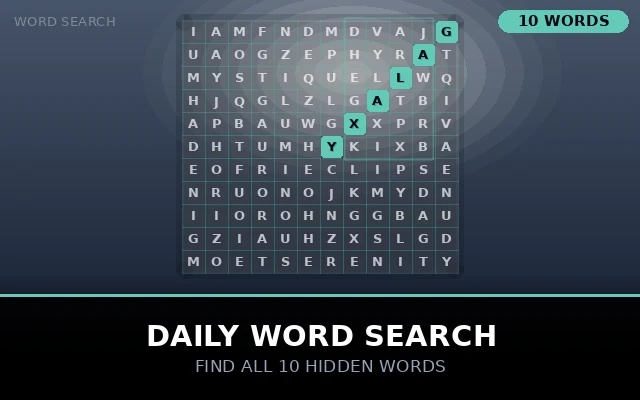
For those who prefer a screen-based experience, a fruits word search online offers interactive play without any printing required. Many educational websites host digital fruits word search games that include features like automatic highlighting of found words, a timer for competitive play, and difficulty settings that adjust grid size and word list length.
A fruits word search online game is particularly popular with younger children who are already comfortable using tablets and computers. The interactive format adds instant feedback found words light up or disappear which provides immediate positive reinforcement that keeps learners engaged.
How to Create Your Own Fruits Word Search
Creating a custom fruits word search is a rewarding project and easier than most people expect. Whether it is for a classroom, a birthday party, a family activity night, or a language lesson, a personalised fruits word search can be tailored perfectly to the occasion and the audience.
Step-by-Step Guide to Making a Fruits Word Search
Choose a theme and difficulty level. Decide whether the puzzle will focus on common fruits, tropical fruits, a specific language, or a cross-curricular topic. Choose an appropriate grid size small (10x10) for beginners, large (20x20 or more) for advanced solvers.
Build the fruit vocabulary list. For a standard fruits word search, a list of 15 to 25 fruit names works well. Include a mix of short words (FIG, LIME, PLUM) and longer words (POMEGRANATE, WATERMELON, BLUEBERRY) for variety and challenge.
Use an online generator or create manually. Tools like Discovery Education's Puzzlemaker, WordMint, or Crossword Labs allow anyone to input a word list and automatically generate a fruits word search grid. Alternatively, the puzzle can be designed by hand on graph paper for a more personal touch.
Fill the remaining grid spaces. After placing all the fruit names, fill the empty grid squares with random letters to conceal the hidden words. Avoid creating accidental words that are not on the list, as these can confuse solvers.
Create the answer key. Mark all hidden words on a copy of the grid to produce the answer key. This is essential for classroom use and for solvers who get stuck.
Fruits Word Search Ideas for Special Themes
A fruits word search can be creatively themed to suit a wide range of occasions and learning contexts. Here are some popular theme ideas:
Summer Fruits Word Search featuring seasonal fruits like WATERMELON, PEACH, CHERRY, RASPBERRY, and NECTARINE.
Citrus Fruits Word Search focused on the citrus family: LEMON, LIME, ORANGE, GRAPEFRUIT, TANGERINE, CLEMENTINE, and KUMQUAT.
Berry Fruits Word Search highlighting the berry family: STRAWBERRY, BLUEBERRY, RASPBERRY, BLACKBERRY, CRANBERRY, GOOSEBERRY, and ELDERBERRY.
World Fruits Word Search featuring fruits from around the globe, such as DURIAN (Southeast Asia), ACKEE (Jamaica), FEIJOA (South America), and LOQUAT (Asia).
Fruits of the Bible Word Search using fruits mentioned in biblical texts, including FIG, GRAPE, POMEGRANATE, OLIVE, DATE, and ALMOND.
Each of these themed versions transforms a simple fruits word search into a rich, contextualised learning experience that goes far beyond basic vocabulary memorisation.
The Most Common Fruits to Include Fruits Word Search Word List
One of the most searched aspects of the fruits word search topic is the word list itself. Here is a comprehensive fruits word search word list organised by category, which can be used to build puzzles of any difficulty level:
Common Everyday Fruits
APPLE, PEAR, PLUM, PEACH, GRAPE, MANGO, LEMON, LIME, ORANGE, BANANA, CHERRY, MELON, KIWI, FIG, DATE, AVOCADO
Berries
STRAWBERRY, BLUEBERRY, RASPBERRY, BLACKBERRY, CRANBERRY, GOOSEBERRY, ELDERBERRY, BOYSENBERRY, MULBERRY, LOGANBERRY
Tropical and Exotic Fruits
PAPAYA, GUAVA, COCONUT, PINEAPPLE, LYCHEE, RAMBUTAN, JACKFRUIT, DRAGONFRUIT, PASSIONFRUIT, STARFRUIT, DURIAN, MANGOSTEEN, TAMARIND, LONGAN, ACKEE, BREADFRUIT
Citrus Fruits
GRAPEFRUIT, TANGERINE, CLEMENTINE, KUMQUAT, MANDARIN, POMELO, BLOOD ORANGE, YUZU, BERGAMOT
Less Common and Advanced Fruits
POMEGRANATE, PERSIMMON, QUINCE, FEIJOA, CARAMBOLA, SOURSOP, CHERIMOYA, NANCE, JUJUBE, SAPODILLA, BAEL, LOQUAT, SALAK
Using a mix of these categories ensures a fruits word search that is both educational and appropriately challenging for the intended audience.
- Animals word search
- Fruits Word Search
- Heavens Crossword Puzzle
- IT Word Search
- Animal Word Search
- Olympic Sports Word Search
- Christmas Word Search
Practical Teaching Tips Fruits Word Search in the Classroom
Teachers who regularly use a fruits word search in their classrooms know that the activity is most effective when integrated thoughtfully into a broader lesson plan rather than used simply as a time-filler. Here are some practical tips for getting the most educational value from a fruits word search:
Vocabulary Priming Before the Puzzle
Before distributing the fruits word search, spend five to ten minutes introducing the fruit vocabulary. Show pictures, pass around real fruits if possible, and have students repeat each fruit name aloud. This priming phase ensures that learners are not encountering the words cold they already have a mental image and possibly a sensory memory associated with each fruit name, which makes finding it in the grid a far more meaningful experience.
Active Engagement Strategies During the Puzzle
Encourage students to tick off each fruit name on the word list as they find it in the grid. This active list management develops organisational skills and prevents frustration from searching for already-found words. For a collaborative approach, pairs or small groups of students can work on the same fruits word search together, discussing where they think each word might be hiding and building communication skills alongside vocabulary.
Extension Activities After the Puzzle
A fruits word search works best as a springboard to further learning. After completing the puzzle, students can be asked to write a sentence using each fruit name, draw and label their favourite fruit, research where their most unusual fruit grows, or complete a nutrition fact sheet comparing different fruits. This extension approach transforms the fruits word search from a standalone activity into the centrepiece of a rich, multi-faceted learning experience.
Conclusion: The Fruits Word Search as a Gateway to Learning
The fruits word search is a beautifully simple concept with a surprisingly rich educational impact. It builds vocabulary, sharpens letter recognition, develops focus and concentration, and opens doors to conversations about nutrition, geography, culture, and language all while feeling like nothing more than a fun puzzle activity.
Whether it's a kindergartener carefully circling the word APPLE in their very first word search, a 5th grader hunting for POMEGRANATE in a grid, a high schooler tackling an exotic fruits edition featuring CARAMBOLA and MANGOSTEEN, or an adult ESL learner building their English fruit vocabulary one letter at a time, the fruits word search meets every learner exactly where they are.
With so many free printable fruits word search options available online from simple PDF downloads to fully interactive digital games there has never been a better time to bring this versatile educational activity into the classroom, the home, or the language learning programme. So pick up a pencil, print out a puzzle, and start searching the world of fruits is waiting to be found, one letter at a time.