The Ultimate Learning Guide Asian Countries Word Search
Introduction Exploring Asia Through Words
Asia is the largest and most populous continent on Earth, stretching from the icy tundras of Siberia in the north to the tropical islands of Southeast Asia in the south. It covers approximately 44.6 million square kilometers nearly 30% of Earth's total land area and is home to more than 4.7 billion people, representing over 60% of the world's population.
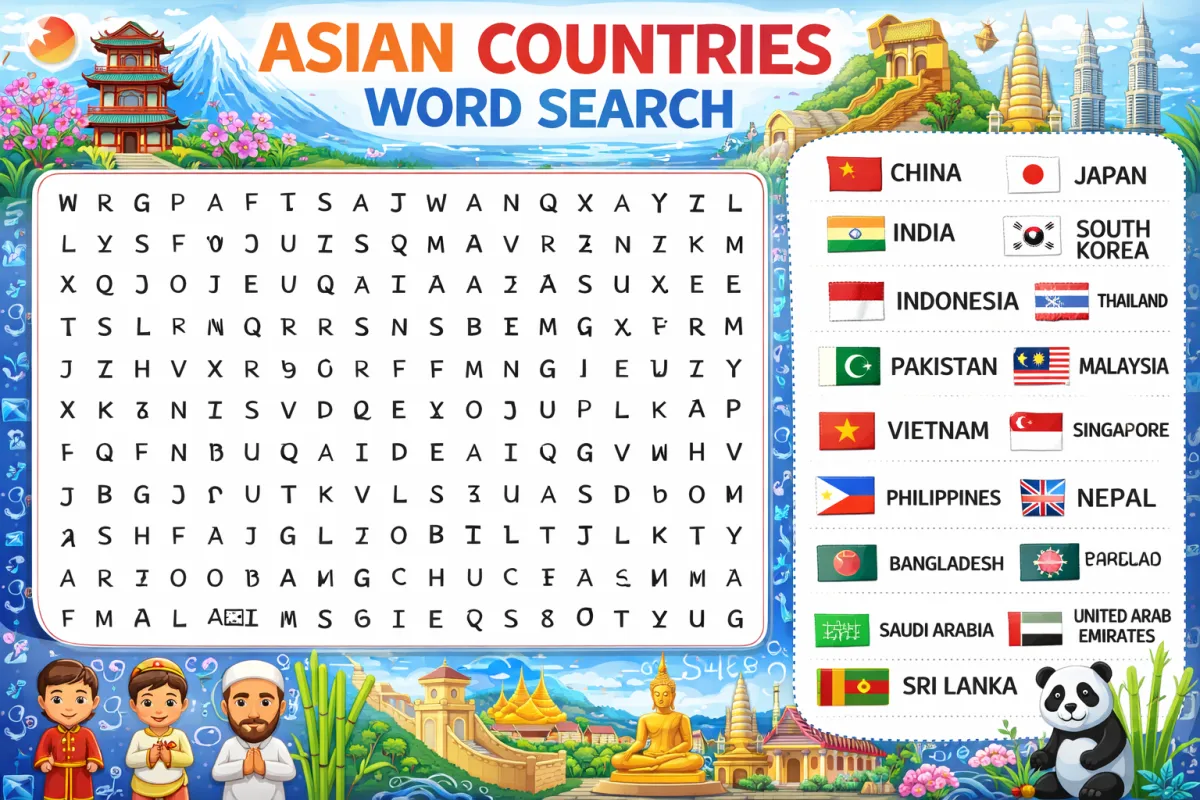
An Asian Countries Word Search is one of the most effective, enjoyable, and research-backed ways to learn the geography of this vast continent. Whether you are a student preparing for a geography exam, a teacher designing an interactive classroom activity, a traveler planning your next adventure, or simply a curious mind seeking to expand your knowledge this guide has everything you need.
In this comprehensive blog post, we will cover: a complete list of Asian countries with key facts, the educational benefits of word puzzles, fascinating trivia about Asian nations, step-by-step tips for solving word searches, and answers to the most frequently asked questions about Asian geography. Let us begin!
What Is an Asian Countries Word Search?
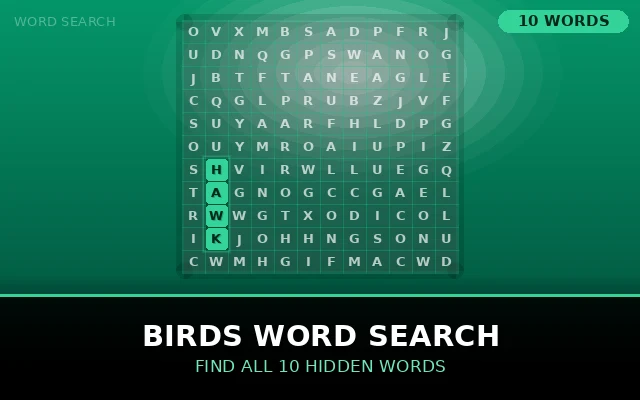
A word search puzzle is a grid of seemingly random letters that contains hidden words arranged horizontally, vertically, or diagonally. An Asian Countries Word Search specifically hides the names of countries located in Asia within this grid.
- Introduction Exploring Asia Through Words
- What Is an Asian Countries Word Search?
- Puzzles:
- Asian Countries by Region
- Why Word Search Puzzles Are Great for Learning Geography
- Tips to Master the Asian Countries Word Search
- Fascinating Trivia About Asian Countries
- Asia at a Glance Key Statistics
- How to Use This Word Search in the Classroom
- Conclusion
These puzzles have been used in educational settings since the 1960s and remain one of the most popular tools for vocabulary reinforcement and geography education. When applied to learning country names, word searches help the brain form strong visual-spatial memory associations, making it easier to recall names during tests, travel, or everyday conversations.
Unlike rote memorization, word puzzles engage active learning your brain must recognize patterns, read letters carefully, and make connections between what it sees and what it already knows. This makes the learning experience both effective and enjoyable.
Puzzles:
Asian Countries by Region
Asia is commonly divided into five major sub-regions. Understanding these regions helps place each country in its geographic and cultural context.
East Asia East Asia is home to some of the world's most powerful economies and ancient civilizations. Key countries include China (Beijing), Japan (Tokyo), South Korea (Seoul), North Korea (Pyongyang), Mongolia (Ulaanbaatar), and Taiwan (Taipei).
South Asia South Asia is one of the most densely populated regions on Earth, containing ancient civilizations, diverse religions, and rapidly growing economies. Key countries include India (New Delhi), Pakistan (Islamabad), Bangladesh (Dhaka), Sri Lanka, Nepal (Kathmandu), Bhutan (Thimphu), Maldives, and Afghanistan (Kabul).
Southeast Asia Southeast Asia is an incredibly diverse region of archipelagos, peninsulas, and mainland territories, famous for its tropical rainforests, ancient temples, and vibrant cultures. Key countries include Indonesia (Nusantara), Philippines (Manila), Vietnam (Hanoi), Thailand (Bangkok), Malaysia (Kuala Lumpur), Singapore, Myanmar (Naypyidaw), Cambodia (Phnom Penh), Laos (Vientiane), Brunei, and Timor-Leste (Dili).
Central Asia Central Asia is a landlocked region known for its Silk Road heritage, nomadic traditions, vast steppes, and significant natural resources. Key countries include Kazakhstan (Astana), Uzbekistan (Tashkent), Tajikistan (Dushanbe), Kyrgyzstan (Bishkek), and Turkmenistan (Ashgabat).
West Asia (The Middle East) West Asia sits at the crossroads of three continents and holds immense historical and geopolitical importance. Key countries include Saudi Arabia (Riyadh), Iran (Tehran), Iraq (Baghdad), Turkey (Ankara), UAE (Abu Dhabi), Israel (Jerusalem), Jordan (Amman), Syria (Damascus), Lebanon (Beirut), Kuwait, Qatar (Doha), Bahrain (Manama), Oman (Muscat), Yemen (Sanaa), Cyprus (Nicosia), Armenia (Yerevan), Azerbaijan (Baku), and Georgia (Tbilisi).
Why Word Search Puzzles Are Great for Learning Geography
Educational research consistently shows that puzzle-based learning significantly improves information retention compared to passive reading. Here are the key reasons why Asian Countries Word Search puzzles are particularly effective:
Active Engagement Unlike simply reading a list of countries, a word search forces you to actively scan, recognize, and process each country name multiple times. This repetition strengthens neural pathways associated with that information.
Spelling Reinforcement Many Asian country names are unfamiliar to students names like 'Kyrgyzstan,' 'Tajikistan,' or 'Brunei Darussalam' can be tricky. Searching for them in a grid forces careful letter-by-letter attention, dramatically improving spelling accuracy.
Dopamine Reward Loops Each time you find a hidden word, your brain releases a small dose of dopamine the reward neurotransmitter. This positive reinforcement makes you want to keep learning, transforming geography study from a chore into a pleasure.
Suitable for All Ages Word searches are accessible to primary school students yet engaging enough for adults. They are used in ESL classrooms, homeschool curricula, corporate training, and even cognitive therapy for seniors.
No Special Materials Needed Unlike many educational tools, a word search requires nothing more than a printed page or a screen, making it one of the most cost-effective learning tools available.
Builds Pattern Recognition Regularly solving word search puzzles improves your ability to identify patterns quickly, a skill that transfers to many other areas of learning including mathematics and language acquisition.
Tips to Master the Asian Countries Word Search
Whether you are a beginner or an experienced puzzle solver, these expert strategies will help you find every hidden country name more quickly and efficiently.
Start with Short Words Begin by looking for shorter country names like 'Iran,' 'Iraq,' 'Laos,' 'Oman,' and 'India.' These are easier to spot and will build your confidence before tackling longer names.
Scan Row by Row Rather than randomly scanning the grid, go through it systematically row by row, top to bottom. This ensures you do not miss any section of the puzzle.
Look for Unusual Letters Country names like 'Kazakhstan' or 'Kyrgyzstan' contain uncommon letters like K and Z. Spotting these rare letters in the grid is a quick way to locate these words.
Check All Eight Directions Words can be hidden horizontally, vertically, or diagonally and sometimes even backwards. Always check all eight possible directions from any starting letter.
Pair with a Map After completing the puzzle, locate each country you found on a physical or digital map. This dual-modal learning creates much stronger geographic memory than either activity alone.
Time Yourself for Challenge Set a timer and try to beat your previous record. Adding a time challenge increases focus and engagement, and over time you will notice your geographical knowledge improving measurably.
Fascinating Trivia About Asian Countries
Asia is a continent of superlatives, extremes, and extraordinary diversity. Here are some of the most fascinating facts:
Highest & Lowest: Asia contains both the highest point on Earth (Mount Everest in Nepal at 8,848.86 m) and the lowest point on Earth's land surface (the Dead Sea at ~430 m below sea level).
Largest Inland Water Body: The Caspian Sea, bordering Kazakhstan, Russia, Azerbaijan, Iran, and Turkmenistan, is the world's largest inland body of water.
Most Populous Metro Area: Tokyo, Japan, is consistently ranked as the world's most populous metropolitan area, with over 37 million inhabitants in its greater urban region.
Ancient Civilizations: Three of the world's four oldest civilizations emerged in Asia — Mesopotamia (Iraq), the Indus Valley Civilization (Pakistan/India), and Ancient China.
Rice Dominance: Asia produces and consumes over 90% of the world's rice. China, India, Indonesia, Bangladesh, and Vietnam are the top rice-producing nations globally.
Religious Diversity: Asia is the birthplace of every major world religion Hinduism, Buddhism, Islam, Judaism, Christianity, Sikhism, Taoism, Confucianism, and Zoroastrianism.
Tech Giants: China's Alibaba and Tencent, South Korea's Samsung, and Japan's Sony are among the world's most powerful technology companies, all headquartered in Asia.
Language Count: More than 2,300 languages are spoken across Asia, making it by far the most linguistically diverse continent on the planet.
Island Nations: Indonesia has over 17,000 islands, making it the world's largest archipelago nation. The Philippines boasts more than 7,600 islands.
Great Wall of China: The Great Wall stretches over 21,000 kilometres the world's longest man-made structure.
Asia at a Glance Key Statistics
Asia covers a total area of 44.6 million km², making it the largest continent on Earth. Its population exceeds 4.7 billion people over 60% of the world's total. There are 48 officially recognized sovereign states, and more than 2,300 languages are spoken across the continent.
China leads Asia with a GDP of approximately $18 trillion USD, while Singapore tops the per-capita income charts at over $65,000 USD. Mount Everest in Nepal stands at 8,848.86 meters the world's highest peak while the Dead Sea sits around 430 meters below sea level. The Yangtze River in China stretches ~6,300 km, the Arabian Desert covers ~2.3 million km², and Mandarin Chinese has approximately 1.1 billion native speakers. Tokyo remains the world's largest city by metro population (37+ million), and the Burj Khalifa in Dubai at 828 meters holds the record as the world's tallest building.
How to Use This Word Search in the Classroom
Teachers and educators have found Asian Countries Word Searches to be extremely versatile teaching tools. Here are some classroom-tested strategies for maximum educational impact:
Pre-Lesson Warm-Up Distribute the word search at the beginning of a geography lesson. Students complete the puzzle first, which primes their brain to recognize and remember the country names they encounter in the main lesson.
Post-Lesson Reinforcement Use the puzzle as a closing activity after a lesson on Asian geography. The act of finding words they have just learned reinforces the lesson content and helps identify which names students may still be struggling with.
Timed Challenge Turn the puzzle into a friendly competition who can find all the country names first? Healthy competition increases engagement and motivation significantly.
Paired Learning Have students work in pairs, with one person searching and the other checking the word list. This promotes communication and cooperative learning skills alongside geography knowledge.
Extension Activity After completing the puzzle, ask students to write three facts about any five countries they found. This converts passive puzzle-solving into active research and writing practice.
Differentiated Versions Create differentiated versions of the puzzle an easy version for younger students containing only 10 common countries, a medium version with 20 countries, and an advanced version featuring all 48 nations including less-familiar names like Timor-Leste, Brunei, and Bhutan.
Read More: European Capitals
Conclusion
Asia is a continent that defies simple description it is ancient and ultra-modern, vast and intimate, spiritually rich and technologically revolutionary. Learning the names of its 48 countries is not just an academic exercise; it is the first step toward understanding more than half of humanity.An Asian Countries Word Search makes that first step enjoyable, memorable, and effective. Whether you are using this puzzle as a student, a teacher, a parent, or a curious traveler, we hope this guide has given you not just a fun activity but a genuine appreciation for the extraordinary diversity and depth of the Asian continent.