The Complete Educational Guide to Learning the Periodic Table Through Puzzles
Elements of Chemistry Word Search: The Complete Educational Guide to Learning the Periodic Table Through Puzzles
Introduction: Why Chemistry Learning Needs a Fresh Approach
Chemistry is widely considered one of the most challenging subjects in science education. Students often struggle not because the concepts are impossibly difficult, but because the sheer volume of new vocabulary element names, chemical symbols, compound terminology, and reaction types creates an overwhelming cognitive load right from the start. Before a student can understand a chemical reaction, they need to know the names and properties of the elements involved. Before they can read a periodic table confidently, they need familiarity with terms like 'atomic number,' 'valence electron,' 'isotope,' and 'electronegativity.'
This is precisely where an elements of chemistry word search becomes an unexpectedly powerful educational tool. Rather than forcing students to stare at dense textbook pages or memorise flashcard stacks, a well-designed chemistry word search puzzle introduces the vocabulary of chemistry in a low-pressure, engaging format. Learners encounter element names, chemical symbols, and scientific terminology repeatedly as they scan the grid building the kind of effortless recognition that supports deeper conceptual understanding when formal instruction follows.
This guide explores everything educators, students, and parents need to know about using elements of chemistry word search puzzles effectively from the science behind why they work, to the specific chemical vocabulary they contain, to practical strategies for creating and solving them at every level.
What Is an Elements of Chemistry Word Search?
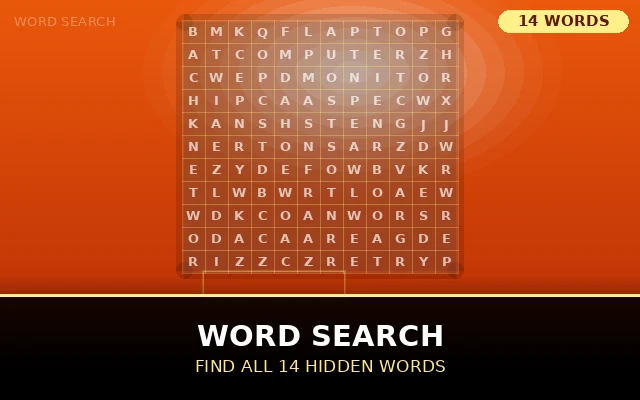
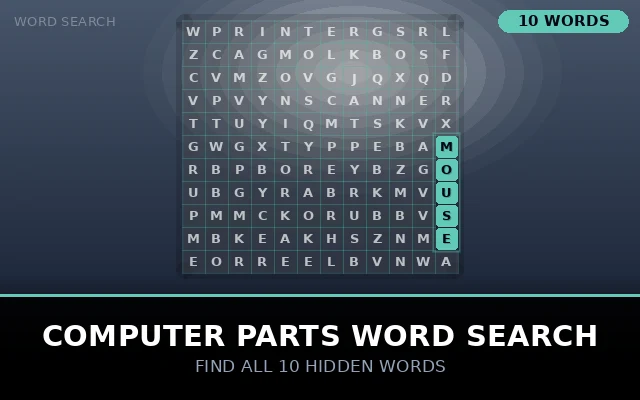
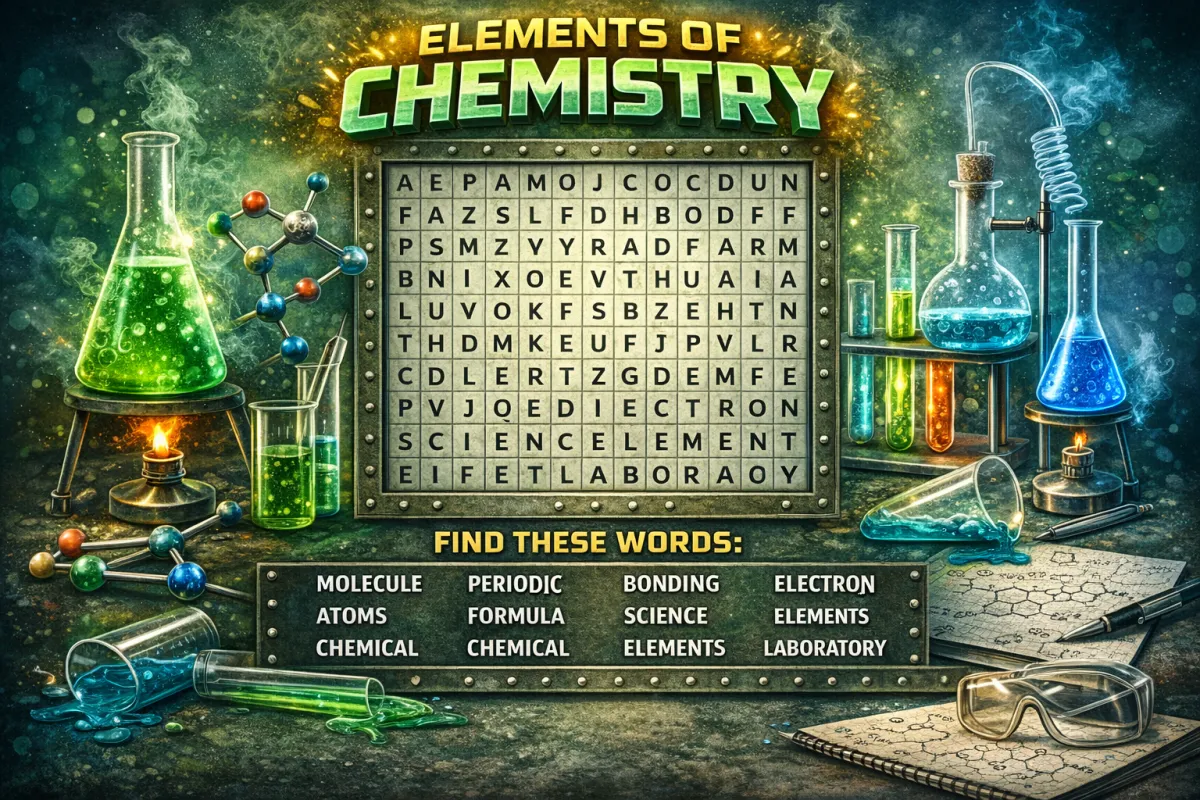
An elements of chemistry word search is a letter-grid puzzle in which the names of chemical elements, symbols, compound types, and related scientific terms are concealed within rows and columns of seemingly random letters. The solver's goal is to locate and circle each hidden word, which may run left to right, right to left, top to bottom, bottom to top, or diagonally in any direction depending on the difficulty level.
- Introduction: Why Chemistry Learning Needs a Fresh Approach
- What Is an Elements of Chemistry Word Search?
- Puzzles:
- The Difference Between an Element Name and a Chemical Symbol
- The Science Behind Why Word Search Puzzles Improve Chemistry Learning
- Spaced Repetition Through Repeated Exposure
- Multi-Sensory Encoding for Stronger Memory
- Key Elements and Chemistry Terms That Appear in Word Search Puzzles
- The Most Common Elements in Chemistry Word Searches
- Periodic Table Concepts in Chemistry Word Searches
- Chemical Bonding and Reaction Vocabulary
- How to Use an Elements of Chemistry Word Search in Teaching
- As a Pre-Unit Vocabulary Primer
- As a Consolidation Activity After Instruction
- As a Diagnostic Assessment Tool
- For Independent and Home Learning
- Strategies for Solving an Elements of Chemistry Word Search Efficiently
- Begin With Unusual Letter Combinations
- Work From Longest to Shortest
- Use the Word List as a Spelling Guide
- Search Systematically Rather Than Randomly
- Creating Your Own Elements of Chemistry Word Search
- Choosing the Right Word List for Your Curriculum
- Setting Grid Size and Difficulty
- Preparing an Accurate Answer Key
- Elements of Chemistry Word Search for Different Age Groups
- Primary School Students (Ages 7 to 11)
- Secondary School Students (Ages 11 to 18)
- University and Adult Learners
- The Role of the Answer Key in Chemistry Word Search Learning
- Integrating Digital Chemistry Word Search Tools
- Conclusion: Making Chemistry Vocabulary Stick Through Puzzle-Based Learning
Unlike a standard vocabulary quiz or a multiple-choice test, the word search format does not require the solver to recall information from memory under pressure. Instead, it trains visual recognition the ability to spot a familiar letter sequence quickly and confidently. For chemistry learners, this is enormously valuable because element names and chemical terms have distinctive spellings that become intuitive through repeated visual exposure.
A basic elements of chemistry word search might include familiar names like HYDROGEN, OXYGEN, CARBON, NITROGEN, SODIUM, and GOLD. More advanced versions expand into lesser-known elements across the full periodic table OSMIUM, THULIUM, HASSIUM, DARMSTADTIUM alongside chemical bonding terms, states of matter, and reaction type vocabulary. The format scales elegantly from primary school science through to advanced secondary and university-level chemistry preparation.
Puzzles:
The Difference Between an Element Name and a Chemical Symbol
One of the most useful features of a chemistry word search is that it can be designed to reinforce both element names and their corresponding chemical symbols simultaneously. A well-crafted puzzle might hide both IRON and FE in the same grid, prompting the solver to recognise that these two very different-looking strings both refer to the same element. Similarly, finding both POTASSIUM and K in the same puzzle plants a seed of understanding about why chemical symbols sometimes bear no obvious resemblance to the English name of the element a quirk that confuses many beginners and deserves deliberate instructional attention.
This dual-format approach makes the elements of chemistry word search a particularly effective vocabulary tool compared to a simple matching exercise, because the solver encounters both the formal name and the shorthand symbol within the same visual context.
The Science Behind Why Word Search Puzzles Improve Chemistry Learning
Educational psychologists have studied pattern recognition tasks for decades, and the findings consistently support the use of structured visual activities as vocabulary-building tools. The process of scanning a letter grid for a target word is not a passive activity it engages multiple cognitive systems simultaneously.
When a student searches for MAGNESIUM in a chemistry word search grid, they hold the spelling of that word in working memory while their visual system scans for matching letter sequences. Each partial match finding M, then MA, then MAG triggers a small anticipatory response that keeps attention engaged. When the complete word is finally located and circled, the brain releases a tiny burst of dopamine, the neurotransmitter associated with reward and motivation. This positive reinforcement makes learners want to continue, which is why students who start a word search often persist until it is completely finished rather than abandoning it midway.
Spaced Repetition Through Repeated Exposure
A well-designed elements of chemistry word search grid does not simply hide each word once. The filler letters are chosen carefully so that partial spellings of target words appear naturally across the grid. A student searching for CHLORINE will encounter the letter sequence CHL, then CLO, then CHLO several times before finally locating the complete word. Each partial encounter is a micro-exposure that reinforces the spelling pattern without the student consciously realising it is happening. This is a practical application of spaced repetition one of the most rigorously supported principles in memory science.
Multi-Sensory Encoding for Stronger Memory
When a student completes a printed elements of chemistry word search with a pencil, they are engaging three sensory channels simultaneously: visual processing (seeing the letter grid), motor processing (drawing a circle around the found word), and linguistic processing (mentally saying the word name as they confirm the find). This multi-sensory encoding creates stronger and more durable memory traces than reading alone. Research in cognitive neuroscience consistently shows that information encoded through multiple sensory pathways is retrieved more easily and accurately than information processed through a single channel.
Key Elements and Chemistry Terms That Appear in Word Search Puzzles
Understanding what vocabulary typically appears in an elements of chemistry word search helps educators design better puzzles and helps students know what to expect and study in advance.
The Most Common Elements in Chemistry Word Searches
The elements that appear most frequently in educational chemistry word searches are those from the first four rows of the periodic table, as these are the elements most commonly encountered in school-level chemistry curricula. These include:
HYDROGEN: atomic number 1, symbol H, the lightest and most abundant element in the universe
HELIUM: atomic number 2, symbol He, the noble gas used in balloons and cryogenic cooling
LITHIUM : atomic number 3, symbol Li, increasingly important in battery technology
CARBON : atomic number 6, symbol C, the foundation of all organic chemistry
NITROGEN : atomic number 7, symbol N, making up approximately 78 percent of Earth's atmosphere
OXYGEN : atomic number 8, symbol O, essential for combustion and cellular respiration
SODIUM : atomic number 11, symbol Na, central to electrolyte balance in living organisms
MAGNESIUM : atomic number 12, symbol Mg, important in plant photosynthesis
ALUMINIUM : atomic number 13, symbol Al, the most abundant metal in Earth's crust
SILICON : atomic number 14, symbol Si, the foundation of semiconductor technology
PHOSPHORUS : atomic number 15, symbol P, essential in DNA structure and ATP energy transfer
SULFUR : atomic number 16, symbol S, key in amino acids and industrial chemical processes
CHLORINE : atomic number 17, symbol Cl, widely used in water purification
CALCIUM :atomic number 20, symbol Ca, vital for bone structure and muscle function
IRON :atomic number 26, symbol Fe, the most widely used metal in construction and manufacturing
COPPER : atomic number 29, symbol Cu, essential for electrical wiring and plumbing
ZINC : atomic number 30, symbol Zn, used in galvanisation and immune function
SILVER : atomic number 47, symbol Ag, prized for conductivity and antimicrobial properties
GOLD : atomic number 79, symbol Au, the benchmark of chemical stability and value
LEAD : atomic number 82, symbol Pb, historically used in pipes and paint before toxicity was understood
Periodic Table Concepts in Chemistry Word Searches
Beyond individual element names, a comprehensive elements of chemistry word search will often include the conceptual vocabulary of the periodic table itself. Terms like PERIOD, GROUP, BLOCK, ORBITAL, VALENCE, ISOTOPE, PROTON, NEUTRON, ELECTRON, NUCLEUS, and ATOMIC NUMBER appear in intermediate and advanced puzzles because understanding the structure of the periodic table is as important as knowing individual element names.
The families of elements also provide rich word search vocabulary: ALKALI METALS, ALKALINE EARTH, TRANSITION METAL, LANTHANIDE, ACTINIDE, HALOGEN, NOBLE GAS, and METALLOID are terms that serious chemistry students need to internalise. Finding these in a word search grid especially when they appear adjacent to the names of elements that belong to each family creates associative memory links that support later conceptual learning.
Chemical Bonding and Reaction Vocabulary
More advanced elements of chemistry word search puzzles expand the vocabulary scope to include chemical processes and bonding terminology. Words such as COVALENT, IONIC, METALLIC, POLAR, NONPOLAR, ELECTRONEGATIVITY, OXIDATION, REDUCTION, CATALYST, PRECIPITATE, ELECTROLYTE, SOLUTION, SOLUTE, SOLVENT, MOLE, MOLARITY, ENTHALPY, and ENTROPY transform a word search from a simple element-naming activity into a genuine chemistry vocabulary builder appropriate for GCSE, A-Level, or AP Chemistry preparation.
How to Use an Elements of Chemistry Word Search in Teaching
Chemistry teachers and science educators have developed a range of creative and pedagogically sound approaches for integrating word search puzzles into their lessons. The most effective approaches treat the elements of chemistry word search as a deliberate instructional tool rather than a time-filler, connecting it clearly to the learning objectives of the unit being studied.
As a Pre-Unit Vocabulary Primer
Introducing an elements of chemistry word search at the very beginning of a new unit before any formal teaching has taken place exposes students to the vocabulary they are about to encounter in a completely stress-free way. Students who complete a periodic table word search before their first lesson on atomic structure will have already seen words like PROTON, NEUTRON, VALENCE, and ISOTOPE multiple times. When those same words appear in a textbook explanation or a teacher's lecture, they feel familiar rather than foreign. This pre-exposure effect is well documented in educational psychology and significantly reduces the cognitive load that new vocabulary places on learners during formal instruction.
As a Consolidation Activity After Instruction
At the close of a chemistry lesson, an elements of chemistry word search serves as a consolidation exercise that cements the day's vocabulary in long-term memory. After students have been introduced to the transition metals through direct instruction, for instance, completing a word search that hides the names of all 38 transition elements gives them a second, third, and fourth exposure to each name in a relaxed and engaging context. The combination of instruction followed by active recognition practice is one of the most powerful sequences in vocabulary pedagogy.
As a Diagnostic Assessment Tool
When collected and analysed after completion, student word search worksheets can reveal which terms students are struggling to recognise. If the majority of a class has correctly found HYDROGEN, OXYGEN, and CARBON but has consistently missed BERKELIUM, FERMIUM, and MEITNERIUM, the teacher gains clear diagnostic information about which elements need more instructional attention. This kind of low-stakes diagnostic data is difficult to obtain from traditional tests without creating student anxiety, making the word search a uniquely comfortable assessment vehicle.
For Independent and Home Learning
For self-directed learners, homeschooling families, and students studying for chemistry examinations outside of school, an elements of chemistry word search provides a productive and enjoyable independent study activity. Unlike practice problems, which require a full understanding of chemical calculations to be useful, word search puzzles are productive at any stage of learning. A student who has just begun chemistry study can benefit from a simple elements word search focused on familiar names just as much as a pre-exam student benefits from an advanced puzzle packed with obscure actinide names and bonding terminology.
Strategies for Solving an Elements of Chemistry Word Search Efficiently
Whether working through a beginner puzzle with ten familiar element names or tackling an advanced grid filled with complex actinide and lanthanide terminology, applying a few deliberate solving strategies makes the experience both faster and more instructionally valuable.
Begin With Unusual Letter Combinations
Chemical element names are rich in unusual letter combinations that stand out in a sea of common letters. The XE in XENON, the YT in YTTRIUM, the NE in NEON, the PH in PHOSPHORUS, and the TH in THALLIUM are distinctive clusters that the eye can be trained to find quickly. Starting a solve by scanning specifically for these high-visibility combinations locates anchor words early and eliminates large sections of the grid from further consideration.
Work From Longest to Shortest
Long element names like CALIFORNIUM, PRASEODYMIUM, EINSTEINIUM, and BERKELIUM are actually easier to find in a grid than short names like TIN, GOLD, or LEAD, because they occupy more space and leave a larger visual footprint. Starting with the longest words on the word list and working toward the shortest is a consistently effective strategy in any elements of chemistry word search. Once the long words are located and their letters are crossed out mentally, the remaining grid becomes less cluttered and shorter words become easier to identify.
Use the Word List as a Spelling Guide
For many students, the elements of chemistry word search doubles as an unexpected spelling lesson. Element names like MOLYBDENUM, DYSPROSIUM, and GADOLINIUM are notoriously difficult to spell correctly. Because the word list on the puzzle sheet displays the correct spelling of each term, students who study the word list carefully before beginning the search effectively rehearse the spelling of each element name before encountering it in the grid. This pre-study habit significantly speeds up the search and simultaneously reinforces correct spelling patterns.
Search Systematically Rather Than Randomly
Random scanning is the least efficient approach to any word search puzzle. A systematic grid scan moving left to right across each row from top to bottom, then scanning each column from left to right ensures that every cell in the grid is examined at least once. After the horizontal and vertical passes, a diagonal scan in both directions completes a thorough examination of the grid. This methodical approach is especially important in large chemistry word search grids where dozens of elements are hidden in a 25 by 25 or larger letter matrix.
Creating Your Own Elements of Chemistry Word Search
Teachers, tutors, and educational content creators who want to design a custom elements of chemistry word search have access to a wide range of free and low-cost tools that make the process straightforward. A custom puzzle allows the word list to be perfectly aligned with the specific elements and concepts being taught at any given point in the curriculum.
Choosing the Right Word List for Your Curriculum
The effectiveness of any elements of chemistry word search depends heavily on the quality of its word list. A well-chosen list should include a mix of familiar anchor elements that students are already beginning to know and less familiar terms that stretch their knowledge into new territory. For a secondary school class just beginning periodic table study, a list of twenty to twenty-five elements from the first three periods makes an ideal starting point. For a class preparing for advanced examinations, the word list might encompass all lanthanide and actinide series elements, bonding terminology, and reaction type vocabulary potentially spanning forty to sixty terms across a large grid.
Setting Grid Size and Difficulty
The grid size should be matched to the total letter count of the word list. A good rule of practice is that the grid area should be at least three times the total letter count of all hidden words combined, ensuring that there is enough space for filler letters without making the grid feel impossibly dense. For a twenty-word list with an average word length of eight letters, a 20 by 20 grid is usually appropriate. For longer word lists or longer individual words, stepping up to a 25 by 25 grid maintains the right level of challenge without tipping the puzzle into frustration.
Difficulty is primarily controlled by direction options. Restricting hidden words to horizontal and vertical directions creates a beginner-friendly puzzle. Adding diagonal words increases challenge significantly. Including backwards words in all eight directions creates the hardest possible grid and is most appropriate for advanced students who already have strong familiarity with the vocabulary being used.
Preparing an Accurate Answer Key
Every elements of chemistry word search should be accompanied by a complete and accurate answer key that shows the location, direction, and spelling of every hidden word. The answer key serves multiple educational purposes: it allows teachers to grade completed worksheets quickly, it gives self-directed learners a means of self-checking their work, and it serves as a diagnostic tool when compared against student attempts. Preparing the answer key before distributing the puzzle also ensures that the puzzle generator has placed every word correctly a step that is easy to overlook but critically important for maintaining credibility with students who complete the puzzle and then discover that one of the words was never actually hidden in the grid.
Elements of Chemistry Word Search for Different Age Groups
Primary School Students (Ages 7 to 11)
For younger learners encountering chemistry vocabulary for the first time, an elements of chemistry word search should use the most familiar and phonetically straightforward element names: GOLD, IRON, ZINC, TIN, LEAD, CARBON, OXYGEN, and COPPER are all excellent choices. The grid should be small 12 by 12 or 15 by 15 cells and words should be hidden only horizontally and vertically to avoid confusion. Colourful design and an accompanying illustration of the periodic table with the featured elements highlighted in a corresponding colour helps young learners make the connection between the puzzle vocabulary and the actual scientific context.
Secondary School Students (Ages 11 to 18)
Secondary school students benefit from elements of chemistry word search puzzles that mirror their current syllabus content. A class studying Group 1 alkali metals benefits from a puzzle focused on LITHIUM, SODIUM, POTASSIUM, RUBIDIUM, CAESIUM, and FRANCIUM alongside conceptual terms like REACTIVITY, ELECTROLYSIS, and IONIC BOND. A class covering the transition metals benefits from a comprehensive puzzle that hides all ten first-row transition elements alongside OXIDATION STATE, CATALYST, and COORDINATE BOND. This curriculum-aligned approach ensures that the word search activity reinforces precisely the vocabulary that formal assessments will test.
University and Adult Learners
At university level and in professional scientific contexts, an elements of chemistry word search can venture into highly specialised vocabulary territory. Puzzles focused on actinide chemistry might hide URANIUM, THORIUM, PLUTONIUM, AMERICIUM, CURIUM, BERKELIUM, CALIFORNIUM, EINSTEINIUM, FERMIUM, MENDELEVIUM, NOBELIUM, and LAWRENCIUM alongside terminology like FISSION, FUSION, RADIOACTIVE DECAY, HALF-LIFE, and TRANSURANIUM. For chemistry students preparing for competitive examinations or postgraduate study, working through these advanced word searches while simultaneously consulting reference material about each element transforms a simple puzzle into a genuinely productive study session.
The Role of the Answer Key in Chemistry Word Search Learning
The chemistry word search answer key is one of the most instructionally valuable components of the entire puzzle activity, yet it is also one of the most frequently misunderstood. Many educators worry that making the answer key available to students will encourage them to skip the solving process entirely and simply copy the answers. In practice, this concern rarely reflects what actually happens when students are given open access to the answer sheet alongside the puzzle.
Research on self-regulated learning consistently shows that students who genuinely want to learn which is most students, even if their motivation is sometimes hard to see prefer to find the answers themselves and only consult the key when they are genuinely stuck. The satisfaction of finding a word independently is its own reward, and most students value that reward enough to try seriously before giving up.
When the answer key is used correctly as a self-checking tool after a genuine solving attempt it becomes a powerful metacognitive instrument. Students who review the answer key after completing the puzzle can identify exactly which words they failed to find, examine the letter context around each missed word, and reflect on why that word was harder to locate than others. Was the word hidden in a backwards diagonal direction that the student did not think to check? Was the spelling unfamiliar enough that the eye skipped past it? This kind of reflective analysis is one of the highest-order thinking activities that a word search puzzle can generate.
Integrating Digital Chemistry Word Search Tools
The availability of interactive digital platforms for elements of chemistry word search activities has expanded the possibilities for both classroom and independent use significantly. Online word search tools offer features that printed worksheets simply cannot match.
Interactive digital chemistry word searches provide immediate feedback when a word is found, automatically highlighting the discovered word in the grid and striking it from the word list. This real-time reinforcement strengthens the association between the letter sequence and the element name more effectively than manually circling words on paper. Timer modes allow students to challenge their own completion speed across multiple sessions, building both familiarity with the vocabulary and fluency in visual pattern recognition.
Some platforms offer adaptive difficulty automatically increasing grid size and word complexity as the learner's performance improves. Others integrate brief element fact cards that appear whenever a word is successfully found, providing a contextual burst of information (the element's atomic number, common uses, and discovery date, for instance) that transforms the word search into a combined vocabulary and content learning experience. These richer digital formats are particularly well suited to flipped classroom environments where students complete interactive activities independently at home and then apply their vocabulary knowledge during classroom discussions and practical laboratory sessions.
Read More: Action Heroes
Conclusion: Making Chemistry Vocabulary Stick Through Puzzle-Based Learning
The elements of chemistry word search occupies a unique and valuable niche in science education. It is simple enough to be accessible to a seven-year-old encountering element names for the first time, yet versatile enough to challenge an A-Level chemistry student working through the lanthanide series before a high-stakes examination. It requires no equipment beyond a printed sheet and a pencil, yet it engages multiple cognitive systems simultaneously in a way that passive reading simply cannot match.
What makes the elements of chemistry word search particularly powerful is not the puzzle itself, but the way it functions as a bridge. It bridges the gap between unfamiliar vocabulary and comfortable familiarity. It bridges the gap between passive exposure and active recognition. And when used thoughtfully as part of a deliberate instructional sequence, accompanied by context and followed by reflection it bridges the gap between knowing what a word looks like and understanding what it means.
Every student who picks up a chemistry word search and works through it with genuine engagement is building the vocabulary foundation that all deeper chemistry learning rests upon. And every teacher who designs a curriculum-aligned elements of chemistry word search for their class is giving their students a gift: the gift of encountering complex scientific vocabulary in a safe, engaging, and genuinely enjoyable way before the pressure of formal assessment begins.
Whether you are a student looking for a new way to study the periodic table, a teacher seeking a fresh classroom activity, a parent supporting home learning, or a puzzle enthusiast with a passion for science, the elements of chemistry word search offers something genuinely valuable. Start simple, build gradually, reflect carefully and let the puzzle do its quiet, powerful work.