Fairy Tales Word Search: A Magical Journey Through Storytelling
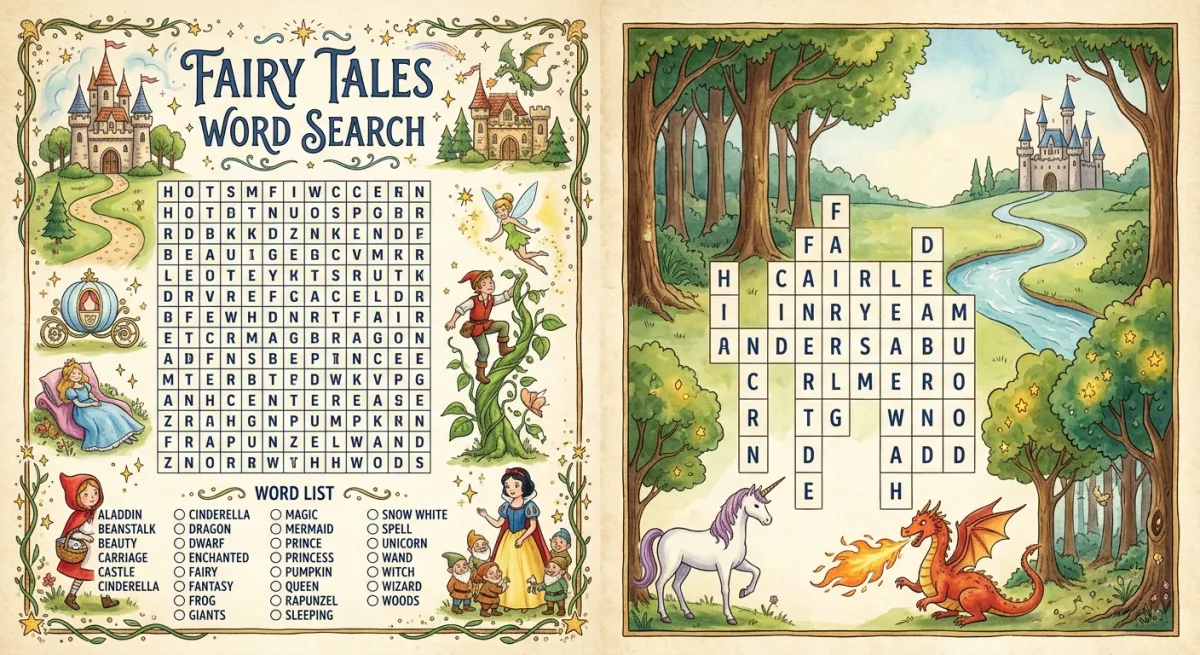
Long before movies and television, fairy tales carried lessons, wonder, and adventure from one generation to the next through the simple power of storytelling. A fairy tales word search takes this beloved tradition and turns it into an engaging vocabulary puzzle, hiding the language of castles, curses, and happy endings inside a letter grid for solvers to discover one enchanting word at a time.
What Is a Fairy Tales Word Search?
A fairy tales word search is a grid-based puzzle in which words related to classic fairy tale characters, settings, and story elements are hidden horizontally, vertically, diagonally, or backwards among rows of letters. Solvers use a provided word list to scan the grid carefully, circling each hidden term as it is found. Rather than presenting storytelling vocabulary as a plain list to memorize, this puzzle format wraps the learning experience inside an interactive challenge that keeps solvers engaged and delighted from the first hidden word to the last.
What makes this theme especially appealing is how deeply familiar fairy tales already are to most children. Whether introduced through bedtime stories, picture books, or animated films, these classic tales carry built-in emotional connection, and a fairy tales word search channels that existing familiarity into a genuinely enjoyable vocabulary-building activity.
Why Storytelling-Themed Word Searches Work So Well
Word search puzzles have long been recognized as effective tools for reinforcing vocabulary and spelling, and pairing that format with fairy tale vocabulary adds a powerful layer of motivation. Because these stories are already deeply familiar and beloved, the process of searching for a word like "enchanted" or "kingdom" inside a dense grid feels less like schoolwork and more like an extension of the magical stories children already know.
This activity also strengthens several cognitive skills at once. Locating a hidden word requires the solver to hold a target term in working memory while systematically scanning rows and columns, a task that builds sustained attention and visual pattern recognition. For children who might resist a standard vocabulary worksheet, a fairy tales word search offers a playful, low-pressure way to practice exactly those same skills without the activity ever feeling like a chore.
There is also a genuine literacy benefit tied to this theme. Fairy tales often introduce children to foundational storytelling concepts, such as heroes, villains, and moral lessons, that will reappear throughout their reading lives. A fairy tales word search reinforces vocabulary tied to these story elements, helping build a framework for understanding narrative structure that extends well beyond any single tale.
Building an Enchanting Word List
Creating an effective fairy tales word search starts with a well-organized word list that spans several categories:
Classic Characters – Princess, prince, witch, and dragon anchor most puzzles with widely recognized vocabulary tied to the archetypal figures found across countless fairy tales.
Magical Elements – Enchanted, spell, curse, and wish introduce vocabulary tied to the magical forces that drive so many classic story plots forward.
Settings and Symbols – Words like castle, forest, and tower round out the list with vocabulary tied to the classic settings where fairy tale adventures typically unfold.
Story Structure Terms – Terms such as fable, legend, and happily-ever-after add vocabulary describing the broader storytelling traditions that fairy tales belong to.
Balancing short, familiar words with a handful of longer or more whimsical ones, such as "enchanted" or "happily-ever-after," ensures that a fairy tales word search remains engaging for a wide range of ages rather than feeling either too simple or too repetitive.
-
Island Nations Word Search
-
Caribbean Islands Word Search
-
African Countries Word Search
-
South American Countries
-
US States Word Search
-
World Capitals Word Search
Adjusting Difficulty for Every Age Group
As with any word search, difficulty depends on grid size, total word count, and the directions words are allowed to appear in. A smaller 10x10 grid featuring a dozen straightforward horizontal words works well for young children or early readers just becoming comfortable with the puzzle format. As solvers grow more confident, expanding to a 15x15 or 20x20 grid, adding diagonal and backwards placements, and introducing longer or less familiar storytelling terms creates a genuinely satisfying challenge for older students and lifelong fairy tale fans.
Many teachers prepare two versions of the same fairy tales word search, a simplified beginner grid and a more advanced version, allowing the same magical theme to serve an entire classroom regardless of individual reading levels.
Where This Puzzle Shines
A fairy tales word search fits naturally into a wide variety of settings. Elementary school teachers frequently use it during a unit on classic literature or storytelling traditions, giving students a fun way to build vocabulary before diving into a favorite fairy tale together as a class. Parents planning a princess or fairy tale-themed birthday party can print copies as table activities or party favors, giving young guests something engaging to do while waiting for games to begin.
Libraries running story time programs often include a fairy tales word search alongside picture book displays, using familiar character names to draw young readers toward classic tales they might not have encountered yet. Homeschool families studying world folklore can pair this puzzle with a comparison of fairy tales from different cultures, using the puzzle as a fun reinforcement activity rather than a standalone worksheet.
Even outside of structured settings, many adults enjoy fairy tale-themed puzzles simply because they capture the same nostalgic sense of wonder these stories have carried since childhood, treating the activity much like a relaxing crossword, but with the added enjoyment of magical, familiar vocabulary.
The Lessons Behind Every Tale
Part of what makes a fairy tales word search so rewarding is the genuine cultural history behind many of the words included. Fairy tales were traditionally passed down through oral storytelling long before they were ever written down, often carrying moral lessons meant to teach listeners about courage, kindness, or the consequences of poor choices. Many familiar tales exist in slightly different versions across cultures, with similar story structures appearing in folklore from countries around the world, each reflecting its own unique cultural values and traditions.
These small but fascinating details give a fairy tales word search extra educational depth beyond simple word recognition. A teacher or parent can use each word found in the puzzle as a starting point for a brief conversation about a favorite tale's origin or lesson, turning a few minutes of puzzle-solving into a genuinely enriching discussion about storytelling traditions.
- Robots and Robotics Word Search
- Knights and Castles Word Search
- Ice cream word search
- Perfumes and Fragrances Word Search
- Renaissance Art Word Search
- Pirates and Treasure Word Search
- Butterflies and Moths Word Search
Tips for Solving This Puzzle Quickly
Solvers looking to move through a fairy tales word search efficiently can use a few simple strategies. First, scan the entire grid once for short, commonly recognized words like "witch" or "spell," since these tend to stand out immediately. Next, focus on the longest words in the list, such as "enchanted" or "kingdom," as their unusual letter combinations make them easier to isolate once the general shape is known. Working systematically through the grid, row by row and then column by column, helps ensure that diagonal or backwards words are not overlooked.
A Shared Activity Across Generations
Because so many fairy tales remain beloved for generations after they were first told, a fairy tales word search often works wonderfully as a shared activity between parents and children, or even grandparents and grandchildren. A grandparent who grew up hearing a particular tale might delight in seeing their own grandchild recognize the same characters and vocabulary, creating a small, meaningful point of connection built entirely around a shared love of storytelling passed down through the family.
Conclusion
A fairy tales word search brings the timeless magic of classic storytelling onto the page, turning familiar vocabulary into a genuinely engaging puzzle experience. By combining beloved characters, magical elements, and classic settings within a flexible, scalable format, this puzzle appeals to young children and lifelong fairy tale enthusiasts alike. Whether used as a classroom activity, a themed birthday party favor, or simply a nostalgic personal pastime, a well-built fairy tales word search proves that learning new vocabulary can be just as enchanting as the stories that inspired it.