Robots and Robotics Word Search: Engineering Vocabulary for the Future
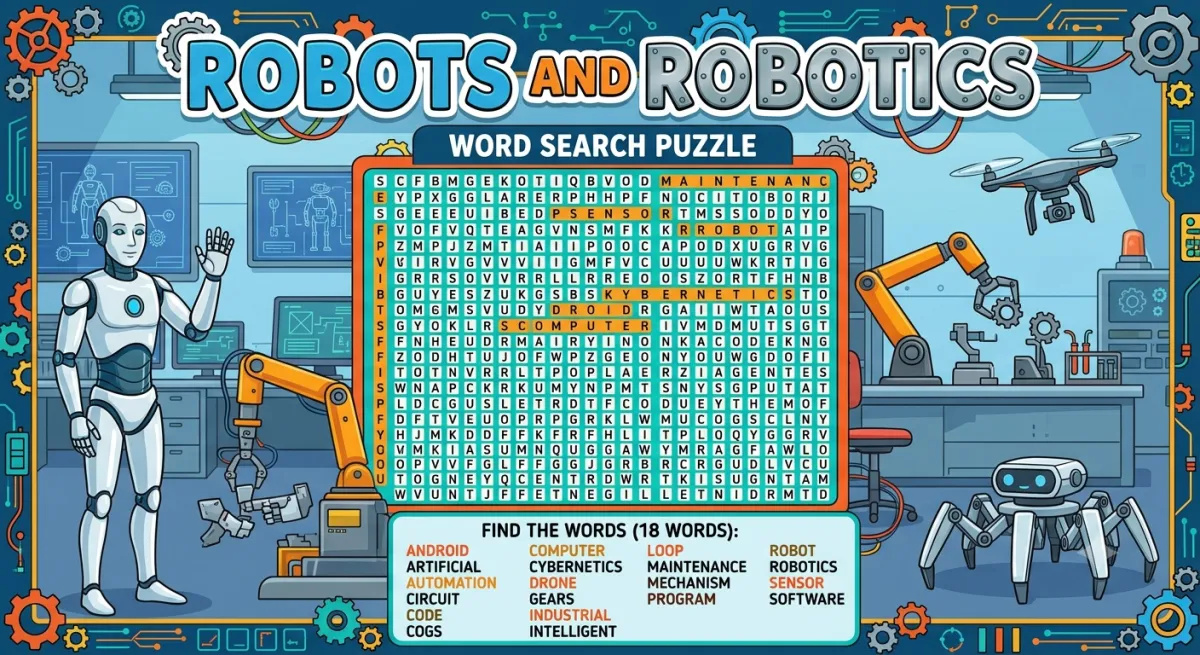
From factory assembly lines to household vacuum cleaners, robots have quietly become part of everyday life, while robotics continues to capture the imagination of students dreaming of building machines of their own. A robots and robotics word search takes this exciting, forward-looking subject and turns it into an engaging vocabulary puzzle, hiding the language of sensors, circuits, and automation inside a letter grid for solvers to discover one word at a time.
What Is a Robots and Robotics Word Search?
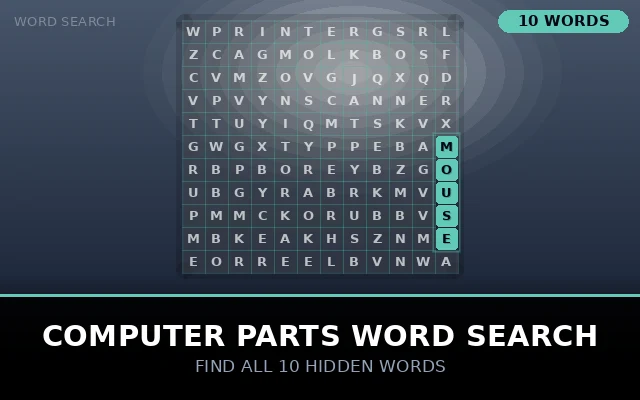
A robots and robotics word search is a grid-based puzzle in which words related to robotic engineering, components, and automation are hidden horizontally, vertically, diagonally, or backwards among rows of letters. Solvers use a provided word list to scan the grid carefully, circling each hidden term as it is found. Rather than presenting engineering vocabulary as a plain list to memorize, this puzzle format wraps the learning experience inside an interactive challenge that keeps solvers engaged from the first hidden word to the last.
What makes this theme especially valuable is how directly it connects to a rapidly growing field that increasingly shapes daily life. From manufacturing to healthcare to space exploration, robotics touches nearly every industry, making this vocabulary genuinely relevant to students considering future careers in engineering, computer science, or related technical fields.
Why STEM-Themed Word Search Work So Well
Word search puzzles have long been recognized as effective tools for reinforcing vocabulary and spelling, and pairing that structure with robotics terminology adds genuine educational depth. Many robotics terms, such as "actuator" or "servo," describe fairly specific engineering concepts that new students often find confusing without a proper introduction. Searching for these words inside an It wordsearch puzzle format offers a low-pressure way to build familiarity before diving into more formal robotics coursework.

- What Is a Robots and Robotics Word Search?
- Why STEM-Themed Word Search Work So Well
- Building a Strong Robotics Word List
- Adjusting Difficulty for Every Age Group
- Where This Puzzle Shines
- The Innovation Behind Every Word
- Tips for Solving This Puzzle Quickly
- Preparing Students for an Automated Future
- A Field That Rewards Early Curiosity
- Conclusion
This activity also strengthens several cognitive skills at once. Locating a hidden word requires the solver to hold a target term in working memory while systematically scanning rows and columns, a task that builds sustained attention and visual pattern recognition. For students participating in robotics clubs or STEM programs, a robots and robotics word search offers an engaging warm-up activity that reinforces vocabulary they will use constantly while building and programming their own robots.
There is also a genuine career-exploration dimension worth noting. Encountering terms like "automation" or "artificial intelligence" in a puzzle format often sparks curiosity about the wide range of careers connected to robotics, from mechanical engineering to software development, giving educators a natural opening to discuss future educational and career paths with interested students who may not have considered these options before.
Building a Strong Robotics Word List
Creating an effective robots and robotics word search starts with a well-organized word list that spans several categories:
Core Components – Sensor, motor, circuit, and battery anchor most puzzles with vocabulary tied to the fundamental building blocks of any robot.
Movement and Mechanical Terms – Actuator, servo, gear, and joint introduce vocabulary tied to how robots physically move and interact with their environment.
Programming and Control Concepts – Words like algorithm, code, and automation round out the list with vocabulary tied to how robots are instructed to perform specific tasks.
Advanced and Future-Focused Terms – Terms such as artificial intelligence, autonomous, and drone give more advanced students something a bit more challenging, connecting the puzzle to cutting-edge developments in the field.
Balancing shorter, familiar terms with a handful of longer or more technical ones, such as "autonomous" or "actuator," ensures that a robots and robotics word search remains engaging for beginner and advanced students alike.
-
Country Music Artists
-
Rock Music Legends
-
Hip-Hop Artists Word Search
-
Musical Instruments Word Search
-
Music Genres Word Search
-
Famous Bands Word Search
-
Music Terms Word Search
Adjusting Difficulty for Every Age Group
As with any word search, difficulty depends on grid size, total word count, and the directions words are allowed to appear in. A smaller 10x10 grid featuring a dozen widely recognized terms in straightforward horizontal placements works well for younger students just beginning to explore basic STEM vocabulary. As solvers grow more confident, expanding to a 15x15 or 20x20 grid, adding diagonal and backwards placements, and introducing more advanced engineering terminology creates a genuinely challenging experience for older students and dedicated robotics enthusiasts.
Many STEM teachers and robotics club coaches prepare two versions of the same robots and robotics word search, a simplified beginner grid and a more advanced version, allowing the same forward-looking theme to serve an entire program regardless of individual grade level or prior technical knowledge.
Where This Puzzle Shines
A robots and robotics word search fits naturally into a wide variety of educational settings. STEM teachers frequently use it when introducing a robotics unit, giving students a fun way to build vocabulary before diving into more detailed lessons on building and programming actual robots. Robotics clubs and after-school engineering programs often use this puzzle as a warm-up activity before hands-on building sessions, helping students review key terminology in a relaxed, low-pressure format.
Science museums and technology centers with robotics exhibits sometimes include a version of this puzzle in educational handouts, reinforcing what visitors just learned while exploring interactive robot displays. Summer STEM camps frequently incorporate this puzzle into welcome packets, giving new campers a fun way to become familiar with terminology they will use throughout their time in the program.
Even outside of formal educational settings, many technology enthusiasts enjoy STEM-themed puzzles simply because the subject matter feels genuinely exciting and forward-looking, treating the activity much like a relaxing trivia session, but with the added benefit of reinforcing knowledge tied to rapidly advancing technology.
- Baking and Desserts Word Search
- Colors Word Search
- Cartoon Characters Word Search
- Wedding Word Search
- Photography Word Search
- Circus and Carnival Word Search
- Magic Tricks and Illusions Word Search
- Jazz Music Word Search
- Bicycles and Cycling Word Search
The Innovation Behind Every Word
Part of what makes a robots and robotics word search so rewarding is the genuine innovation behind many of the words included. A servo motor allows precise control over rotational movement, forming the basis for how many robotic arms and joints operate with remarkable accuracy. Sensors give robots the ability to perceive their environment, whether detecting light, distance, or temperature, allowing them to respond intelligently to changing conditions rather than following a single fixed set of instructions.
These small but fascinating details give a robots and robotics word search extra educational depth beyond simple word recognition. A teacher or parent can use each word found in the puzzle as a jumping-off point for a quick fact about how modern robots actually function, turning a few minutes of puzzle-solving into a genuine engineering lesson.
Tips for Solving This Puzzle Quickly
Solvers looking to move through a robots and robotics word search efficiently can use a few simple strategies. First, scan the entire grid once for short, commonly recognized words like "code" or "gear," since these tend to stand out immediately. Next, focus on the longest words in the list, such as "autonomous" or "actuator," as their unusual letter combinations make them easier to isolate once the general shape is known. Working systematically through the grid, row by row and then column by column, helps ensure that diagonal or backwards words are not overlooked.
Preparing Students for an Automated Future
As automation and robotics continue reshaping industries ranging from manufacturing to healthcare, building familiarity with this vocabulary early gives students a genuine head start in understanding the world they are growing up in. A robots and robotics word search offers a low-pressure way to introduce this rapidly expanding vocabulary well before students encounter it in a formal engineering or computer science course, helping ensure they feel equipped rather than overwhelmed when these topics eventually arise in more advanced coursework.
A Field That Rewards Early Curiosity
Robotics stands out among STEM subjects for how tangibly it rewards curiosity, since even a basic understanding of vocabulary like "sensor" or "circuit" can help a student follow along during a hands-on building session far more confidently than starting with no framework at all. A robots and robotics word search offers exactly this kind of low-pressure vocabulary foundation, giving students a comfortable starting point before they ever pick up a screwdriver or write their first line of code, making the eventual hands-on learning experience feel far less intimidating.
Conclusion
A robots and robotics word search brings the exciting language of engineering and automation onto the page, turning technical vocabulary into a genuinely engaging puzzle experience. By combining core components, movement mechanics, and advanced programming concepts within a flexible, scalable format, this puzzle appeals to beginning students and dedicated robotics enthusiasts alike. Whether used in a STEM classroom, a robotics club meeting, or simply as a relaxing personal pastime, a well-built robots and robotics word search proves that learning the vocabulary of the future can be just as engaging as building the robots themselves.