Colors Word Search: A Bright and Simple Way to Build Vocabulary
A cartoon characters word search is a great way to pay tribute to the favorite TV shows and engage children and adults in expanding their vocabulary. The puzzle involves both the most popular and less known cartoon characters, provides versatility and variety, and can be solved by anybody familiar with the characters. Such a word search can be used both as an educational tool in a classroom or a party game for a themed birthday party.
What Is a Colors Word Search?
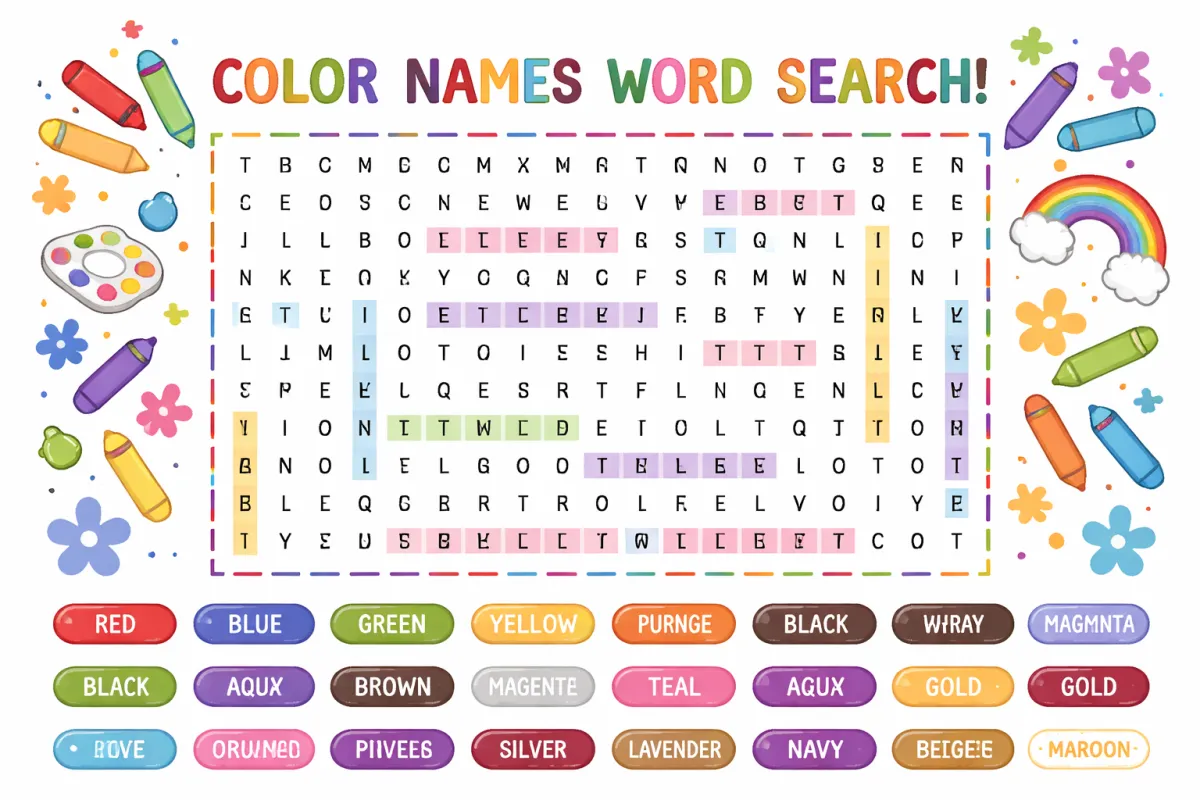
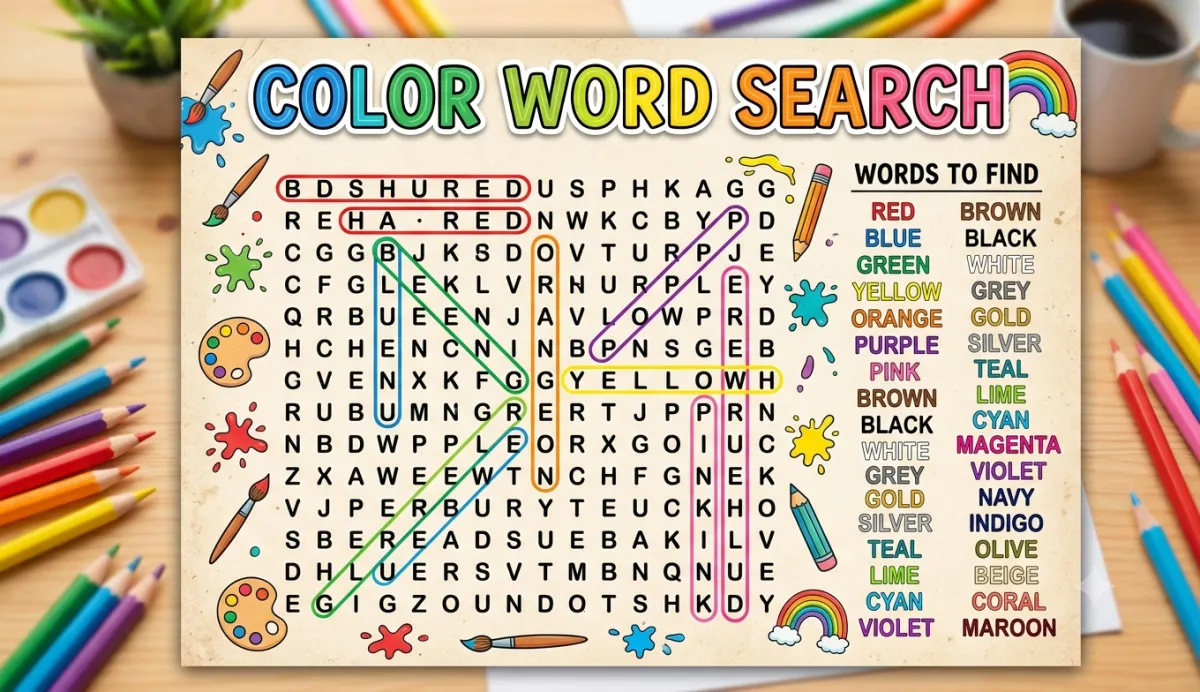
A colors word search is a type of It wordsearch puzzle where the answers to the clues are hidden in a grid of letters. The solver must locate the hidden word list entries by scanning through rows and columns. This particular puzzle is perfect for color vocabulary building, as it presents color words to the players in an exciting and challenging new way, encouraging them to continue looking for the next hidden item in order to finish the word search.
The puzzle is themed around the concept of color, which is one of the simplest concepts for a child to understand. The words to find in a colors word search are typically some of the first ones a child will learn to read and spell. For this reason, this particular type of word search is one of the easiest ones a beginning reader can try to complete.
Why Simple, Foundational Word Search Work So Well
Word search puzzles are a great way to build vocabulary and spelling knowledge. By starting with a simple and relatable topic such as ‘colors’, you help to build confidence and confidence in your child. Most children know the colors visually before they are able to spell them.
- What Is a Colors Word Search?
- Why Simple, Foundational Word Search Work So Well
- Building a Simple but Complete Word List
- Adjusting Difficulty for Every Age Group
- Where This Puzzle Shines
- The Simple Joy of Naming What We See
- Tips for Solving This Puzzle Quickly
- Connecting Vocabulary to the World Around Us
- A Puzzle That Grows Alongside a Child
- Conclusion
This helps to improve memory skills. When trying to find the word within the puzzle, your child has to remember the target word and look through each row and column. This helps to improve their concentration and visual search skills. Using a word search with colors will help to build confidence with the youngest of children.
Using color words will help your child to connect to other areas in the curriculum. Colors can be used in art, color wheel or spectrum of light topics in science and sorting objects by color in early maths. A word search using color words can be a simple activity to help reinforce vocabulary in lots of subjects.
Building a Simple but Complete Word List
When coming up with a list of words to include in your word search puzzle, use a range of simplicity and complexity:
Basic Colors for Simple Puzzles – Red, blue, and yellow are great starting points as they form the basis of most colors word searches ever made.
Slightly More Complicated Colors – Green, orange, purple, and pink are slightly more complex than the basic colors and still common enough to be recognizable by younger children.
Colors of Objects Around Us – Black, white, brown, and gray are simpler colors that can be applied to objects that surround us in everyday life.
More Advanced Color Terms – Turquoise, magenta, and maroon make good slightly more complicated words for older children who want an extra challenge.
Adjusting Difficulty for Every Age Group
As with all word searches the difficulty can be adjusted by changing the size of the grid, number of words and directions. An 8 x 8 word search with basic primary colours and simple horizontal words would be perfect for very young children starting to learn to read. Increasing the grid size, changing the direction to include diagonally and reverse words, and adding some more complex colour names will give a satisfying challenge to those confident with solving puzzles.
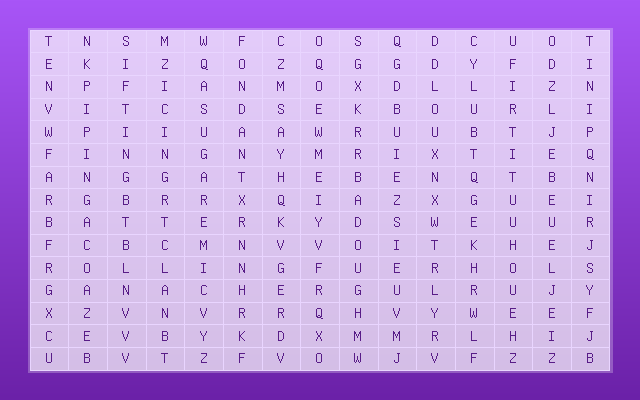
Many early childhood teachers will create easy word searches for preschool and kinder students.
Where This Puzzle Shines
A colors word search can be used in many ways within early years and primary settings. It is often used within preschool and kindergarten classes as one of the very first word searches pupils complete. This means pupils can become familiar with the structure of a word search using vocabulary they are familiar with. In art classes they can be used as a coloring or painting activity to develop children's knowledge of colours.
Parents can use a colors word search to introduce a new child to word searches. As it uses basic vocabulary it can build their confidence. As the child's reading ability increases you can move on to more complex themes. Speech and Language therapists will sometimes use colour related vocabulary activities such as simple word searches.
Some adults also enjoy completing simple colours word searches. This can be a nice way to relax as they don't require a lot of concentration and the vocabulary is not too complex.
- Camping and Outdoor Word Search
- Mental Health and Wellness Word Search
- Cooking Techniques Word Search
- Baking and Desserts Word Search
The Simple Joy of Naming What We See
With this activity, they will be able to connect the sight of the word with the thing it represents - helping them become better readers. Such small things add up to the value of this word search.
Tips for Solving This Puzzle Quickly
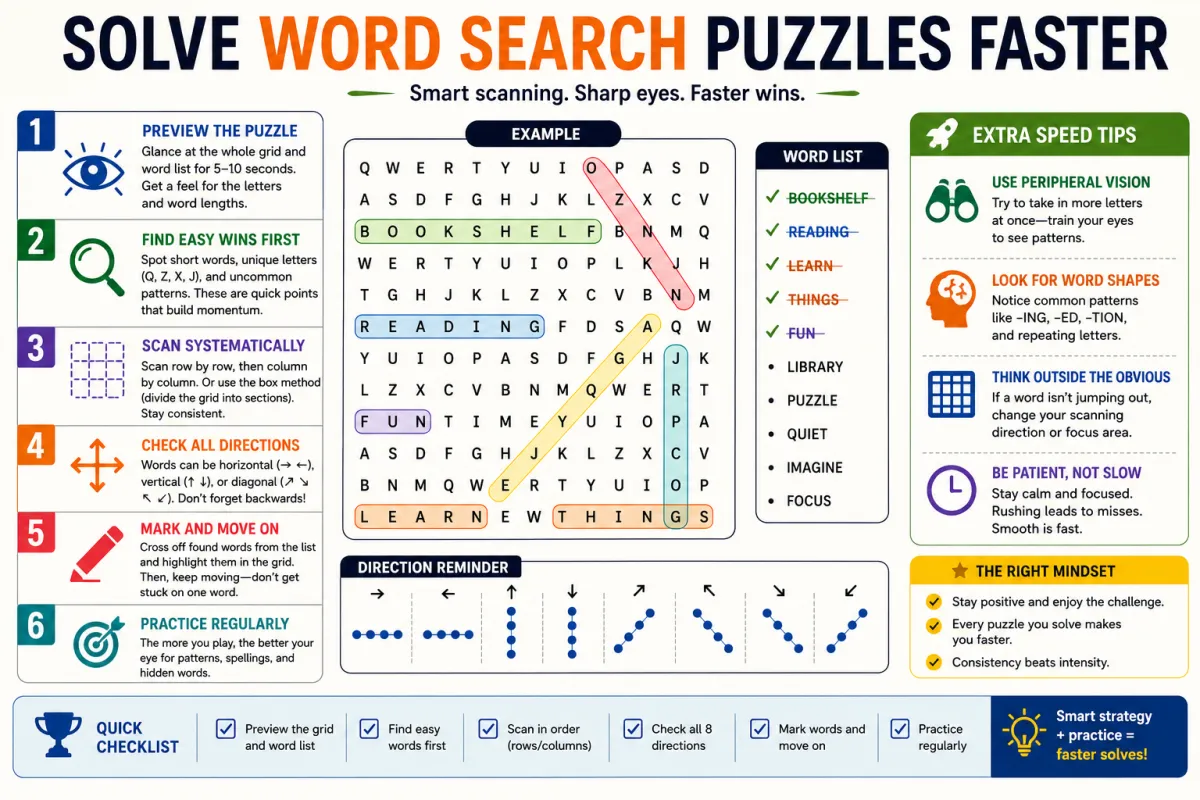
Firstly look for the shortest words in the grid, such as red and tan. Then look for the longest words, these are turquoise and magenta. As they are long names they have unusual letters combinations which make them easier to spot. This will help you avoid missing any diagonal or backwards words.
Connecting Vocabulary to the World Around Us
One of the great things about this wordsearch is how easily it can be taken beyond the page. The moment your child has found the word ‘green’ and circled it, you can point to an item that’s green in the real world.
A Puzzle That Grows Alongside a Child
An additional great feature of colors word searches is that you can easily increase the difficulty as your child improves their reading skills. You can take the same basic theme of your child's first word search and after months or even years use a bigger grid, trickier word placement and more advanced color words. This means that every time you use a colors word search it will be familiar to your child or class.
Conclusion
A color word search makes an excellent word search featuring some of the very first sets of vocabulary you will ever learn. It contains a variety of words to make it an encouraging puzzle with primary colors, common colors and even a few more complex color words. A well designed color word search can be a great introduction to vocabulary for younger children but can also be a fun puzzle. Whether its a preschooler, art activity or just a relaxing hobby, a good color word search can provide a fun puzzle from simple vocabulary.