Cooking Techniques Word Search: Mastering Kitchen Vocabulary One Word at a Time
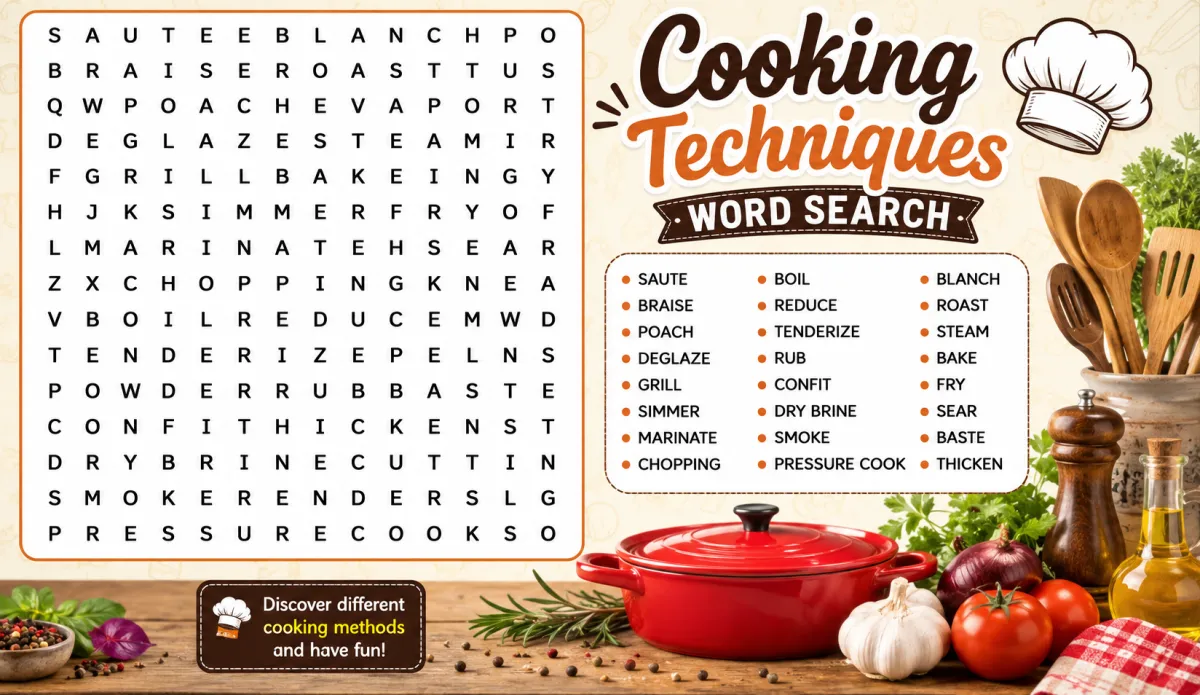
All good food can be cooked using simple cooking techniques. A cooking techniques word search can help you learn the key vocabulary. Solve the word search to find all of the cooking techniques. This can be done by both beginners and experts.
What Is a Cooking Techniques Word Search?
This is a great theme as it relates to a real life skill. Cooking techniques is a much more practical theme than some other vocabulary themes. This means that you can easily use the words you learn next time you cook!
Why Culinary Word Searches Work So Well
Cooking methods can be added to make it more fun. Many people will be able to relate to the words as they will have some knowledge of cooking. Words such as ‘saute’ and ‘braise’ can be found.
- What Is a Cooking Techniques Word Search?
- Why Culinary Word Searches Work So Well
- Building a Strong Culinary Word List
- Adjusting Difficulty for Different Solvers
- Where This Puzzle Shines
- The Precision Behind Every Technique
- Connecting Vocabulary to Real Cooking
- A Skill Set That Grows With Every New Recipe
- Tips for Solving This Puzzle Quickly
- Conclusion
This activity will help to develop several skills. It will develop concentration and visual recognition as pupils will have to remember the target word in their working memory while searching through the rows and columns. A word search with cooking techniques would be a fun and relaxing way to improve vocabulary for culinary students or those wanting to cook at home.
- Yoga Terms Word Search
-
Diet and Nutrition Word Search
-
Mental Wellness Word Search
-
Healthy Daily Habits
-
Alternative Medicine Word Search
Building a Strong Culinary Word List
To create a good cooking techniques wordsearch you need to include a list of words from a variety of categories:
Heating Techniques - Most word searches will include words such as Saute, roast, grill and simmer as these are common techniques.
Slow/Moist Cooking Techniques - Braise, poach and steam are techniques that use slow cooking. They are often used for tougher cuts of meat.
Preparing Techniques - Whisk, fold, dice and marinate are techniques used when preparing your food.
Specialist Techniques - Deglaze, blanch and caramelize. These are slightly more complex techniques that are suitable for more advanced cooks. They provide a challenge to students and enthusiastic cooks.
A mix of short, simple words with some longer, more complex words such as caramelize and deglaze will keep your cooking techniques wordsearch interesting for a variety of skill levels.
Adjusting Difficulty for Different Solvers
As with all word searches the size of the grid, the number of words to find and the direction the words can be found in will affect how easy or difficult the word search is. This will provide a real challenge and will give cooking students and enthusiastic home cooks a real sense of achievement. Many cooking teachers will create an easy version and a harder version of the same word search. The easy version will focus on basic cooking techniques.
Where This Puzzle Shines
Cooking techniques word searches are a great resource for a wide range of situations. They are often used in cooking schools and cooking classes as a starter activity. This allows students to have fun whilst recalling the words they will need to know to understand instructions during a practical session. Home economics teachers will sometimes use this resource as part of their lesson plans to introduce basic cooking skills.

Parents who are teaching their children basic cooking skills can use this resource alongside a simple recipe. This provides a fun way to introduce the vocabulary to their children. Cookbook clubs and recipe sharing groups will sometimes use this resource as a fun starter activity to help them get to know the terminology.
The Precision Behind Every Technique
Many of the words in a cooking techniques word search will be accurate. Deglazing is the process of adding a liquid to a hot pan to help loosen the tasty browned bits of food that have stuck to the bottom of the pan after you have seared meat. This creates a rich sauce.
Connecting Vocabulary to Real Cooking
One of the great benefits of using a word search related to cooking techniques is that it can be used in conjunction with practical cookery. As opposed to many word searches that are based on abstract and distant topics, all of the words within the puzzle can be put into practice. This can be further enhanced by a parent or teacher as they can demonstrate the technique immediately after the word has been found. For example, a student could search for the word ‘whisk’ and then whisk a bowl of eggs. Or they could search for the word ‘dice’ and then practice dicing a vegetable.
- Famous Scientists Word Search
-
Sports Injuries Word Search
-
Human Body Parts Word Search
- Yoga and Fitness Word Search
- Baking and Desserts Word Search
A Skill Set That Grows With Every New Recipe
Cooking methods are an essential part of many recipes. A good understanding of these terms will help you in many recipes. Once you understand what braising and blanching means then you can apply this knowledge to hundreds of recipes from different cuisines. This makes a cooking method word search a great way of building up your vocabulary which will be helpful in the kitchen for years to come.
Tips for Solving This Puzzle Quickly
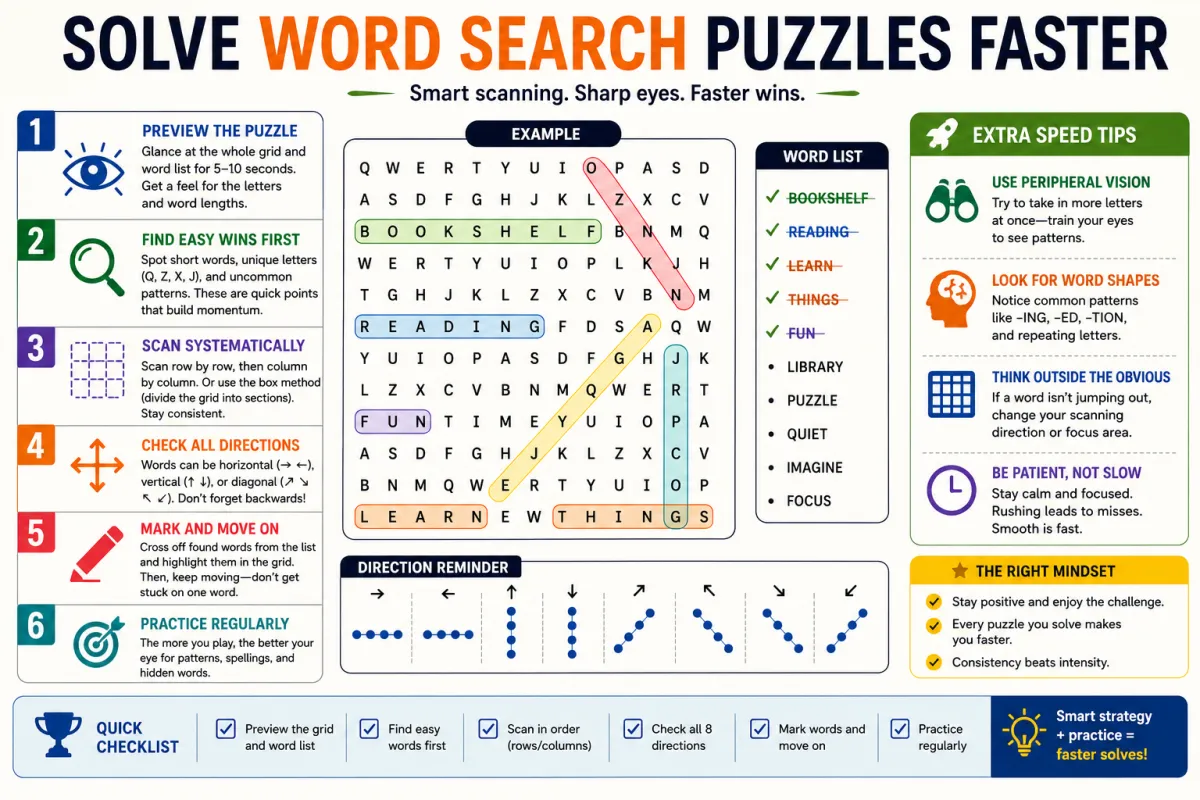
There are several simple ways you can work through this cooking techniques word search. Start by looking through the whole grid to see if there are any short, common words such as dice or roast. Then look for the longest words in the list, such as caramelize or deglaze. These will have some unusual letter combinations which will make them easier to spot.
Conclusion
Featuring a range of cooking techniques, slow cooking methods and specific cooking terms, this game will appeal to both beginner cooks and experienced home chefs. Whether you’re using the game in a cooking class, with your family or just for fun, a great cooking techniques word search will show you that learning new words can be just as enjoyable as learning a new recipe.