Classic Movies Word Search: The Ultimate Guide to Golden Age Puzzle Experience
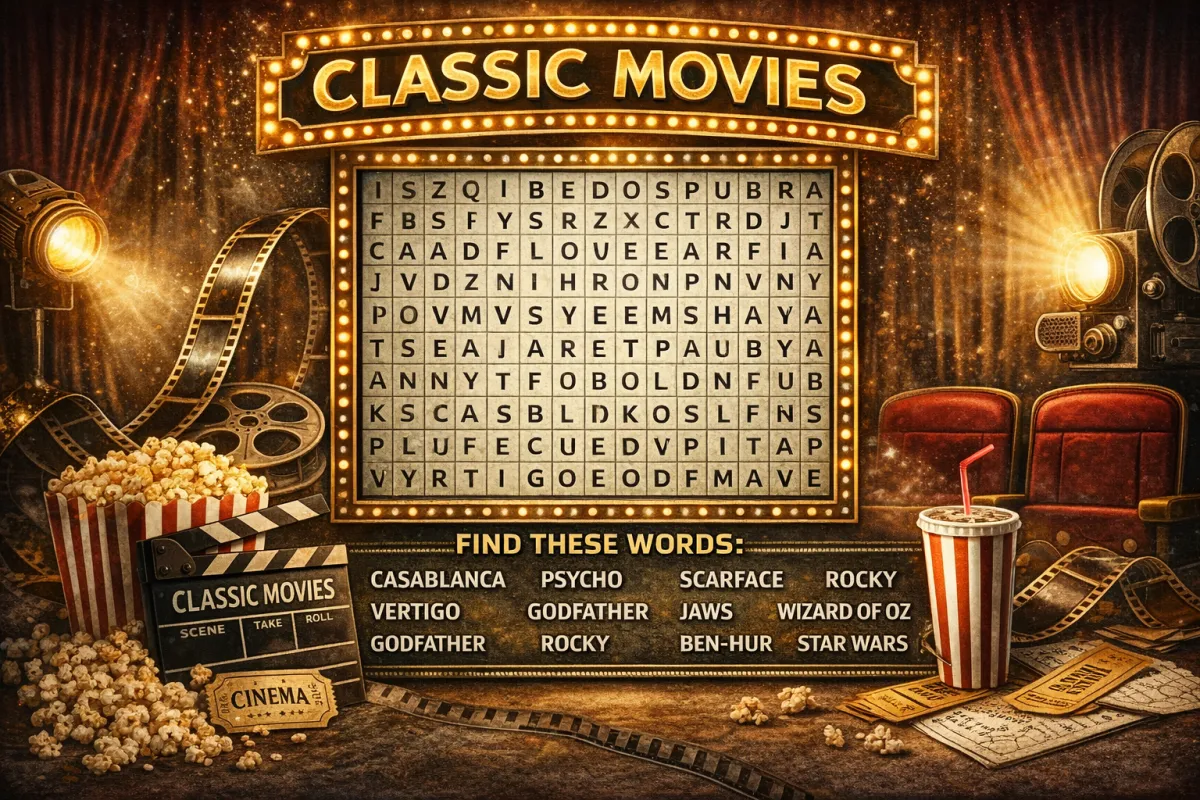
There's a peculiar joy in scanning a grid of seemingly random letters and suddenly spotting 'HUMPHREY BOGART' hiding diagonally in plain sight. That eureka moment the flash of recognition, the rush of memory is at the heart of what makes Classic Movies Word Search such an enduring and beloved activity. Unlike ordinary word searches filled with generic terms, a classic cinema word search is a time machine disguised as a puzzle.
In this guide, we'll take you deep into the world of Classic Movies Word Search covering its history, educational value, cognitive benefits, what to look for in a great puzzle, how to solve one like a pro, and much more. By the time you finish reading, you'll not only understand why millions of people reach for these puzzles, but you'll also have the knowledge to fully appreciate the rich cinematic world hidden within every grid.
What Exactly Is a Classic Movies Word Search?
A Classic Movies Word Search is a themed puzzle featuring words drawn specifically from the world of vintage cinema the era spanning roughly the 1920s through the early 1970s, commonly known as Hollywood's Golden Age and Silver Age. These puzzles contain a rectangular grid of letters in which movie-related words are hidden horizontally, vertically, diagonally, forwards, and backwards.
What sets these puzzles apart from generic word searches is their thematic depth. A well-crafted Classic Movies Word Search might include:
Iconic film titles like CASABLANCA, VERTIGO, SUNSET BOULEVARD, and GONE WITH THE WIND
Legendary actors and actresses such as CARY GRANT, KATHARINE HEPBURN, JAMES STEWART, and AUDREY HEPBURN
Famous directors including HITCHCOCK, WILDER, FORD, and CAPRA
Movie studios of the era like MGM, PARAMOUNT, RKO, and COLUMBIA
Film genres such as NOIR, WESTERN, MUSICAL, and SCREWBALL
Classic movie terms like TECHNICOLOR, CLOSEUP, DISSOLVE, and SCREENPLAY
The result is a puzzle that functions simultaneously as entertainment, mental exercise, and cultural education a rare triple achievement in the world of leisure activities.
Puzzles:
The Rich History Behind Classic Movies Word Search
Word searches themselves have a fascinating origin story. The modern word search puzzle was invented by Norman E. Gibat and initially appeared in the 1968 Selenby Digest in Norman, Oklahoma. However, the idea of hiding words within letter grids dates back even further to various letter-arrangement puzzles popular in European newspapers of the early 20th century.
- What Exactly Is a Classic Movies Word Search?
- Puzzles:
- The Rich History Behind Classic Movies Word Search
- Cognitive Benefits: Why Your Brain Loves Classic Movies Word Search
- Visual Processing and Pattern Recognition
- Memory Consolidation and Recall
- Stress Reduction and Mindful Focus
- Classic Movies Word Search as a Gateway to Film Education
- How to Solve a Classic Movies Word Search Like a Pro
- Start With Rare Letters
- Know Your Directions First
- Leverage Your Film Knowledge
- Cross Words Off Systematically
- What Makes a Great Classic Movies Word Search? A Buyer's and Player's Guide
- Word List Curation
- Grid Size and Word Density
- Educational Context
- Classic Movies Word Search for Different Audiences
- For Seniors and Retirees
- For Children and Students
- For Film Enthusiasts and Cinephiles
- Digital vs. Print: Choosing Your Classic Movies Word Search Format
- Building a Classic Movies Word Search Routine
- The Social Dimension of Classic Movies Word Search
- How to Create Your Own Classic Movies Word Search
- Conclusion: Why Classic Movies Word Search Deserves a Place in Your Daily Life
The marriage of word search puzzles with classic cinema themes happened organically as Hollywood nostalgia grew throughout the 1970s and 1980s. As cable television began airing classic films around the clock and film revival houses sprouted in major cities, public appreciation for Golden Age Hollywood surged. Publishers recognized an opportunity: why not combine the meditative pleasure of word searches with the cultural richness of classic cinema?
What began as modest puzzle books sold in bookshop corners evolved into a dedicated niche. Today, Classic Movies Word Search puzzles appear in printed books, newspapers, magazines, mobile apps, and dedicated websites reaching audiences across generations and continents. The digital revolution hasn't diminished the puzzle's appeal; if anything, it has amplified it by making these puzzles instantly accessible anywhere in the world.
Cognitive Benefits: Why Your Brain Loves Classic Movies Word Search
Science has a lot to say about why puzzles like Classic Movies Word Search are genuinely good for your mind. Research in cognitive neuroscience consistently demonstrates that activities combining visual scanning, pattern recognition, memory retrieval, and focused attention provide measurable mental benefits especially as we age.
Visual Processing and Pattern Recognition
When you scan a word search grid, your visual cortex works overtime. You're training your brain to recognize letter clusters and patterns amid visual noise a skill that transfers to reading speed, attention to detail, and even the ability to spot patterns in data or design. Classic Movies Word Search adds an extra layer: the words themselves are meaningful, which engages your semantic memory alongside your visual processing centers.
Memory Consolidation and Recall
Every time you search for a word like BOGART or HITCHCOCK, your brain activates associated memory networks recalling film scenes, biographical details, emotional responses to movies you've watched. This process of active retrieval strengthens neural pathways and helps consolidate long-term memories. It's why classic movies word searches are particularly recommended for seniors: they combine gentle cognitive challenge with emotionally meaningful content, both of which are key ingredients in brain health programs.
Stress Reduction and Mindful Focus
The act of solving a word search induces what psychologists call 'flow state' a condition of absorbed, effortless concentration that quiets mental chatter. Studies have shown that activities promoting flow state reduce cortisol levels (the stress hormone) and improve mood. Many puzzle enthusiasts report that a 20-minute Classic Movies Word Search session feels like a mental reset, leaving them calmer and more focused afterward.
Classic Movies Word Search as a Gateway to Film Education
One of the most underappreciated aspects of Classic Movies Word Search is its role as an informal film education tool. Many puzzle solvers particularly younger ones encounter names and titles they've never heard of while working through a grid. This curiosity gap is educational gold.
Consider the experience: a teenager solving a classic cinema puzzle comes across the word NOIR. They don't know what it means, so they look it up. Suddenly they're reading about a whole genre shadows and moral ambiguity, femmes fatales and private detectives, rain-slicked streets in black and white. That single word in a puzzle might send them down a rabbit hole that ends with them watching Double Indemnity on a Saturday afternoon.
Educators have recognized this power. Film studies teachers sometimes use Classic Movies Word Search as a pre-lesson warm-up activity, allowing students to become familiar with key names and terminology before deeper discussion. The puzzle format reduces the intimidation factor learning feels like play, which dramatically improves retention.
Specifically, Classic Movies Word Search can introduce solvers to: the Studio System era and how Hollywood once functioned as a vertically integrated industry; the role of the Production Code (the Hays Code) in shaping film content from 1934 to 1968; the distinction between different genres and how they evolved; and the careers of major stars who shaped acting traditions still felt in cinema today.
How to Solve a Classic Movies Word Search Like a Pro
Whether you're new to word searches or a veteran puzzler, applying smart strategies dramatically improves both your speed and enjoyment. Here's a systematic approach developed by experienced solvers:
Start With Rare Letters
In any Classic Movies Word Search, words like HITCHCOCK, ZINNEMANN, or TECHNICOLOR contain uncommon letter combinations (TCH, ZI, NNE) that appear in very few places in the grid. Start by scanning for these rare sequences first. Once you spot the unusual cluster, the word usually falls into place quickly around it. This is far more efficient than scanning every row sequentially.
Know Your Directions First
Before diving in, check the puzzle's rules. Some Classic Movies Word Search puzzles include words written backwards or diagonally; others are strictly horizontal and vertical. Knowing this upfront prevents you from missing words you've actually scanned over because you didn't look in the right direction. If backwards words are included, make it a habit to scan each row both left-to-right and right-to-left.
Leverage Your Film Knowledge
Unlike a generic word search, a Classic Movies Word Search rewards genuine cultural knowledge. If you know that Humphrey Bogart's real first name was Humphrey (not a nickname), that Katharine Hepburn spelled her name without a 'C', or that the film 'It's a Wonderful Life' is often abbreviated WONDERFUL in puzzles these details directly help you find words faster. Brush up on classic cinema basics before tackling harder puzzles.
Cross Words Off Systematically
Maintain an active word list and cross off each word the moment you find it. This prevents you from searching for words you've already located and keeps your mental energy focused on the remaining targets. For digital puzzles, use the built-in highlight feature; for printed puzzles, a light pencil checkmark works perfectly without obscuring the grid.
What Makes a Great Classic Movies Word Search? A Buyer's and Player's Guide
Not all Classic Movies Word Search puzzles are created equal. The quality gap between an excellently crafted puzzle and a mediocre one can be substantial. Here's what distinguishes the best from the rest:
Word List Curation
A high-quality Classic Movies Word Search features a thoughtfully curated word list that tells a story or builds thematic coherence. Rather than randomly mixing actors from the 1930s with directors from the 1970s, the best puzzles have focus perhaps all the words relate to a single genre (Film Noir, Westerns, Musicals), a specific era (1940s Hollywood), or a particular theme (Oscar winners, Best Picture films). This coherence makes the puzzle feel like a curated film history lesson rather than a random glossary.
Grid Size and Word Density
The ideal word density the ratio of puzzle words to total letters sits around 50-60%. Below this, the grid feels sparse and easy; above it, the puzzle becomes frustratingly cluttered. Grid dimensions matter too: a 15x15 grid with 20 classic movie terms hits the sweet spot for most adult solvers, offering 15-25 minutes of satisfying challenge.
Educational Context
The finest Classic Movies Word Search books and apps include brief contextual notes alongside the puzzles a sentence or two about each featured film or artist. This transforms the experience from pure puzzle-solving into genuine learning. After completing a puzzle, you emerge not just satisfied but genuinely more knowledgeable about cinema history.
Classic Movies Word Search for Different Audiences
For Seniors and Retirees
Classic Movies Word Search holds special significance for older adults. For many seniors, Hollywood's Golden Age represents the cinema of their youth these are the films they saw on first dates, the stars they admired in theatrical trailers, the stories that defined their cultural world. Engaging with these puzzles activates episodic memories tied to powerful personal experiences, which research suggests is particularly beneficial for cognitive health in later life. Large-print versions are widely available for those with visual concerns.
For Children and Students
For younger solvers, Classic Movies Word Search serves as a gentle introduction to cultural heritage. Children who complete these puzzles often develop curiosity about the films and personalities they've encountered a curiosity that parents and educators can nurture by watching classic films together. Age-appropriate versions feature easier vocabulary: famous film titles rather than technical terms, and shorter, more recognizable names.
For Film Enthusiasts and Cinephiles
Dedicated film lovers find Classic Movies Word Search a satisfying way to celebrate their passion. Expert-level puzzles challenge even the most knowledgeable cinephiles with obscure character names, lesser-known directors, rare film terminology, and deliberately tricky word placements. Completing a particularly challenging puzzle becomes a badge of cinematic honor.
Digital vs. Print: Choosing Your Classic Movies Word Search Format
The Classic Movies Word Search experience varies meaningfully depending on your chosen format. Both digital and print versions have distinct advantages, and many enthusiasts maintain a preference for one or happily switch between both depending on context.
Print puzzles offer a tangible, screen-free experience that many people find more relaxing. There's something deeply satisfying about circling a found word with a pencil, the physical act reinforcing the mental achievement. Additionally, print books are great presents for friends and family who enjoy films, especially older people who might prefer paper to screens.
Digital puzzles, on the other hand, offer conveniences print cannot match: automatic word highlighting, adjustable difficulty settings, instant access to thousands of puzzles, and the ability to pause and resume anytime. Many digital platforms also track your solving time and offer achievements for completing puzzle series adding a gentle gamification layer that motivates continued play.
A growing hybrid category merits mention: printable Classic Movies Word Search puzzles available as PDF downloads. These combine the accessibility of digital sourcing with the tactile pleasure of paper solving and they're ideal for teachers, parents hosting movie nights, or anyone who prefers print without visiting a bookstore.
Building a Classic Movies Word Search Routine
The greatest benefits from Classic Movies Word Search cognitive, educational, and emotional come from consistent practice rather than occasional indulgence. Building a sustainable puzzle routine doesn't require extraordinary discipline. Consider integrating these puzzles into natural breaks in your day: alongside your morning coffee, during lunch, before bed as a screen-free wind-down activity.
Many dedicated solvers pair their puzzle sessions with classic film viewing. Complete a word search themed around Film Noir, then spend the evening watching The Maltese Falcon or Out of the Past. This double immersion deepens your appreciation for both activities and creates a richer, more multidimensional engagement with cinema history.
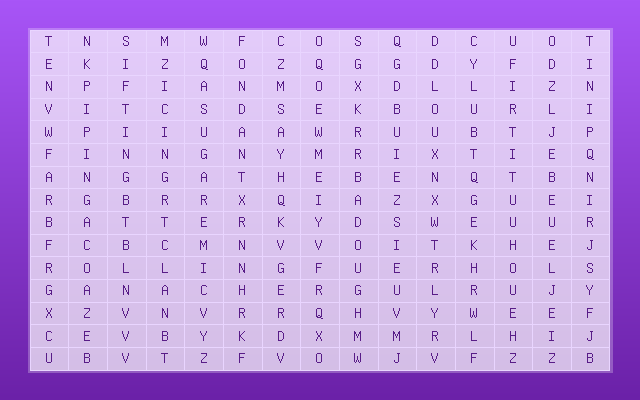
Puzzle journals notebooks where solvers record which puzzles they've completed, favorite finds, and newly discovered films add an additional layer of engagement and create a personal archive of cinematic discovery.
The Social Dimension of Classic Movies Word Search
Word searches are often thought of as solitary activities, but Classic Movies Word Search has a surprisingly vibrant social life. Film clubs and senior centers regularly incorporate these puzzles into group sessions, using them as conversation starters. Spotting FRED ASTAIRE in a grid inevitably triggers reminiscences, debates about favorite performances, and recommendations to first-time classic film viewers.
Online communities dedicated to classic cinema often share puzzle recommendations and creations. Social platforms feature enthusiasts posting photos of completed puzzle pages alongside their thoughts on the films represented. These micro-communities create connections between people who might never otherwise meet, united by shared enthusiasm for Hollywood's past and the simple pleasure of finding hidden words.
Puzzle races where two or more people compete to finish the same grid first add a competitive dimension perfect for family game nights with a cinema theme. Movie-night hosts increasingly use printable Classic Movies Word Search as a pre-screening activity, warming audiences up for a film by having them search for relevant names and terms in a grid.
How to Create Your Own Classic Movies Word Search
Creating a personalized Classic Movies Word Search is a rewarding project for teachers, film club organizers, or anyone wanting to gift a puzzle enthusiast something truly unique. The process is simpler than it looks, especially with modern tools.
Start by choosing your theme perhaps a single actor's filmography, a specific decade, or an Oscar ceremony. Create your word list with 15-25 terms of varying length (mix short 4-letter words with longer 10+ letter words for balanced difficulty). Free online word search generators like Puzzle Maker or Discovery Education's tool can automatically arrange your words in a grid. Print or share digitally.
The most memorable custom puzzles include a brief introduction explaining the theme's significance and a short description of each featured film or personality listed in the answer key. This transforms your creation from a simple puzzle into a curated cultural experience.
Read More: Elements of Chemistry
Conclusion: Why Classic Movies Word Search Deserves a Place in Your Daily Life
Classic Movies Word Search occupies a rare and wonderful intersection: it's simultaneously a brain exercise, a history lesson, a nostalgic journey, and pure entertainment. It asks nothing more of you than a few minutes of focused attention, and in return it offers cognitive stimulation, cultural knowledge, and the quiet pleasure of discovery.
In an age of constant distraction and digital noise, the Classic Movies Word Search offers something genuinely precious: a moment of focused, screen-optional engagement with humanity's cinematic heritage. Whether you're scanning for INGRID BERGMAN in a newspaper grid or tapping your way through a mobile app puzzle on a commute, you're participating in a tradition that connects you to both a beloved art form and the timeless human pleasure of the puzzle.