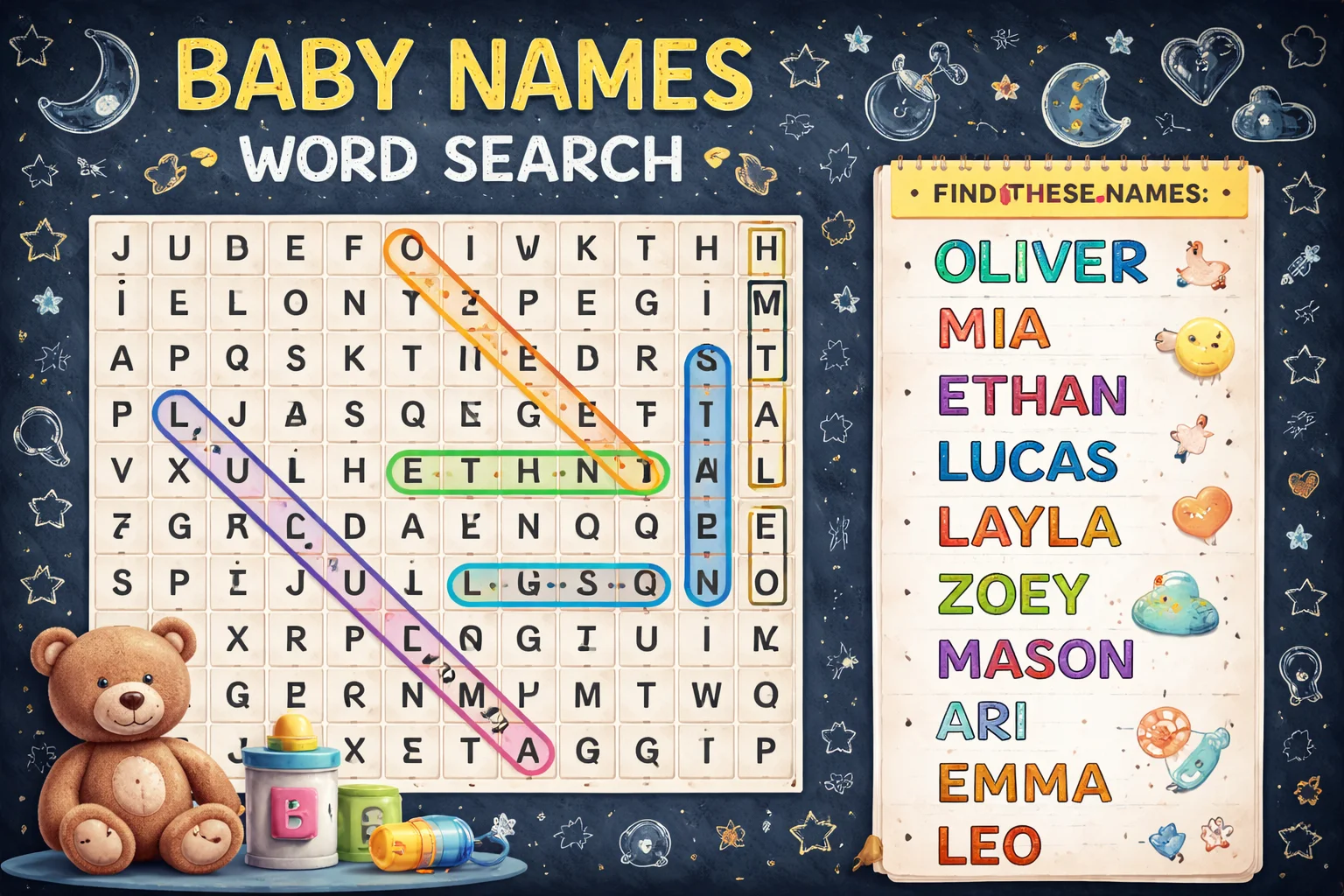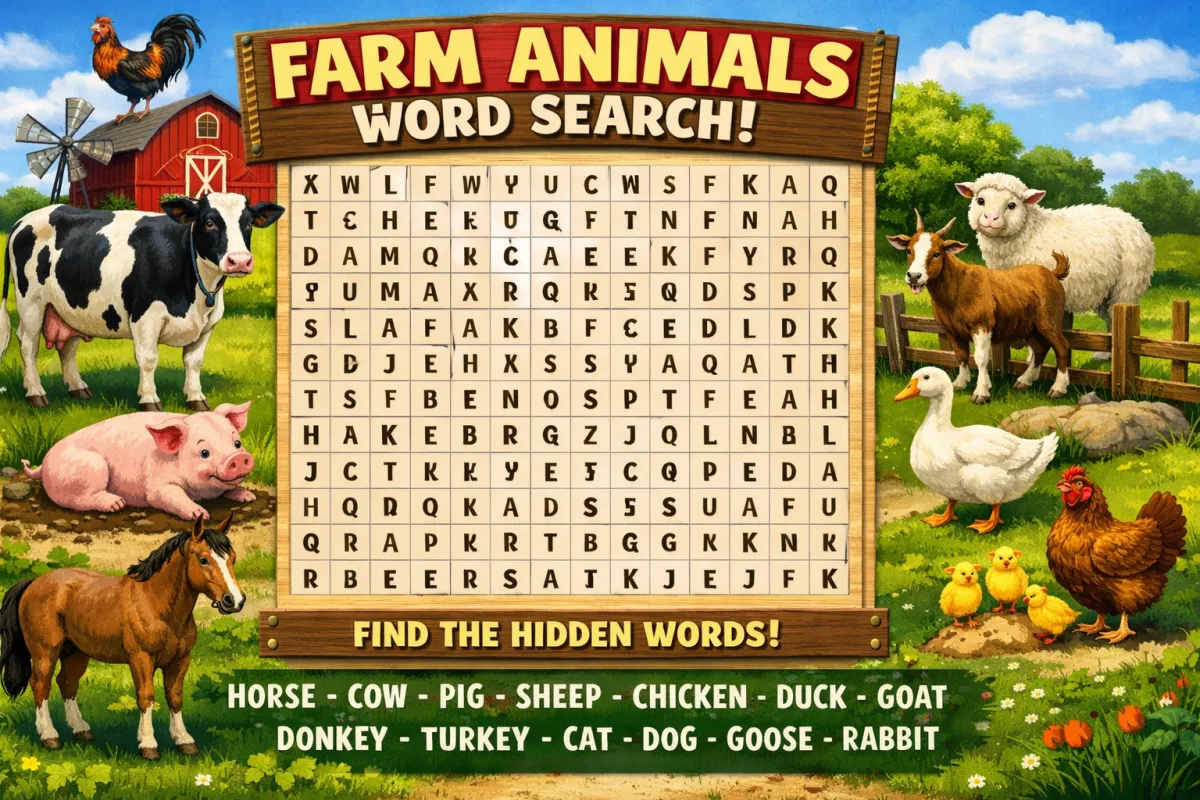
Introduction: What Is a Farm Names Word Search?
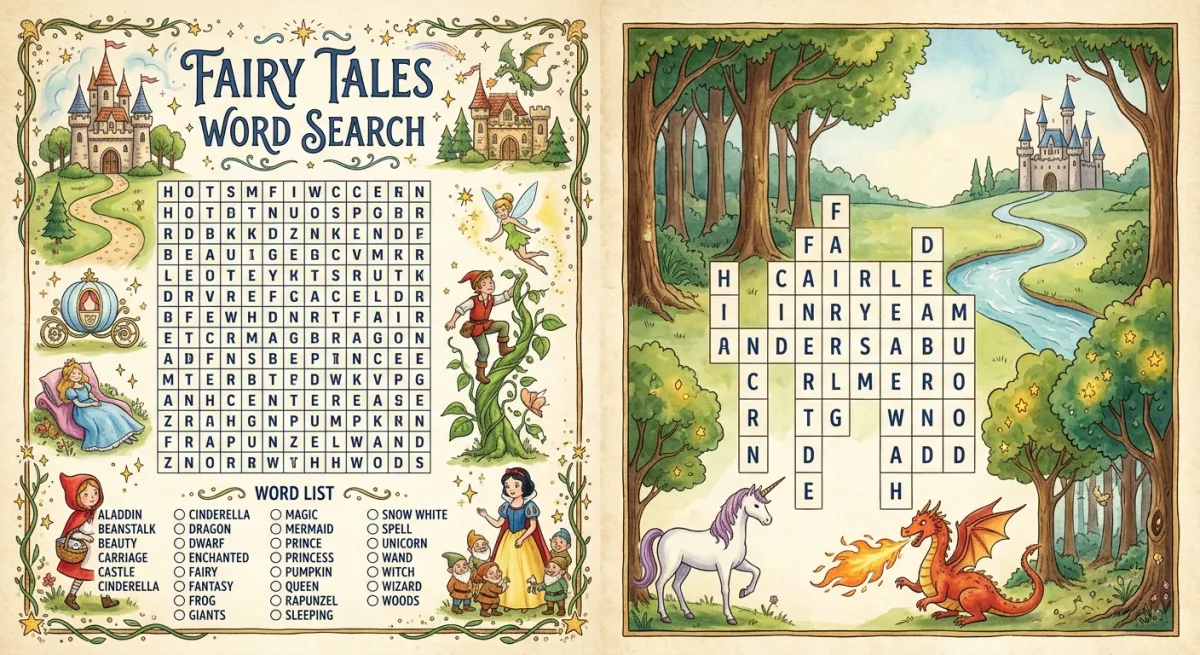
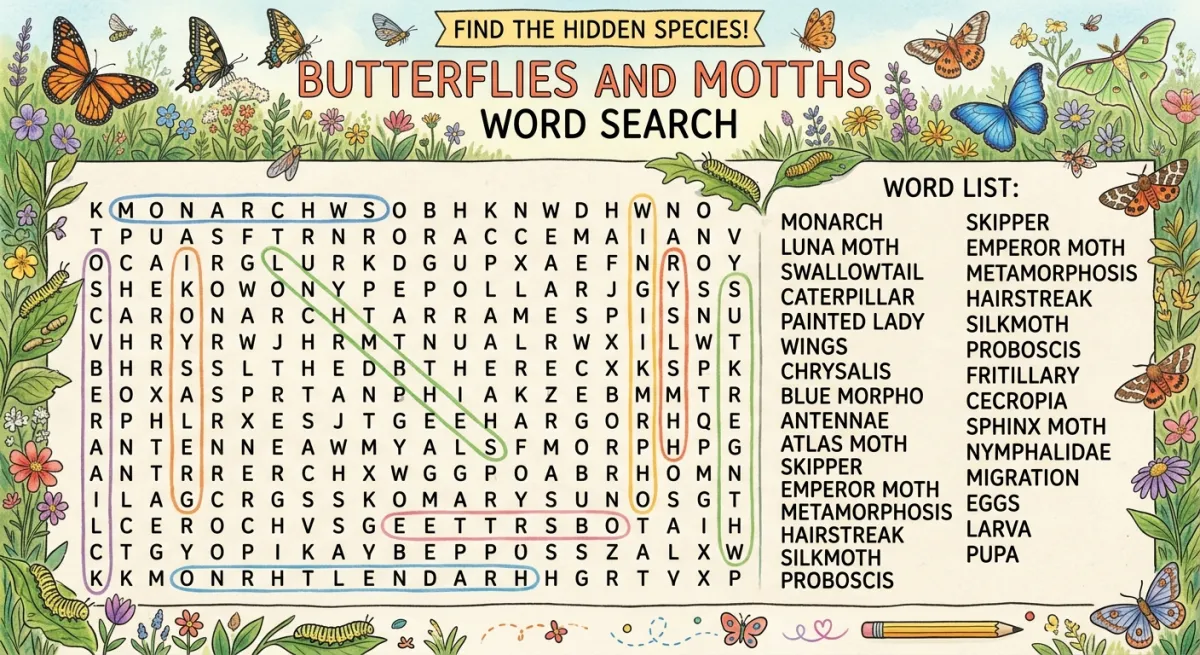
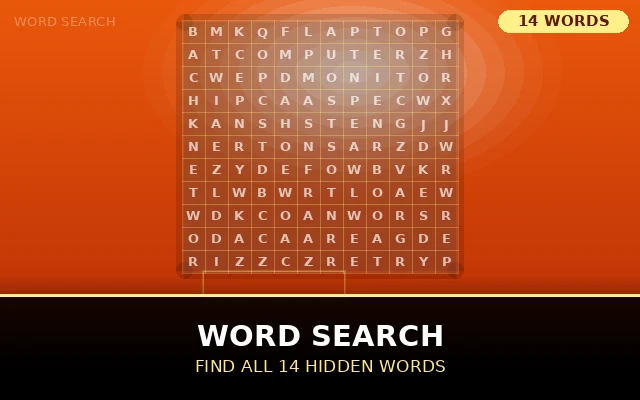
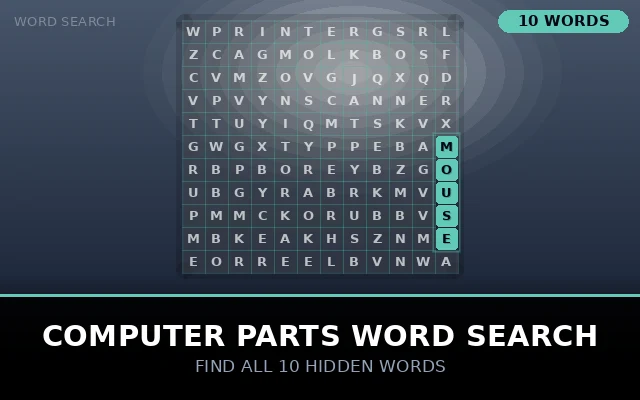
A farm names word search is a letter-grid puzzle in which the names of farm animals are hidden within rows and columns of randomly arranged letters. Players scan the grid horizontally, vertically, diagonally, and sometimes backwards to locate words such as COW, PIG, HEN, GOAT, HORSE, SHEEP, DUCK, and RABBIT. It is one of the most widely used educational tools in primary classrooms, homeschool environments, and early learning programmes around the world.
The format is simple enough for a child of three to enjoy with adult guidance, yet flexible enough to challenge a ten-year-old when constructed with a large grid and a comprehensive word list. At its core, the farm names word search asks children to engage actively with the spelling of animal names rather than simply reading or copying them. This active engagement is what makes the activity so effective for vocabulary development.
Research in early childhood literacy consistently demonstrates that word puzzles anchored to concrete, familiar subjects produce significantly stronger vocabulary retention than traditional list-based memorisation. Farm animals are among the most universally recognised subjects for young children, making the farm animals word search an ideal vehicle for building early reading and spelling skills. When a child finds the word SHEEP in a grid, traces each letter with a finger or pencil, and says the word aloud, three channels of learning are activated simultaneously: visual, kinaesthetic, and auditory. This triple reinforcement is at the heart of the format's enduring popularity.
The following guide provides a complete farm animals list with key facts, an A-to-Z breakdown of farm animal names, a detailed reference on farm animal sounds, age-appropriate activity recommendations, a guide to creating your own puzzle, and a comprehensive FAQ section. All content is built around the central theme of the farm names word search and draws on the full range of related educational keywords.
Complete Farm Animals List with Names and Key Facts
A thorough understanding of farm animals is the foundation of any effective farm names word search activity. The table below presents a complete farm animals list that includes the most common species found on farms across the world, their primary role in agriculture, and one notable fact that makes each animal memorable. This list serves both as a reference for creating word search puzzles and as a standalone educational resource for children and teachers.
- Introduction: What Is a Farm Names Word Search?
- Complete Farm Animals List with Names and Key Facts
- Puzzles:
- Farm Animals A to Z: Names for Every Letter
- A Complete Reference Guide Farm Animals Sounds
- Farm Animals Activities for Kids, Toddlers and Preschoolers
- Farm Animals Printable Word Search
- Farm Animals Coloring Pages
- Farm Animals Drawing Easy Step by Step
- Farm Animals Worksheet Bundle
- Farm Animals Activities for Toddlers
- Farm Animals Activities for Preschoolers
- Adding Depth to the Word Search Popular Farm Animal Names
- Why Farm Names Word Search Is Effective for Children
- Taking Learning Beyond the Page Farm Animals Near Me
- How to Create a Farm Names Word Search at Home or in the Classroom
- Conclusion
Each animal in this table contributes a distinct name to the farm names word search format. Short three-letter names such as COW and PIG are ideal for beginner-level puzzles aimed at toddlers and preschoolers. Longer names such as ROOSTER, TURKEY, ALPACA, and RABBIT provide a more substantial challenge for older children and advanced learners.
Puzzles:
Farm Animals A to Z: Names for Every Letter
An A-to-Z farm names word search is among the most popular formats used in primary classrooms and homeschool programmes. It systematically builds vocabulary across the full alphabet while keeping children engaged through the familiar puzzle format. The table below provides a complete A-to-Z reference of farm animal names, each accompanied by a brief educational note.
The A-to-Z format works particularly well as a structured farm animals word search for children aged eight and above. For younger learners, a selection of the most recognisable entries such as A for Alpaca, C for Cow, D for Duck, G for Goat, H for Hen, P for Pig, S for Sheep provides a manageable and confidence-building introduction to alphabetical farm vocabulary.
A Complete Reference Guide Farm Animals Sounds
Integrating farm animal sounds into a farm names word search session transforms a quiet, individual activity into an interactive, multi-sensory learning experience. When a child locates the word HEN in the grid, the natural follow-up question what does a hen say? reinforces the vocabulary through spoken language and auditory memory. This combination of visual recognition and auditory recall is one of the most effective techniques in early literacy education.
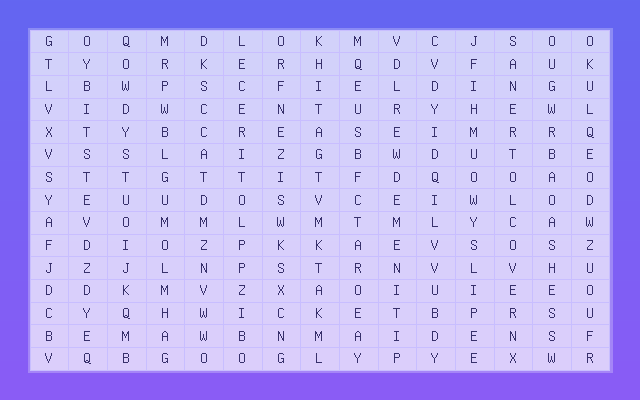
The table below provides a complete reference to farm animals sounds, including an educational detail for each that adds depth to the activity and gives teachers and parents interesting talking points to share with children.
A highly effective classroom variation involves the teacher calling out a farm animal sound while children search for the corresponding animal name in their word search grid. The first child to circle the correct word wins a point. This spoken-to-written connection is among the most powerful vocabulary reinforcement techniques available in early education.

Farm Animals Activities for Kids, Toddlers and Preschoolers
The farm names word search sits at the centre of a wider range of farm animals activities that can be layered together into a complete, multi-session learning programme. The activities described below are recommended by early childhood educators and connect directly and naturally with the word search format.
Farm Animals Printable Word Search
The first and most foundational activity is a well-designed farm animals printable word search. Grid size should be carefully matched to the learner's age and current ability. A five-by-five grid containing four simple, three-letter words is the correct starting point for toddlers. An eight-by-eight grid with eight to ten words is well-suited to preschoolers aged three to five. Children aged six and above are ready for grids of twelve-by-twelve or larger, which can incorporate the full A-to-Z animal list. Placing small farm animals pictures alongside each word in the list significantly increases visual engagement and helps younger children connect the written word with the animal it represents.
Farm Animals Coloring Pages
After completing a word search, providing a matching set of farm animals coloring pages extends the session and develops fine motor skills in parallel with literacy work. When a child colours an image of a hen immediately after locating the word HEN in the grid, the dual activity creates a layered memory that is far more durable than reading the word alone. Coloring also gives children a degree of creative ownership over the material, which increases motivation and positive associations with the learning experience.
Farm Animals Drawing Easy Step by Step
Teaching children to draw farm animals through simple, step-by-step sequences is an excellent creative extension of the word search format. A cow can be constructed from a large oval body and a smaller circular head. A pig begins with a round snout. A sheep is built from overlapping cloud-like shapes that represent its wool. These farm animals drawing easy techniques are widely used in primary classrooms as a visual art complement to literacy activities. Children who draw the animals they have found in their word search develop a substantially deeper connection to the vocabulary and are more likely to retain the spelling.
Farm Animals Worksheet Bundle
A complete farm animals worksheet bundle consolidates several activities into a single structured resource. A well-designed bundle typically includes a word search grid, a spelling exercise, a sounds-matching activity, a coloring sheet, and a simple drawing template. This multi-activity format is ideal for homeschooling parents and classroom teachers who need to address several learning objectives within a single farm-themed session.
Farm Animals Activities for Toddlers
For the youngest learners, farm animals activities for toddlers must prioritise sensory engagement and concrete interaction over academic complexity. Sorting plastic farm animal figures by type, making animal sounds together, pointing to animals in picture books, and matching animal cards to photograph cards are all highly effective at this stage. These activities build the foundational vocabulary that makes a word search meaningful when the child reaches preschool age. The names and sounds absorbed through play at two and three years old provide the recognition that allows a four- or five-year-old to connect the written word COW to the animal they already know.
Farm Animals Activities for Preschoolers
For children aged three to five, farm animals activities for preschoolers can introduce a gentle layer of structured learning. Matching word cards to picture cards, arranging foam letters to spell simple animal names, and completing the beginner word search formats described above are all appropriate at this stage. The objective is to build letter-recognition confidence while maintaining the playful, low-pressure atmosphere that is essential for early childhood engagement.
Adding Depth to the Word Search Popular Farm Animal Names
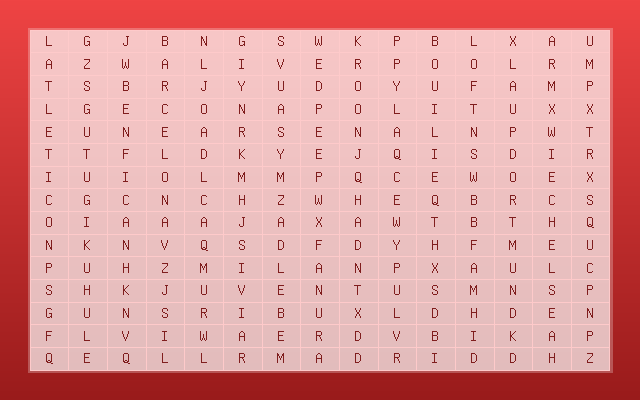
Beyond species names, many farmers give their animals individual names, and including these in a farm names word search creates a richer, more narrative experience for children. A puzzle that contains both SHEEP and WOOLLY, or both PIG and WILBUR, carries a sense of personality and story that children respond to strongly. The table below lists the most popular naming conventions for common farm animals.
Why Farm Names Word Search Is Effective for Children
The use of farm animals activities for preschoolers and toddlers in early education is supported by substantial research. Word puzzles built around concrete, familiar subjects consistently outperform abstract vocabulary exercises in measurable literacy outcomes. The following benefits have been identified by researchers and practitioners across early childhood education:
Vocabulary acquisition is accelerated when new words appear in a puzzle context rather than as an isolated list, because searching actively engages the learner with each letter and the overall word structure.
Visual scanning skills are systematically developed as children learn to track across rows and columns in an organised sequence, a skill that transfers directly to improved reading fluency and comprehension.
Spelling confidence increases significantly when children encounter the correct letter sequence of a word multiple times while searching, which is far more effective than copying a word from a board or a list.
Concentration and sustained attention are built through the goal-directed nature of puzzle-solving. Each word found delivers a small but genuine sense of achievement that motivates continued effort.
Agricultural literacy is developed from an early age, helping children understand the origins of food, the roles of different animals, and the importance of farming in everyday life.
Independent problem-solving is encouraged as children develop personal strategies for scanning grids efficiently rather than searching at random.
Multi-sensory learning is supported when the word search is combined with sounds activities, drawing exercises, and coloring pages engaging visual, kinaesthetic, and auditory channels simultaneously.
Taking Learning Beyond the Page Farm Animals Near Me
Once a child has built confidence with the farm names word search format and can correctly identify the animals on their list, the most powerful next step is to connect that knowledge to a real-world encounter. Searching for farm animals near me or visiting a local petting farm transforms the vocabulary from printed letters into living, breathing animals that the child can see, hear, and touch.
Many families are surprised by how accessible farm visits are in their local area. Agricultural shows, open farm days, community farm programmes, and farm animals auctions near me are available in most regions throughout the year. A child who has previously found the word GOAT in a word search grid and has learned that goats say "meh" will respond with particular delight the first time a real goat investigates their coat for hidden food. The abstract printed word becomes a specific, remembered animal.
Some farms offer structured educational visits in which children can feed animals, collect eggs from nesting boxes, groom ponies, and observe dairy milking demonstrations. These experiences represent the highest-quality extension of any word search or worksheet activity. For teachers planning a term-length farm theme, a classroom word search at the beginning of the unit followed by a farm visit at the end creates a complete, meaningful learning arc with measurable vocabulary outcomes.
For families unable to visit a farm in person, a wide range of farm animals videos and live webcam feeds are available online. These allow children to observe real farm animals in their natural environment and hear authentic sounds a credible and accessible complement to the printed word search for urban learners.
How to Create a Farm Names Word Search at Home or in the Classroom
Creating a farm names word search requires no specialist materials or technical knowledge. The following step-by-step process produces a clean, functional puzzle suitable for children of any age and ability level.
1. Select between six and fifteen farm animal names depending on the child's age. Younger children work best with fewer, shorter words; older children benefit from larger lists that include longer, more challenging names.
2. Draw a grid on squared paper. A ten-by-ten grid is a reliable and versatile starting size for most age groups. Larger grids of twelve-by-twelve or fifteen-by-fifteen are appropriate for older children.
3. Place each animal name in the grid one at a time, selecting a direction for each word horizontal, vertical, diagonal, or backwards. Ensure that no two words share a letter square in a conflicting way.
4. Fill all remaining empty squares with random letters. Distribute vowels and consonants roughly evenly across the grid to avoid obvious patterns that inadvertently reveal the location of hidden words.
5. Write the complete word list below or beside the grid so that children know exactly which animals they are searching for. For younger children, add a small illustration beside each word in the list.
6. Print multiple copies of the completed puzzle so that it can be used by siblings, classmates, or saved for future learning sessions.
7. For a variation in difficulty, present older children with only a theme description rather than a specific word list, asking them to search the grid without knowing which words are hidden.
Free online word search generators are widely available and allow teachers and parents to customise grid size, difficulty level, word direction settings, and font size. Many offer a downloadable farm animals printable PDF that can be printed directly without any additional formatting. These tools are particularly useful for educators who need to produce multiple versions of a puzzle quickly for classroom use.
Read More: Type of Dogs
Conclusion
Farm names word search is far more than a simple classroom activity. It is a carefully structured educational tool that builds vocabulary, develops spelling and reading skills, strengthens concentration, and establishes an early and lasting appreciation for agricultural life and the animals that sustain it. When combined with farm animals coloring pages, drawing exercises, sounds activities, and real-world farm visits, it becomes a cornerstone of a rich and effective early learning curriculum that addresses multiple developmental objectives simultaneously.
This guide has provided a complete farm animals list covering sixteen common species, an A-to-Z vocabulary reference with 26 entries, a detailed sounds guide for twelve animals, step-by-step instructions for creating puzzles at home, activity recommendations for every age group from toddler to upper primary, a naming convention reference, and a ten-question FAQ section. Together, these resources give teachers, parents, and educators everything they need to build a comprehensive farm-themed learning programme centred on the farm names word search.
Whether the goal is a single printed puzzle for a quiet afternoon at home, a full classroom worksheet bundle, or a term-length project culminating in a farm visit, the content in this guide provides a complete and reliable foundation. Every child who picks up a pencil and finds that first hidden word COW, PIG, HEN, or HORSE takes one more step toward confident, independent literacy, grounded in the most tangible and universally relatable subject in the natural world.