Gardening Word Search: A Relaxing Puzzle for Plant Lovers of All Ages
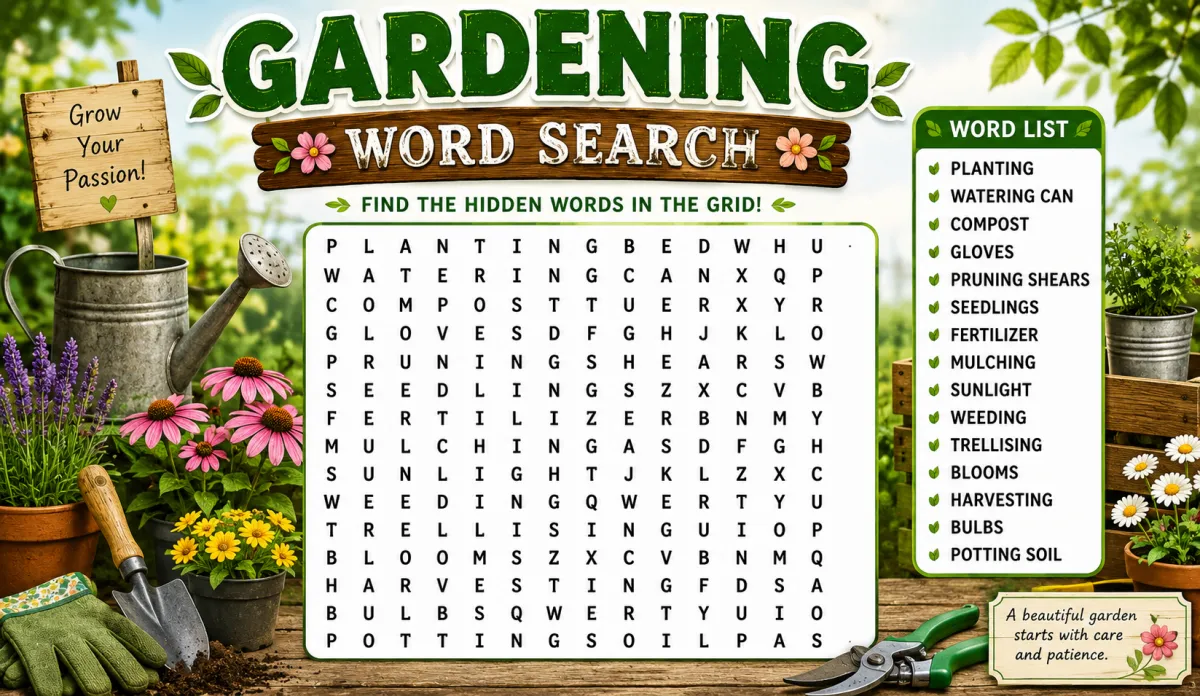
There is something naturally calming about gardening, and it turns out that even a paper-based version of the hobby can offer similar benefits. A gardening word search combines two relaxing pastimes, puzzle solving and plant appreciation, into one enjoyable activity suited for kids, adults, and seniors alike. Whether you are a teacher planning a spring science unit, a caregiver looking for a gentle brain activity, or simply someone who loves flowers and vegetables, this guide covers everything you need to know about gardening-themed word search puzzles and how to get the most out of them.
The Appeal of a Gardening-Themed Puzzle
Gardening touches nearly everyone's life in some way, whether through a backyard vegetable patch, a windowsill herb garden, or childhood memories of helping grandparents in the yard. Because of this widespread familiarity, gardening word searches tend to feel approachable and enjoyable rather than academic or intimidating. They also tap into a growing interest in outdoor hobbies, sustainable living, and home food production, making them a timely and relevant theme for puzzle books, classroom worksheets, and community newsletters.
Unlike more specialized word search themes that require prior knowledge, most people already recognize common gardening terms like "seed," "soil," and "watering can," which makes this type of puzzle accessible to almost any age group or skill level.
Puzzles:
Categories of Words Commonly Found in a Gardening Word Search
A well-designed gardening word search usually pulls vocabulary from several different categories to keep the puzzle varied and interesting.
- The Appeal of a Gardening-Themed Puzzle
- Puzzles:
- Categories of Words Commonly Found in a Gardening Word Search
- Gardening Tools
- Plant Names
- Gardening Actions and Techniques
- Nature and Environment Terms
- Who Benefits Most From Gardening Word Search Puzzles
- Young Children Learning About Nature
- Elementary and Middle School Students
- Seniors and Memory Care Activities
- Gardening Enthusiasts of Any Age
- Seasonal Variations Worth Exploring
- How to Approach Solving a Gardening Word Search
- Interesting Facts About Gardening to Share Alongside the Puzzle
- Creative Ways to Use Gardening Word Search Puzzles
- Conclusion
Gardening Tools
Words in this category might include shovel, rake, trowel, hoe, pruners, wheelbarrow, watering can, and gloves. These are often the easiest words for beginners since most people are familiar with basic gardening equipment.
Plant Names
This category can range from simple flowers like rose, tulip, sunflower, and daisy to vegetables such as tomato, carrot, lettuce, and pepper, or herbs like basil, mint, and rosemary. Puzzle creators often choose plant names based on the season or the specific lesson being taught.
Gardening Actions and Techniques
Words like planting, weeding, pruning, composting, mulching, harvesting, and fertilizing fall into this category. These terms are especially useful for puzzles designed to teach the actual process of gardening rather than just plant identification.
Nature and Environment Terms
Broader terms such as soil, sunlight, compost, pollination, ecosystem, and photosynthesis can be included in more advanced puzzles, particularly those designed for science classrooms covering plant biology.
Who Benefits Most From Gardening Word Search Puzzles
While anyone can enjoy this type of puzzle, certain groups tend to find them especially valuable.
Young Children Learning About Nature
For kids just starting to learn about plants and the environment, a simple gardening word search introduces basic vocabulary in a playful format, often paired with coloring activities or simple planting projects in early childhood classrooms.
Elementary and Middle School Students
Teachers frequently use gardening puzzles during spring units, Earth Day activities, or science lessons about plant life cycles, since the theme naturally complements topics like photosynthesis, pollination, and ecosystems.
Seniors and Memory Care Activities
Word search puzzles are widely recommended as gentle cognitive exercises for older adults, and gardening themes are particularly popular in senior centers and memory care facilities because the subject often connects to positive personal memories and lifelong hobbies.
Gardening Enthusiasts of Any Age
Adults who simply enjoy gardening as a hobby often find these puzzles a fun way to relax, whether flipping through a puzzle book during a coffee break or solving one digitally while waiting for seeds to sprout.
Seasonal Variations Worth Exploring
One of the most enjoyable aspects of gardening as a puzzle theme is how easily it adapts to different seasons throughout the year.
A spring-themed puzzle might focus on words like seedling, bloom, tulip, and daffodil, celebrating the start of the growing season. A summer version could highlight harvest-related terms such as tomato, zucchini, watering, and sunflower, reflecting the peak growing months. Meanwhile, an autumn puzzle might include words like pumpkin, harvest, compost, and mulch, tying into fall gardening tasks, and even a winter puzzle can work by focusing on indoor gardening terms like houseplant, succulent, and greenhouse.
This seasonal flexibility makes gardening word searches a recurring activity that teachers, activity coordinators, and hobbyists can revisit throughout the year without the content ever feeling repetitive.

How to Approach Solving a Gardening Word Search
Solving these puzzles efficiently comes down to a few simple strategies. Begin by identifying the longest words in the list first, since terms like "photosynthesis" or "wheelbarrow" are easier to spot in a crowded grid than short three or four letter words. Next, group similar words mentally, since plant names often share common letter patterns, such as ending in vowels, which can help your eyes adjust to the rhythm of the puzzle. It also helps to work in sections rather than scanning the entire grid at once, focusing on one quarter of the puzzle before moving to the next. Finally, keep a pencil or highlighter handy so you can mark found words immediately, preventing yourself from accidentally searching for the same word twice.
- Ancient Civilizations Word Search
- South American Countries Word Search
- World Religions Word Search
- Roblox Word Search
- Esports Terms Word Search
- Shakespeare Word Search
Interesting Facts About Gardening to Share Alongside the Puzzle
Adding a bit of trivia can turn a simple puzzle into a mini lesson. Tomatoes are botanically classified as fruits, not vegetables, despite being commonly cooked and eaten as one. Sunflowers can grow to heights of over twelve feet in optimal conditions, and their heads naturally track the movement of the sun throughout the day, a phenomenon known as heliotropism. Composting can reduce household waste significantly while simultaneously producing nutrient-rich soil, making it one of the most sustainable practices available to home gardeners. Certain herbs, like mint, spread so aggressively that experienced gardeners often recommend planting them in containers to prevent them from overtaking an entire garden bed.
Creative Ways to Use Gardening Word Search Puzzles
Beyond the classroom, gardening word searches can be used in a variety of creative settings. Community gardening clubs often include them in newsletters as a fun member activity, while plant nurseries sometimes hand them out to children visiting with parents. Birthday parties with a garden or nature theme can also feature a printed puzzle as a quiet activity table option, and gardening bloggers frequently include downloadable puzzles as bonus content for readers who enjoy a break from long-form articles. Even corporate wellness programs have started incorporating gardening-themed puzzles into stress-relief activities, recognizing the calming effect the subject matter tends to have on participants.
Conclusion
A gardening word search offers far more than a simple way to pass the time. It blends the mental engagement of puzzle solving with the universally appealing subject of plants, nature, and outdoor hobbies, making it suitable for classrooms, senior activities, family fun, and everything in between. With flexible seasonal themes, varied vocabulary categories, and genuine educational value, this type of puzzle proves that learning about gardening does not always require getting your hands dirty. Sometimes, all it takes is a pencil, a grid full of letters, and a little patience to dig up the hidden words waiting inside.