Shakespeare Word Search: A Creative Way to Explore the Bards Legacy
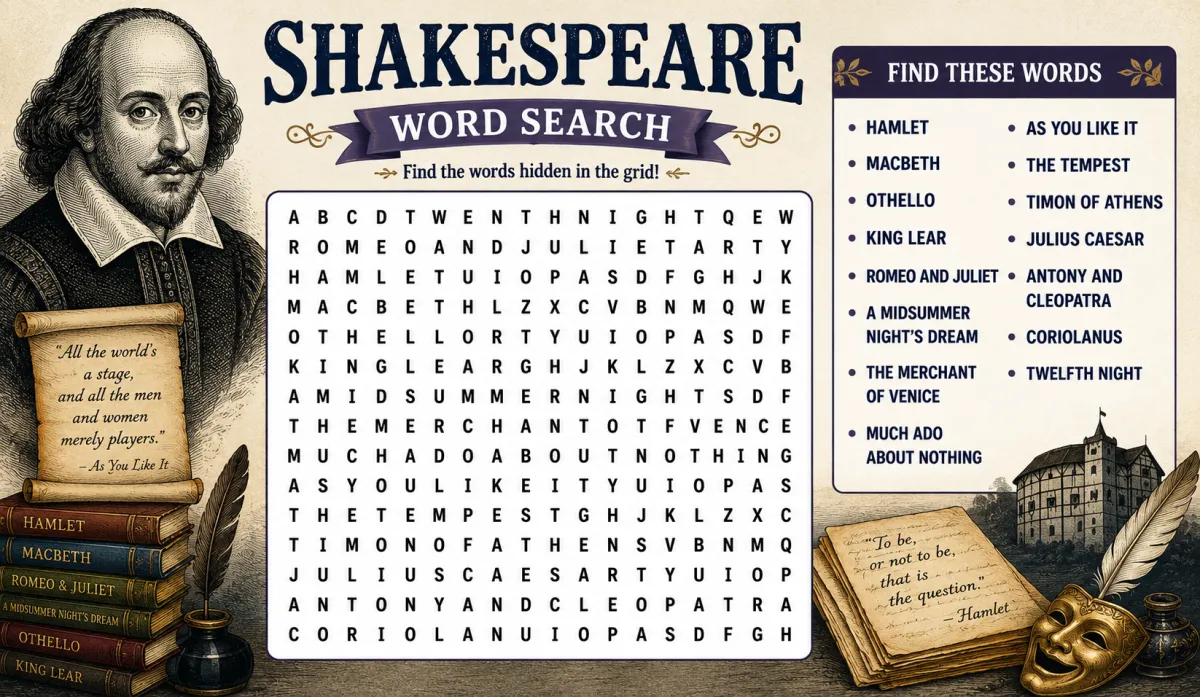
William Shakespeare remains one of the most celebrated writers in the history of the English language, and his influence continues to shape literature, theater, and even everyday vocabulary centuries after his death. For students, teachers, and literature lovers alike, a Shakespeare word search offers a playful yet meaningful way to engage with his plays, characters, and timeless phrases. This article explores why Shakespeare-themed word search puzzles have become such a popular educational tool, what kinds of words they typically feature, and how you can make the most of them whether you are teaching a classroom or simply enjoying a quiet puzzle session at home.
Why Shakespeare Is a Perfect Theme for Word Search Puzzles
Shakespeare's works are rich with unique names, unusual vocabulary, and memorable phrases, which makes them an ideal subject for word search puzzles. Unlike generic vocabulary lists, a Shakespeare-themed puzzle naturally introduces players to literary terms, character names, and play titles they might not encounter elsewhere. This combination of entertainment and education is exactly why so many English teachers turn to It wordsearch activities when introducing Shakespearean literature to their students.
Beyond the classroom, Shakespeare word search puzzles are also popular among trivia enthusiasts, book clubs, and theater groups looking for a lighthearted way to celebrate the playwright's work during events such as Shakespeare's birthday celebrations or before attending a live performance.
Puzzles:
Types of Shakespeare Word Search Puzzles
Not all Shakespeare word searches are the same. Depending on the purpose and audience, puzzles can be built around different themes:
- Why Shakespeare Is a Perfect Theme for Word Search Puzzles
- Puzzles:
- Types of Shakespeare Word Search Puzzles
- Play Title Puzzles
- Character Name Puzzles
- Quote and Phrase Puzzles
- Mixed Theme Puzzles
- Common Words and Names Found in a Shakespeare Word Search
- Educational Value of a Shakespeare Word Search
- Reinforces Vocabulary Retention
- Encourages Familiarity Before Deep Study
- Builds Confidence in Younger Readers
- Supports Classroom Engagement
- Fascinating Facts About Shakespeare Worth Knowing
- Tips for Solving a Shakespeare Word Search Efficiently
- Using Shakespeare Word Search in the Classroom or at Home
- Conclusion
Play Title Puzzles
These puzzles focus on the titles of Shakespeare's most famous works, such as Hamlet, Macbeth, Othello, Romeo and Juliet, A Midsummer Night's Dream, The Tempest, and King Lear. This type is especially useful for students who are just beginning to study Shakespeare and need to become familiar with his major works.
Character Name Puzzles
Character-based puzzles include names like Hamlet, Ophelia, Macbeth, Lady Macbeth, Puck, Juliet, Romeo, Prospero, Iago, and Falstaff. These puzzles work well after students have read a specific play, helping them recall key figures from the story.
Quote and Phrase Puzzles
Some advanced puzzles hide famous words or short phrases coined by Shakespeare, since many common English expressions actually originated in his plays. This type of puzzle is often used in higher-level literature classes to highlight Shakespeare's lasting impact on modern language.
Mixed Theme Puzzles
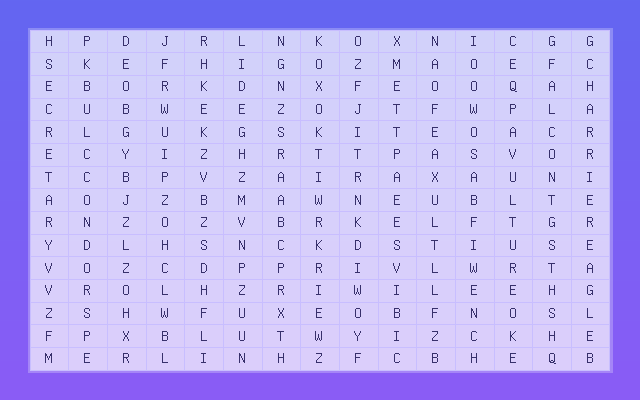
A mixed puzzle combines play titles, character names, and literary terms such as "sonnet," "soliloquy," "tragedy," and "comedy" into a single grid. This format is ideal for a general overview lesson covering Shakespeare's life and body of work.
Common Words and Names Found in a Shakespeare Word Search
If you are building your own puzzle or want to know what to expect, here are common categories of words typically included:
- Plays: Hamlet, Macbeth, Othello, Hamlet, King Lear, The Tempest, Twelfth Night
- Characters: Romeo, Juliet, Ophelia, Puck, Falstaff, Iago, Prospero
- Literary Terms: Sonnet, Soliloquy, Iambic, Pentameter, Tragedy, Comedy, Tragicomedy
- Places: Stratford, Globe Theatre, Verona, Denmark, Venice
- Related Figures: Playwright, Bard, Elizabethan, Poet
Combining these categories allows puzzle creators to design word searches suited to different grade levels, from simple ten-word grids for younger students to complex twenty-five-word grids for advanced literature courses.
Educational Value of a Shakespeare Word Search
While word search puzzles are often seen as a simple pastime, their educational benefits are significant, especially when applied to a subject as rich as Shakespearean literature.
Reinforces Vocabulary Retention
Searching for character names and literary terms helps students visually reinforce spelling and recognition, which supports long-term memory retention far better than passive reading alone.
Encourages Familiarity Before Deep Study
Introducing a Shakespeare word search before diving into a full play can help ease students into unfamiliar names and settings, reducing intimidation when they begin reading the actual text.
Builds Confidence in Younger Readers
For younger students who may find Shakespeare's language intimidating, a word search offers a low-pressure way to interact with his world without the challenge of interpreting complex Elizabethan English.
Supports Classroom Engagement
Teachers often use these puzzles as warm-up activities, review exercises after finishing a play, or fun filler activities before exams, keeping students engaged with the material in a lighter format.
Fascinating Facts About Shakespeare Worth Knowing
Pairing your puzzle with a few fun facts can make the activity even more engaging:
- Shakespeare is credited with inventing or popularizing over 1,700 words that are still used in English today, including "eyeball," "bedroom," and "lonely."
- He wrote 39 plays and 154 sonnets during his lifetime, despite relatively little being documented about his personal life.
- The Globe Theatre, where many of his plays were performed, burned down in 1613 during a performance of Henry VIII, after a cannon effect ignited the thatched roof.
- Many common phrases used today, such as "break the ice" and "heart of gold," trace their origins back to Shakespeare's writing.
- Shakespeare was born and died on the same date, April 23, according to traditional records, though his birth date is not fully confirmed with certainty.
Tips for Solving a Shakespeare Word Search Efficiently
If you are the one solving rather than creating the puzzle, these strategies can help you finish faster:
Start by scanning for longer or more distinctive words first, since names like "Prospero" or "Ophelia" stand out more easily than shorter, common words. Pay attention to double letters, which are common in names like "Falstaff" or "Othello," as they can help you spot a word quickly. Work systematically through the grid rather than jumping around randomly, checking rows, then columns, then diagonals in an organized pattern. If solving digitally, use zoom features to reduce eye strain, especially on smaller grids with dense letter placement.
- Ancient Civilizations Word Search
- South American Countries Word Search
- World Religions Word Search
- Roblox Word Search
- Esports Terms Word Search
Using Shakespeare Word Search in the Classroom or at Home
Teachers can easily incorporate these puzzles into lesson plans by pairing them with reading assignments, character analysis activities, or historical context lessons about the Elizabethan era. Homeschooling parents can use them as light supplementary material alongside a reading schedule, while book clubs might enjoy a themed puzzle night before discussing a specific play. Many free puzzle generator tools online also allow you to build a fully customized Shakespeare word search in minutes, letting you choose your own word list and difficulty level based on your specific needs.
Conclusion
A Shakespeare word search is far more than a simple time-filler activity. It is a genuinely useful educational tool that introduces students to the playwright's characters, plays, and literary vocabulary in a fun, low-stress format. Whether used as a classroom warm-up, a homeschool supplement, or simply a personal challenge for literature enthusiasts, these puzzles help bridge the gap between Shakespeare's centuries-old language and modern learners. By combining entertainment with education, a well-designed Shakespeare word search keeps the Bard's legacy alive for new generations, one hidden word at a time.