Civil Rights Movement
Click and drag to select words
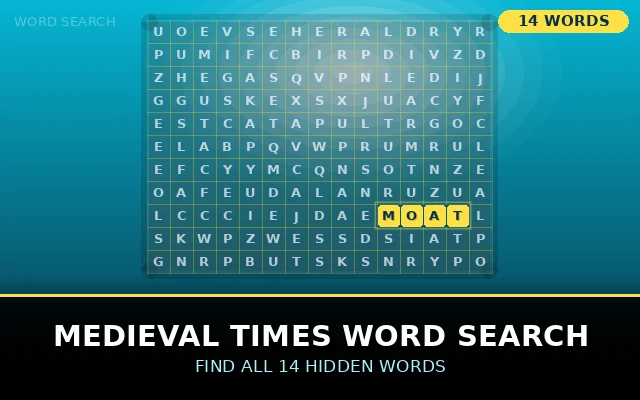
Explore the age of knights, castles, and kingdoms with this 14 word puzzle featu...
Play Now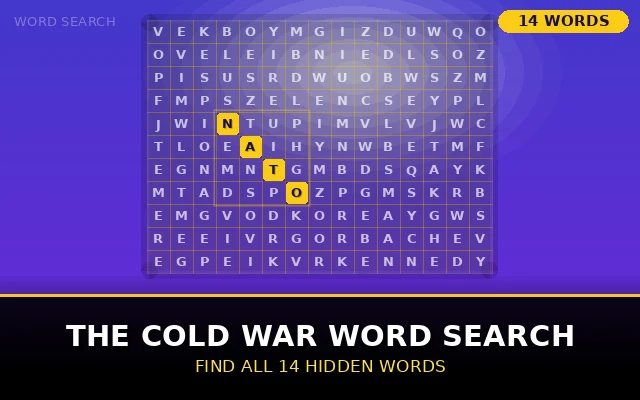
Track down 14 words connected to the decades long standoff between superpowers, ...
Play Now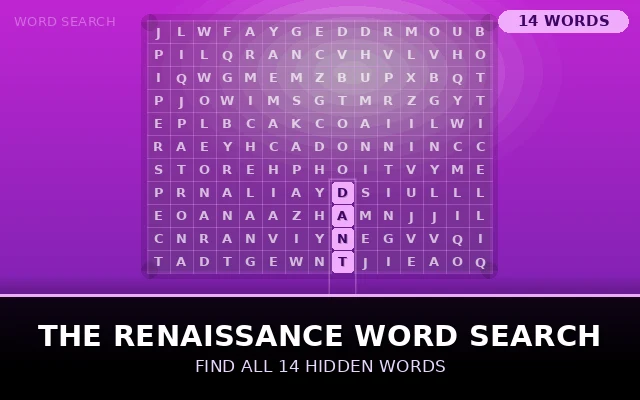
Uncover 14 words tied to the rebirth of art, science, and culture in Europe, fea...
Play NowFind 14 key terms tied to the fight for equality in America, including names, events, and ideals from the Civil Rights Movement, offering a meaningful way to learn about a defining chapter in US history.
Explore the age of knights, castles, and kingdoms with this 14 word puzzle featuring terms like Knight, Castle, Crusade, and Feudalism, perfect for anyone curious about medieval Europe and its traditions.
Play Now
Track down 14 words connected to the decades long standoff between superpowers, covering terms like NATO, Berlin Wall, and Nuclear, and giving solvers a quick grasp of Cold War era tension and politics.
Play Now
Uncover 14 words tied to the rebirth of art, science, and culture in Europe, featuring names and terms linked to the Renaissance period, ideal for art lovers and history students exploring this golden age.
Play NowCivil Rights Movement Guides & Articles
Civil Rights Movement Word Search: Honoring a Pivotal Era in American History
Introduction: A Puzzle That Honors History
The Civil Rights Movement word search is more than just a puzzle it's an educational tribute to one of the most transformative periods in American history. Featuring nine carefully chosen words connected to the fight for racial equality, this civil rights word search puzzle invites players to engage with pivotal moments, influential leaders, and foundational concepts from a movement that reshaped the United States forever.
This article explores the historical context behind the It wordsearch puzzle, examines the significance of the vocabulary involved, and highlights why puzzles like this serve as powerful tools for teaching American history in classrooms and homes alike.
The Historical Significance of the Civil Rights Movement
The American Civil Rights Movement, which reached its peak intensity between the mid-1950s and late 1960s, was a sustained effort by African Americans and their allies to end racial segregation and discrimination and secure equal rights under the law. Building on centuries of resistance to slavery and Jim Crow laws, the movement used a combination of legal challenges, nonviolent protest, and grassroots organizing to achieve landmark changes in American society.
The Roots of Inequality
To understand the Civil Rights Movement, it's essential to understand the systemic inequality that preceded it. Following the end of slavery after the Civil War, Southern states enacted Jim Crow laws that enforced racial segregation in schools, public transportation, restaurants, and virtually every aspect of public life. These laws, combined with widespread voter suppression tactics and economic discrimination, created a deeply unequal society that persisted for nearly a century after emancipation.
Brown v. Board of Education
One of the most significant legal victories of the era came in 1954 with the Supreme Court's ruling in Brown v. Board of Education, which declared that racial segregation in public schools was unconstitutional. This landmark decision overturned the "separate but equal" doctrine established decades earlier and set a powerful legal precedent that would fuel further civil rights litigation throughout the following decades.
Rosa Parks and the Montgomery Bus Boycott
In December 1955, Rosa Parks refused to give up her seat to a white passenger on a segregated bus in Montgomery, Alabama, sparking the Montgomery Bus Boycott. This 381-day protest, organized in part by a young minister named Martin Luther King Jr., demonstrated the power of coordinated nonviolent resistance and helped propel King into a leadership role that would define the movement for the next decade.
Martin Luther King Jr. and Nonviolent Resistance
Martin Luther King Jr. became the most recognizable face of the Civil Rights Movement, advocating for nonviolent civil disobedience inspired by the philosophy of Mahatma Gandhi. King's leadership was instrumental in organizing major events like the 1963 March on Washington, where he delivered his iconic "I Have a Dream" speech before a crowd of over 250,000 people. His commitment to nonviolence, even in the face of violent opposition, became a defining characteristic of the movement's moral authority. King's assassination in 1968 was a devastating blow to the movement, but his legacy continues to influence civil rights activism worldwide, which is why his name and philosophy are frequently featured in martin luther king word search puzzles and educational materials.
The Civil Rights Act and Voting Rights Act
Sustained activism and public pressure led to two of the most consequential pieces of legislation in American history: the Civil Rights Act of 1964, which outlawed discrimination based on race, color, religion, sex, or national origin, and the Voting Rights Act of 1965, which prohibited racial discrimination in voting practices. These laws dismantled the legal framework of segregation and represented major victories for the movement, though the struggle for full equality continued in the decades that followed.
Key Figures Beyond MLK
While Martin Luther King Jr. remains the most well-known leader, the Civil Rights Movement was powered by countless activists and organizations. Figures like Malcolm X offered a different perspective on achieving racial justice, emphasizing self-defense and Black empowerment. John Lewis, a young organizer who later became a longtime congressman, played a critical role in events like the Selma to Montgomery marches. Organizations such as the NAACP, the Southern Christian Leadership Conference (SCLC), and the Student Nonviolent Coordinating Committee (SNCC) provided essential organizational infrastructure that sustained the movement over years of struggle.
Sit-Ins, Freedom Rides, and Grassroots Activism
Beyond high-profile marches and speeches, the Civil Rights Movement was built on countless acts of grassroots courage. Sit-in protests, where activists peacefully occupied segregated lunch counters, spread across the South starting in 1960. Freedom Rides, in which activists rode interstate buses to challenge segregation in public transportation, faced violent opposition but drew national attention to the injustices of the Jim Crow South. These forms of direct action demonstrated the movement's commitment to nonviolent confrontation as a tool for social change.
Why Teaching Civil Rights History Matters
Understanding this chapter of American history is essential for students of all backgrounds. An american history word search focused on civil rights helps students engage with difficult but important topics in an accessible format, encouraging deeper reflection and discussion.
Building Empathy and Awareness: Learning about the struggles faced by civil rights activists helps students develop empathy and a deeper understanding of ongoing conversations about equality and justice.
Reinforcing Key Vocabulary: Terms like "segregation," "equality," "protest," and "activism" are essential vocabulary for understanding not just this era, but broader discussions of social justice throughout history.
Encouraging Critical Thinking: Studying the strategies and philosophies of civil rights leaders encourages students to think critically about effective methods of social change.
Connecting Past and Present: Many of the issues addressed during the Civil Rights Movement remain relevant today, making this civil rights history puzzle a valuable starting point for discussions about contemporary social justice movements.
How to Approach This Word Search Thoughtfully
Because this puzzle deals with meaningful historical content, consider these approaches when using it in an educational setting:
- Pair with discussion — Use the puzzle as a warm-up activity before a deeper classroom discussion about the movement's history and legacy.
- Research each word — Encourage students to look up the historical significance of each word after completing the puzzle.
- Connect to primary sources — Supplement the puzzle with speeches, photographs, or firsthand accounts from the era for a richer learning experience.
- Encourage reflection — Ask students to consider how the vocabulary in the puzzle connects to modern conversations about civil rights and equality.
The Value of Educational Word Search Puzzles in Sensitive Topics
While many educational word search puzzles focus on lighter subjects like animals or geography, puzzles covering serious historical topics like the Civil Rights Movement serve a unique purpose. They introduce complex, sometimes difficult subject matter in a structured, approachable format that can serve as a gentle entry point for deeper study. This makes history word search for kids covering topics like this one particularly valuable in middle and high school curricula, where educators often look for creative ways to introduce challenging historical content.
Who Should Use This Puzzle?
This puzzle is particularly well-suited for:
- Middle and high school students studying American history or social studies
- Teachers planning lessons around Black History Month or civil rights education
- Homeschool families covering 20th-century American history
- Adults interested in reinforcing their knowledge of this pivotal era
- Community organizations hosting educational events focused on equality and justice
Expanding Your Understanding Beyond the Puzzle
After completing this word search, consider exploring additional resources about the movement, including King's "Letter from Birmingham Jail," the history of the NAACP, or the ongoing legacy of the Voting Rights Act in contemporary politics. These topics naturally build on the foundational vocabulary presented in the puzzle and offer opportunities for deeper historical engagement.
Conclusion
The Civil Rights Movement word search offers a meaningful way to engage with one of the most important chapters in American history. By combining the accessible format of a word search game online with substantive historical vocabulary, this puzzle helps students, teachers, and history enthusiasts reflect on the courage, sacrifice, and determination that defined the fight for equality. As both an educational tool and a tribute to the movement's legacy, this puzzle reminds us that learning about history even its most challenging chapters can be engaging, accessible, and deeply worthwhile.
Target Keywords: civil rights movement word search, civil rights word search puzzle, american history word search, civil rights history puzzle, martin luther king word search, free word search puzzles, history word search for kids, equality word search, educational word search puzzles, black history word search, word search game online, civil rights vocabulary