World War II Word Search
Click and drag to select words
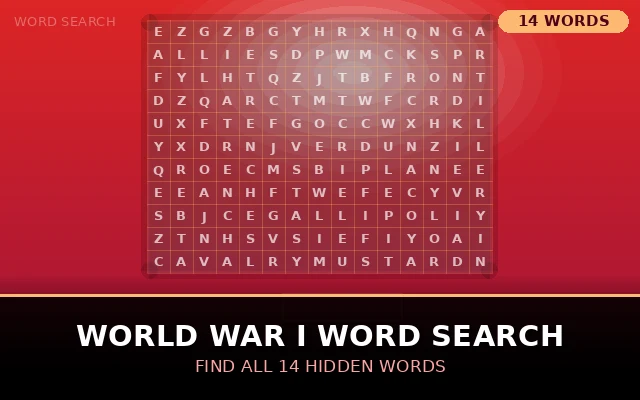
Play the free World War I word search puzzle featuring key terms, battles, and f...
Play Now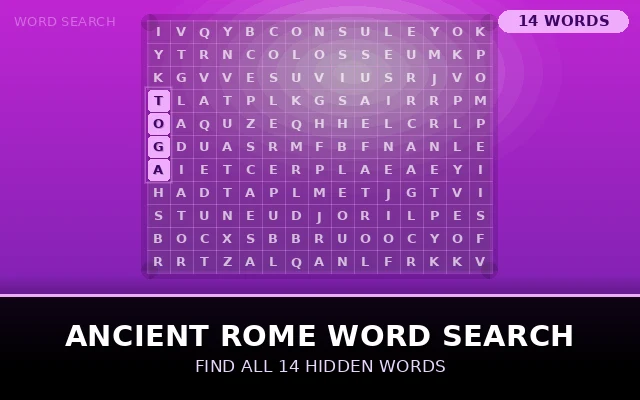
Play the free Ancient Rome word search puzzle featuring emperors, gladiators, an...
Play Now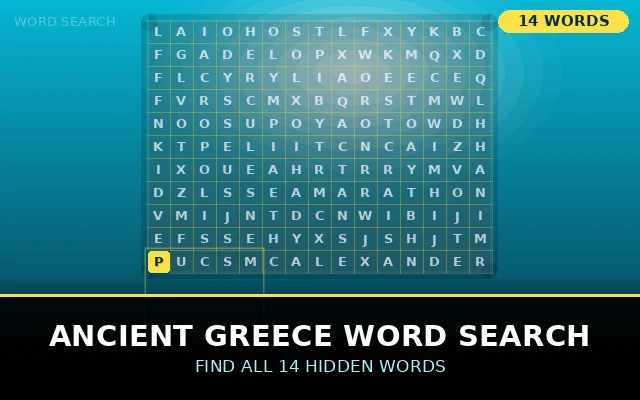
Search for iconic Ancient Greece terms like Sparta, Athens, Olympus, and Democra...
Play NowPlay the free World War II word search puzzle featuring key battles, leaders, and events from history's largest conflict. Ideal for students, teachers, and history enthusiasts.
Play the free World War I word search puzzle featuring key terms, battles, and figures from the Great War. A perfect educational resource for students and history fans.
Play Now
Play the free Ancient Rome word search puzzle featuring emperors, gladiators, and the Roman Empire. A fun, educational puzzle for students, teachers, and history lovers.
Play Now
Search for iconic Ancient Greece terms like Sparta, Athens, Olympus, and Democracy in this 14 word puzzle covering the myths, philosophy, and city states that shaped Western civilization forever.
Play NowWorld War II Word Search Guides & Articles
World War II Word Search: Journey Through the Defining Conflict of the 20th Century
Introduction: Confronting History's Largest Conflict
The World War 2 word search puzzle invites players to explore the largest and most devastating conflict in human history. Featuring 14 words connected to the events, leaders, and legacy of World War II, this wwii word search puzzle provides an engaging and educational way for students, teachers, and history enthusiasts to deepen their understanding of a war that reshaped the entire world.
This article explores the historical context surrounding World War II, examines the vocabulary featured in the puzzle, and explains why this world war two history puzzle remains such an important educational resource for understanding the modern world.
Understanding World War II: A Global Catastrophe
World War II, lasting from 1939 to 1945, was the deadliest conflict in human history, involving more than 30 countries and resulting in an estimated 70 to 85 million deaths worldwide. The war pitted the Allied Powers, including the United States, the Soviet Union, Britain, and China, against the Axis Powers, led by Nazi Germany, Fascist Italy, and Imperial Japan. The scale, brutality, and global reach of this conflict make it one of the most extensively studied events in world history.
The Rise of Fascism and the Path to War
The origins of World War II are deeply connected to the political and economic instability that followed World War I. The harsh terms of the Treaty of Versailles, combined with the devastating effects of the Great Depression, created fertile ground for extremist political movements across Europe. In Germany, Adolf Hitler and the Nazi Party It wordsearch exploited widespread economic hardship and national resentment to rise to power in 1933, promising to restore German prestige and territory. Hitler's aggressive expansionist policies, including the annexation of Austria and the invasion of Czechoslovakia, went largely unchallenged by Western powers pursuing a policy of appeasement, emboldening further aggression.
The Invasion of Poland and the Outbreak of War
World War II officially began on September 1, 1939, when Nazi Germany invaded Poland, prompting Britain and France to declare war on Germany two days later. This invasion demonstrated Germany's devastating new military strategy known as "blitzkrieg," or lightning war, which combined fast-moving tanks, motorized infantry, and air support to overwhelm defenders before they could mount an effective response. The rapid fall of Poland set the pattern for German military successes throughout the early years of the war.
The Holocaust: History's Darkest Chapter
Among the most horrific aspects of World War II was the Holocaust, the systematic, state-sponsored persecution and murder of six million Jews, along with millions of other victims including Roma people, disabled individuals, and political dissidents, carried out by Nazi Germany and its collaborators. This genocide, carried out through mass shootings, forced labor, and extermination camps, represents one of the darkest chapters in human history and stands as a permanent reminder of the catastrophic consequences of unchecked hatred and totalitarian ideology. Education about the Holocaust remains a critical component of World War II history curricula, which is why holocaust word search puzzles and related educational materials play an important role in helping students understand this tragic history and its lasting lessons.
Pearl Harbor and American Entry
The United States formally entered World War II following the surprise Japanese attack on the American naval base at Pearl Harbor, Hawaii, on December 7, 1941. This devastating attack, which killed over 2,400 Americans and crippled much of the Pacific Fleet, galvanized American public opinion and led to an immediate declaration of war against Japan. Germany and Italy subsequently declared war on the United States, formally bringing America into the global conflict on both the European and Pacific fronts.
Key Battles and Turning Points
Several pivotal battles determined the ultimate outcome of World War II. The Battle of Stalingrad, fought between German and Soviet forces from 1942 to 1943, marked a decisive turning point on the Eastern Front, as Soviet forces successfully repelled the German invasion at enormous human cost. The D-Day invasion of Normandy on June 6, 1944, saw Allied forces launch the largest amphibious invasion in history, establishing a crucial foothold in German-occupied France that ultimately led to the liberation of Western Europe. In the Pacific theater, battles like Midway and Iwo Jima demonstrated the brutal island-hopping strategy that gradually pushed Japanese forces back toward their home islands.
Leaders Who Shaped the War
World War II was defined by powerful leaders whose decisions shaped the course of history. Winston Churchill's defiant leadership rallied Britain during its darkest hours, while Franklin D. Roosevelt guided American strategy and provided crucial support to Allied nations even before formal U.S. entry into the war. On the opposing side, Adolf Hitler's fanatical ideology and military ambitions drove Germany's aggressive expansion, while Japanese military leaders pursued their own vision of imperial dominance in the Pacific.
The Atomic Bomb and the End of the War
World War II concluded with the United States' unprecedented use of atomic weapons against the Japanese cities of Hiroshima and Nagasaki in August 1945, resulting in devastating loss of life and ultimately prompting Japan's surrender. This decision, one of the most controversial in military history, ushered in the nuclear age and fundamentally transformed the nature of international relations for decades to come, setting the stage for the Cold War tensions that would soon follow.
The Aftermath and Global Transformation
The end of World War II brought profound changes to the global political order. The United Nations was established in 1945 to promote international cooperation and prevent future conflicts, while the devastated nations of Europe and Asia began the long process of reconstruction. The war's conclusion also set the stage for decades of Cold War tension between the United States and the Soviet Union, as the wartime alliance between these two emerging superpowers quickly gave way to ideological rivalry.
Why WWII History Facts Matter for Modern Students
Understanding wwii history facts provides essential context for interpreting contemporary international relations, human rights advocacy, and the ongoing importance of preventing genocide and totalitarianism.
Understanding Modern International Institutions: Organizations like the United Nations and NATO emerged directly from the lessons learned during World War II, making this history essential for understanding contemporary global governance.
Appreciating the Cost of War: The staggering human toll of World War II underscores the importance of diplomacy and international cooperation in preventing future large-scale conflicts.
Learning from History's Darkest Moments: Studying the Holocaust and other atrocities committed during the war reinforces the critical importance of tolerance, human rights, and vigilance against extremism.
Connecting Science and History: The development of the atomic bomb during World War II connects historical study to broader discussions of scientific ethics and the responsible use of technology.
Tips for Solving the World War II Word Search
To get the most out of this ww2 vocabulary word search, consider these strategies:
- Review the word list carefully — Familiarize yourself with all 14 words before starting to search, allowing your brain to recognize patterns more efficiently.
- Look for proper nouns and place names — Words related to specific battles, countries, or leaders often stand out due to distinctive letter combinations.
- Search methodically — Move through the grid in a consistent pattern to ensure you don't overlook any hidden words.
- Use the puzzle as a launching point for further study — Research any unfamiliar terms after completing the puzzle to deepen your historical knowledge.
The Educational Impact of WWII-Themed Puzzles
Educational word search puzzles covering World War II serve a particularly important function, given the war's profound and lasting impact on modern society. A history word search for kids focused on this topic can serve as a gentle, structured introduction to difficult historical subject matter, making it easier for educators to address these important topics in age-appropriate ways.
This puzzle appeals to:
- Middle and high school students studying 20th-century world history
- Teachers planning lessons around Holocaust remembrance or World War II history units
- History and military enthusiasts interested in the strategic and political dimensions of the war
- Homeschool families covering major 20th-century conflicts
- Veterans and families with personal connections to World War II history
Extending Your World War II Knowledge
After completing this word search, consider exploring related topics such as the role of code-breakers at Bletchley Park, the experiences of Japanese American internment during the war, or the Nuremberg Trials that held Nazi leaders accountable for war crimes. These subjects offer meaningful opportunities for continued historical learning.
Conclusion
The World War II word search puzzle offers a meaningful way to engage with the most consequential conflict in modern history. From the horrors of the Holocaust to the pivotal battles that determined the war's outcome, this world war 2 word search helps players build a deeper understanding of events that continue to shape our world today. Whether used as a classroom resource or a personal educational challenge, this puzzle honors the historical weight of World War II while providing an accessible and engaging learning experience for players of all ages.
Target Keywords: world war 2 word search, wwii word search puzzle, world war two history puzzle, ww2 vocabulary word search, free word search puzzles, history word search for kids, holocaust word search, educational word search puzzles, wwii history facts, 20th century history puzzle, word search game online, allied powers word search