Norse Mythology Word Search: Exploring the World of Gods, Giants, and Legends Through Puzzles
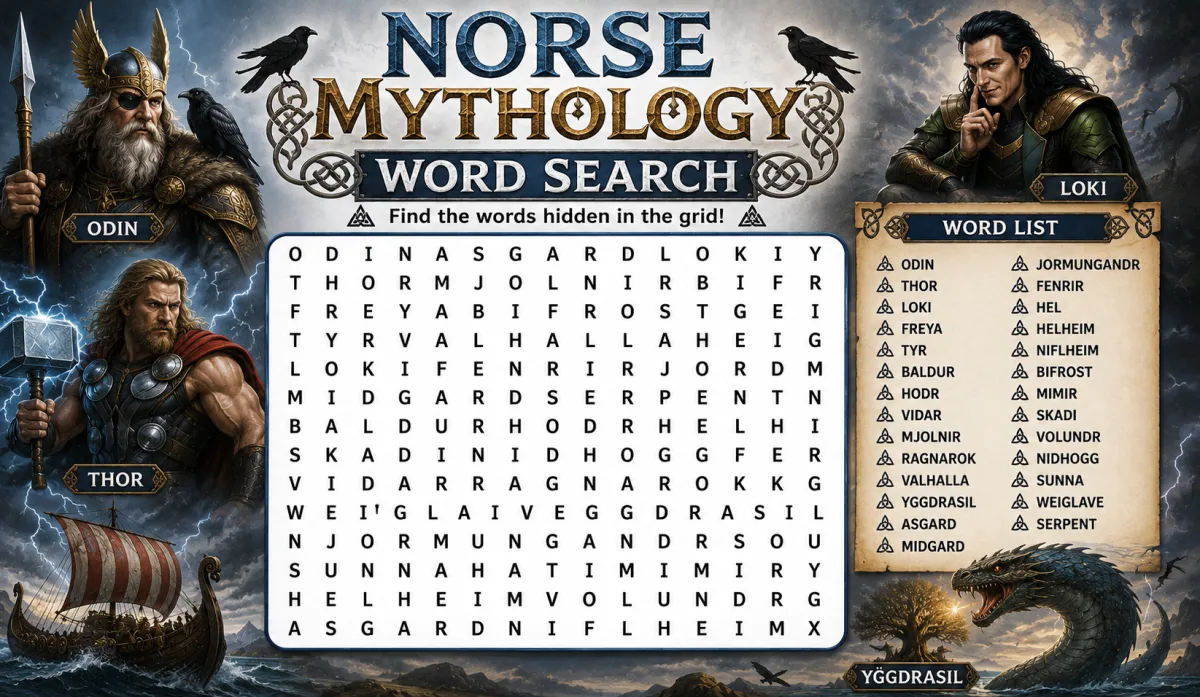
Few mythological traditions capture the imagination quite like Norse mythology. With its tales of powerful gods, fearsome giants, mystical realms, and an inevitable apocalypse known as Ragnarok, the mythology of ancient Scandinavia has fascinated readers, students, and pop culture fans for generations. A Norse mythology word search offers a unique way to engage with this rich tradition, blending the fun of puzzle solving with genuine cultural and historical learning. In this article, we will explore why Norse mythology makes such a compelling puzzle theme, the kinds of vocabulary you can expect to find, who benefits most from this type of activity, and how you can get the most out of solving or creating one.
The Enduring Appeal of Norse Mythology
Norse mythology originated among the Germanic peoples of Scandinavia and was passed down through oral tradition long before being recorded in texts such as the Poetic Edda and the Prose Edda during the medieval period. Unlike many mythological systems that emphasize eternal order, Norse mythology is defined by impermanence, struggle, and an eventual cosmic ending. The gods themselves are not portrayed as flawless or invincible; they scheme, quarrel, and ultimately face their own destruction at Ragnarok, the prophesied battle that brings about the end of the world as they know it.
This narrative complexity, combined with vivid imagery of towering World Trees, nine interconnected realms, and legendary weapons like Thor's hammer Mjolnir, gives Norse mythology a depth that continues to captivate modern audiences. It has influenced everything from classic literature to blockbuster films, video games, and television series, keeping the mythology firmly embedded in contemporary culture. This widespread familiarity is precisely what makes Norse mythology such a rewarding subject for a word search puzzle, since most solvers will recognize at least some names or terms even before they begin.
Puzzles:
-
Greek Gods Word Search
-
Egyptian Gods Word Search
-
Mythical Creatures Word Search
-
Roman Gods Word Search
Categories of Words You Will Find in a Norse Mythology Word Search
A well-constructed Norse mythology word search typically draws from several distinct categories, allowing puzzle creators to tailor the difficulty and focus of the grid to their intended audience.
- The Enduring Appeal of Norse Mythology
- Puzzles:
- Categories of Words You Will Find in a Norse Mythology Word Search
- The Major Gods and Goddesses
- Legendary Creatures and Beings
- The Nine Realms and Key Locations
- Artifacts, Weapons, and Symbols
- Key Events and Concepts
- Designing a Puzzle for Different Skill Levels
- Who Benefits Most From Norse Mythology Word Search Puzzles
- Students in Literature and History Classes
- Fans of Popular Culture and Media
- Homeschooling Families
- Adult Mythology Enthusiasts
- Fascinating Facts About Norse Mythology Worth Sharing
- Strategies for Solving a Norse Mythology Word Search Efficiently
- The Connection Between Norse Mythology and Modern Pop Culture
- Bringing Norse Mythology Word Search Into Different Settings
- Conclusion
The Major Gods and Goddesses
At the heart of any Norse mythology puzzle are the names of its central deities. Odin, the All-Father and ruler of Asgard, is often the most prominent name included, alongside his son Thor, the thunder god known for his immense strength and iconic hammer. Other frequently featured names include Loki, the cunning and unpredictable trickster god; Freya, the goddess associated with love, fertility, and war; Baldur, known for his beauty and tragic fate; and Tyr, the god of law and justice who famously sacrificed his hand to bind the wolf Fenrir.
Legendary Creatures and Beings
Norse mythology is populated by an extraordinary cast of creatures beyond the gods themselves. Puzzle words in this category often include Fenrir, the monstrous wolf destined to kill Odin during Ragnarok; Jormungandr, the World Serpent so massive it encircles the entire earth; and Hel, the being who rules over the realm of the dead that shares her name. Other common inclusions are valkyries, the female figures who choose which warriors die in battle and are brought to Valhalla, as well as dwarves, elves, and giants, all of whom play significant roles throughout the mythological narrative.
The Nine Realms and Key Locations
Norse cosmology divides existence into nine distinct realms connected by Yggdrasil, the great World Tree. Puzzle words frequently drawn from this category include Asgard, home of the Aesir gods; Midgard, the realm of humans; Jotunheim, home to the giants; and Valhalla, the majestic hall where slain warriors are said to feast eternally under Odin's watch. Niflheim, a realm of ice and mist, and Muspelheim, a realm of fire, also appear in more advanced puzzles focused on Norse cosmology.
Artifacts, Weapons, and Symbols
No Norse mythology puzzle would be complete without referencing its most iconic objects. Mjolnir, Thor's hammer, is almost always included, along with Gungnir, Odin's spear, and Draupnir, a magical ring that multiplies itself. Runes, the ancient alphabet used by Norse peoples and often associated with mystical power, also appear frequently, especially in puzzles designed for older students studying the historical and linguistic side of Norse culture.
Key Events and Concepts
More advanced puzzles may incorporate broader conceptual terms such as Ragnarok, the prophesied end of the world; Valhalla, as both a place and a concept tied to honorable death in battle; and Yggdrasil, symbolizing the interconnected structure of the Norse universe. These terms work particularly well for high school or college-level puzzles exploring the philosophical and symbolic dimensions of the mythology.
Designing a Puzzle for Different Skill Levels
Because Norse mythology contains names and terms ranging from simple to genuinely challenging, this theme lends itself well to multiple difficulty tiers, making it flexible for a wide age range.
Beginner puzzles intended for younger students or those with limited prior exposure to the mythology typically stick to widely recognized names like Thor, Odin, Loki, and Asgard, many of which have entered mainstream awareness through popular films. These puzzles usually feature smaller grids, often ten by ten or twelve by twelve squares, with words placed only horizontally and vertically to keep the challenge approachable.
Intermediate puzzles expand the word list to include names like Freya, Baldur, Valhalla, and Midgard, introducing slightly less familiar vocabulary while still remaining accessible. Grids at this level often grow to around fifteen by fifteen squares, and diagonal placements are introduced to increase the challenge modestly.
Advanced puzzles, designed for older students, mythology enthusiasts, or those with deeper interest in the subject, often incorporate more obscure names such as Jormungandr, Draupnir, Muspelheim, and Yggdrasil. These puzzles typically use larger grids of twenty by twenty squares or more, with words placed in all directions, including backward, to create a genuinely demanding solving experience.
- Shakespeare Word Search
- Gardening Word Search
- Airport and Flying Terms Word Search
- Mountains and Rivers Word Search
- Cars and Vehicles Word Search
Who Benefits Most From Norse Mythology Word Search Puzzles
This puzzle theme appeals to a wide variety of audiences, each drawn to it for slightly different reasons.
Students in Literature and History Classes
Norse mythology frequently appears in middle school and high school curricula, particularly when covering world mythology units or exploring the historical roots of Scandinavian culture. A word search puzzle serves as an excellent introductory activity before students dive into more complex readings of the actual myths, helping familiarize them with unfamiliar names and terms in a low-pressure format.
Fans of Popular Culture and Media
Given the mythology's significant influence on modern film franchises, television series, and video games, many puzzle solvers come to this theme not through academic study but through entertainment media. These solvers often enjoy connecting names they already recognize from movies or games to the deeper mythological context behind them, making the puzzle a bridge between pop culture familiarity and genuine historical knowledge.
Homeschooling Families
Parents teaching mythology or world history at home often turn to word search puzzles as a low-prep, high-engagement supplement to reading assignments, allowing children to interact with new vocabulary at their own pace without requiring extensive lesson preparation.
Adult Mythology Enthusiasts
Beyond formal education, many adults simply enjoy mythology as a personal interest and appreciate a lighthearted way to review names and concepts, whether as a relaxing solo activity or as part of a themed puzzle night with friends who share similar interests.
Fascinating Facts About Norse Mythology Worth Sharing
Pairing your puzzle with a bit of trivia can deepen the experience and spark further curiosity. Odin is often depicted with only one eye, having sacrificed the other in exchange for wisdom by drinking from the Well of Mimir. Thursday, the day of the week, actually derives its name from Thor, reflecting how deeply Norse mythology has influenced modern language and culture. Valhalla was believed to house only warriors who died bravely in battle, while other souls were said to journey to different realms depending on the nature of their death. The concept of Ragnarok describes not just an ending but a cyclical rebirth, since some versions of the mythology suggest that a new world eventually rises from the ashes of the old one, populated by surviving gods and a renewed humanity.
Strategies for Solving a Norse Mythology Word Search Efficiently
A few practical techniques can help you move through this type of puzzle more quickly. Begin by scanning for longer, more distinctive names first, since words like Jormungandr or Yggdrasil stand out far more easily in a crowded grid than shorter, more common terms. Pay attention to unusual letter combinations, since Norse names often contain double consonants or uncommon pairings that are visually distinct from typical English words. It also helps to work through the grid systematically, checking horizontal rows first, then vertical columns, and finally diagonal lines, rather than scanning randomly across the entire puzzle at once. If you find yourself stuck on a particular word, try focusing on its ending rather than its beginning, since many Norse names share similar starting letters but diverge more noticeably toward the end.
The Connection Between Norse Mythology and Modern Pop Culture
Part of what makes this puzzle theme so popular today is the sheer visibility of Norse mythology in contemporary entertainment. Comic book adaptations have introduced characters like Thor and Loki to massive global audiences, often blending traditional mythological elements with modern superhero storytelling. Television series exploring Viking history and culture have similarly renewed interest in the historical and mythological roots of Scandinavian civilization, while video games set in Norse-inspired worlds have introduced an entire generation of players to realms like Asgard and creatures like draugr and valkyries. This cultural visibility means that even casual puzzle solvers with no formal background in mythology often arrive with at least partial familiarity, making the puzzle feel accessible rather than obscure.
Bringing Norse Mythology Word Search Into Different Settings
Beyond traditional classrooms, this puzzle theme finds its way into a variety of creative settings. Libraries often include mythology-themed puzzles as part of summer reading programs, encouraging children to explore mythological literature alongside a fun activity. Fantasy and mythology-themed conventions sometimes distribute printed puzzles as light entertainment for attendees waiting between panels or events. Online mythology blogs and educational websites frequently offer downloadable versions as bonus content, giving readers an interactive way to engage with articles covering Norse gods and legends. Even board game cafes and trivia nights occasionally incorporate mythology puzzles as a warm-up activity before diving into more competitive trivia rounds focused on similar themes.
Conclusion
A Norse mythology word search offers a genuinely engaging way to explore one of history's most captivating mythological traditions. By blending familiar names from popular culture with deeper historical and cultural vocabulary, this puzzle theme appeals to students, casual fans, and dedicated mythology enthusiasts alike. Whether used as a classroom warm-up, a homeschool supplement, or simply a personal challenge for those fascinated by tales of gods, giants, and the end of the world, this puzzle proves that learning about ancient mythology does not have to feel like a chore. Sometimes, all it takes is a grid full of letters and a little curiosity to uncover the legendary names hidden within.