The Ultimate Guide to Learning Vegetable Names Word Search
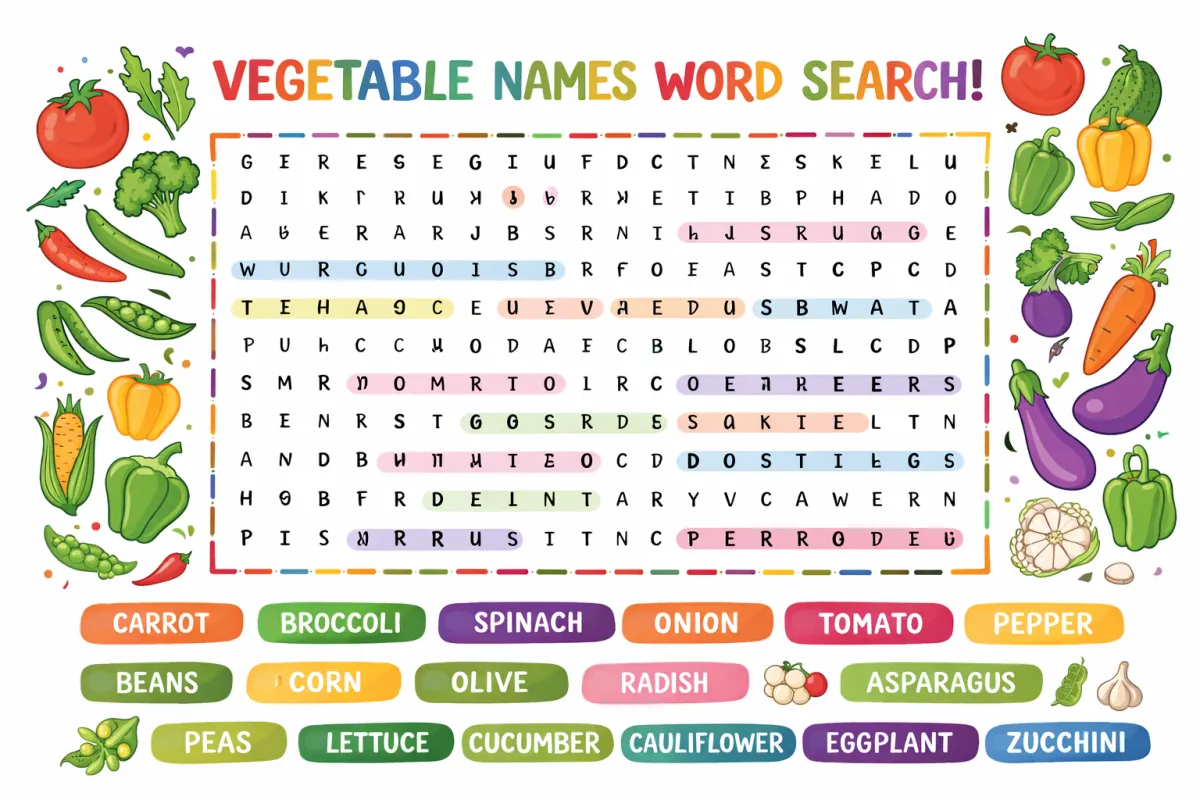
Word search puzzles have long been one of the most enjoyable and effective ways to build vocabulary, and when it comes to learning vegetable names in English, nothing beats the combination of visual learning and puzzle-solving. Whether you are a student trying to memorize vegetable names and pictures, a teacher looking for classroom resources, or simply someone who loves word puzzles, a vegetable names word search is the perfect activity to sharpen your mind while expanding your knowledge.
This comprehensive guide covers everything you need to know about vegetable names, how word search puzzles help you learn them faster, and why itwordsearches.com is the best place to enjoy these educational puzzles for free.
Why Learning Vegetable Names Matters
Vegetables form the foundation of healthy eating across every culture and cuisine on the planet. From crispy carrots to leafy spinach and earthy beets, each vegetable carries its own story, nutritional profile, and culinary identity. Learning vegetable names in English is particularly important for students, ESL learners, and children who are building their foundational vocabulary.
Knowing vegetable names also supports everyday life. When you go grocery shopping, read a recipe, or order food at a restaurant, recognizing common vegetable names helps you make better choices. Children who learn these names early develop stronger language skills and a healthier relationship with food.
For multilingual learners, understanding vegetable names in English alongside their native language builds a cross-cultural bridge that goes beyond the kitchen. Many people search for vegetable names in Hindi, vegetable names in Spanish, vegetable names in Japanese, or vegetable names in French, showing how universal the desire to learn these essential words truly is.
Puzzles:
How Word Search Puzzles Make Vegetable Learning Fun
- Why Learning Vegetable Names Matters
- Puzzles:
- An Overview for Word Search Enthusiasts Vegetable Names in English
- Vegetable Names Word Search for Kids and Students
- Vegetable Names Word Search for English Language Learners
- The Educational Science Behind Word Search Puzzles
- A Perfect Word Search Theme Vegetable Names Alphabetical Order
- Seasonal Vegetable Names and Themed Word Searches
- Long Vegetable Names and Their Word Search Appeal
- Connecting Visual and Verbal Learning Vegetable Names with Pictures
- Using Vegetable Word Search on Puzzles
- Tips for Getting the Most Out of Vegetable Word Search
- Conclusion
Traditional memorization of a vegetable names list can feel repetitive and dull. Word search puzzles change the entire experience by turning learning into a game. Here is why they work so well.
Active engagement plays a major role. When you search for a word in a puzzle grid, your brain actively processes the letters rather than passively reading them. This deeper processing creates stronger memory links, making it easier to recall vegetable names long after the puzzle is done.
Visual recognition is another key benefit. Seeing vegetable names spelled out in a puzzle helps you connect the letters, sounds, and meanings more effectively than simply reading a list. Over time, repeated exposure through puzzles helps spellings become second nature.
Word search puzzles are also adaptable to every skill level. Beginners can start with simple vegetable names on a small grid, while advanced learners can tackle complex puzzles featuring uncommon or long vegetable names. This natural progression keeps players engaged and motivated.

Finally, puzzles create a low-pressure environment for learning. There is no grading, no time pressure unless you choose it, and no wrong way to play. This relaxed atmosphere helps learners especially children build confidence without fear of failure.
An Overview for Word Search Enthusiasts Vegetable Names in English
English has an extraordinarily rich vocabulary for vegetables, drawing from Latin, French, Spanish, indigenous American languages, and beyond. Understanding where vegetable names come from can make word searches even more rewarding.
Consider the word broccoli, borrowed from Italian, or zucchini, which also comes from Italian origins. Squash comes from a Native American Narragansett word, while spinach traces back to Persian through Arabic and Old French. Knowing these etymological roots turns a simple vegetable names word search into a mini history lesson.
Common vegetables that frequently appear in word search puzzles include carrot, potato, tomato, onion, garlic, pepper, cucumber, lettuce, cabbage, spinach, broccoli, cauliflower, celery, pumpkin, zucchini, radish, turnip, beet, asparagus, artichoke, parsnip, leek, kale, chard, fennel, yam, okra, eggplant, and corn among many others.
Vegetable names that start with specific letters are especially popular in themed word searches. Vegetables starting with the letter A include asparagus, artichoke, and arugula. Those starting with B include broccoli, Brussels sprouts, beet, bok choy, and butternut squash. Starting with C you have carrot, cabbage, cauliflower, celery, and corn. These alphabetical groupings make excellent puzzle themes and help learners systematically cover the full vegetable vocabulary.
Vegetable Names Word Search for Kids and Students
Children benefit enormously from vegetable-themed word search activities. For nursery class, kindergarten, and primary school students, word searches featuring simple vegetable names build early literacy alongside food awareness.
For nursery and LKG class students, puzzles should include short, phonetically simple vegetable names such as pea, yam, corn, beet, and kale. These three and four letter words are ideal for young learners who are just beginning to recognize letter patterns.
UKG and Class 1 students can handle slightly longer names such as onion, carrot, radish, and garlic. At this level, the puzzle grid can be a little larger and the words can be hidden in more directions including horizontal, vertical, and diagonal.
Class 2 and older students can engage with a full vegetable names list in English featuring words like broccoli, cauliflower, cucumber, and zucchini. These longer, multi-syllable words provide excellent spelling practice and build confidence when students successfully find them in a puzzle.
Teachers have found that introducing a vegetable names chart alongside a word search activity creates a powerful dual-learning experience. Students refer to the chart to understand what each vegetable looks like, then hunt for its name in the puzzle, connecting image with text in a way that sticks.
Vegetable Names Word Search for English Language Learners
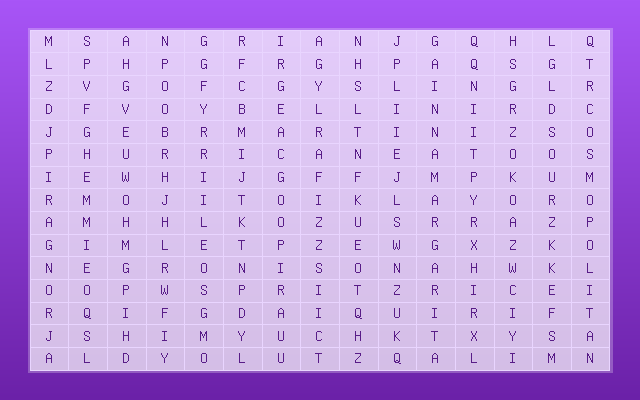
For people learning English as a second language, vegetable names word search puzzles offer a unique and productive learning tool. ESL learners searching for vegetable names in English often struggle with spelling because many vegetable names do not follow standard phonetic rules. Puzzles help by making the spelling visual and repeating it in a game context.
Learners who speak Hindi, Urdu, Tamil, Telugu, Kannada, Marathi, Gujarati, Punjabi, or Malayalam often search for vegetable names in their mother tongue alongside English equivalents. Understanding both versions builds a bilingual vocabulary that is particularly valuable for first-generation immigrants, heritage language speakers, and international students.
Similarly, learners of Spanish, French, Italian, Japanese, German, Arabic, and Chinese benefit from English vegetable name puzzles because they reinforce the target language while the learner connects it to familiar concepts from their own food culture.
Word searches on itwordsearches.com cater to this multilingual audience by offering vegetable name puzzles that can be enjoyed regardless of your native language, since the puzzle format itself is universally understood.
The Educational Science Behind Word Search Puzzles
Research into learning and memory supports the use of word puzzles as genuine educational tools, not just entertainment. The act of scanning a grid for a specific word activates multiple brain regions simultaneously, including those responsible for visual processing, language comprehension, and attention.
This multi-region activation is often described as elaborative encoding, a process where new information gets connected to existing knowledge through rich, varied neural pathways. The richer the encoding, the more durable the memory. This explains why students who practice vegetable names through word searches tend to retain spelling and vocabulary better than those who rely on rote repetition alone.
Puzzles also build sustained attention, which is a cognitive skill with benefits far beyond vocabulary learning. Children and adults who regularly engage with word searches develop stronger focus and better ability to track details, skills that transfer directly to reading, writing, and academic performance.
For older adults, word puzzles including vegetable-themed word searches have been linked to cognitive maintenance and mental agility. Regular engagement with language puzzles is considered a healthy brain exercise regardless of age.
A Perfect Word Search Theme Vegetable Names Alphabetical Order
One of the most popular formats for vegetable word search puzzles is organizing vegetables in alphabetical order from A to Z. This structure is satisfying because it gives learners a sense of completeness and systematic coverage.
A to Z vegetable word searches are especially popular with students in early education because the alphabetical organization ties vocabulary learning to the foundational skill of alphabetic sequencing. Finding broccoli under B and zucchini under Z reinforces alphabet knowledge while teaching vegetable vocabulary simultaneously.
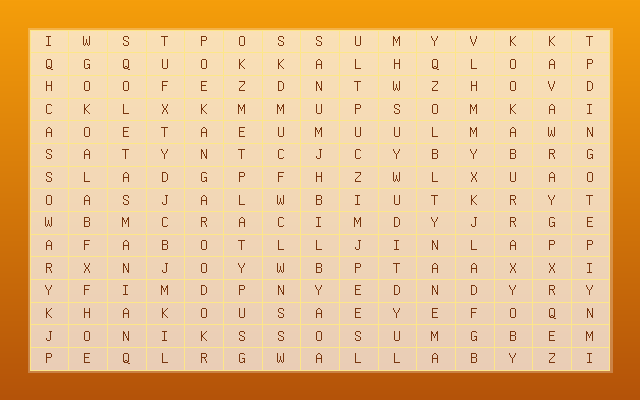
These puzzles also make great reference tools. A completed vegetable names A to Z word search becomes a personalized vocabulary chart that learners can keep and refer back to. Itwordsearches.com provides printable versions of these puzzles, making them ideal for classroom walls, refrigerator doors, or study binders.
Seasonal Vegetable Names and Themed Word Searches
Vegetables are not the same year-round. Seasonal eating has gained enormous popularity, and vegetable word searches can reflect this by grouping vegetables according to the season in which they grow best.
Summer vegetables that appear frequently in word searches include tomato, cucumber, zucchini, corn, pepper, eggplant, okra, green beans, and squash. These warm-weather crops are among the most recognizable and beloved vegetables worldwide.
Spring vegetables include asparagus, peas, lettuce, radish, spinach, and artichoke. Winter vegetables that make great puzzle material include kale, Brussels sprouts, parsnip, turnip, beet, and butternut squash.
Autumn brings a harvest of pumpkin, sweet potato, cauliflower, and leek. Seasonal vegetable word searches teach not just names but also the agricultural cycles that connect food to the natural world, making the learning experience richer and more meaningful.
Long Vegetable Names and Their Word Search Appeal
Some of the most interesting vegetable names are also some of the longest. Long vegetable names present a special challenge in word searches because they require careful letter-by-letter scanning across the grid.
Vegetables with notably long names include romanesco, chayote, horseradish, watercress, courgette, cauliflower, butternut squash, and Jerusalem artichoke among others. Finding these long words in a puzzle grid is particularly satisfying and reinforces accurate spelling of these often difficult-to-remember names.
Puzzle designers at itwordsearches.com create grids specifically sized to accommodate these longer vegetable names while keeping the overall puzzle challenging but solvable. The right balance of short easy words and long challenging words keeps players engaged from start to finish.
Connecting Visual and Verbal Learning Vegetable Names with Pictures
One of the most effective formats for vegetable vocabulary learning combines vegetable names with pictures. Seeing the actual vegetable alongside its printed name creates a direct association that word-only lists cannot achieve.
On itwordsearches.com, many vegetable word search puzzles include illustrated clues or are designed to be paired with vegetable images so that learners connect visual recognition with spelling knowledge. This combination is particularly effective for young children who are learning vegetable names for the first time and for visual learners of any age.

When a child sees a picture of a bright orange carrot and then searches for the word CARROT in the puzzle grid, two memory systems activate at once, the visual system and the linguistic system. This dual activation dramatically improves both recall and recognition, making the learning far more effective than either approach alone.
Using Vegetable Word Search on Puzzles
Itwordsearches.com is dedicated to providing high-quality, educational word search puzzles for players of all ages and skill levels. The vegetable names collection on the site covers everything from simple beginner puzzles for young children to comprehensive all-vegetable challenges for advanced learners.
The site offers puzzles organized by theme, difficulty, and length, making it easy to find exactly the right puzzle for your needs. Whether you want a quick five-minute puzzle to warm up your brain or a comprehensive vegetable names A to Z challenge to spend a focused learning session on, the selection has you covered.
Puzzles are available in print-friendly formats, which makes them ideal for classroom use, homeschooling, tutoring sessions, family game nights, and personal study. Teachers particularly appreciate the clean layout and clear word lists that make itwordsearches.com puzzles easy to use without any additional preparation.
The site is also continuously updated with new puzzles, seasonal themes, and special collections, so there is always something fresh to discover. Regular visitors find that building a habit around daily word search play on itwordsearches.com is one of the most enjoyable ways to maintain and expand their vocabulary over time.
Tips for Getting the Most Out of Vegetable Word Search
To maximize the learning benefit of vegetable names word searches, a few simple strategies can make a meaningful difference.
Start by reviewing the word list before beginning the puzzle. Taking a moment to read through all the vegetable names before hunting for them activates your memory and gives your brain a preview of what to look for.
Read each word aloud as you find it. Saying vegetable names out loud while finding them in the puzzle engages your auditory memory alongside your visual memory, creating a stronger and more lasting impression.
After completing the puzzle, try to recall all the vegetable names from memory without looking at the word list. This self-testing exercise is one of the most powerful memory consolidation techniques available and takes less than a minute to do.
For children, turning the activity into a game by timing how quickly they can find all the words adds an element of excitement that boosts engagement and motivation. You can also award small rewards for each completed puzzle to build a positive association with vocabulary learning.
Read More: Color Names
Conclusion
Learning vegetable names does not have to be a chore. With the right tools, it becomes an adventure. Vegetable names word search puzzles offer a proven, enjoyable, and effective path to building vocabulary, improving spelling, and developing a deeper appreciation for the rich diversity of vegetables that grace our tables and gardens.
Whether you are exploring vegetable names in English for the first time, helping a child build their food vocabulary, or simply enjoying a relaxing but stimulating puzzle, itwordsearches.com has everything you need. Visit the site today, pick your favorite vegetable word search, and discover how much fun learning can be when it comes in the form of a puzzle.