Coffee and Tea Word Search: A Warm Way to Learn New Words
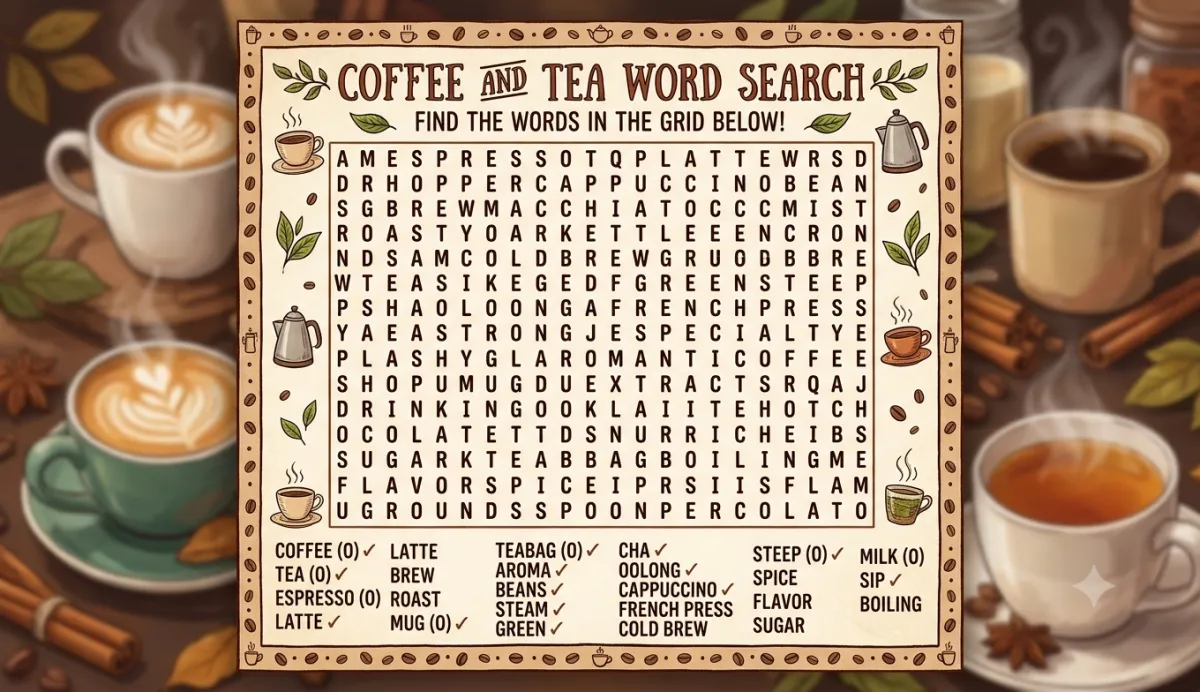
Few daily rituals bring as much comfort as a warm cup of coffee in the morning or a soothing cup of tea in the evening. These beverages carry their own rich vocabulary, shaped by centuries of tradition, global trade, and countless preparation methods passed down through generations. A coffee and tea word search takes this cozy, universally loved subject and turns it into an engaging vocabulary-building puzzle, hiding the language of brewing, roasting, and steeping inside a letter grid for solvers to discover one comforting word at a time.
What Is a Coffee and Tea Word Search?
A coffee and tea word search is a grid-based It wordsearch puzzle in which words related to coffee, tea, and beverage culture are hidden horizontally, vertically, diagonally, or backwards among rows of letters. Solvers use a provided word list to scan the grid carefully, circling each hidden term as it is found. Rather than presenting beverage vocabulary as a plain list to memorize, this puzzle format wraps the learning experience inside an interactive challenge that keeps solvers engaged from the first hidden word to the last, much like savoring a slow, quiet cup of their favorite drink.
What makes this theme so appealing is how deeply it connects to everyday life. Nearly everyone has a favorite coffee order or a preferred type of tea, which means the vocabulary in a coffee and tea word search feels immediately familiar rather than abstract, making the puzzle enjoyable for casual solvers and dedicated beverage enthusiasts alike.
Why Beverage-Themed Word Searches Work So Well
Word search puzzles have long been recognized as effective tools for reinforcing vocabulary and spelling, and pairing that structure with coffee and tea vocabulary adds a genuine layer of everyday relevance. Because so many people already have personal routines built around these beverages, searching for a word like "espresso" or "chamomile" inside a dense grid draws on real, lived experience rather than unfamiliar academic content.

This activity also strengthens several cognitive skills at once. Locating a hidden word requires the solver to hold a target term in working memory while systematically scanning rows and columns, a task that builds sustained attention and visual pattern recognition. For casual puzzle enthusiasts looking for a relaxing mental activity, a coffee and tea word search offers a low-pressure way to unwind, often enjoyed alongside the very beverages the puzzle celebrates.
There is also a cultural and educational dimension worth noting. Many coffee and tea terms, such as "arabica," "oolong," or "cappuccino," carry origins tied to specific regions and traditions around the world. Encountering these words in a puzzle format often sparks curiosity about where a particular brewing method or tea variety originated, giving solvers a small but genuine window into global culture and trade history that stretches back centuries.
- Shakespeare Plays Word Search
-
Classic Novels Word Search
-
Famous Authors Word Search
-
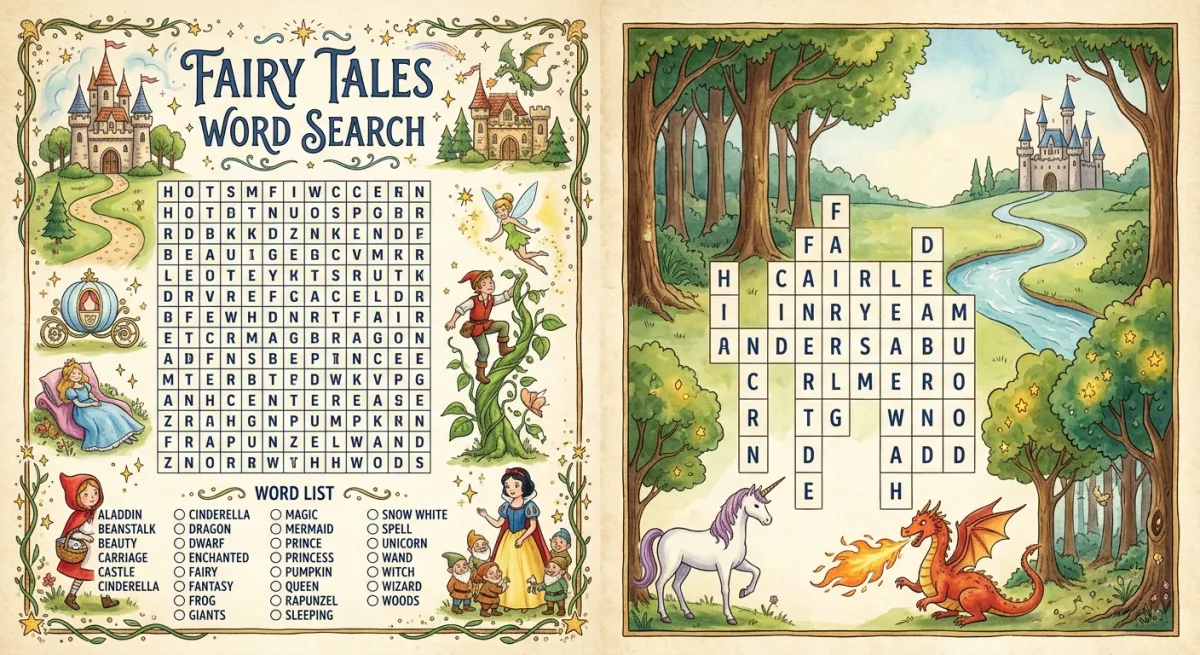
Fairy Tale Characters Word Search
-
Poetry Terms Word Search
Building a Strong Word List
Creating an effective coffee and tea word search starts with a well-organized word list that spans multiple categories:
Coffee Varieties and Terms – Espresso, latte, cappuccino, arabica, and robusta anchor most puzzles with widely recognized coffee vocabulary familiar to casual drinkers and enthusiasts alike.
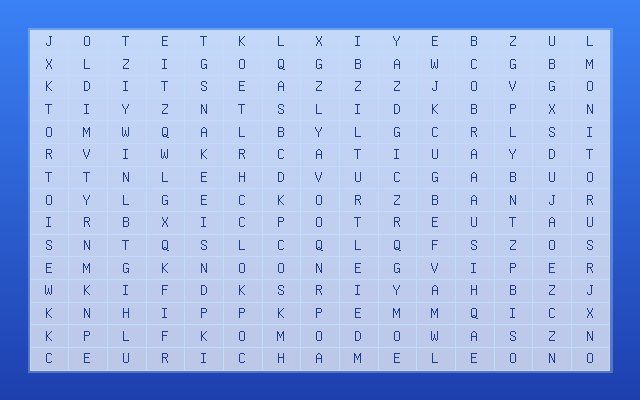
Tea Varieties – Chamomile, oolong, matcha, and chai introduce vocabulary tied to different tea traditions from around the world, broadening the puzzle's cultural scope.
Brewing and Preparation Terms – Words like brew, steep, roast, and grind add vocabulary tied to the actual process of preparing these beverages, giving the puzzle a more technical layer for dedicated enthusiasts.
Cafe Culture and Accessories – Words such as barista, kettle, mug, and teapot round out the list with vocabulary tied to the broader culture surrounding coffee shops and tea houses.
Balancing short, familiar words with a handful of longer or more distinctive ones, such as "cappuccino" or "chamomile," ensures that a coffee and tea word search remains engaging for a wide range of solvers rather than feeling either too simple or too obscure.

Adjusting Difficulty for Different Solvers
As with any word search, difficulty depends on grid size, total word count, and the directions words are allowed to appear in. A smaller 10x10 grid featuring a dozen straightforward horizontal words works well for casual solvers or younger puzzle enthusiasts just becoming familiar with beverage vocabulary. As solvers grow more confident, expanding to a 15x15 or 20x20 grid, adding diagonal and backwards placements, and introducing more specialized terms creates a genuinely satisfying challenge for dedicated coffee and tea enthusiasts.
Many puzzle creators prepare two versions of the same coffee and tea word search, a simplified beginner grid and a more advanced version, allowing the same cozy theme to serve casual solvers and serious beverage connoisseurs alike.
Where This Puzzle Shines
A coffee and tea word search fits naturally into a wide variety of settings. Coffee shops and tea houses sometimes print copies as table activities, giving customers something relaxing to do while waiting for their order or enjoying a quiet moment alone. Culinary and hospitality training programs occasionally use this puzzle as a fun way to reinforce vocabulary students will need when working in cafes or restaurants that specialize in coffee or tea service.
Parents hosting a tea party or coffee-tasting event can print copies as party favors, giving guests an enjoyable way to pass time between tastings, turning a simple gathering into a slightly more interactive and memorable social occasion. Homeschool families studying world cultures can pair a coffee and tea word search with a short lesson on how these beverages traveled from their regions of origin to become global staples, using the puzzle as a fun reinforcement activity rather than a standalone worksheet.

Even outside of these specific settings, many adults simply enjoy a coffee and tea word search as a relaxing pastime, often working through the puzzle with their own cup in hand, treating the activity as a small, comforting ritual similar to their daily coffee or tea routine itself.
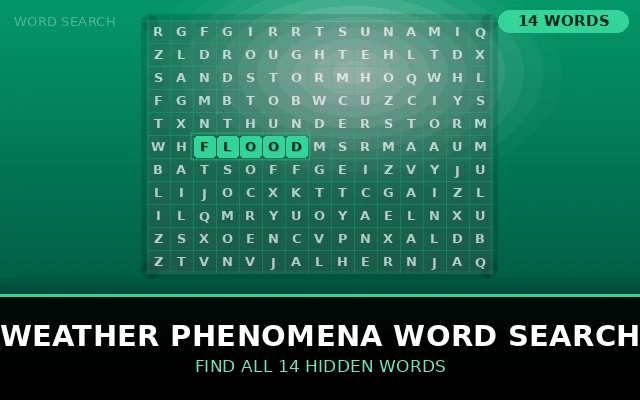
- Volcanoes and Natural Disasters Word Search
- Halloween Word Search
- Classic Rock Bands Word Search
- Arctic and Polar Animals Word Search
- Ancient Egypt Word Search
The Global Story Behind Every Cup
Part of what makes a coffee and tea word search so rewarding is the genuine history behind many of the words included. Coffee is believed to have originated in Ethiopia, where legend tells of a goat herder who noticed his animals becoming energetic after eating coffee cherries. Tea, meanwhile, traces its roots to ancient China, where it was originally valued for its medicinal properties before becoming the beloved daily beverage enjoyed around the world today. Even specific terms carry their own stories, such as "cappuccino," named after the brown-hooded robes worn by Capuchin friars, whose color reportedly resembled the drink's blend of espresso and steamed milk.
These small but fascinating details give a coffee and tea word search extra educational depth beyond simple vocabulary recognition. A teacher or parent can use each word found in the puzzle as a starting point for a quick fact about global trade, agriculture, or cultural tradition, turning a few minutes of puzzle-solving into a genuinely enriching conversation about how these beverages became such an important part of daily life worldwide, connecting a small home ritual to centuries of global history.
A Theme That Never Goes Out of Style
Coffee and tea culture continues to evolve constantly, with new brewing methods, specialty drinks, and regional varieties gaining popularity every year. This means a coffee and tea word search never has to feel outdated, since fresh vocabulary from emerging trends can always be added alongside timeless classics. A puzzle built around traditional favorites can sit comfortably alongside one featuring newer specialty drinks, giving puzzle creators an endless well of fresh word lists to draw from as beverage culture continues to grow and diversify worldwide.
Tips for Solving This Puzzle Quickly
Solvers looking to move through a coffee and tea word search efficiently can use a few simple strategies. First, scan the entire grid once for short, commonly recognized words like "mug" or "chai," since these tend to stand out immediately. Next, focus on the longest words in the list, such as "cappuccino" or "chamomile," as their unusual letter combinations make them easier to isolate once the general shape is known. Working systematically through the grid, row by row and then column by column, helps ensure that diagonal or backwards words are not overlooked.
Conclusion
A coffee and tea word search brings the comforting rituals of two of the world's most beloved beverages onto the page, turning familiar vocabulary into a genuinely engaging puzzle experience. By combining coffee varieties, tea traditions, and brewing terminology within a flexible, scalable format, this puzzle appeals to casual drinkers and dedicated enthusiasts alike. Whether enjoyed at a coffee shop, during a quiet afternoon at home, or as part of a themed gathering, a well-built coffee and tea word search proves that learning new vocabulary can be just as soothing as the beverages it celebrates.