Halloween Word Search: A Spooktacular Way to Build Vocabulary
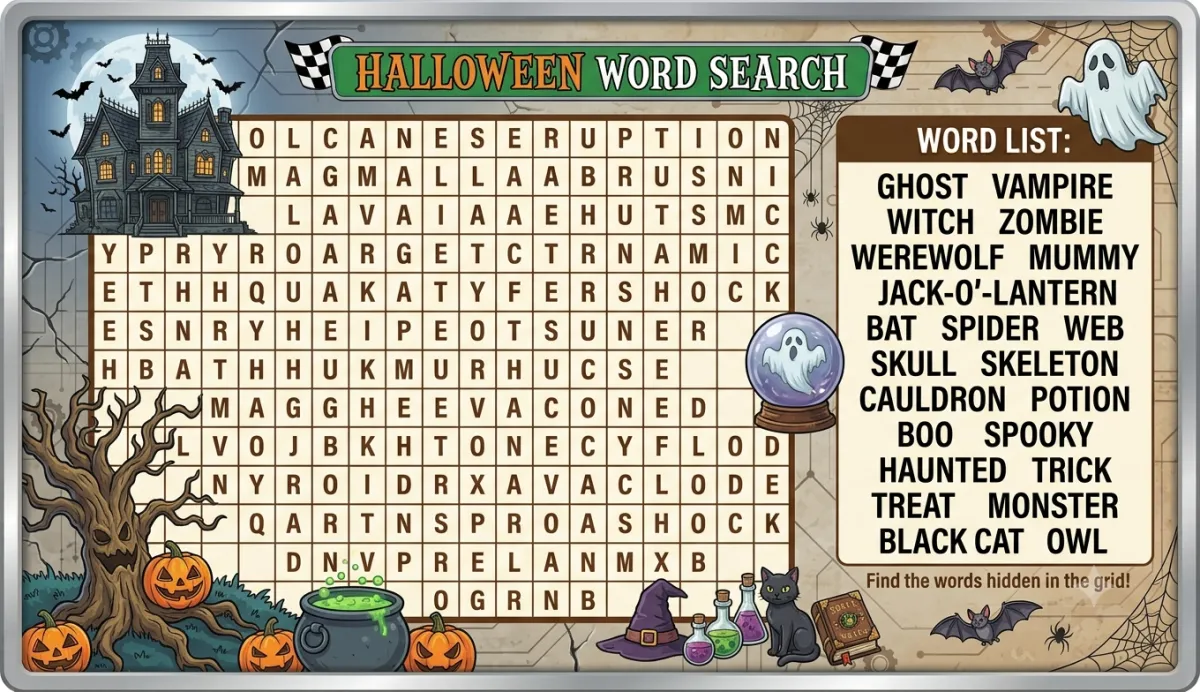
There is something about the arrival of autumn that makes even the simplest activities feel a little more magical. Pumpkins appear on porches, costumes fill store aisles, and the air itself seems to carry a hint of mystery. A Halloween word search captures that same seasonal excitement and turns it into an engaging vocabulary-building puzzle, hiding spooky, festive words inside a letter grid for solvers of every age to uncover one costume, creature, or candy at a time.
What Is a Halloween Word Search?
A Halloween word search is a grid-based It wordsearch puzzle in which Halloween-themed words, such as costume names, spooky creatures, and seasonal vocabulary, are hidden horizontally, vertically, diagonally, or backwards among rows of letters. Solvers use a provided word list to scan the grid carefully, circling each hidden term as it is found. Instead of presenting seasonal vocabulary as a plain list to memorize, this format wraps the learning experience inside an interactive challenge that keeps solvers engaged and entertained from the very first hidden word to the last.
What makes this particular theme so effective is the built-in excitement already surrounding the Halloween season. Children in particular look forward to costumes, trick-or-treating, and decorations for weeks in advance, and that same anticipation carries naturally into a Halloween word search, making vocabulary practice feel like part of the celebration rather than a separate academic task added onto an already busy and exciting time of year.
Why Seasonal Word Searches Work So Well
Word search puzzles have long been valued as effective tools for reinforcing vocabulary and spelling, and pairing that structure with a beloved holiday adds a powerful layer of motivation. Because Halloween already carries so much excitement and anticipation, the process of searching for a word like "pumpkin" or "skeleton" inside a dense grid feels less like schoolwork and more like an extension of the seasonal fun itself.
This activity also strengthens several cognitive skills at once. Locating a hidden word requires the solver to hold a target term in working memory while systematically scanning rows and columns, a task that builds sustained attention and visual pattern recognition. For children who might resist a standard vocabulary worksheet, a Halloween word search offers a low-pressure, festive way to practice exactly those same skills without the activity ever feeling like a chore, since the reward of finding a favorite spooky word carries its own built-in motivation.
There is also a strong classroom management benefit tied to this theme. Teachers often find that the weeks leading up to Halloween bring heightened excitement and shorter attention spans, making a Halloween word search an ideal way to channel that seasonal energy into a productive, engaging activity rather than fighting against it throughout an already distracting stretch of the school calendar.
Building a Festive Word List
Creating an effective Halloween word search starts with a well-organized word list that spans several categories:
Spooky Creatures – Ghost, witch, vampire, werewolf, and zombie anchor most puzzles with widely recognized, exciting vocabulary that captures the spirit of the season.
Costumes and Characters – Pumpkin, skeleton, mummy, goblin, and scarecrow introduce vocabulary tied directly to popular costume choices and Halloween decorations.
Treats and Traditions – Candy, trick-or-treat, lantern, and haunted round out the list with vocabulary tied to the activities and traditions families associate with the holiday.
Autumn and Setting Words – Words like harvest, moonlight, cobweb, and graveyard add atmospheric vocabulary that reinforces the broader seasonal setting surrounding Halloween itself.
Balancing short, familiar words with a handful of longer or more unusual ones, such as "werewolf" or "scarecrow," ensures that a Halloween word search remains engaging for a wide range of ages rather than feeling either too simple or too repetitive.
Adjusting Difficulty for Every Age Group
As with any word search, difficulty depends on grid size, total word count, and the directions words are allowed to appear in. A smaller 10x10 grid featuring a dozen straightforward horizontal words works well for young children or early readers just becoming comfortable with the puzzle format. As solvers grow more confident, expanding to a 15x15 or 20x20 grid, adding diagonal and backwards placements, and introducing longer or less familiar seasonal terms creates a genuinely satisfying challenge for older students and adult puzzle enthusiasts.
Many teachers prepare two versions of the same Halloween word search, a simplified beginner grid and a more advanced version, allowing the same festive theme to serve an entire classroom regardless of individual reading levels.
Where This Puzzle Shines
A Halloween word search fits naturally into a wide variety of settings. Elementary school teachers frequently use it as a classroom activity during the weeks leading up to the holiday, giving students a fun, seasonal way to build vocabulary while also channeling some of the excitement that naturally builds during this time of year. Parents planning a Halloween party can print copies as table activities or party favors, giving young guests something engaging to do while waiting for games or trick-or-treating to begin.
Libraries and community centers often include a Halloween word search in fall-themed activity packets, using the festive vocabulary to draw children toward seasonal book displays and storytelling events. Homeschool families can pair a Halloween word search with a short lesson on the history and origins of the holiday, using the puzzle as a fun reinforcement activity rather than a standalone worksheet.
Even outside of structured settings, many adults enjoy Halloween-themed puzzles simply because they capture the same nostalgic excitement the season has carried since childhood, treating the activity much like a relaxing crossword or sudoku session, but with the added enjoyment of festive, familiar vocabulary that instantly brings back memories of past Halloweens spent trick-or-treating or decorating with family.
A Theme That Returns Every Year
Part of what makes a Halloween word search so consistently popular is the way the holiday itself returns predictably every autumn, giving teachers and parents a reliable, recurring opportunity to introduce the same beloved theme in a fresh way each year. New costume trends, updated decorations, and evolving traditions mean the word list can always be refreshed slightly while still capturing the same timeless spooky spirit that makes Halloween so widely loved across generations. This yearly rhythm also means that a well-built Halloween word search can become something of a tradition in its own right, with families or classrooms looking forward to a new version each October the same way they anticipate carving pumpkins or choosing costumes.
Tips for Solving This Puzzle Quickly
Solvers looking to move through a Halloween word search efficiently can use a few simple strategies. First, scan the entire grid once for short, commonly recognized words like "ghost" or "candy," since these tend to stand out immediately. Next, focus on the longest words in the list, such as "scarecrow" or "werewolf," as their unusual letter combinations make them easier to isolate once the general shape is known. Working systematically through the grid, row by row and then column by column, helps ensure that diagonal or backwards words are not overlooked. As with any puzzle, patience matters most, and speed naturally improves the more the format is practiced.
- Superheroes Word Search
- Dinosaur Names Word Search
- Desert Animals Word Search
- Basketball Word Search
- Pizza and Italian food word search
- Volcanoes and Natural Disasters Word Search
Pairing the Puzzle With Other Seasonal Activities
A Halloween word search becomes even more engaging when paired with complementary seasonal activities. Many teachers combine the puzzle with pumpkin carving templates, simple costume design worksheets, or short readings about the history of Halloween traditions in different countries. This layered approach keeps the festive spirit alive across multiple learning styles, ensuring that visual learners, hands-on learners, and reading-focused students all find something engaging within the same themed unit. Parents hosting a Halloween party can similarly rotate between the word search, a pumpkin decorating station, and a short scavenger hunt, giving guests of all ages a variety of ways to enjoy the holiday together.
Because Halloween vocabulary spans such a wide range of difficulty, from simple three-letter words like "bat" or "owl" to more elaborate terms like "jack-o'-lantern" or "graveyard," a single puzzle can often be adapted on the fly for a mixed-age group. A parent supervising both a five-year-old and a ten-year-old, for example, can simply point the younger child toward the shorter words on the list while letting the older child tackle the full grid independently, making a Halloween word search one of the more flexible seasonal activities available for family gatherings, classroom parties, and community events alike.
Conclusion
A Halloween word search brings the excitement of one of the year's most beloved holidays onto the page, turning festive vocabulary into a genuinely engaging puzzle experience. By combining spooky creatures, costume vocabulary, and seasonal traditions within a flexible, scalable format, this puzzle appeals to young children and lifelong Halloween enthusiasts alike. Whether used as a classroom activity, a party favor, or simply a fun way to get into the seasonal spirit, a well-built Halloween word search proves that learning new vocabulary can be just as enjoyable as the holiday itself.