Esports Word Search: Learning Competitive Gaming Vocabulary Through Puzzles
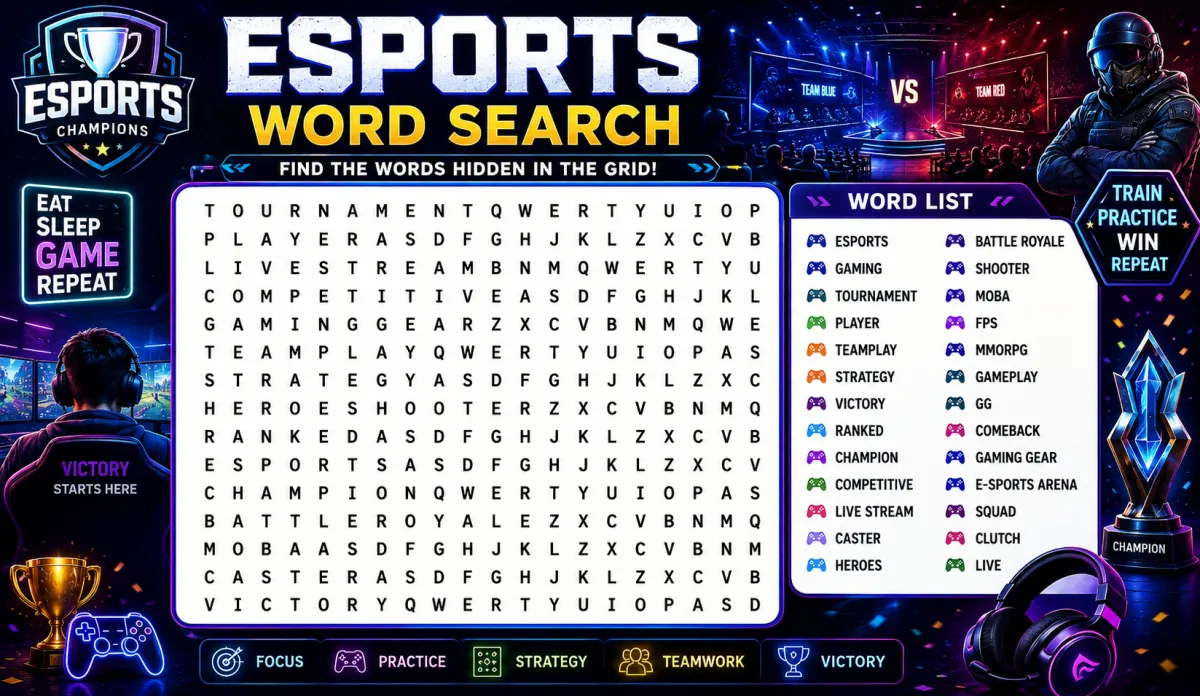
Esports has grown from a niche hobby into a global phenomenon, filling stadiums, drawing millions of online viewers, and creating a whole new vocabulary of its own. Terms like "scrim," "meta," "tilt," and "MVP" are now part of everyday conversation for millions of fans, yet they can sound like a completely foreign language to anyone new to competitive gaming. This is exactly the gap that an esports word search fills so well. It transforms the sometimes overwhelming jargon of competitive gaming into an approachable, enjoyable puzzle that both entertains and educates.
This article takes a close look at what an esports word search actually is, why it has become such a popular activity among fans, students, and event organizers, the different types of vocabulary these puzzles usually include, and how anyone can use or build one to deepen their understanding of the esports world.
Understanding the Esports Word Search
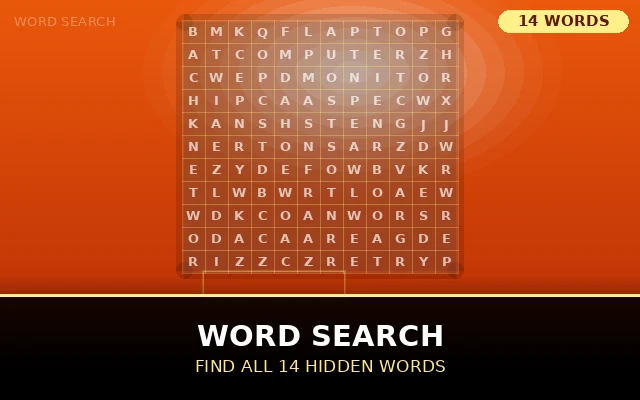
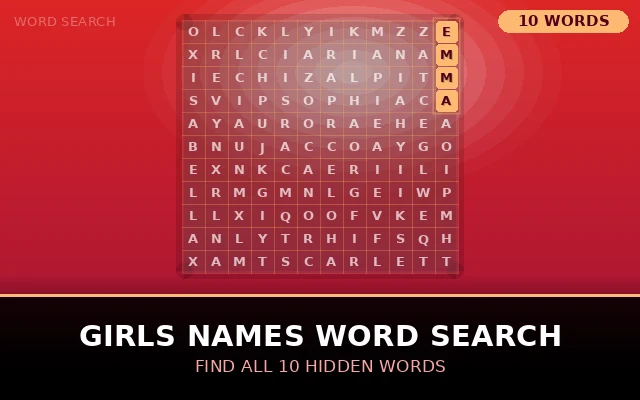
An esports word search follows the same basic format as a traditional word-find puzzle, but instead of random everyday words, it hides terminology specific to competitive gaming. Solvers are given a grid filled with letters and a list of target words, and the goal is to locate each word within the grid, whether it runs horizontally, vertically, diagonally, or even backward.
What sets an esports word search apart from a general gaming puzzle is its focus. Rather than covering hardware or casual gameplay terms, it zeroes in on the language of competition: team roles, tournament structure, in-game strategy, and the broader culture surrounding professional gaming. This makes it especially appealing to fans who follow esports leagues, watch tournaments, or aspire to compete themselves.
Related Puzzles:
-
Minecraft Terms Word Search
-
Fortnite Word Search
 TRY OUR PUZZLECricket Terms Word SearchWicket, bowler, innings and more hidden in the grid. Play our Cricket Terms word search and learn the games vocabular...Play PuzzleTable of Contents
- Understanding the Esports Word Search
- Related Puzzles:
- Why Esports Word Search Have Gained So Much Popularity
- The Types of Words Found in an Esports Word Search
- Team Roles and Positions
- Tournament and Competition Terms
- In-Game Strategy and Mechanics
- Performance and Culture Terms
- Broadcasting and Community Terms
- Organizational and Business Terms
- The Learning Value Hidden Inside the Fun
- How These Puzzles Are Usually Designed
- Building Your Own Esports Word Search
- Who Gets the Most Value From These Puzzles
- Adding Esports Word Search to Community and Educational Settings
- Final Thoughts
- Roblox Word Search
- Chess Terms Word Search
Why Esports Word Search Have Gained So Much Popularity
The explosive growth of competitive gaming as a spectator sport has created a large and passionate audience that is hungry for content related to their favorite games and players. Word searches tap into this enthusiasm in a way that feels casual rather than academic.
For newer fans, esports commentary can be dense and fast-paced, filled with abbreviations and slang that seasoned viewers understand instantly but newcomers often miss entirely. A word search offers a low-pressure way to become familiar with this vocabulary before diving into a livestream or tournament broadcast.
Puzzles also carry well-documented cognitive benefits. The act of scanning a grid for hidden patterns exercises visual processing and concentration, giving solvers a light mental workout while they engage with content tied to a subject they already enjoy.
Event organizers, gaming cafes, schools with esports programs, and content creators have also embraced these puzzles as engaging supplementary material. An esports word search can serve as a fun activity at a LAN event, a printable handout for a school esports club, or bonus content shared alongside gaming articles and videos.
The Types of Words Found in an Esports Word Search
Competitive gaming has developed a surprisingly rich vocabulary, and a well-rounded esports word search usually draws from several distinct categories.
Team Roles and Positions
Many esports titles assign specific roles to players, and this category focuses on those terms. Words such as support, carry, jungler, shot caller, entry fragger, in-game leader, and substitute commonly appear here. Understanding these roles helps fans follow team strategy and appreciate individual player contributions during a match.
Tournament and Competition Terms
This category covers the structural language of competitive events, including words like bracket, seeding, playoffs, group stage, qualifier, lower bracket, best of five, and grand finals. These terms are essential for anyone trying to follow how a tournament progresses from the opening rounds to the championship.
In-Game Strategy and Mechanics
This group focuses on the tactical language players and analysts use to describe what's happening during gameplay. Words such as rotation, map control, objective, flank, push, ult, cooldown, and team fight fall into this category. These terms are especially valuable for viewers who want to understand the strategic depth behind competitive matches rather than just the surface-level action.
Performance and Culture Terms
Esports has developed its own culture-driven slang that goes beyond pure gameplay. Words like meta, tilt, clutch, choke, MVP, carry, and smurf capture the emotional and performance-related side of competitive gaming. These terms are frequently used by commentators, players, and fans alike when discussing standout moments or shifting trends.
Broadcasting and Community Terms
Since much of esports is experienced through livestreams and online communities, this category includes words such as caster, analyst desk, hype, chat, sub, VOD, and highlight reel. These terms reflect the media ecosystem that surrounds competitive gaming just as much as the games themselves.
Organizational and Business Terms
For fans interested in the business side of esports, terms like franchise, roster, sponsorship, org, contract, and free agency also appear in more advanced puzzles, reflecting how esports functions as a professional industry with its own economic structure.
The Learning Value Hidden Inside the Fun
Beyond entertainment, an esports word search offers genuine educational value, particularly for people who are new to competitive gaming or trying to follow a specific title more closely. Repeated exposure to terms like "rotation" or "map control" within a playful puzzle format helps these words become familiar in a way that feels natural rather than forced.
For parents, teachers, and youth program coordinators, esports word searches can serve as an accessible entry point into discussions about teamwork, strategy, and even career paths within the growing esports industry. Many schools now run esports clubs or classes, and a well-designed word search can act as a lighthearted supplement to more formal lessons on competitive gaming fundamentals.
For dedicated fans, these puzzles offer a way to test and reinforce knowledge of the scene, whether that means recognizing tournament terminology or understanding the roles players fill on their favorite teams. Content creators and community managers also use these puzzles as engaging, shareable material that strengthens a sense of community among followers.
How These Puzzles Are Usually Designed
An effective esports word search typically follows a structure similar to other word-find puzzles, but with attention paid to the difficulty and relevance of the vocabulary chosen. Grid sizes commonly range from a simpler 10x10 layout for beginners to a more demanding 20x20 or larger grid for dedicated fans and trivia enthusiasts.
Words are hidden across multiple directions to add challenge, while empty cells are filled with random letters to prevent the puzzle from being too easy. The accompanying word list is often organized by category, such as separating tournament terms from in-game strategy terms, which helps reinforce thematic understanding as solvers work through the puzzle.
Difficulty level can be adjusted depending on the intended audience. A puzzle aimed at casual fans might include widely recognized words like "team" or "match," while one designed for hardcore followers might include more specialized terminology like "smurf," "scrim," or "draft phase."
Building Your Own Esports Word Search
Creating a personalized esports word search is a manageable project, even without specialized design skills. The process begins with compiling a word list, ideally drawing from the categories outlined above to ensure a balanced mix of beginner-friendly and advanced terminology.
From there, a grid size should be selected based on the target audience, with smaller grids suited to younger or more casual solvers and larger grids offering a bigger challenge for enthusiasts. The chosen words are placed into the grid across various directions, and the remaining spaces are filled with random letters to conceal the hidden terms.
A number of free word search generator tools are available online, allowing creators to simply input their word list and automatically generate a properly formatted grid, making it easy for teachers, event organizers, and content creators to produce a professional-looking puzzle quickly.
Who Gets the Most Value From These Puzzles
Esports word searches appeal to a broad audience. New fans benefit by picking up the vocabulary needed to follow broadcasts and community discussions with greater confidence. Students in esports programs benefit from a fun supplement to structured lessons about competitive gaming and team dynamics. Content creators and community managers benefit by having ready-made, shareable content that resonates with their audience's interests. Even long-time fans benefit simply by enjoying a nostalgic puzzle format applied to a subject they follow passionately.
Adding Esports Word Search to Community and Educational Settings
Beyond individual enjoyment, esports word search have found a natural home in community-building efforts. Gaming clubs, college esports societies, and online fan communities often use these puzzles as part of newsletters, Discord server activities, or pre-tournament warm-up content to get fans engaged before a big match. Because the puzzle format is universally familiar, it requires no explanation and can be enjoyed by fans of any age or skill level.
In educational settings, teachers who incorporate esports into media literacy or technology classes have found that vocabulary-based puzzles help bridge the gap between a subject students are already passionate about and the academic skills being taught, such as reading comprehension, pattern recognition, and categorization. A well-designed esports word search can quietly reinforce these skills while keeping the tone light and enjoyable rather than feeling like a traditional assignment.
Final Thoughts
An esports word search does far more than pass the time. It bridges the gap between casual curiosity and genuine understanding of competitive gaming's rich and ever-expanding vocabulary. By hiding key terms from team roles, tournament structure, in-game strategy, and community culture within an engaging grid format, these puzzles make the language of esports approachable for newcomers while still offering a satisfying challenge for seasoned fans. Whether used in classrooms, at gaming events, or simply enjoyed as a relaxing solo activity, an esports word search proves that learning the language of competitive gaming can be just as exciting as watching the matches themselves.