Gaming Word Search: The Ultimate Guide to Video Game Terms and Esports Vocabulary
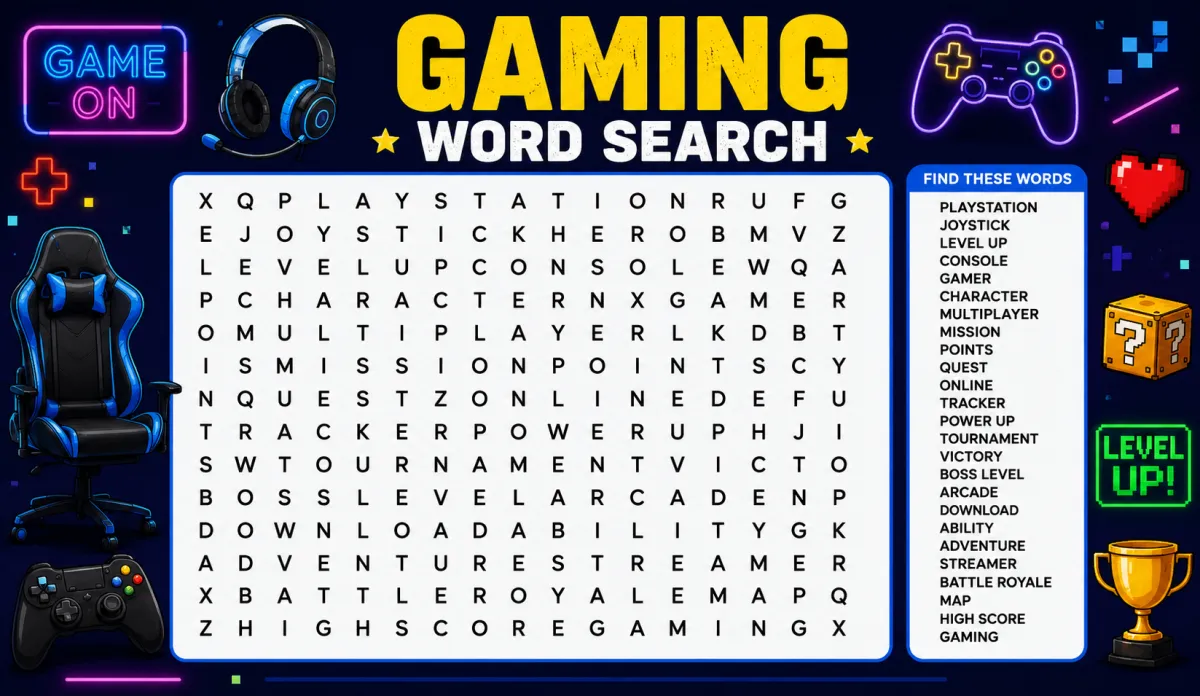
Ask any gamer what "GG," "respawn," or "aggro" means, and they will answer without blinking. But for someone new to gaming culture, that same vocabulary can feel like an entirely different language. This is exactly where a gaming word search earns its place it turns unfamiliar gaming jargon into something playful, memorable, and genuinely fun to learn.
Whether you are a student curious about esports, a teacher looking for a classroom icebreaker, or simply someone who enjoys a themed puzzle, a video game terms word search gives you a low-pressure way to absorb the language of gaming without opening a textbook or a wiki page.
What Is a Gaming Word Search?
A gaming word search is a themed puzzle where the hidden words are pulled from the world of video games hardware terms, gameplay mechanics, esports jargon, and iconic gaming slang. Unlike a generic puzzle filled with random vocabulary, every word in a gaming word search connects to something a player would recognize instantly, which makes the solving experience feel relevant rather than academic.
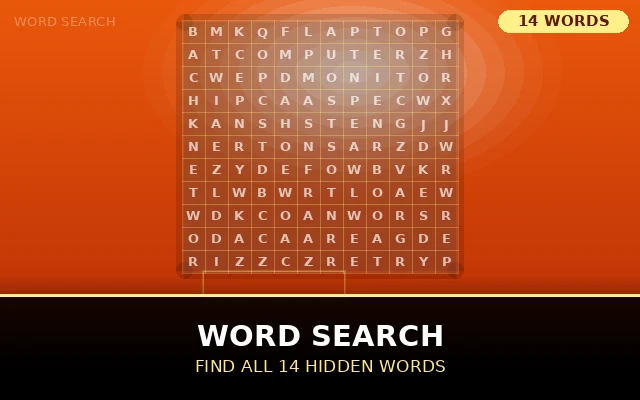
The grid itself works exactly like any classic word search. Letters are arranged in rows and columns, and the target words are hidden horizontally, vertically, diagonally, or even backward. What changes is the word list instead of fruits or animals, you are hunting for terms tied to the games, consoles, and communities that shape modern gaming culture.
-
PC Gaming Terms Word Search
-
Esports Terms Word Search
-
Chess Terms Word Search
-
Roblox Word Search
-
Fortnite Word Search
-
Minecraft Terms Word Search
The Rise of Gaming Culture and Why Vocabulary Matters
Gaming has grown from a niche hobby into one of the largest entertainment industries in the world, and with that growth comes an enormous, constantly evolving vocabulary. New slang appears with every major title, every streaming trend, and every esports season. Terms that meant nothing five years ago — "battle royale," "smurfing," "meta shift" — are now part of everyday conversation among players.
- What Is a Gaming Word Search?
- The Rise of Gaming Culture and Why Vocabulary Matters
- Why Gamers and Students Love a Video Game Terms Word Search
- Common Categories in a Gaming Word Search
- PC Gaming Vocabulary
- Esports Terminology
- Game Genre Vocabulary
- Classic Gaming Slang
- Console and Retro Gaming Terms
- How Gaming Word Search Puzzles Are Designed
- How to Solve a Gaming Word Search Puzzle
- Gaming Word Search for Classrooms and Team Building
- Gaming Word Search for Esports Fans and Streamers
- Printable vs. Online Gaming Word Search Puzzles
- Choosing the Right Difficulty Level
- Conclusion
For newcomers, this fast-moving vocabulary can be intimidating. Jumping into a gaming forum or watching a tournament broadcast without knowing the terminology can feel like watching a sport you have never learned the rules to. A gaming word search softens that learning curve by presenting the vocabulary in a format that rewards recognition rather than requiring memorization from scratch. It also gives parents and educators, who may not be gamers themselves, an easy entry point into a culture their students or children already care deeply about.
Why Gamers and Students Love a Video Game Terms Word Search
Gaming vocabulary changes fast, but a word search built around this vocabulary keeps that language fresh in a way flashcards rarely manage. Players enjoy spotting a term they use every day hidden diagonally in a grid, and newcomers get a gentle introduction to words they will need if they want to follow esports commentary or join a gaming community.
There is also a satisfying sense of identity involved. Solving a puzzle filled with words from your favorite genre or your go-to esports title feels different from solving a puzzle about, say, kitchen utensils. It taps into a hobby you already care about, which keeps motivation high even when the puzzle grid gets difficult. For many players, finishing a themed puzzle feels like a small badge of honor, proof that they know their favorite hobby inside and out.
- Dog Breeds Word Search
- Space Exploration Word Search
- Stars and Galaxies Word Search
- Solar System Word Search
Common Categories in a Gaming Word Search
PC Gaming Vocabulary
Terms like frame rate, GPU, latency, and overclock appear frequently in puzzles aimed at PC gaming enthusiasts. These words bridge the gap between hardware knowledge and everyday gameplay experience, and they are especially useful for players who are building or upgrading their own gaming rigs for the first time.
Esports Terminology
An esports word search usually features words such as scrim, meta, tournament bracket, and MVP. These puzzles are especially popular with students following competitive gaming leagues or planning to enter esports as a career or hobby. Because esports commentary moves quickly and assumes familiarity with this vocabulary, a themed puzzle is a practical way to build that fluency before watching a live match.
Game Genre Vocabulary
Words describing genres strategy, roguelike, sandbox, battle royale help newer players understand how games are categorized and discussed online. Genre vocabulary also comes in handy when browsing digital storefronts, where games are almost always filtered and described using these exact terms. A solver who works through a genre-based puzzle often walks away better equipped to describe their own gaming preferences with more precision.
Classic Gaming Slang
Terms like power-up, boss fight, checkpoint, and speedrun connect generations of gamers, from arcade veterans to modern console players. Puzzles built around classic slang tend to appeal to a wide age range, since much of this vocabulary has stayed consistent across decades of gaming history, making them a natural bridge between parents who grew up on arcade cabinets and children raised on modern consoles.

Console and Retro Gaming Terms
Some gaming word search puzzles lean into nostalgia, featuring terms tied to classic consoles and arcade culture. Words like joystick, cartridge, and high score bring older gamers back to their earliest gaming memories while introducing younger solvers to the roots of the hobby.
How Gaming Word Search Puzzles Are Designed
Puzzle difficulty usually depends on two factors: grid size and word direction. A smaller grid with only horizontal and vertical words suits beginners or younger players, while a larger grid that allows diagonal and backward placement challenges more experienced solvers. Many gaming word search puzzles also mix short abbreviations (like GPU or MVP) with longer compound terms (like matchmaking or overclocking), which creates a nice balance between quick wins and genuine challenge. Puzzle creators often test a grid with a mixed audience in mind, ensuring that a newcomer can find at least a handful of familiar words while a seasoned gamer still has plenty to work through.
How to Solve a Gaming Word Search Puzzle
The same core strategy that works for any word search applies here, with a small twist for gaming vocabulary:
- Scan for compound or unusual terms first words like "overclock" or "matchmaking" are longer and easier to spot than short generic words.
- Group terms mentally by category (hardware vs. gameplay vs. esports) before you start searching, since this narrows your visual focus.
- Check diagonals carefully. Puzzle designers often hide esports abbreviations and slang along diagonal paths since they are shorter and easier to disguise.
- Work through the word list in order rather than jumping around randomly, and cross off each term as you find it to keep track of your progress.
- If you get stuck on one word, move to the next one and come back later sometimes a fresh look at the grid reveals a word you missed the first time.
Gaming Word Search for Classrooms and Team Building
Teachers introducing a unit on digital literacy or media studies sometimes use a gaming word search as a warm-up activity, since it meets students on familiar ground before moving into more technical discussion. Esports clubs and gaming communities also use themed puzzles as icebreakers before tournaments, competitions, or LAN parties, turning a few spare minutes into a shared activity that gets everyone talking about a subject they already enjoy.
Gaming Word Search for Esports Fans and Streamers
Esports organizations and content creators occasionally use gaming word search puzzles as light community engagement content, sharing them on social media or during stream breaks. Because the vocabulary is instantly recognizable to their audience, these puzzles double as a quick, low-effort way to keep viewers engaged between rounds of gameplay or during a broadcast intermission.
Printable vs. Online Gaming Word Search Puzzles
A printable gaming word search works well for offline events gaming cafes, school clubs, or tournament waiting rooms where screens are already in heavy use elsewhere. Online versions, on the other hand, offer instant word highlighting, timers, and replayability, making them a convenient option for a quick solo break between gaming sessions. Online puzzles also make it easy to switch between categories instantly, so a player can move from a PC gaming puzzle to an esports-themed one without needing a new printout.
Choosing the Right Difficulty Level
Not every solver wants the same challenge. Younger players or newcomers to gaming culture usually do best with a smaller grid and simpler, more common terms. Experienced players and esports enthusiasts, on the other hand, often prefer larger grids packed with abbreviations, slang, and genre-specific vocabulary. Many puzzle platforms offer multiple difficulty tiers within the same gaming category, letting solvers pick the version that matches their comfort level.
Conclusion
A gaming word search does more than pass the time between matches it reinforces the vocabulary that connects players to the wider gaming community. Whether you are brushing up on PC gaming terms, learning esports jargon for the first time, or just looking for a quick puzzle break, exploring a themed gaming category puzzle is an easy way to combine fun with genuine vocabulary building.