Dog Breeds Word Search: Sorted by Personality and Purpose
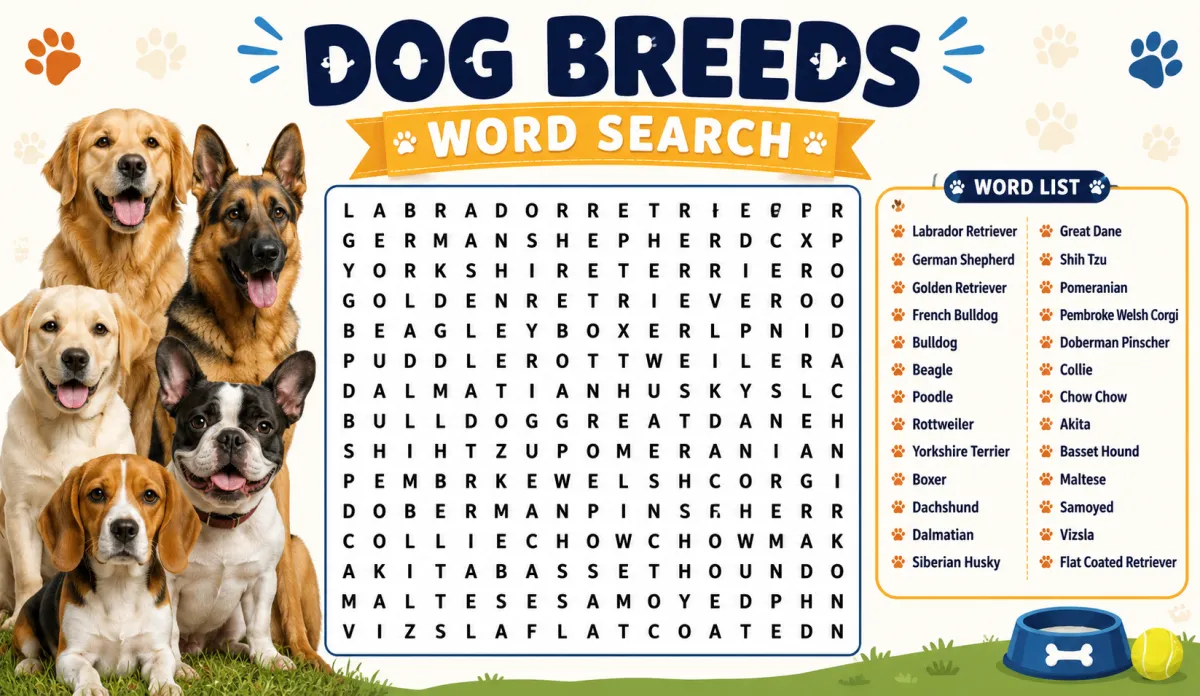
Ask any dog owner why they chose their particular breed, and size or appearance is often only part of the answer. Just as important is personality: whether a dog is calm and cuddly, alert and protective, or bursting with energy and in need of a job to do. A dog breeds word search built around temperament and purpose captures this personality-driven side of dog ownership, hiding breed names within a grid organized not by looks or geography, but by the traits that make each dog who they are.
This article explores why temperament offers such a compelling lens for a dog breeds word search, walks through the kinds of breed names typically grouped under different personality types, and looks at how this style of puzzle can be adjusted, created, and used in everyday settings.
Why Personality Adds a New Layer to a Classic Puzzle
Most dog-themed word searches lean on visual or geographic traits to organize their word lists, but personality offers a different kind of hook, one that speaks directly to why people choose the dogs they do. Rather than simply recognizing a breed's name or appearance, solvers working through a temperament-based puzzle are gently reminded of the behavioral traits and original purposes tied to each dog.
This angle tends to resonate strongly with prospective dog owners, families researching their first pet, or anyone simply curious about why certain breeds behave the way they do. It shifts the puzzle from a pure vocabulary exercise into something closer to a light introduction to canine behavior and history.
Grouped by Personality: A Tour Through Temperament Types
Rather than organizing vocabulary by size or origin, this style of dog breeds word search takes solvers through a series of personality-driven groupings, each carrying its own set of representative breeds.
- Why Personality Adds a New Layer to a Classic Puzzle
- Grouped by Personality: A Tour Through Temperament Types
- Why This Temperament-Based Structure Resonates With Solvers
- When Personality Doesn't Match the Stereotype
- Adjusting Difficulty for Different Audiences
- Building Your Own Temperament-Based Dog Breeds Word Search
- Where This Puzzle Shows Up in Real Life
- Conclusion
The tour often begins with family and companion breeds, dogs generally known for their gentle, affectionate nature and suitability for households with children. Names like Golden Retriever, Labrador Retriever, Cavalier King Charles Spaniel, and Beagle frequently appear here, reflecting breeds widely praised for their friendly and adaptable temperaments.
From there, the puzzle often shifts toward guard and protective breeds, dogs historically developed to watch over property, livestock, or family members. Words like Rottweiler, Doberman Pinscher, Boxer, and Akita commonly appear in this category, representing breeds known for loyalty, alertness, and a strong protective instinct toward their families.
The journey then frequently moves into working and herding breeds, dogs bred specifically to perform physical jobs alongside humans. Names like Border Collie, German Shepherd, Australian Cattle Dog, and Siberian Husky typically appear here, reflecting breeds prized for intelligence, stamina, and a strong drive to stay busy with a task.
Many puzzles then continue into active and athletic breeds, dogs known for high energy levels and a need for regular exercise. Words like Vizsla, Weimaraner, Dalmatian, and Jack Russell Terrier often fill this section, representing breeds that tend to thrive with active owners and plenty of physical outlets.
Finally, the tour usually closes with calm and low-energy breeds, dogs generally associated with a relaxed, easygoing temperament well suited to quieter households. Names like Basset Hound, Bulldog, Shih Tzu, and Greyhound, despite its athletic build, frequently appear here, reflecting breeds known for their laid-back approach to daily life.
Alongside these personality groupings, many puzzles also weave in supporting vocabulary describing temperament traits themselves, including words like loyal, alert, gentle, independent, and trainable, reinforcing the very framework the puzzle is organized around.
Why This Temperament-Based Structure Resonates With Solvers
Organizing breed vocabulary by personality rather than appearance or geography gives the puzzle an emotional and practical relevance that other formats sometimes lack. Solvers aren't just learning to recognize a name; they're absorbing a bit of insight into why a particular breed might make sense for a busy, active household versus a calm, low-key home.
This structure is especially useful for anyone using the puzzle as a lighthearted introduction to breed research, such as families considering their first dog or students learning about the relationship between breeding history and behavior. Rather than treating temperament as an abstract concept, the puzzle format ties it directly to specific, memorable breed names.
For dog trainers, veterinarians, and breed educators, this style of word search also offers a useful teaching tool, reinforcing the idea that a dog's behavior is often deeply connected to the original purpose it was bred for, whether that purpose was herding livestock, guarding property, or simply providing companionship.
When Personality Doesn't Match the Stereotype
While temperament groupings offer a helpful starting point, many puzzle creators also use this format as a gentle opportunity to highlight exceptions to common assumptions about certain breeds. A word like "Greyhound" appearing in the calm and low-energy category often surprises solvers who assume that a breed built for racing must also be high-strung and constantly active, when in reality many Greyhounds are famously relaxed homebodies once outside the racetrack.

Similarly, some guard breeds included in the protective category, such as the Boxer, are also widely known for their playful, affectionate side with family members, showing that protective instincts and warmth toward loved ones aren't mutually exclusive traits. Puzzle creators who want to add educational depth sometimes include a short note alongside the word list pointing out one or two of these surprising contrasts, encouraging solvers to look past size and breed stereotypes and consider each dog's individual personality instead.
Adjusting Difficulty for Different Audiences
As with other themed word searches, a temperament-based dog breeds puzzle can be adjusted to suit a range of ages and experience levels. For younger children or casual solvers, a smaller grid featuring widely recognized names like "Labrador" or "Bulldog" within just a couple of personality categories keeps the activity simple and approachable.
For older students, prospective dog owners, or dedicated enthusiasts, expanding the grid allows room for a broader mix of breeds across all five personality categories, along with descriptive temperament vocabulary like "trainable" or "independent." Increasing the number of directions words can be hidden in adds further challenge for solvers looking for something more demanding.
Some puzzle designers increase difficulty further by mixing breeds from different temperament categories together without clear separation, requiring solvers to rely on genuine familiarity with breed personalities rather than an obvious grouping pattern to guide their search.
Building Your Own Temperament-Based Dog Breeds Word Search
Creating a personalized version of this puzzle follows a manageable process. It begins with assembling a word list organized around personality categories, ideally including a balanced mix of family, guard, working, active, and calm breeds to keep the puzzle varied and representative.
From there, an appropriate grid size should be chosen based on the intended audience, followed by placing the selected breed names into the grid across multiple directions. The remaining empty spaces are then filled with random letters to conceal the hidden terms and add an appropriate level of challenge.
Free online word search generator tools can handle much of this layout work automatically, making it easy for trainers, veterinary staff, and dog enthusiasts to input a temperament-organized breed list and receive a properly formatted, printable puzzle in return.
Where This Puzzle Shows Up in Real Life
Temperament-based dog breeds word searches are a popular addition to veterinary clinics and dog training schools, since the personality groupings naturally support conversations about matching owners with breeds suited to their lifestyle. Breed-specific rescue organizations also use this format at adoption events, helping potential adopters think through which temperament category might best fit their household before meeting available dogs, often using the puzzle as an icebreaker that opens up more detailed conversations with adoption counselors.
Pet insurance companies, dog food brands, and pet supply retailers occasionally use branded versions of this puzzle in marketing materials, since a temperament-focused approach pairs naturally with messaging about choosing products suited to a dog's energy level or personality type, such as calming chews for anxious breeds or high-protein food formulated for working and athletic dogs. Family-oriented pet publications and parenting blogs also frequently include these puzzles as part of articles helping families choose their first dog, often pairing the puzzle with a short breed-matching quiz or checklist to make the personality-focused theme feel even more practical and relevant to readers actively researching their next pet.
Conclusion
A dog breeds word search built around temperament and purpose goes beyond simple name recognition, inviting solvers to think about the personalities and original jobs behind some of the world's most familiar dogs. By grouping breeds according to traits like protectiveness, energy level, and family friendliness rather than appearance or geography, this format offers a genuinely useful lens for anyone curious about canine behavior. Whether used by a family researching their first pet, a student learning about breed history, or simply a dog lover looking for a relaxing puzzle, this version of the dog breeds word search proves that personality can be just as fascinating to explore as appearance or origin.