Space Exploration Word Search: A Puzzle That Travels Through the History of Spaceflight
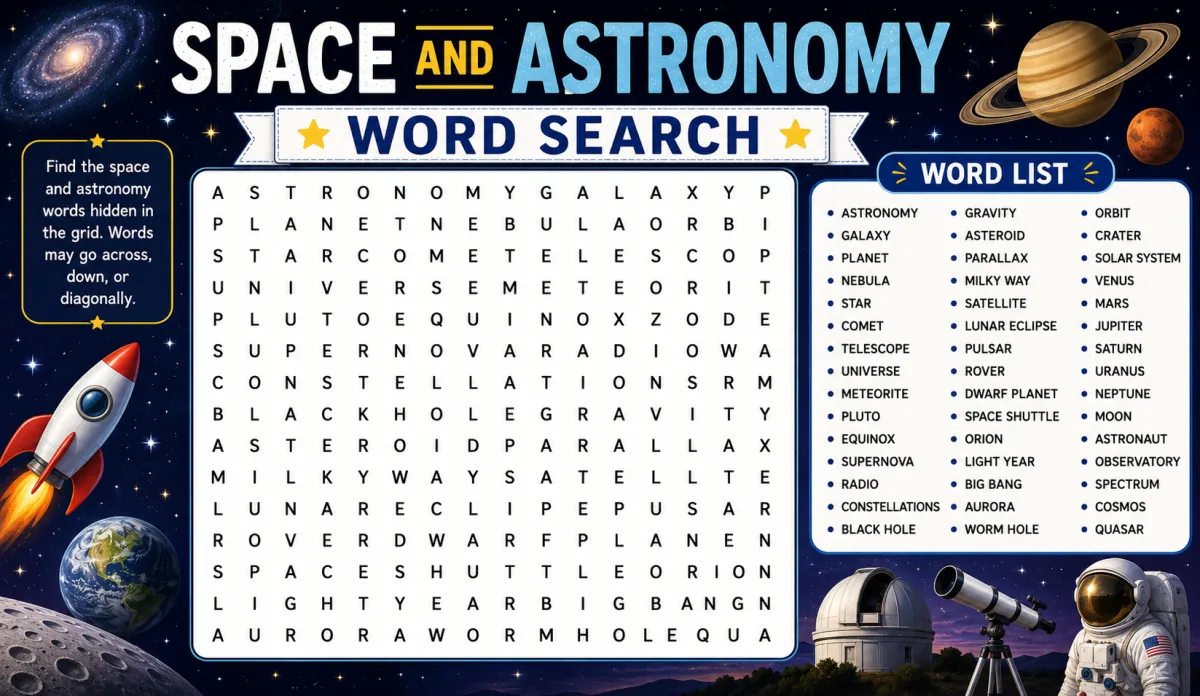
Space exploration is one of the few subjects where science, history, and human ambition collide in a single story. From the first satellite to reach orbit to astronauts walking on the Moon and rovers rolling across Mars, this journey is packed with milestones, machines, and moments that changed how we see our place in the universe. A space exploration word search takes this decades-long story and compresses it into a single puzzle, letting solvers travel through spaceflight history one hidden word at a time.
This article walks through why space exploration works so well as word search material, takes a chronological tour through the vocabulary these puzzles typically include, and looks at how the format is used, scaled, and built for different audiences.
Why Space Exploration Makes Such Rich Puzzle Material
Unlike a purely scientific subject, space exploration blends technical vocabulary with genuine human drama, competition, and achievement. This gives a space exploration word search a slightly different flavor compared to puzzles focused purely on planets or constellations, since it draws just as heavily from history and engineering as it does from astronomy itself.
This blend makes the format especially appealing to a wide range of solvers. History enthusiasts enjoy encountering names and missions tied to major milestones, while science-minded solvers appreciate the technical vocabulary describing how rockets, satellites, and spacecraft actually function. Because the subject spans real events rather than abstract concepts alone, a space exploration word search often feels more like a trip through a timeline than a straightforward vocabulary exercise.
A Timeline in a Grid: Touring the Words of Spaceflight History
Rather than sorting vocabulary into abstract categories, most space exploration It wordsearch naturally follow the chronological arc of the space age itself, picking up new terms at each major milestone along the way.
- Why Space Exploration Makes Such Rich Puzzle Material
- A Timeline in a Grid: Touring the Words of Spaceflight History
- Why Following a Timeline Helps the Vocabulary Stick
- The Agencies and Organizations Behind the Story
- Adjusting Difficulty for Different Audiences
- Building Your Own Space Exploration Word Search
- Where This Puzzle Shows Up in the Real World
- Conclusion
The story typically begins with the Space Race, the intense period of competition between global superpowers that kicked off the modern era of spaceflight. Early puzzles often include Sputnik, the first artificial satellite launched into orbit, along with foundational vocabulary like orbit, launch, and rocket that solvers need to understand before moving further into the timeline.
From there, the journey usually moves into the era defined by crewed spaceflight, introducing words like astronaut, cosmonaut, capsule, and mission control. This period frequently includes vocabulary tied to the Apollo program, such as lunar module and splashdown, reflecting humanity's first crewed missions beyond low Earth orbit and the eventual Moon landing that captured global attention.
Following this milestone, many puzzles shift toward the era of reusable spacecraft and long-term habitation, bringing in terms like space shuttle, space station, docking, and microgravity. This stretch of the timeline reflects a shift from short, dramatic missions toward sustained human presence in space, exemplified by ongoing operations aboard structures like the International Space Station.
The tour then often moves into the world of robotic and uncrewed exploration, introducing vocabulary like rover, probe, satellite, and flyby. These terms highlight how much of modern space exploration relies on machines rather than astronauts, particularly when it comes to studying distant planets, moons, and asteroids that remain far too dangerous or distant for crewed missions.
Finally, more advanced or up-to-date puzzles often close the timeline with newer vocabulary reflecting the current era of spaceflight, including terms like reusable rocket, commercial spaceflight, and spacewalk. This final stretch acknowledges how private companies have increasingly joined government agencies in pushing the boundaries of space exploration, adding a modern layer to a puzzle otherwise rooted in history.
Why Following a Timeline Helps the Vocabulary Stick
Presenting space exploration vocabulary in roughly chronological order gives solvers more than just a list of disconnected words to memorize. It offers a narrative thread that mirrors how the subject is usually taught in classrooms, moving from early satellites through crewed missions and into the robotic and commercial era that defines much of modern spaceflight.
This structure also helps solvers understand how vocabulary connects to real historical context rather than existing in isolation. Encountering "Sputnik" early in a puzzle and "commercial spaceflight" much later reinforces the sense that these terms represent different chapters of the same ongoing story, rather than an arbitrary jumble of space-related words.
For students, this timeline-driven approach pairs naturally with history and science lessons covering the same material, allowing a word search to reinforce classroom content without requiring any additional explanation. For adult hobbyists and space enthusiasts, the format offers a nostalgic trip through decades of spaceflight milestones, often triggering memories of famous missions or well-known figures from space history.
The Agencies and Organizations Behind the Story
No timeline of space exploration would feel complete without acknowledging the organizations that made these milestones possible, and many puzzles weave in this layer of vocabulary as well. Words like NASA, ESA, Roscosmos, and ISRO frequently appear in more advanced puzzles, representing the government space agencies that have driven much of the exploration covered throughout the timeline.
More recent puzzles have also started to include vocabulary tied to the growing role of private companies in spaceflight, with terms like SpaceX or general references to commercial launch providers appearing alongside traditional agency names. This addition reflects how the modern space industry has expanded well beyond government-run programs, creating a genuinely mixed public-and-private landscape that today's space exploration word search puzzles increasingly try to capture.
Including agency names alongside mission-specific vocabulary also gives solvers a helpful anchor point, since recognizing an organization like NASA or ESA often makes it easier to recall the missions and terminology associated with it, reinforcing connections across the puzzle rather than treating each word as an isolated fact.
Adjusting Difficulty for Different Audiences
Like most themed puzzles, a space exploration word search can be tailored to fit a wide range of ages and knowledge levels. For younger students or beginners, a smaller grid paired with a short, well-known list of terms like "astronaut," "rocket," and "Moon" keeps the activity approachable and encouraging.
For older students or dedicated space history enthusiasts, expanding the grid size allows room for more advanced vocabulary such as "lunar module," "microgravity," or "commercial spaceflight." Increasing the number of directions in which words can be hidden, including diagonal and backward placements, adds further challenge for solvers looking for something more demanding.
Some puzzle designers also raise difficulty by blending vocabulary from different eras together rather than keeping them in a clear chronological sequence, requiring solvers to draw on a broader understanding of space history rather than relying purely on context clues from nearby words.
Building Your Own Space Exploration Word Search
Creating a personalized version of this puzzle follows a manageable, step-by-step process. It begins with assembling a word list that ideally reflects the chronological structure described earlier, moving from early satellites through crewed missions and into modern robotic and commercial spaceflight.
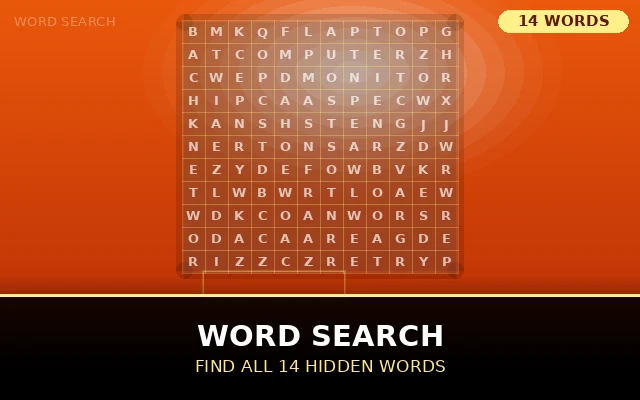
Once the word list is finalized, an appropriate grid size should be chosen based on the intended audience, followed by placing the selected words into the grid across a mix of directions. The remaining empty cells are then filled with random letters to conceal the hidden terms and add an appropriate level of challenge.
Free online word search generator tools can handle much of this layout work automatically, allowing teachers, parents, and space enthusiasts to simply input a word list and receive a properly formatted, printable puzzle without needing specialized design skills.
Where This Puzzle Shows Up in the Real World
Space exploration word searches are a common feature in middle and high school history and science classrooms, often distributed alongside lessons covering the Space Race, the Apollo program, or the ongoing operations of the International Space Station. Museums dedicated to aviation and space history frequently include these puzzles as takeaway activities, giving visitors a way to reinforce what they just learned while touring exhibits about famous missions and spacecraft.
Beyond formal education, these puzzles also appear in space-themed birthday party activity packets, summer camp workbooks, and anniversary materials tied to major milestones like Moon landing celebrations. Space enthusiasts and hobbyist historians also enjoy these puzzles simply as a nostalgic way to revisit decades of spaceflight achievements, whether shared in a puzzle book, printed handout, or digital format online.
Space agencies themselves have occasionally embraced this format too, releasing printable activity sheets around major mission launches or anniversary events to help engage students and the general public in a low-cost, easily distributed way. This grassroots use of the puzzle format shows just how effectively a simple grid of letters can support public interest in ongoing space exploration efforts.
Conclusion
A space exploration word search does more than test vocabulary. It offers a compact, engaging way to travel through one of humanity's most ambitious ongoing stories, from the earliest satellites launched into orbit to the astronauts, rovers, and reusable rockets shaping the current era of spaceflight. By following the natural timeline of space history rather than a random list of terms, this puzzle format reinforces both vocabulary and historical context in a way that feels genuinely engaging rather than academic. Whether used in a classroom, a museum, or simply enjoyed as a quiet afternoon activity, a space exploration word search proves that even decades of spaceflight history can fit neatly into a single, satisfying grid.