Endangered Species Word Search: A Fun and Educational Way to Learn About Wildlife Conservation
Introduction
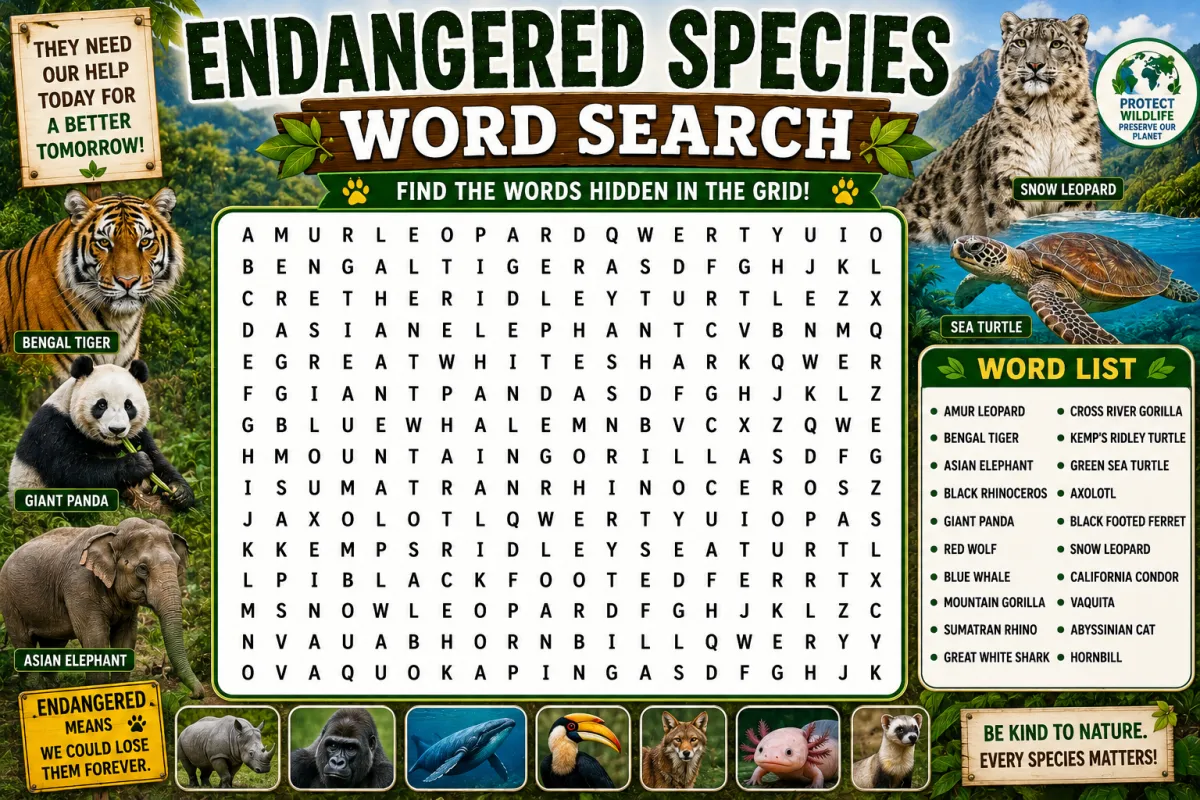
In a world where technology often keeps children and adults glued to screens, finding engaging ways to teach important lessons about nature and conservation can be challenging. This is where an endangered species word search comes into play as a powerful educational tool. Combining the simple joy of a classic word puzzle with vital information about the planet's most vulnerable animals, this activity has become a favorite among teachers, parents, and wildlife enthusiasts alike.
An endangered species word search isn't just a game. It's a gateway to conversations about biodiversity, habitat loss, climate change, and the urgent need for conservation efforts worldwide. In this article, we'll explore why these puzzles matter, how they help raise awareness, and how you can create or use one effectively for education and fun.
What Is an Endangered Species Word Search?
A word search is a puzzle consisting of letters arranged in a grid, where players must find and circle specific words hidden horizontally, vertically, or diagonally. An endangered species word search takes this familiar format and fills it with the names of animals that are currently at risk of extinction, such as Bengal tigers, giant pandas, black rhinos, snow leopards, sea turtles, and orangutans.
- Introduction
- What Is an Endangered Species Word Search?
- Puzzles:
- Why Endangered Species Word Search Matter
- 1. Raising Awareness Through Play
- 2. Building Vocabulary and Cognitive Skills
- 3. Encouraging Environmental Responsibility
- 4. Supporting Classroom Learning
- Popular Endangered Species Often Featured in Word Search
- Benefits of Using Word Searches in Environmental Education
- The Bigger Picture: Why Endangered Species Awareness Is Critical
- Tips for Maximizing the Educational Value of Word Search Puzzles
- Conclusion
These puzzles are often accompanied by fun facts about each species, making them not only entertaining but also deeply informative. Whether used in a classroom, at home, or during a nature camp, an endangered species word search turns learning into an interactive experience.
Puzzles:
Why Endangered Species Word Search Matter
1. Raising Awareness Through Play
Children and adults often retain information better when it's tied to an enjoyable activity. By searching for the names of endangered animals, players naturally become curious about why these species are endangered in the first place. This curiosity often leads to deeper research and discussions about topics like poaching, deforestation, and pollution.
2. Building Vocabulary and Cognitive Skills
Word searches are excellent for improving vocabulary, spelling, and pattern recognition. When themed around endangered species, they introduce learners to scientific and common names of animals they might not encounter in everyday life, such as the axolotl, pangolin, or vaquita porpoise.

3. Encouraging Environmental Responsibility
Education is the first step toward action. When people, especially children, learn about endangered species early on, they are more likely to grow into adults who value conservation and make environmentally conscious choices. An endangered species word search plants that seed of awareness in a fun, low-pressure way.
4. Supporting Classroom Learning
Teachers frequently use themed word searches as icebreakers or supplementary activities during science and environmental studies lessons. These puzzles can be tailored to specific units, such as African wildlife, marine life, or rainforest animals, making them versatile teaching aids.
Popular Endangered Species Often Featured in Word Search
Here are some commonly included animals in an endangered species word search, along with a brief look at why they need our protection:
- Bengal Tiger: Facing habitat loss and poaching, fewer than 4,000 remain in the wild.
- Giant Panda: Once critically endangered, conservation efforts have helped stabilize populations, though habitat fragmentation remains a concern.
- Sumatran Orangutan: Threatened primarily by deforestation for palm oil plantations.
- Black Rhino: Poached extensively for their horns, their numbers have dropped drastically over the past century.
- Sea Turtle: Various species face threats from plastic pollution, bycatch, and beach habitat destruction.
- Snow Leopard: Found in mountainous regions of Central Asia, they're vulnerable due to climate change and poaching.
- Amur Leopard: One of the rarest big cats, with only around 100 individuals left in the wild.
- Vaquita Porpoise: Considered the most endangered marine mammal, with a population critically close to extinction.
- African Elephant: Threatened by ivory poaching and shrinking habitats.
- Red Panda: Facing habitat destruction across the Himalayan region.
Including these species in a word search not only makes the puzzle more engaging but also introduces players to the diverse range of ecosystems affected by human activity.
- Airport and Flying Terms Word Search
- Mountains and Rivers Word Search
- Cars and Vehicles Word Search
- Norse Mythology Word Search
- Musical Instruments Word Search
Benefits of Using Word Searches in Environmental Education
Word searches, while simple, offer several unique benefits when incorporated into environmental education:
- Accessible for All Ages: From young children to adults, word searches can be adapted for any skill level.
- Low-Cost Educational Tool: Unlike expensive field trips or specialized programs, word searches require minimal resources.
- Reinforces Learning: Repetition of species names helps with memory retention, especially when paired with visual aids or fun facts.
- Encourages Group Learning: Word searches can be done individually or in groups, promoting discussion and collaborative learning.
- Bridges Entertainment and Education: They make learning about serious topics like extinction and habitat loss more approachable, especially for younger audiences.
The Bigger Picture: Why Endangered Species Awareness Is Critical
According to wildlife conservation organizations, thousands of species worldwide are currently classified as endangered or critically endangered. Human activities, including illegal wildlife trade, deforestation, climate change, and pollution, continue to push many species toward extinction.

Educational tools like an endangered species word search serve as a small but meaningful part of a larger conservation movement. By introducing these topics early and in engaging formats, we help cultivate a generation that values biodiversity and understands the importance of protecting our planet's wildlife.
Many zoos, wildlife sanctuaries, and environmental organizations now use themed puzzles and activity books as part of their educational outreach programs. This growing trend reflects a broader understanding that awareness often begins with simple, accessible tools.
Tips for Maximizing the Educational Value of Word Search Puzzles
To get the most out of an endangered species word search, consider these additional tips:
- Pair with Videos or Documentaries: After completing the puzzle, watch a short video about one of the featured animals to deepen understanding.
- Include a Discussion Segment: Ask participants why they think certain animals are endangered and what can be done to help.
- Create a Follow-Up Project: Have students research one species from the puzzle and present a fact or two to the group.
- Rotate Themes Regularly: Keep the activity fresh by focusing on different regions or animal types each time.
- Connect to Real-World Action: Introduce simple ways to help endangered species, such as reducing plastic use or supporting conservation charities.
Conclusion
An endangered species word searchin It wordsearch is more than just a puzzle. It's a simple yet effective way to introduce important conservation topics to learners of all ages. By blending entertainment with education, these puzzles spark curiosity, build vocabulary, and lay the foundation for a lifelong appreciation of wildlife and environmental responsibility.
Whether you're a teacher planning a lesson, a parent looking for a meaningful activity, or simply someone passionate about wildlife conservation, incorporating an endangered species word search into your routine can make a real difference. It's a small step, but one that contributes to a much larger goal: protecting the incredible diversity of life on our planet for generations to come.
So next time you're looking for a fun and educational activity, consider creating or downloading an endangered species word search, because every word found is a step toward greater awareness and a brighter future for endangered wildlife.