History Word Search: The Ultimate Guide to Learning World History Through Puzzles
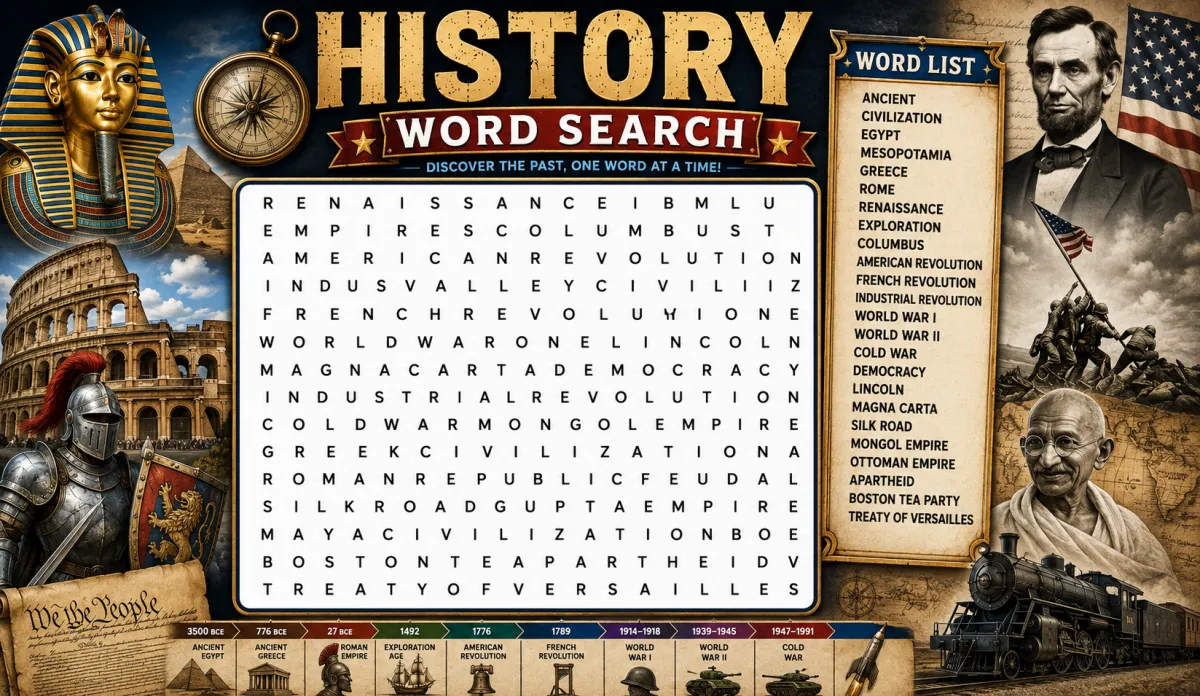
History is packed with names, dates, and events that can feel overwhelming when presented as a wall of text in a textbook. A history word search offers a different way in — turning historical vocabulary into a puzzle that rewards curiosity rather than memorization pressure, one hidden word at a time.
Whether you are a student preparing for an exam, a teacher planning a new unit, or simply someone who enjoys learning through puzzles, a history word search makes the past feel a little more approachable without losing any of its depth.
What Is a History Word Search?
A history word search is a themed puzzle where the hidden words come from historical events, civilizations, and figures. Rather than a random assortment of vocabulary, every word connects to a moment or person that shaped the past, giving the puzzle an educational thread that pulls solvers from one discovery to the next.
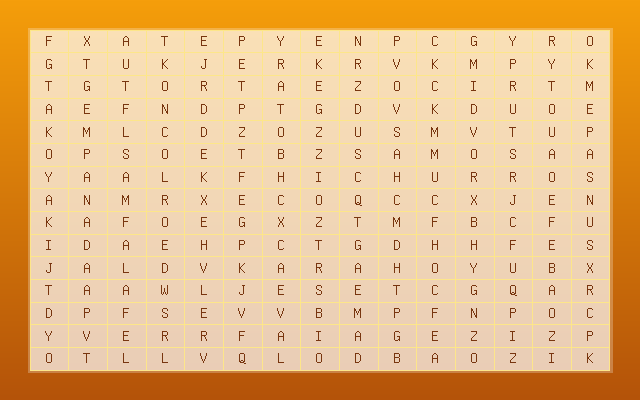
Like any classic word search, the format relies on a grid of letters with words hidden horizontally, vertically, diagonally, or backward. What makes a history word search distinctive is the intentional selection of vocabulary, chosen to reflect a specific era, region, or historical theme rather than a scattered mix of unrelated words.
Why a World History Word Search Works So Well for Learning
History spans thousands of years and countless cultures, which means vocabulary alone can be a barrier to engagement. A world history word search breaks that vocabulary into approachable, themed chunks a puzzle about ancient Egypt feels entirely different from one about the Industrial Revolution, even though both fall under the same broad subject. This variety keeps the format fresh across grade levels and interests.
- What Is a History Word Search?
- Why a World History Word Search Works So Well for Learning
- Categories Commonly Found in a History Word Search
- Ancient History Word Search Terms
- Historical Events Word Search Terms
- Historical Figures
- Historical Vocabulary and Terminology
- Regional and Era-Specific Puzzles
- Benefits of a History Word Search for Students
- How History Word Search Puzzles Are Designed
- Tips for Solving a History Word Search
- Using History Word Search Puzzles in the Classroom
- History Word Search Beyond the Classroom
- History Word Search for Exam Revision
- Conclusion
There is also a memory benefit built into the format itself. Actively scanning a grid for a specific historical term requires repeated visual processing of that word, which reinforces spelling and recognition far more effectively than passively reading the same term once in a textbook paragraph.
Categories Commonly Found in a History Word Search
Ancient History Word Search Terms
Words like pharaoh, empire, civilization, and hieroglyphics introduce solvers to early human history, often used as a companion to ancient civilizations units in school. These puzzles frequently focus on a specific ancient culture Egypt, Rome, Greece, or Mesopotamia giving students a themed vocabulary set tied directly to what they are studying in class.
Historical Events Word Search Terms
Puzzles built around specific events revolutions, world wars, independence movements reinforce the vocabulary tied to a particular period, helping students connect terms to a timeline. A puzzle focused on a single event, such as a specific war or revolution, tends to be especially effective, since it keeps the vocabulary tightly connected to one narrative rather than spreading across unrelated eras.
Historical Figures
Names of monarchs, explorers, scientists, and political leaders appear frequently, giving solvers a chance to recognize figures they have studied or are about to encounter in a lesson. These puzzles work particularly well as a review activity, since recognizing a name in a grid often triggers memory of the broader story or achievement tied to that figure.
Historical Vocabulary and Terminology
Broader terms like treaty, monarchy, colony, and revolution round out puzzles designed to reinforce the general language used across history courses. This vocabulary tends to reappear across many different units, which makes a dedicated terminology puzzle useful as a standalone review tool at almost any point in a history course.
Regional and Era-Specific Puzzles
Many history word search puzzles are built around a specific region or time period rather than history in general medieval Europe, the age of exploration, or twentieth-century world history, for example. This regional focus allows teachers to align a puzzle precisely with whatever unit their class is currently covering, rather than relying on a broader, less targeted word list.
-
World War II Word Search
-
US Presidents Word Search
-
Ancient Egypt Word Search
-
Ancient Rome Word Search
-
Famous Explorers Word Search
-
American Revolution Word Search
Benefits of a History Word Search for Students
History vocabulary often includes unfamiliar or foreign-origin words that are easy to forget after a single reading. A themed word search gives students repeated visual exposure to these terms in a low-pressure setting, which helps with spelling and recognition before the same words appear in essays or exams. Teachers frequently use history-themed puzzles as a warm-up activity at the start of a new unit, priming students with key vocabulary before deeper reading begins.
History word search puzzles also work well for students who struggle with traditional reading-heavy review methods. The visual, game-like nature of a puzzle offers an alternative path to the same vocabulary, which can be especially helpful for younger learners or students who benefit from more active, hands-on study techniques.
How History Word Search Puzzles Are Designed
Puzzle difficulty in a history word search is usually shaped by both grid size and the complexity of the vocabulary itself. A puzzle aimed at younger students studying a general ancient civilizations unit might use a smaller grid with simple, widely recognized terms, while a puzzle built for older students studying a specific war or political movement might use a larger grid packed with more advanced and specific vocabulary, including proper names and less common terms.
Tips for Solving a History Word Search
- Scan for proper nouns first names of empires, rulers, and historical figures tend to be longer and more distinctive than common words.
- If the puzzle covers a specific era, recall what you already know about that period before searching, since it narrows down which words are likely included.
- Pay close attention to backward and diagonal placements, since puzzle designers often hide longer historical terms in less obvious directions.
- Read through the full word list before starting, since recognizing an unfamiliar term in advance makes it far easier to spot once you begin scanning.
- Cross off each word as you find it, especially in longer puzzles, to avoid losing track of which terms remain.
Using History Word Search Puzzles in the Classroom
History teachers use themed puzzles across nearly every unit, from ancient civilizations to modern world history. A puzzle introduced before a lesson previews upcoming vocabulary, while one used afterward serves as a quick review before a quiz or test. Because the format needs no technology, it also works well as a substitute lesson plan or an early-finisher activity for students who complete other work ahead of their classmates.
Some teachers extend the activity further by asking students to define or explain each term they find in the puzzle, turning a simple word search into a short vocabulary discussion. This pairing helps ensure that students are not just recognizing the spelling of a term, but also connecting it to its historical meaning.
- Dog Breeds Word Search
- Space Exploration Word Search
- Stars and Galaxies Word Search
- Solar System Word Search
- Gaming Word Search
- Music Word Search
- Mythology Word Search
History Word Search Beyond the Classroom
History-themed puzzles are not limited to school settings. Museums, historical societies, and heritage organizations sometimes use themed word searches as a family-friendly activity during events or exhibits, giving visitors of all ages a lighthearted way to engage with the subject on display. History enthusiasts also enjoy these puzzles simply as a form of casual learning, revisiting familiar names and events in a relaxed, game-like format.
History Word Search for Exam Revision
Students preparing for history exams sometimes use themed puzzles as a final review step before test day. Working through a word search built around the exact unit being tested reinforces the spelling and recognition of key terms one last time, without the pressure of a formal practice test. This makes history word search puzzles a useful addition to a broader revision routine that also includes notes, flashcards, and past papers.
Conclusion
A history word search turns dense historical vocabulary into something genuinely enjoyable to explore. Whether the focus is ancient civilizations, world wars, or influential historical figures, these puzzles give students and history enthusiasts alike a memorable way to engage with the past one hidden word, name, and event at a time.